How to Manage Anger and Stay Calm Simple Anger Control Tips for Peace of Mind
Anger is a natural human emotion, but learning how to manage it effectively can transform the way you handle stress, relationships, and everyday challenges. Everyone experiences moments of frustration, disappointment, or irritation, yet the ability to pause, reflect, and respond calmly is a skill that can be developed over time. With the right anger management techniques, you can create more peaceful reactions, improve communication, and build stronger emotional awareness.
The goal of managing anger is not to eliminate this powerful emotion. Instead, it is about understanding what causes anger, recognizing early warning signs, and choosing healthier ways to express feelings. Simple practices like deep breathing, identifying triggers, taking breaks, and using calm communication can make a meaningful difference in emotional well-being.
Key Takeaways
- Pause and breathe before reacting during moments of anger.
- Identify personal anger triggers to prepare healthier responses.
- Use respectful communication instead of blame or criticism.
- Take intentional breaks to calm your mind and body.
- Mindfulness and self-awareness can improve emotional control.
Understanding Anger and Why It Happens
Anger is an emotional response that often appears when we feel threatened, ignored, overwhelmed, disappointed, or treated unfairly. It can be triggered by external situations, interactions with others, or even our own thoughts and expectations. While anger itself is not harmful, uncontrolled reactions can affect mental health, relationships, and daily life.
Many people believe that being angry means losing control, but anger actually provides valuable information. It can reveal personal boundaries, unmet needs, or situations that require attention. Learning to listen to anger without immediately acting on it is an important part of emotional intelligence.
Important: Effective anger management does not mean pretending everything is fine. It means creating enough space between your emotions and your actions so you can respond in a way that reflects your values.
The Power of Breathing and Pausing Before Reacting
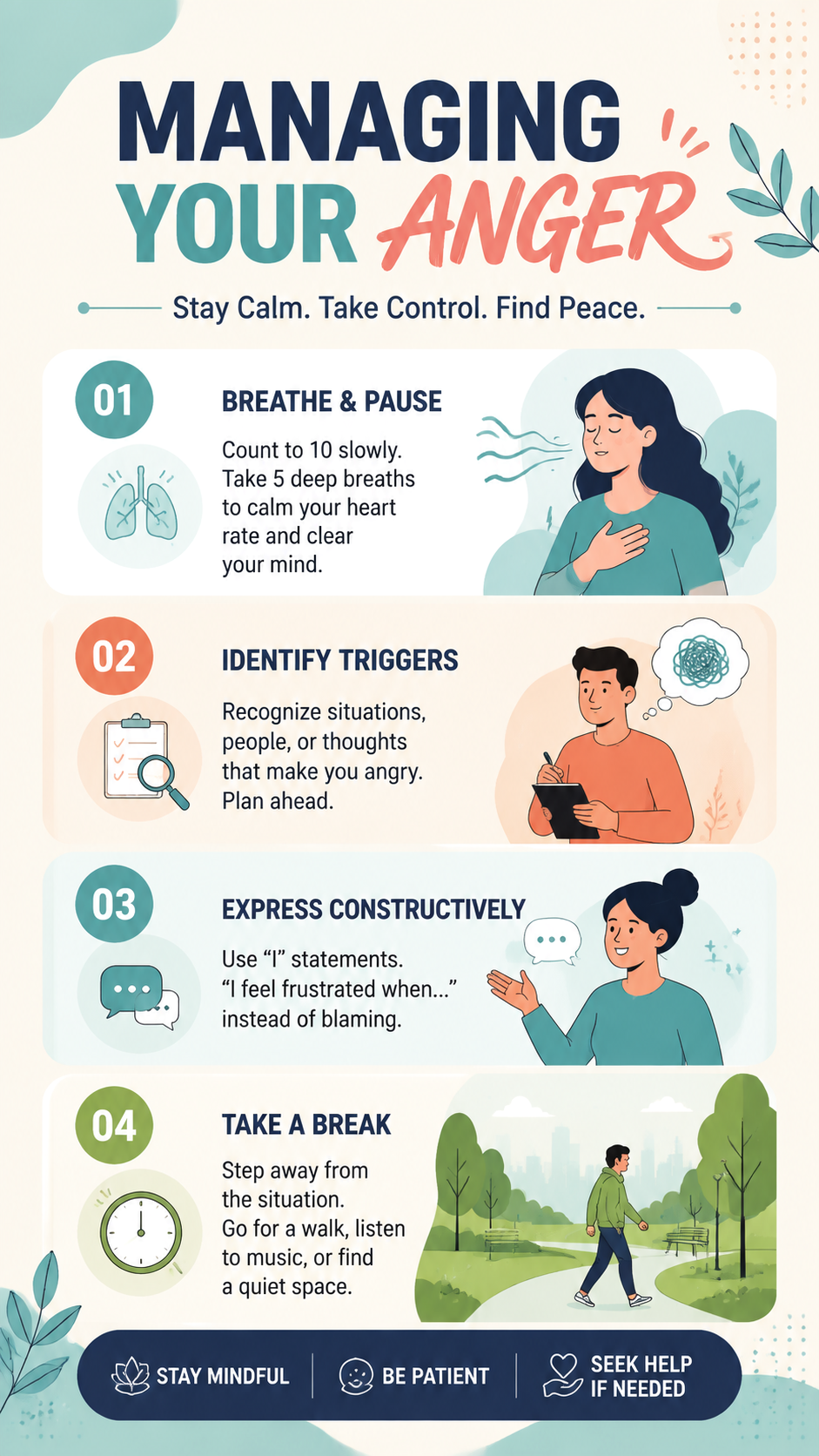
One of the simplest ways to manage anger is to create a pause between feeling angry and responding. When anger rises, your body may enter a stress response. Your heart rate can increase, your muscles may tense, and your thoughts can become more focused on the problem instead of possible solutions.
How Deep Breathing Helps Calm Anger
Deep breathing exercises send a calming signal to your nervous system. Taking slow breaths can help lower physical tension and create mental space for clearer thinking. A simple technique is to inhale slowly, hold briefly, and release the breath while focusing on relaxation.
- Count slowly to ten before responding.
- Take several deep breaths when emotions feel intense.
- Focus on relaxing your body as you breathe.
Why a Short Pause Matters
A pause gives your brain time to move from an emotional reaction toward thoughtful decision-making. Even a few seconds can prevent words or actions that may create unnecessary conflict.
Identifying Your Anger Triggers
Understanding what causes your anger is one of the most important steps in emotional regulation. Triggers are situations, people, thoughts, or experiences that repeatedly create strong emotional reactions.
Common anger triggers may include feeling misunderstood, being under pressure, experiencing criticism, dealing with unexpected changes, or feeling like your needs are being ignored. Everyone has different triggers, so self-reflection is essential.
Ways to Recognize Personal Triggers
- Notice situations where your frustration appears quickly.
- Pay attention to repeated patterns in your reactions.
- Write down thoughts and feelings after stressful moments.
- Look for physical signs such as tension or a faster heartbeat.
Pro Tip: Keeping a simple anger journal can help you discover patterns and prepare healthier responses before difficult situations happen.
Expressing Anger in a Healthy Way
Anger often becomes damaging when it is expressed through yelling, blaming, insults, or aggressive behavior. Healthy expression allows you to communicate your feelings while still respecting yourself and others.
Practice Using “I” Statements
One powerful communication technique is using “I” statements. Instead of saying, “You never listen,” try expressing your experience by saying, “I feel frustrated when I do not feel heard.” This approach reduces blame and encourages more productive conversations.
- Describe your feelings clearly.
- Explain what situation affected you.
- Share what you need moving forward.
Why This Matters
Healthy communication helps turn anger into understanding. When people learn to express emotions calmly, they create stronger connections and reduce unnecessary conflict.
- Calm conversations improve trust.
- Respectful expression prevents misunderstandings.
- Emotional awareness supports better relationships.
Taking a Break to Reset Your Mind
Sometimes the best response to anger is stepping away temporarily. A short break allows your emotions to settle and gives you time to return to the situation with a clearer perspective.
Healthy Ways to Take a Break
- Go for a peaceful walk outdoors.
- Listen to calming music.
- Spend a few quiet moments alone.
- Practice mindfulness or relaxation exercises.
- Return to the conversation when you feel prepared.
A break is not about avoiding problems. It is about creating the emotional space needed to handle challenges more effectively.
Building Long-Term Anger Management Skills
Managing anger is a continuous process that improves with practice. Small daily habits can strengthen emotional control and help you respond calmly during stressful moments.
Develop Mindfulness
Mindfulness teaches you to notice your thoughts and emotions without immediately reacting. Regular mindfulness practice can improve self-awareness and help you recognize emotional changes before they become overwhelming.
Create Healthy Daily Habits
Sleep, physical activity, relaxation time, and positive relationships all influence emotional balance. Taking care of your overall well-being makes it easier to handle frustration and stress.
At a Glance
- Pause before reacting.
- Recognize your emotional triggers.
- Communicate feelings respectfully.
- Use breaks and mindfulness to reset.
Conclusion: Creating a Calmer and More Balanced Life
Learning how to manage anger is a valuable life skill that can improve your emotional health, relationships, and overall sense of peace. By practicing breathing techniques, identifying triggers, expressing yourself calmly, and taking intentional breaks, you can transform difficult moments into opportunities for growth.
Anger does not have to control your actions. With patience, awareness, and consistent practice, you can develop healthier responses and create a more mindful approach to everyday challenges. Small changes today can lead to greater emotional balance and a calmer tomorrow.
Tags
Anger Management
Emotional Wellness
Stress Relief
Mindfulness Tips
Self Care
Mental Health