Introvert Self-Care Ideas Unplug, Unwind Recharge Your Mind
In a world filled with constant notifications, busy schedules, and endless demands, creating moments of quiet has become a powerful form of self-care. For introverts, taking time to unplug and unwind is not about avoiding people or responsibilities. It is about reconnecting with yourself, protecting your energy, and creating a peaceful environment where you can truly recharge.
The art of slow living and intentional rest can transform ordinary moments into meaningful experiences. A cozy reading corner, a warm cup of tea, a journal, a calming candle, or simply a few minutes of silence can become part of a restorative self-care routine. These small habits help create a sense of balance and comfort in everyday life.
Key Takeaways
- Quiet moments can help introverts restore energy and reduce daily stress.
- A cozy personal space can support relaxation and mindful living.
- Simple self-care rituals are often more effective than complicated routines.
- Unplugging from distractions creates more room for creativity and reflection.
- Protecting your peace is an important part of emotional wellness.
Why Introvert Self-Care Matters
Introverts often recharge through solitude, reflection, and calm environments. While social connection is valuable, too much stimulation without enough recovery time can leave you feeling mentally exhausted. Self-care provides a way to reset your mind and return to daily activities with more clarity and focus.
Unlike the idea that self-care must involve expensive products or elaborate routines, introvert self-care is often centered around simplicity. It can be as easy as enjoying a quiet morning, reading a favorite book, writing thoughts in a journal, or creating a comfortable corner that feels like your own personal retreat.
Important: Rest is not a reward you earn after reaching your limits. Regular moments of quiet help you maintain emotional balance, improve focus, and create a healthier relationship with your own energy.
Create a Cozy Sanctuary at Home
Your surroundings can have a major impact on your mood. A peaceful home environment gives you a place where you can relax, think clearly, and feel comfortable being yourself. Creating a cozy sanctuary does not require a complete room makeover. Small changes can make a big difference.
Simple Ways to Build a Relaxing Space
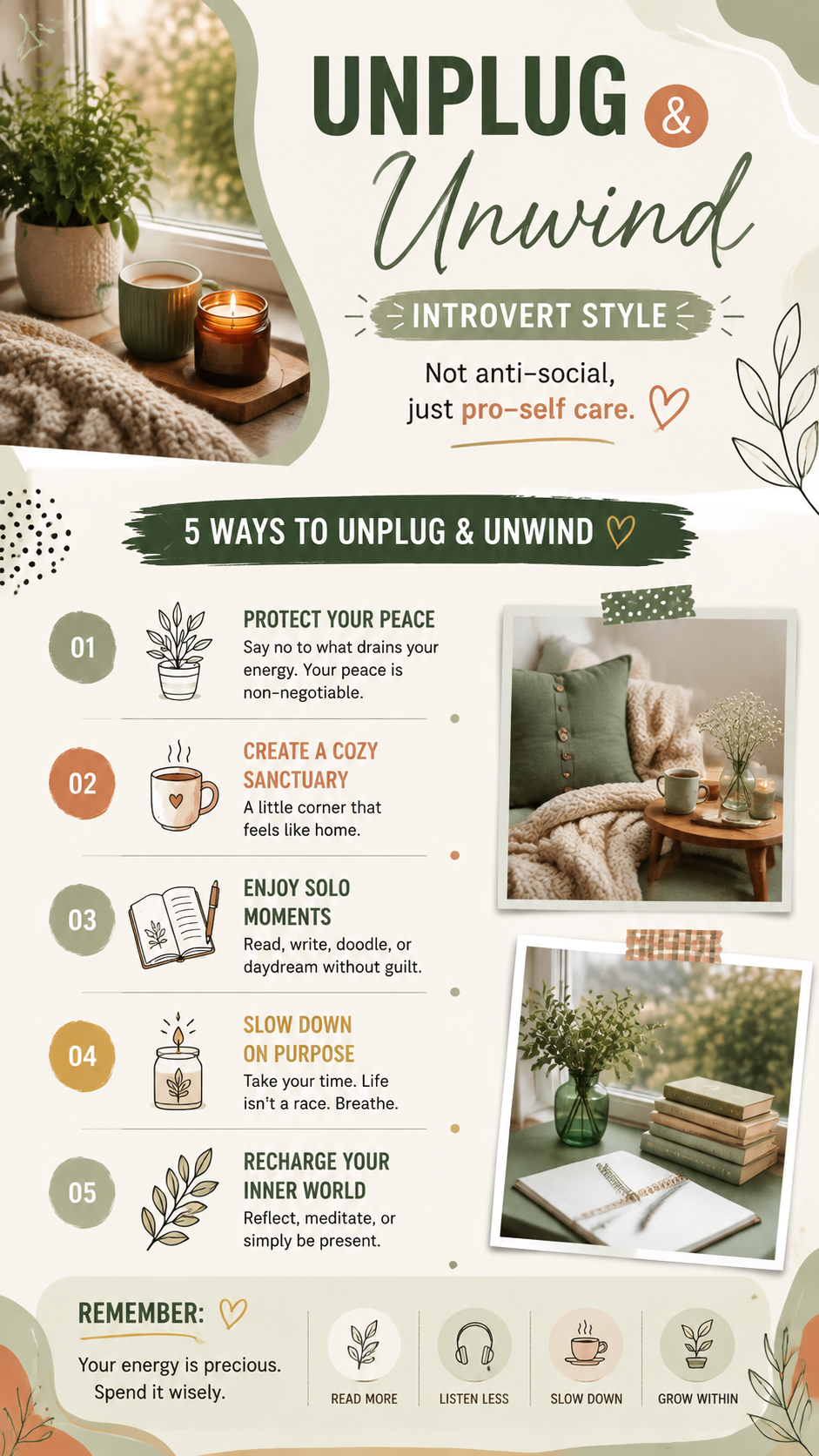
- Add comfortable textures: Soft blankets, cushions, and warm fabrics can instantly make a space feel inviting.
- Create a reading corner: A small chair, a stack of books, and gentle lighting can become a peaceful escape.
- Bring nature indoors: Plants and natural elements can add freshness and calmness to your surroundings.
- Reduce visual clutter: A tidy space often helps create a calmer mind.
A personal sanctuary should reflect what makes you feel peaceful. For some people, that may be a quiet desk for journaling. For others, it may be a comfortable spot near a window where they can enjoy a slow morning routine.
Ways to Unplug and Recharge Your Mind
Modern life encourages constant connection. Phones, emails, and social media can make it difficult to enjoy uninterrupted time with yourself. Learning how to unplug intentionally can help you feel more present and refreshed.
Practice Digital Boundaries
Taking breaks from screens does not mean abandoning technology completely. It simply means creating healthy limits. Consider setting aside specific periods during the day where you step away from notifications and focus on activities that restore your energy.
- Turn off unnecessary notifications.
- Create a relaxing morning or evening routine without screens.
- Replace scrolling time with reading, writing, or creative hobbies.
Enjoy Meaningful Solo Activities
Solo time can be deeply fulfilling when it is intentional. Activities like journaling, reading, drawing, listening to calming music, gardening, or enjoying a favorite drink can help you reconnect with yourself.
These moments allow your mind to slow down and create space for reflection. Instead of seeing alone time as empty, many introverts discover it is where their creativity and inspiration grow.
Protect Your Peace Without Guilt
Many introverts struggle with feeling guilty about needing alone time. However, protecting your energy is an important part of maintaining healthy relationships and emotional wellness. Saying no to activities that drain you does not mean you care less about others.
Healthy Boundaries for Everyday Life
Boundaries help you understand what you need and communicate those needs clearly. They create room for rest, personal growth, and better connections.
- Recognize when your energy levels are low.
- Give yourself permission to pause and recover.
- Choose activities that support your well-being.
- Spend time with people who respect your need for balance.
Self-care is not selfish. When you take care of your own mental and emotional needs, you are better prepared to show up fully in every area of your life.
Slow Living Habits for a Calmer Lifestyle
Slow living is about being more intentional with your time. It encourages you to focus on quality instead of constantly rushing from one task to another. For introverts, this approach naturally supports a lifestyle built around mindfulness and meaningful experiences.
Small Habits That Make a Difference
- Start your day with a quiet moment before checking your phone.
- Enjoy meals without distractions.
- Keep a gratitude journal.
- Make time for hobbies that bring genuine joy.
- Take short breaks to breathe and reset.
Why This Matters
Creating intentional quiet moments helps you reconnect with yourself. A slower lifestyle can improve awareness, reduce overwhelm, and make everyday experiences feel more meaningful.
Build Your Personal Recharge Routine
The best self-care routine is one that feels natural and sustainable. Instead of copying someone else’s habits, focus on what genuinely helps you feel refreshed. Your routine may include a few minutes of journaling, a peaceful evening drink, reading before bed, or spending time in a quiet outdoor space.
The goal is not perfection. It is consistency. Small moments of care repeated regularly can create a stronger sense of calm and confidence.
At a Glance
- Make quiet time a regular habit.
- Create a comforting space that feels personal.
- Use simple activities to recharge your mind.
- Set boundaries that protect your energy.
Conclusion: Embrace the Power of Quiet Moments
Unplugging and unwinding is a beautiful reminder that rest has value. For introverts, peaceful moments are not empty spaces to fill. They are opportunities to reflect, recharge, and reconnect with what truly matters.
By creating a cozy environment, practicing mindful habits, and protecting your personal energy, you can build a self-care routine that supports a calmer and more balanced lifestyle. Quiet moments can become powerful sources of comfort, creativity, and renewal.
Whether you spend a few minutes journaling, enjoying a book, or simply sitting in silence, remember that caring for yourself begins with making space for yourself.
Tags
Introvert Self Care
Slow Living
Mindful Living
Cozy Home Ideas
Self Care Routine
Quiet Time Ideas
Emotional Wellness