Mental Load Why Youre Exhausted From Remembering Everything
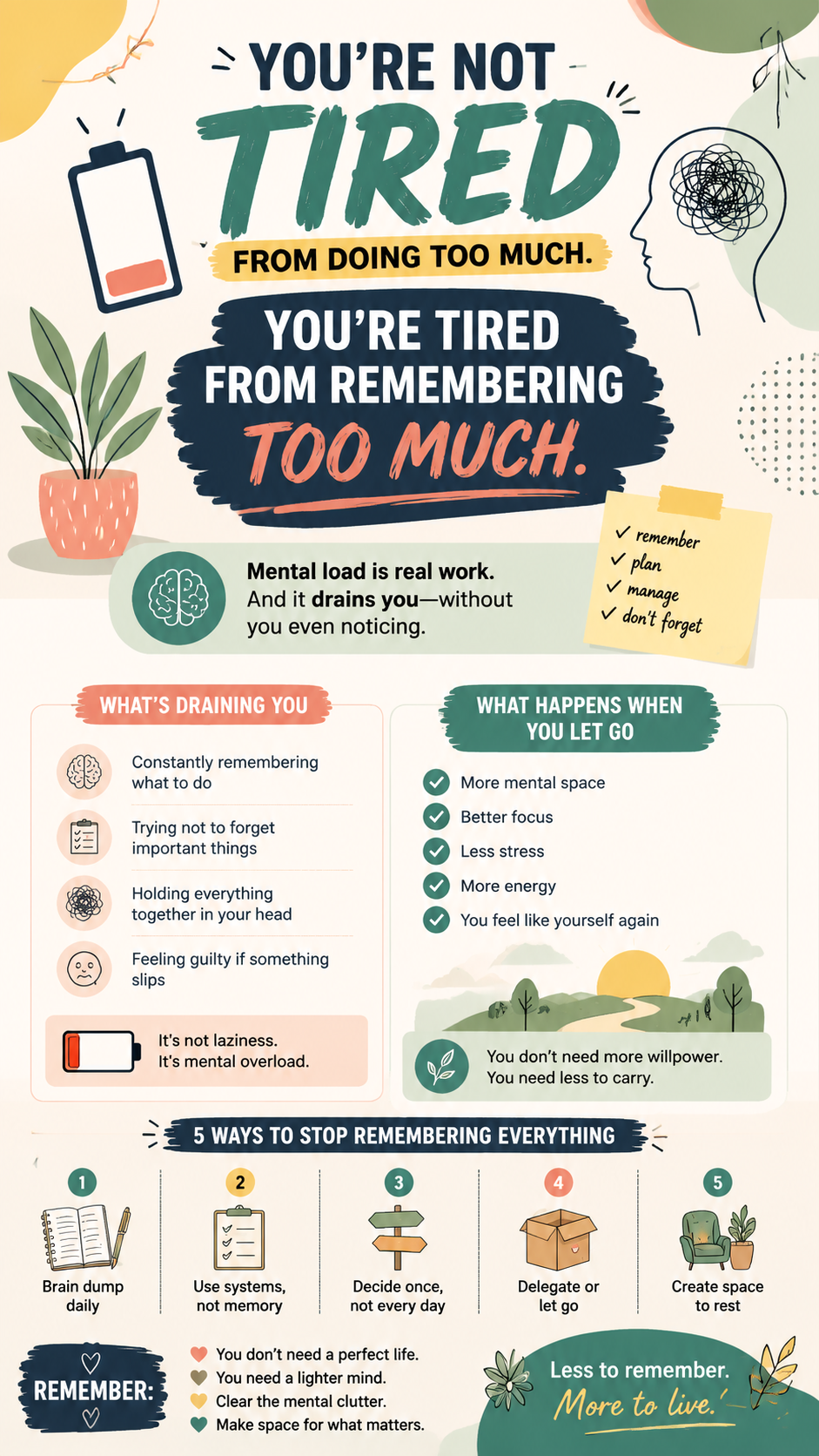
Feeling exhausted even when your schedule does not seem impossible? Many people experience a type of fatigue that comes from constantly managing thoughts, responsibilities, reminders, and decisions. This invisible burden is known as mental load, and it can quietly drain your energy long before you realize what is happening.
The problem is not always that you are doing too much. Sometimes, the real challenge is that your mind is working nonstop to remember everything, organize everything, and prevent mistakes. From keeping track of appointments to anticipating other people’s needs, your brain can become overloaded with information it was never designed to store all day.
Key Takeaways
- Mental load is the invisible work of remembering, planning, and organizing daily life.
- Constantly holding information in your mind can create stress and emotional exhaustion.
- External systems like lists, calendars, and routines reduce mental pressure.
- Letting go of unnecessary responsibilities creates more focus and energy.
- Rest is not laziness, it is an essential part of maintaining balance.
Understanding the Hidden Mental Load Behind Your Exhaustion
Mental load refers to the ongoing responsibility of managing information, making decisions, and keeping track of everything that needs attention. Unlike physical tasks, mental load is often invisible. You may finish your daily responsibilities but still feel completely drained because your brain has been working continuously in the background.
Think about all the small things you remember every day:
- Tasks that need to be completed
- Appointments and important dates
- Messages you need to answer
- Problems that need solutions
- Expectations from yourself and others
- Future plans and possible challenges
Each individual thought may seem small, but carrying hundreds of them creates cognitive pressure. Your brain is constantly switching between tasks, checking unfinished responsibilities, and trying to avoid forgetting something important.
Important: Feeling mentally tired does not always mean you need more motivation or discipline. Sometimes it means your mind is overloaded with too many things that require attention at the same time.
Why Remembering Everything Drains Your Energy
The human brain is excellent at solving problems, creating ideas, and making decisions. However, it is not meant to function as a storage system for every detail of daily life.
When you try to remember everything internally, your brain uses energy simply to keep information available. This can create a constant feeling of being “on,” even during moments when you should be relaxing.
The Cost of Constant Mental Tracking
Many people underestimate how tiring it is to repeatedly ask themselves questions like:
- What am I forgetting?
- What needs to happen next?
- Did I remember to handle that task?
- Should I be doing something more productive?
This constant internal checking creates mental clutter. Even when your body is resting, your mind may still be working through unfinished loops.
The Difference Between Being Busy and Being Overloaded
A busy day does not automatically lead to exhaustion. Many people enjoy meaningful activities and responsibilities. The bigger problem occurs when your responsibilities stay active in your mind long after the task itself is complete.
You might not be physically doing more, but mentally you are carrying more. That invisible responsibility can make ordinary days feel overwhelming.
Signs You May Be Carrying Too Much Mental Weight
Mental overload can appear in many ways. Some common signs include:
- Feeling tired even after sleeping
- Difficulty focusing on simple tasks
- Forgetting things more often
- Feeling overwhelmed by small decisions
- Needing more time alone to recover
- Feeling responsible for everything around you
Mental Clutter Can Look Like Procrastination
Sometimes mental overload is mistaken for laziness or poor organization. However, when your brain is processing too many unfinished thoughts, starting another task can feel difficult.
The solution is not always pushing harder. Often, the solution is creating space by reducing the number of things your brain has to actively manage.
How to Stop Remembering Everything and Reduce Mental Load
Reducing mental load does not mean ignoring responsibilities. It means creating better ways to manage them so your brain does not have to carry everything alone.
1. Practice a Daily Brain Dump
A brain dump is one of the simplest ways to clear mental clutter. Instead of keeping every thought in your head, write everything down.
You can create a list of:
- Tasks you need to complete
- Ideas you want to remember
- Concerns that are taking up space
- Things you need to decide later
The goal is not to create a perfect plan. The goal is to give your brain permission to stop holding everything at once.
2. Use Systems Instead of Relying on Memory
Calendars, reminders, notes, and checklists are not signs of weakness. They are tools that protect your mental energy.
When you trust an external system, your brain no longer needs to constantly repeat reminders. This creates more space for creativity, focus, and relaxation.
3. Make Decisions Once
Repeated decisions create unnecessary mental fatigue. Creating routines can reduce the number of choices you make every day.
Examples include preparing meals in advance, creating morning routines, or deciding specific times for checking messages.
4. Learn to Delegate and Release Control
Many people carry extra mental weight because they believe everything depends on them. Learning to share responsibilities can create immediate relief.
Ask yourself:
- Does this truly need my attention?
- Can someone else help with this?
- Is this responsibility still important?
5. Create Space for Rest Without Guilt
Rest is not something you earn only after completing everything. Since responsibilities are endless, waiting until everything is finished means you may never truly recover.
Protecting quiet moments, hobbies, and personal time helps restore your energy and improves your ability to handle daily challenges.
What Happens When You Release Mental Overload
When you reduce the amount of information you carry mentally, many areas of life can improve. You may experience:
- More clarity and focus
- Less stress and worry
- Better emotional balance
- More energy for meaningful activities
- A stronger connection with yourself
The goal is not to create a perfect life where nothing needs attention. The goal is to build a lifestyle where your mind has room to breathe.
Quick Points: Reducing Mental Load
- Write things down instead of storing everything mentally.
- Create routines that reduce repeated decisions.
- Release tasks that do not require your attention.
- Protect time for rest and recovery.
Conclusion: You Need Less to Carry, Not More Willpower
Feeling tired from mental load is a sign that your brain has been working hard behind the scenes. The answer is not always adding more productivity strategies or pushing yourself further.
Sometimes the most powerful change is learning what you can remove, simplify, delegate, or release. By creating systems and clearing mental clutter, you give yourself the space to focus on what truly matters.
A lighter mind creates more energy, better focus, and a greater sense of balance. You do not need to remember everything. You need a healthier way to carry what matters.
Tags
Mental Load
Stress Management
Mental Clutter
Self Care
Productivity Habits
Mindset
Intentional Living