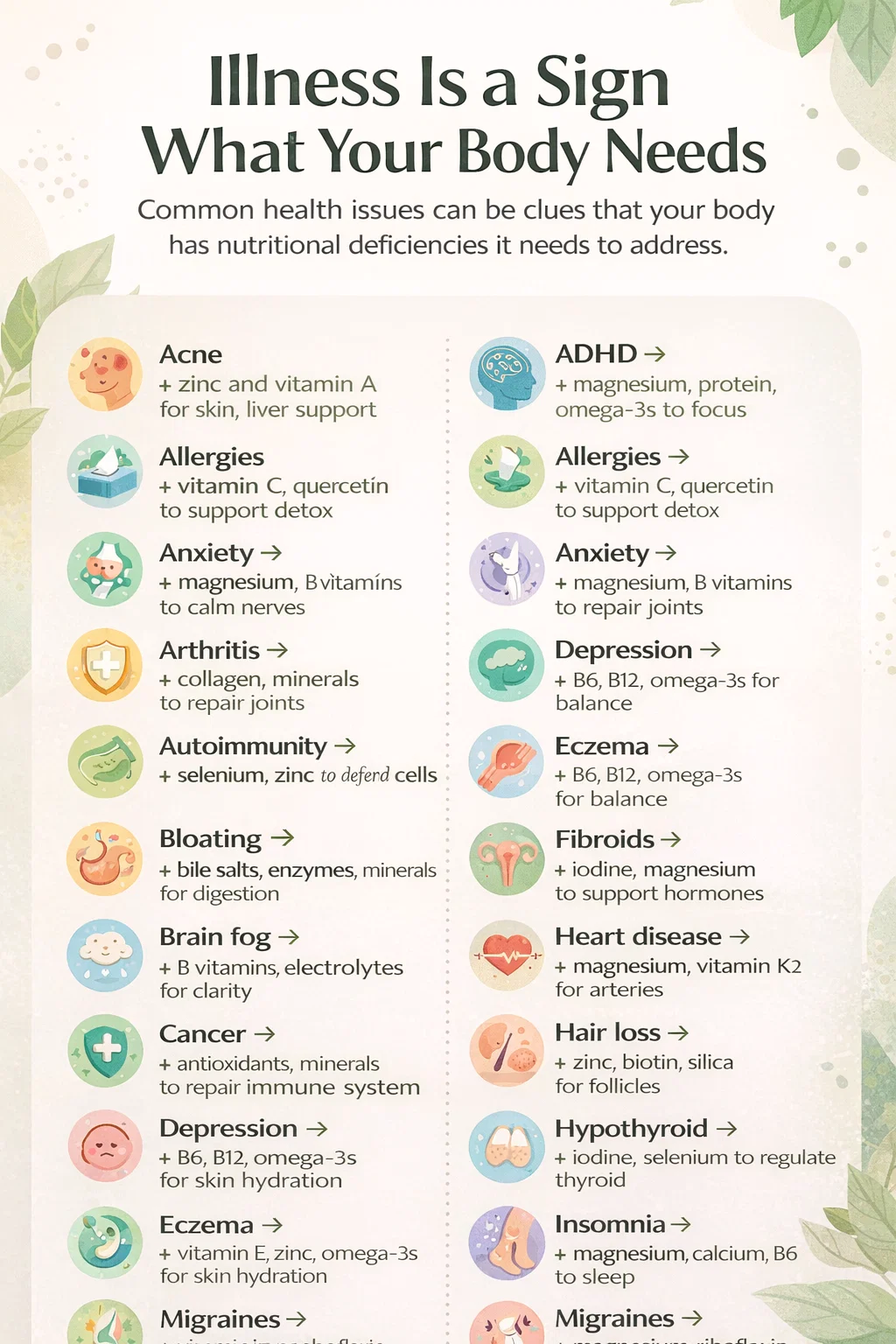
Natural Remedies for Common Illnesses What Your Body Actually Needs
Have you ever stopped to listen to what your body is trying to tell you? Most of the time, we treat physical symptoms like annoying interruptions to our busy lives. When a headache strikes, we reach for a painkiller. When we feel sluggish, we grab another cup of coffee. When our skin breakouts, we apply a topical cream. But what if these symptoms are actually a sophisticated communication system? The image we are looking at today suggests a profound shift in perspective: illness is not just a problem to be suppressed, but a sign of what your body desperately needs to function at its peak.
Understanding the language of your body is the first step toward true holistic wellness. Instead of viewing a diagnosis or a symptom as a localized failure, we can begin to see it as a nutritional or environmental SOS signal. By identifying the specific vitamins, minerals, and lifestyle adjustments required for different conditions, we empower ourselves to heal from the inside out. Let us dive deep into the science and philosophy of listening to your body signals.
The Connection Between Nutrition and Chronic Symptoms
The human body is an incredibly complex machine that requires a precise balance of fuel to operate. When that balance is off, the machine starts to sputter. Modern medicine often focuses on the symptom, but functional nutrition looks at the substrate. For example, if you are experiencing brain fog, your body might not be asking for more caffeine. Instead, it might be signaling a deficiency in B vitamins and electrolytes which are essential for neurotransmitter function and cellular hydration.
Consider the role of magnesium. It is involved in over 300 biochemical reactions in the body. Yet, a vast majority of the population is deficient. When your body lacks magnesium, it does not send you a text message; it gives you a panic attack, muscle cramps, or insomnia. By recognizing these as signs of a magnesium deficiency, you can address the root cause rather than just managing the anxiety or the sleeplessness with temporary fixes.
Decoding Skin Conditions: Acne, Eczema, and Psoriasis
Our skin is our largest organ and often acts as a mirror for what is happening internally, particularly in our gut and liver. When we see acne, we often think about external bacteria. However, looking deeper, acne is frequently a sign that the liver is overwhelmed and the skin needs zinc, Vitamin A, and omega-3 fatty acids to regulate oil production and reduce inflammation. Zinc is particularly crucial as it helps with wound healing and immune function, making it a powerhouse for clearing up persistent breakouts.
Similarly, conditions like eczema and psoriasis are often cries for moisture and gut repair. Eczema is strongly linked to a need for Essential Fatty Acids (EFAs) and Vitamin A to maintain the skin barrier. Psoriasis, on the other hand, often points toward a need for Vitamin D and zinc to modulate the immune response and manage the gut-skin axis. When we treat the skin from the inside, the results are often much more permanent than any cream could provide.
Neurological Health and Cognitive Clarity
The brain is a high energy organ that is extremely sensitive to nutrient status. We often accept memory loss or lack of focus as a natural part of aging, but many of these issues are preventable through targeted nutrition. Conditions like ADHD and general brain fog are often linked to a need for protein, magnesium, and omega-3s. These nutrients provide the building blocks for focus and the structural fats needed for brain cell membranes.
For more serious concerns like Alzheimer’s or Parkinson’s, the body is often signaling a need for deep neuroprotection. Choline, B12, and DHA are vital for maintaining the myelin sheath and preventing cognitive decline. Parkinson’s symptoms may indicate a need for high level antioxidants and CoQ10 to protect the mitochondria within brain cells. By providing the brain with these specific tools, we support its natural ability to repair and maintain cognitive function well into our later years.
Managing Mental Health Through Mineral Balance
The link between nutrition and mental health is one of the most exciting areas of modern wellness. Anxiety and depression are frequently viewed solely through a psychological lens, but the physiological component is undeniable. Anxiety is often a sign that the nerves are overstimulated and need magnesium and B vitamins to find a state of calm. These nutrients help regulate the nervous system and manage the production of cortisol, the stress hormone.
Depression can be an indicator that the brain lacks the raw materials to produce feel good neurotransmitters like serotonin and dopamine. Needs for B6, B12, and omega-3s are common in those struggling with mood regulation. When the body has the B vitamins it needs to facilitate methylation and the healthy fats it needs for cell signaling, the chemical environment of the brain shifts, making it much easier to maintain emotional balance.
Energy, Metabolism, and Mitochondrial Support
If you feel constantly exhausted, it is a clear sign that your mitochondria, the powerhouses of your cells, are struggling. Chronic fatigue is rarely just about a lack of sleep. It is often a sign that your mitochondria need CoQ10, magnesium, and B vitamins to effectively convert food into energy. Without these cofactors, the energy production process stalls, leaving you feeling drained no matter how much you rest.
Metabolic health, including conditions like Obesity and Type 2 Diabetes, also points back to mitochondrial function. Type 2 Diabetes is frequently a sign that the body needs chromium, magnesium, and B vitamins to improve insulin sensitivity and glucose metabolism. Obesity is not just about calories; it is often a metabolic signal that the body needs more protein and minerals to process energy efficiently. When we give the metabolism what it needs to thrive, weight management becomes a natural byproduct of health rather than a constant struggle.
Supporting the Heart and Circulatory System
Heart disease and high blood pressure are often treated as inevitable, but they are frequently signs of arterial distress and nutrient depletion. The arteries need magnesium and CoQ10 for repair and flexibility. Without these, the heart has to work harder, and the vessels become stiff. Varicose veins are another circulatory signal, often suggesting a need for Vitamin C, collagen, and bioflavonoids to strengthen the vein walls and improve blood flow.
Migraines, which are often vascular in nature, are a classic sign that the brain and blood vessels need magnesium, B2, and specific minerals for healthy circulation. Many migraine sufferers find significant relief simply by increasing their intake of these specific nutrients, proving once again that the body is simply asking for the tools it needs to maintain equilibrium.
Digestive Harmony and Gut Repair
The gut is often called the second brain, and for good reason. When digestion goes wrong, it affects every other system in the body. Bloating is a common sign that the digestion needs bile salts, enzymes, and minerals to break down food properly. Instead of just avoiding certain foods, we should look at whether we have the necessary components for healthy digestion.
Leaky gut, a condition where the intestinal lining becomes overly permeable, is a sign that the gut needs zinc and L-Glutamine to seal and repair itself. Once the gut lining is restored, many other systemic issues, such as autoimmunity and allergies, often begin to clear up as well. Autoimmunity itself is a sign that the cells need selenium and zinc to defend against oxidative stress and regulate the immune system’s response.
Hormonal Balance and Reproductive Health
For many women, issues like PCOS, Endometriosis, and heavy periods are accepted as a normal part of life. However, these are often signs of hormonal imbalances that can be addressed through nutrition. PCOS frequently points to a need for chromium, zinc, and inositol to manage insulin and testosterone levels. Endometriosis and fibroids may indicate a need for iodine and magnesium to help the body clear excess tissue and balance estrogen.
Even life transitions like perimenopause can be made smoother by listening to the body’s signals. Perimenopause is often a sign that the adrenals, which take over hormone production from the ovaries, need extra magnesium and B vitamins to adapt to the change. By supporting the endocrine system with these targeted nutrients, we can reduce symptoms like hot flashes and mood swings significantly.
The Power of Preventive Nutrition
The ultimate goal of decoding your body’s signals is prevention. We do not want to wait until a minor symptom becomes a major illness. By paying attention to small signs like tingling hands (which may signal a B12 or B1 deficiency) or sinus infections (which suggest a need for Vitamin C and anti-inflammatory nutrients), we can intervene early. This proactive approach to health allows us to maintain vitality throughout our lives.
It is important to remember that every body is unique. While the guide in our image provides a wonderful roadmap, your specific needs might vary based on your genetics, environment, and lifestyle. The key is to start experimenting with these targeted nutrients and observing how your body responds. Are you feeling more energetic? Is your skin clearing up? Is your mind sharper? These are the rewards of becoming a student of your own biology.
Conclusion: Taking Charge of Your Health Journey
The journey toward health is not about finding a magic pill; it is about building a relationship with your body. When you view illness as a sign of what your body needs rather than a betrayal, everything changes. You stop being a passive victim of your symptoms and become an active participant in your healing. Whether you are dealing with chronic fatigue, skin issues, or simply a lack of focus, there is a nutritional path forward.
Start small. If you identify with one or two of the conditions mentioned today, consider how you can incorporate those specific nutrients into your diet or supplement routine. Consult with a healthcare professional who understands functional nutrition to create a personalized plan. Your body is incredibly resilient and has an amazing capacity to heal if you simply give it the right tools. Listen closely, act with intention, and watch as your body transforms from a source of frustration into a source of strength and vitality.