Rosemary Hair Oil Recipe for Longer, Stronger Healthier Hair Growth
Healthy-looking hair often starts with simple, consistent care, and rosemary hair oil has become a popular natural addition to many hair routines. This herbal-inspired treatment combines the traditional appeal of rosemary with nourishing carrier oils to create a relaxing scalp care ritual that supports stronger, smoother, and more manageable hair. Whether you are looking to improve your self-care routine or explore natural hair care ideas, a rosemary oil routine can be an easy practice to include at home.
From scalp massages to weekly conditioning rituals, rosemary hair oil is loved by many people who enjoy plant-based beauty routines. The process is simple: infuse rosemary with a suitable carrier oil, apply it carefully, and give your hair time to absorb the nourishing ingredients. This guide explains how to create a rosemary hair oil routine, how to use it properly, and what makes it a popular choice for natural hair care enthusiasts.
Key Takeaways
- Rosemary hair oil is a popular natural scalp care treatment.
- Regular scalp massage can make your hair routine feel more relaxing and intentional.
- Carrier oils like coconut or olive oil help create a nourishing hair treatment.
- Consistent care is an important part of maintaining healthy-looking hair.
- A simple DIY rosemary oil routine can fit easily into a weekly beauty schedule.
Why Rosemary Hair Oil Is Popular in Natural Hair Care
Rosemary has been used for generations in traditional beauty practices because of its fresh herbal scent and connection with plant-based wellness routines. Today, rosemary hair oil has become a favorite among people who prefer simple ingredients and homemade treatments.
The appeal of rosemary oil comes from its place in a balanced hair care routine. Many people enjoy using it as a scalp massage oil because the application process encourages gentle attention to the scalp while adding moisture and care. A healthy hair routine is not only about one product but also about consistency, protection, and proper maintenance.
Important: Natural hair care works best when it becomes part of a regular routine. Rosemary hair oil can be a helpful addition to your self-care habits, but healthy-looking hair also depends on gentle handling, proper cleansing, and overall hair care practices.
How to Make DIY Rosemary Hair Oil at Home
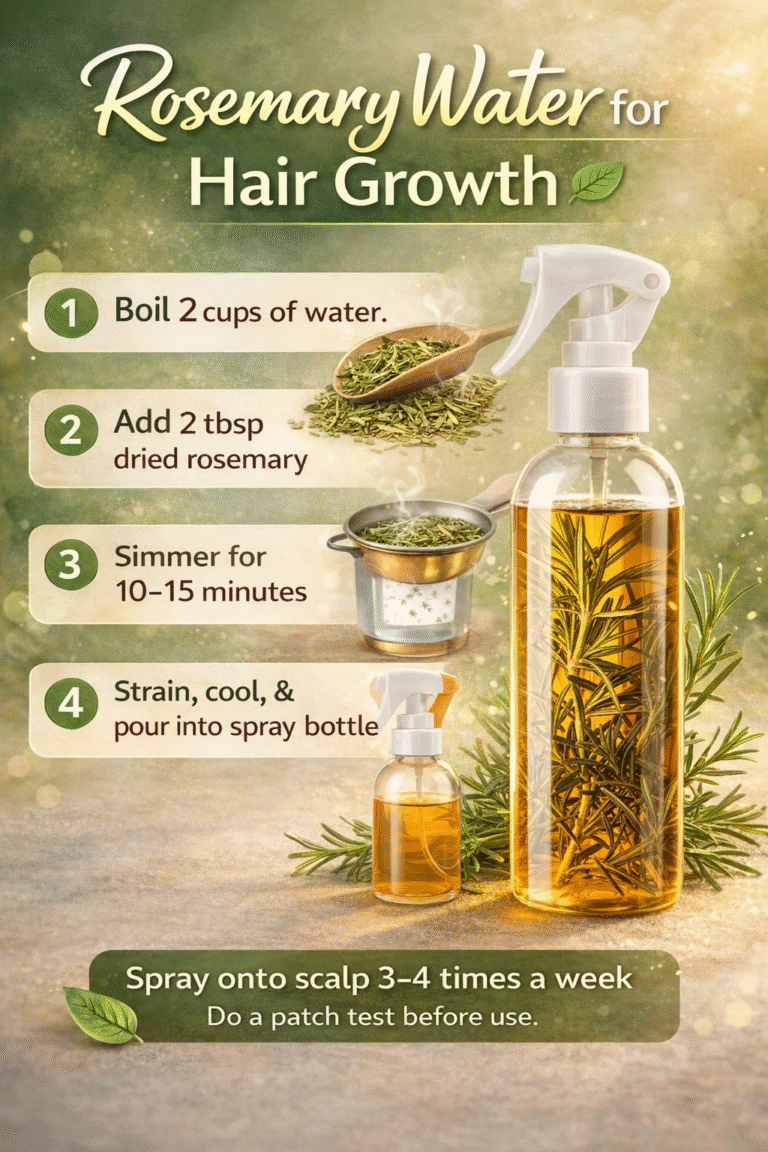
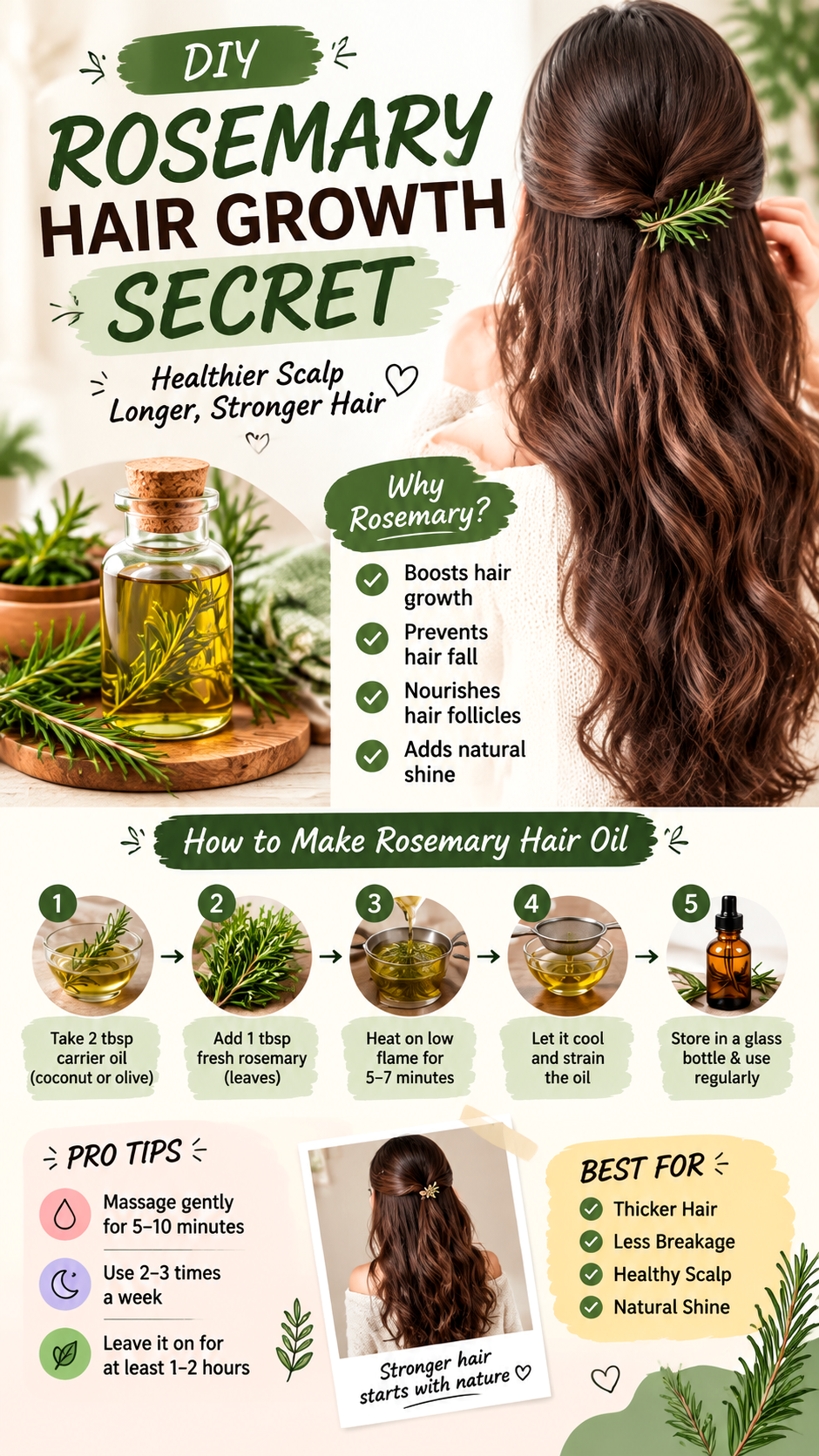
Creating a homemade rosemary hair oil treatment requires only a few simple ingredients. The visual guide highlights a straightforward method using rosemary leaves and a carrier oil, making it accessible for beginners who want to try a natural hair routine.
Ingredients You Need
- Fresh rosemary leaves: Provides the herbal element of the infusion.
- Carrier oil: Coconut oil, olive oil, or another hair-friendly oil can be used.
- Clean glass bottle: A dark or airtight container helps store the finished oil.
Simple Infusion Steps
- Add a small amount of rosemary leaves to your chosen carrier oil.
- Warm the mixture gently on low heat for several minutes.
- Allow the oil to cool before straining out the rosemary pieces.
- Store the finished oil in a clean glass container.
- Use it as part of your regular scalp and hair care routine.
Pro Tip: Avoid overheating herbal oils. Gentle warming helps combine the ingredients while protecting the quality of the oil. Always allow homemade treatments to cool before applying them to your scalp.
How to Use Rosemary Hair Oil Correctly
A good rosemary hair oil routine is less about using a large amount and more about applying it thoughtfully. The image highlights a scalp-focused approach, where the oil is gently massaged into the roots before allowing time for the treatment to work as part of a complete hair care routine.
Step-by-Step Application Routine
- Start with a small amount of oil to avoid making the hair feel heavy.
- Apply the oil to the scalp using your fingertips.
- Massage gently for several minutes using circular motions.
- Leave the oil on for a suitable amount of time before washing.
- Cleanse with a gentle shampoo to remove excess oil.
Many people prefer using rosemary oil once or a few times per week depending on their hair type and personal routine. Finding the right frequency can help maintain a comfortable balance between nourishment and cleanliness.
Why This Matters
A consistent hair care routine focuses on small habits that support healthier-looking hair over time.
- Gentle scalp massage can make hair care feel more relaxing.
- Natural oils can add moisture and softness to dry-feeling strands.
- Simple routines are easier to maintain long term.
Benefits of Adding Rosemary Oil to Your Hair Routine
Rosemary hair oil is often included in beauty routines because it combines nourishment, relaxation, and a natural approach to hair maintenance. While individual results can vary, many people enjoy the experience of using herbal oils as part of their personal care habits.
Supports a Nourishing Scalp Routine
The scalp is an important part of overall hair care. Keeping it moisturized and cared for can help create a comfortable environment for your hair routine. A gentle oil massage can also turn a regular beauty step into a calming self-care moment.
Helps Hair Feel Softer and More Manageable
Carrier oils used in rosemary hair oil recipes can help provide moisture to dry-feeling hair. When combined with gentle brushing and protective styling habits, oil treatments can become a useful part of a complete hair maintenance plan.
Creates a Relaxing Beauty Ritual
Hair care is also an opportunity to slow down and practice self-care. Taking a few minutes for a scalp massage can make your routine feel more enjoyable and intentional.
Common Mistakes to Avoid With Hair Oil Treatments
Even natural hair treatments work best when used correctly. Avoiding a few common mistakes can help make your rosemary oil routine more comfortable and effective.
- Using too much oil: Excess oil may leave hair feeling heavy and difficult to wash.
- Applying harsh pressure: Scalp massage should always be gentle.
- Skipping cleansing: Removing leftover oil helps maintain a fresh scalp feel.
- Expecting instant changes: Hair care routines usually require patience and consistency.
Who Can Enjoy a Rosemary Hair Oil Routine?
Rosemary hair oil can appeal to many people who enjoy natural beauty routines, especially those interested in scalp care, DIY treatments, and simple wellness habits. It is suitable for anyone looking to create a relaxing hair care ritual using plant-based ingredients.
People with dry-feeling hair, those who enjoy weekly conditioning treatments, or anyone exploring homemade beauty ideas may find rosemary oil an interesting addition to their routine.
At a Glance: Rosemary Hair Oil Routine
- Choose a nourishing carrier oil.
- Infuse gently with rosemary.
- Massage into the scalp with care.
- Use consistently as part of your routine.
- Pair with healthy hair habits.
Conclusion: Build a Simple Natural Hair Care Ritual
Rosemary hair oil is a beautiful example of how simple ingredients can become part of a meaningful self-care routine. From preparing a homemade infusion to enjoying a relaxing scalp massage, this herbal treatment offers an easy way to bring more intention into your weekly hair care habits.
Strong, healthy-looking hair often comes from small steps repeated consistently. By combining rosemary oil with gentle care, proper cleansing, and protective habits, you can create a balanced routine that supports your personal hair goals while making time for yourself.
Tags
Rosemary Hair Oil
Natural Hair Care
DIY Hair Treatment
Scalp Care
Healthy Hair Routine
Herbal Beauty