Sensory Regulation Techniques 9 Calming Tools to Reduce Stress Anxiety
Feeling overwhelmed, stressed, or emotionally overloaded can make even simple moments feel challenging. Sensory regulation techniques offer gentle, practical ways to help your nervous system find balance by using movement, breathing, touch, sound, and calming routines. These simple tools are designed to support emotional wellness, reduce stress, and create moments of comfort when your body and mind need extra care.
From grounding exercises and deep breathing to creating a personal calm kit, sensory regulation strategies can become valuable parts of a daily self-care routine. Whether you experience occasional stress, sensory overload, or simply want more peaceful habits, these techniques provide accessible ways to reconnect with yourself.
Key Takeaways
- Sensory regulation helps calm the nervous system during stressful moments.
- Grounding, breathing exercises, and movement can support emotional balance.
- Small sensory tools can create a feeling of safety and comfort.
- A personalized calm routine can improve daily stress management.
- Self-compassion is an important part of nervous system care.
What Are Sensory Regulation Techniques?
Sensory regulation techniques are activities that help your brain and body process sensations in a healthier, more balanced way. Our nervous system constantly responds to information from the environment, including sounds, textures, temperatures, movement, and emotions.
When the nervous system becomes overloaded, people may feel anxious, restless, distracted, tense, or emotionally exhausted. Sensory regulation provides simple strategies that encourage the body to return to a calmer state.
Important: Sensory regulation is not about avoiding all uncomfortable feelings. It is about learning supportive tools that help you respond to stress with greater awareness, patience, and control.
These techniques are commonly used in mindfulness practices, emotional wellness routines, occupational therapy approaches, and personal self-care habits. Anyone can explore sensory tools and discover what helps them feel more grounded.
Why Sensory Regulation Matters for Stress Management
Stress affects more than your thoughts. It can influence breathing patterns, muscle tension, energy levels, focus, and emotional responses. When your nervous system feels threatened or overwhelmed, it may become harder to relax or concentrate.
Sensory regulation techniques work by giving your brain calming signals. A slow breath, a comforting texture, a peaceful sound, or gentle movement can help create a sense of stability.
The Connection Between Your Senses and Emotions
Your senses play a major role in how you experience the world. A relaxing sound can create comfort, while an overwhelming environment can increase tension. Understanding your personal sensory preferences can help you build better coping strategies.
- Touch: Soft blankets, stress balls, and textured objects can provide comforting sensations.
- Movement: Stretching, walking, or dancing can release physical tension.
- Sound: Calm music, nature sounds, or quiet spaces may encourage relaxation.
- Temperature: Cool water or warm drinks can provide soothing sensory experiences.
9 Simple Sensory Regulation Techniques to Try
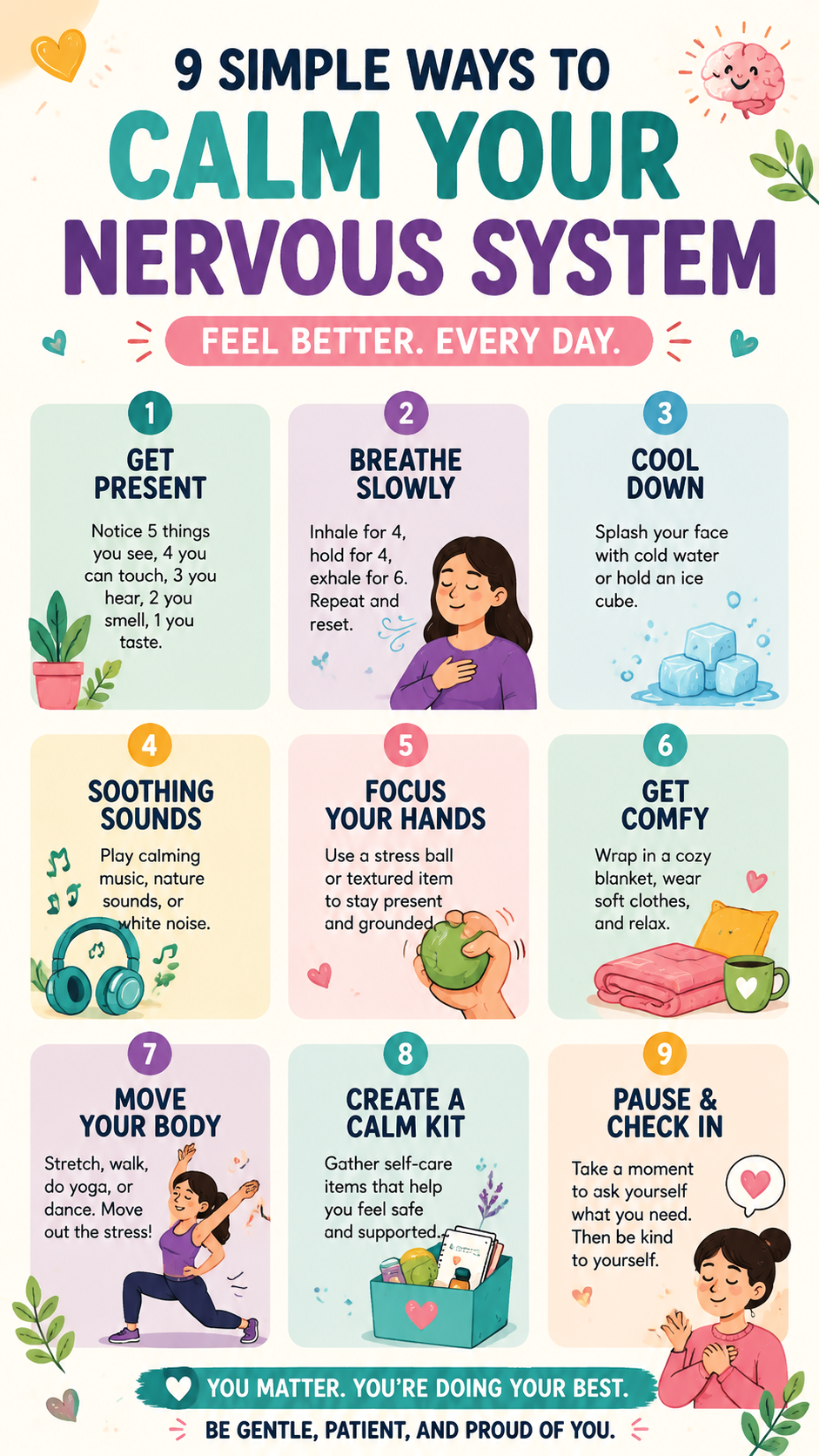
1. Practice Grounding Exercises
Grounding techniques help bring your attention back to the present moment. One popular method is the 5-4-3-2-1 technique:
- Notice 5 things you can see.
- Notice 4 things you can touch.
- Notice 3 things you can hear.
- Notice 2 things you can smell.
- Notice 1 thing you can taste.
This simple practice can interrupt racing thoughts and help you reconnect with your surroundings.
2. Try Deep Breathing Exercises
Controlled breathing is one of the easiest sensory regulation tools because it is always available. Box breathing is a popular technique that involves inhaling, holding, exhaling, and pausing for equal counts.
Slow breathing can encourage relaxation by helping your body shift away from a high-alert state and toward a calmer rhythm.
3. Use Cooling Sensations
Temperature changes can provide a noticeable sensory reset. Splashing cool water on your face, holding an ice cube briefly, or using a cool cloth may help you feel more present during moments of stress.
4. Add Soothing Sounds
Sound can strongly influence mood. Create a calming environment with relaxing music, rainfall sounds, nature recordings, or gentle background noise.
Experiment with different sounds to discover what helps your mind feel peaceful and focused.
5. Try Fidget and Focus Tools
Fidget tools, stress balls, and textured objects can provide gentle movement for your hands while helping your mind stay focused. These tools can be especially helpful during moments when sitting still feels difficult.
6. Create a Cozy Comfort Space
Your environment can influence your emotional state. A comfortable corner with soft blankets, calming lighting, favorite items, or a warm drink can become a place where you recharge.
Pro Tip: Build your calming space before you need it. Having supportive tools ready can make stressful moments feel easier to manage.
7. Move Your Body
Movement is a powerful way to release built-up tension. Stretching, yoga, walking, or dancing can help your body process stress while improving your connection with physical sensations.
8. Make a Personal Calm Kit
A calm kit is a collection of items that help you feel safe and relaxed. It can include comforting objects, encouraging notes, favorite scents, snacks, sensory tools, or anything that creates a sense of calm.
The best calm kit is personal. Choose items that connect with your own preferences and needs.
9. Pause and Check In With Yourself
Taking a moment to ask yourself what you need can build emotional awareness. A simple pause can help you identify whether you need rest, movement, quiet, comfort, or connection.
Expert Insight
The most effective sensory regulation routine is one that feels natural and realistic for your lifestyle.
- Notice which sensations help you feel calmer.
- Practice regularly instead of waiting for stressful moments.
- Combine different techniques to create a personalized approach.
How to Build a Daily Sensory Regulation Routine
Creating a sensory regulation routine does not require a major lifestyle change. Small habits practiced consistently can make a meaningful difference.
- Start your day with a calming activity such as stretching or deep breathing.
- Keep simple sensory tools nearby when you need support.
- Create quiet moments throughout the day to check in with yourself.
- Reflect on which techniques feel most helpful.
Remember that everyone responds differently to sensory experiences. A technique that works well for one person may not feel comfortable for another. Personal exploration is an important part of finding balance.
At a Glance: Sensory Regulation Benefits
Quick Points
- Supports calm and emotional awareness.
- Encourages healthier stress responses.
- Provides simple tools for overwhelming moments.
- Helps create comforting daily routines.
Conclusion: Small Tools Can Create Big Changes
Sensory regulation techniques remind us that caring for our nervous system can begin with small, intentional actions. A deep breath, a grounding exercise, a comforting texture, or a peaceful sound can become powerful tools for creating moments of calm.
Building a personal collection of sensory strategies allows you to respond to stress with more understanding and kindness. Instead of pushing through overwhelming moments, you can create space for comfort, awareness, and emotional balance.
Whether you are developing a mindfulness routine, exploring self-care practices, or simply looking for ways to feel more grounded, sensory regulation offers practical tools that support everyday wellness.
Tags
Sensory Regulation
Stress Relief
Nervous System Care
Mindfulness
Self Care Tips
Calming Techniques