Substance Use Disorder Nursing Notes Types, Symptoms, Treatment Exam Quick Guide
Substance use disorder (SUD) is an important topic in mental health nursing because it affects a person’s physical health, emotional well-being, relationships, and daily functioning. For nursing students, understanding substance use disorder involves more than memorizing definitions. It requires recognizing the signs of addiction, understanding how substance use can affect the brain, identifying potential complications, and learning how to provide compassionate, evidence-based care.
Whether you are preparing for a B.Sc. Nursing examination, reviewing psychiatric nursing concepts, or strengthening your clinical knowledge, this guide covers the essential aspects of substance use disorder. You will explore its definition, common types, signs and symptoms, progression, complications, diagnosis, treatment approaches, and nursing management in a clear, organized format.
Key Takeaways
- Substance use disorder involves a problematic pattern of substance use that causes significant impairment or distress.
- Commonly involved substances include alcohol, cannabis, opioids, stimulants, sedatives, nicotine, and inhalants.
- Cravings, impaired control, continued use despite harm, and withdrawal symptoms can be important warning signs.
- Diagnosis involves a clinical assessment and established diagnostic criteria, not symptoms alone.
- Treatment may include medications, counseling, behavioral therapies, peer support, and continuing care.
- Nurses play a vital role in assessment, safety, therapeutic communication, patient education, and relapse prevention.
What Is Substance Use Disorder?
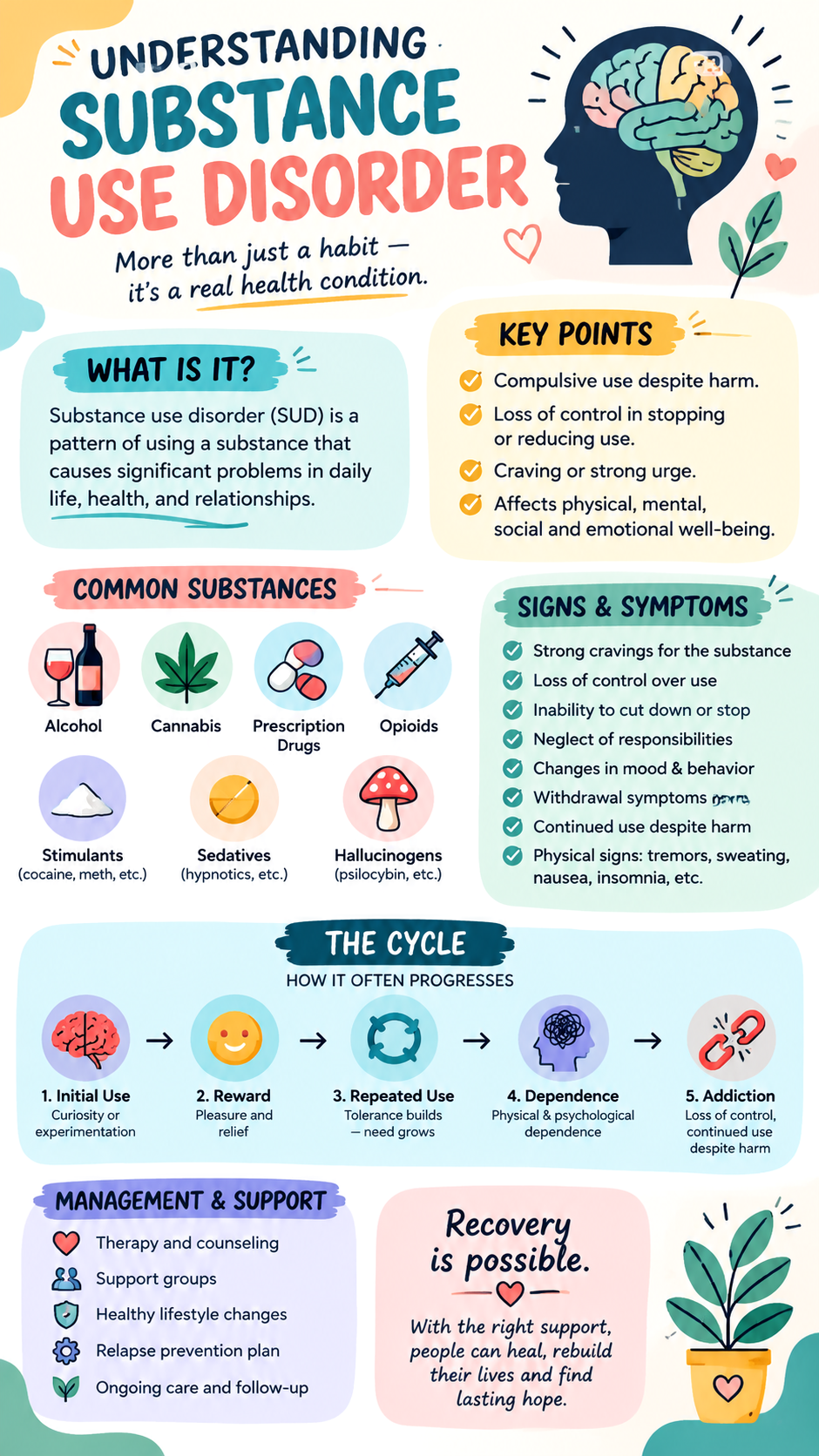
Substance use disorder is a health condition characterized by a problematic pattern of using alcohol or another substance that leads to clinically significant impairment or distress. A person may continue using a substance even when it causes health problems, damages relationships, interferes with work or education, or creates safety concerns.
The condition can involve difficulty controlling substance use, strong cravings, spending considerable time obtaining or using a substance, and continuing despite negative consequences. Some individuals also develop tolerance or experience withdrawal when they reduce or stop using a substance.
Substance use disorder exists on a spectrum. Its severity depends on the number and nature of diagnostic criteria met during the relevant assessment period. Not everyone who uses a substance develops a disorder, and the presence of a disorder should be determined through a professional clinical assessment.
Important: Substance use disorder is not simply a lack of willpower or a moral failing. It is a treatable health condition influenced by biological, psychological, social, and environmental factors. Respectful, nonjudgmental care can help people feel safer seeking treatment.
Substance Use, Misuse, and Addiction
These terms are related, but they do not mean exactly the same thing.
- Substance use: The consumption of alcohol, medication, or another substance. Use does not automatically indicate a disorder.
- Substance misuse: Use in a way that creates health risks or conflicts with medical directions, such as taking a medication differently from how it was prescribed.
- Substance use disorder: A clinical diagnosis based on a pattern of symptoms and consequences.
- Addiction: A commonly used term describing a compulsive pattern of substance use that persists despite harmful consequences.
Physical dependence can develop with certain substances or medications, sometimes even when they are taken as prescribed. Dependence and addiction are not interchangeable. Tolerance and withdrawal alone do not establish a substance use disorder when they arise during appropriate medical treatment.
Types of Substance Use Disorders
Substance use disorders are generally classified according to the substance involved. Different substances affect the brain and body in different ways, so symptoms, risks, withdrawal patterns, and treatment options can vary considerably.
1. Alcohol Use Disorder
Alcohol use disorder involves difficulty controlling alcohol consumption despite negative effects on health, responsibilities, relationships, or personal safety.
Possible signs include drinking more or for longer than intended, repeated unsuccessful attempts to cut down, cravings, and continued drinking despite physical or emotional consequences. Long-term heavy alcohol use can contribute to liver disease, cardiovascular problems, digestive disorders, cognitive difficulties, and other complications.
Alcohol withdrawal can be dangerous. Severe symptoms may include seizures, hallucinations, and delirium. People who may be physically dependent on alcohol should seek medical guidance before stopping, because withdrawal sometimes requires urgent medical supervision.
2. Cannabis Use Disorder
Cannabis use disorder occurs when cannabis consumption becomes difficult to control and interferes with everyday functioning or continues despite harmful consequences.
Potential indicators include cravings, unsuccessful efforts to reduce use, neglect of responsibilities, and continued consumption despite relationship, educational, occupational, or psychological difficulties. Some individuals experience irritability, sleep problems, anxiety, or reduced appetite when they stop using cannabis after regular use.
The effects of cannabis vary according to the product, its potency, frequency of use, individual vulnerability, and other factors. Heavy or frequent use can impair attention, memory, coordination, and judgment, while some people may experience significant anxiety or other mental health symptoms.
3. Opioid Use Disorder
Opioid use disorder involves problematic use of substances such as heroin, morphine, and certain prescription pain medications. Opioids can reduce pain but also suppress breathing, particularly when taken in excessive amounts or combined with alcohol or sedative medications.
Warning signs may include strong cravings, difficulty controlling use, continued consumption despite harm, and withdrawal symptoms such as muscle aches, sweating, restlessness, diarrhea, nausea, and abdominal discomfort.
Overdose is a major risk. Signs can include very slow or absent breathing, unresponsiveness, and pinpoint pupils. An opioid overdose is a medical emergency. Emergency services should be contacted immediately, and naloxone should be administered if available and appropriate, following local guidance.
4. Stimulant Use Disorder
Stimulant use disorder can involve substances such as cocaine, amphetamines, and methamphetamine. Stimulants increase activity in parts of the nervous system and may temporarily increase alertness, energy, or confidence.
Problematic use can lead to agitation, anxiety, sleep disruption, cardiovascular complications, impaired judgment, and, in some cases, paranoia or psychosis. A person who stops using stimulants after repeated use may experience fatigue, low mood, sleep changes, and intense cravings.
Clinical care may include assessment of cardiovascular and psychiatric symptoms, behavioral treatment, supportive care, and ongoing monitoring. Treatment should be tailored to the person’s circumstances and needs.
5. Sedative, Hypnotic, or Anxiolytic Use Disorder
This category includes problematic use of certain medications that calm the nervous system, including benzodiazepines and some sleep medications. When used appropriately under medical supervision, these medications can have legitimate clinical benefits. However, some can cause tolerance and physical dependence.
Warning signs may include taking larger amounts than intended, difficulty reducing use, excessive sedation, memory problems, and continued use despite negative consequences. Combining sedatives with alcohol or opioids can dangerously suppress breathing.
Withdrawal from certain sedatives, particularly benzodiazepines after sustained use, can cause seizures or other serious complications. Abrupt discontinuation should be avoided when physical dependence is possible. A qualified clinician can plan a safe, individualized reduction when indicated.
6. Other Substance-Related Disorders
Other substances can also lead to clinically significant problems. These include nicotine, inhalants, hallucinogens, and certain other drugs. Some individuals develop problems involving multiple substances, which can complicate diagnosis, increase health risks, and influence treatment planning.
When several substances are involved, healthcare professionals need to consider possible interactions, combined intoxication, overlapping withdrawal symptoms, and the person’s overall physical and mental health.
Signs and Symptoms of Substance Use Disorder
The symptoms of substance use disorder differ from person to person. They depend on the substance, the frequency and amount of use, the duration of the pattern, and the individual’s health. Recognizing changes in behavior and functioning can help nurses identify concerns and arrange appropriate assessment.
Behavioral Signs
- Using more of a substance or using it for longer than intended.
- Repeated unsuccessful attempts to reduce or control consumption.
- Spending substantial time obtaining, using, or recovering from a substance.
- Strong cravings or persistent thoughts about using.
- Neglecting family, work, school, or other responsibilities.
- Continuing use despite relationship problems or known health risks.
- Reducing participation in important social or recreational activities.
- Using substances in situations where doing so creates a safety risk.
Physical Signs
Physical symptoms vary according to the substance involved. They may include changes in sleep, appetite, weight, coordination, energy, or general appearance. Some people experience sweating, tremors, nausea, changes in heart rate, or other symptoms during intoxication or withdrawal.
These signs are not specific to substance use disorder. Many medical conditions and prescribed medications can cause similar changes, so nurses should avoid drawing conclusions from appearance alone.
Psychological and Social Signs
Substance-related problems may coincide with anxiety, low mood, irritability, impaired concentration, changes in motivation, or difficulties managing everyday stress. Relationships may become strained, and financial, educational, legal, or employment problems may arise.
These difficulties can occur before, during, or after a substance use disorder develops. Mental health conditions may also contribute to substance use or occur alongside it, making a comprehensive assessment particularly important.
Clinical reminder: One symptom, such as a craving or a change in mood, does not establish a diagnosis. Look for a broader pattern, assess the person’s functioning and safety, and use validated diagnostic criteria alongside clinical judgment.
How Substance Use Disorder Develops
Substance use disorder can develop through a combination of biological vulnerability, learning, repeated exposure, psychological factors, and social circumstances. There is no single pathway that applies to every individual. The following sequence is a useful educational model, not an inevitable progression.
1. Initial Use and Experimentation
Substance use may begin through curiosity, social influences, attempts to manage discomfort, or exposure to a prescribed medication. Initial use does not necessarily lead to addiction. Many people who encounter a substance do not develop a disorder.
2. Reward and Reinforcement
Some substances influence brain systems involved in reward, motivation, learning, and memory. If substance use produces pleasure or temporary relief from distress, the brain may learn to associate that behavior with a rewarding outcome.
Environmental cues, particular locations, emotional states, or social situations can later trigger urges to use. These learned associations help explain why cravings can occur even when someone sincerely wants to stop.
3. Repeated Use and Tolerance
With repeated exposure to some substances, the body or brain adapts. Tolerance may develop, meaning that the same amount produces less of a particular effect or that more is needed to achieve a similar effect. Tolerance does not develop in the same way for every substance or every person.
Increasing the amount used can raise the risk of adverse effects, poisoning, and overdose. Tolerance should therefore be understood as a potential warning sign rather than a reason to increase consumption.
4. Dependence and Withdrawal
Some people develop physical dependence, in which the body adapts to the presence of a substance. Reducing or stopping it may then cause withdrawal symptoms. The severity and duration depend on the substance, pattern of use, health status, and other factors.
Physical dependence is not the same as addiction. It can occur during medically supervised treatment, and withdrawal symptoms must be interpreted in the context of the person’s history.
5. Compulsive Use and Continued Harm
In a substance use disorder, a person may struggle to control consumption despite significant consequences. Cravings, stress, environmental cues, changes in motivation, and difficulty managing withdrawal can all contribute to continued use.
Recovery remains possible at every stage. Effective treatment can reduce risks, improve functioning, and help individuals build healthier patterns of living.
Why This Matters
Understanding the process of substance use disorder helps nurses respond with empathy rather than blame. Treatment can address cravings, withdrawal, underlying mental health concerns, social pressures, and practical barriers to recovery instead of focusing only on whether a person has stopped using.
Diagnosis of Substance Use Disorder
Diagnosis requires a careful assessment by a qualified healthcare professional. In the United States, the Diagnostic and Statistical Manual of Mental Disorders, Fifth Edition, Text Revision (DSM-5-TR) provides diagnostic criteria for substance use disorders. Other countries and healthcare systems may use additional or different classification frameworks, including the International Classification of Diseases.
Under DSM-5-TR criteria, a substance use disorder is generally diagnosed when at least two of eleven criteria occur within a 12-month period, with severity determined by the number of criteria met.
- Mild: Two or three criteria.
- Moderate: Four or five criteria.
- Severe: Six or more criteria.
The criteria cover impaired control, social impairment, risky use, and pharmacological features such as tolerance and withdrawal. The precise assessment depends on the substance and the applicable diagnostic rules.
Components of a Nursing Assessment
Nurses contribute valuable information by assessing the patient’s current condition, substance use history, immediate risks, and support needs. A thorough assessment may include:
- Substance history: Substance used, frequency, amount, route, duration, and most recent use.
- Medical history: Existing conditions, previous overdoses, withdrawal episodes, prescribed medications, and allergies.
- Psychological assessment: Mood, cognition, anxiety, behavior, and mental health history.
- Physical assessment: Vital signs, level of consciousness, hydration, nutritional status, and relevant physical findings.
- Functional assessment: Effects on work, education, relationships, finances, and daily activities.
- Safety assessment: Risk of overdose, severe withdrawal, self-harm, injury, or other urgent complications.
- Social assessment: Housing, family support, access to treatment, and potential barriers to care.
Laboratory investigations, toxicology tests, and screening questionnaires may support the assessment when appropriate. A positive toxicology result does not by itself establish a substance use disorder, and a negative result does not necessarily exclude one.
Complications of Substance Use Disorder
Substance use disorder can affect nearly every aspect of a person’s life. The specific complications depend on the substance, the pattern of consumption, existing health conditions, and whether several substances are used together.
Physical Complications
- Liver and digestive problems: Some patterns of alcohol use can contribute to liver disease, gastritis, and pancreatitis.
- Cardiovascular complications: Certain substances can increase heart rate and blood pressure or contribute to serious cardiac events.
- Neurological effects: Intoxication, withdrawal, or long-term exposure may contribute to seizures, impaired cognition, or other neurological problems.
- Respiratory depression: Opioids and sedatives can slow breathing, particularly when combined.
- Injuries and accidents: Impaired coordination, judgment, and alertness can increase the risk of falls, traffic accidents, and other injuries.
- Nutritional difficulties: Some patterns of substance use are associated with poor nutrition, dehydration, and disrupted eating habits.
Psychological Complications
Substance-related disorders can occur alongside depression, anxiety, sleep problems, cognitive difficulties, and other psychiatric symptoms. Some substances can trigger or worsen paranoia and psychosis in vulnerable individuals.
The relationship is complex. Mental health symptoms can contribute to substance use, substance use can aggravate existing symptoms, and both conditions may be influenced by shared risk factors. Assessment and treatment should address both substance-related and mental health needs.
Social and Family Complications
Substance-related difficulties can strain relationships, interfere with education or employment, and create financial pressure. Family members may experience stress, uncertainty, or concern about safety. Some individuals also face housing instability, legal difficulties, or social isolation.
These consequences should be addressed without treating them as evidence of personal failure. Practical support, family education when appropriate, and access to community resources can be important parts of recovery.
Overdose and Other Emergencies
Overdose can occur with many substances, particularly when doses are excessive, the substance is unexpectedly potent, or drugs are combined. Severe intoxication, slowed breathing, seizures, chest pain, extreme confusion, or unresponsiveness require urgent medical assessment.
If someone is unresponsive or having difficulty breathing, contact local emergency services immediately. Do not leave the person alone. Follow emergency dispatcher instructions, and use naloxone if opioid overdose is suspected and naloxone is available. Never assume that a person can safely sleep off a suspected overdose.
Treatment and Recovery Approaches
There is no single treatment plan that works for everyone. Effective care is individualized according to the substance involved, the severity of symptoms, physical health, mental health, personal goals, and available support. Many people benefit from a combination of medical care, psychological treatment, and long-term recovery support.
1. Medical Assessment and Withdrawal Management
Initial treatment may involve assessing intoxication, identifying urgent medical conditions, and determining whether supervised withdrawal management is needed. The appropriate setting depends on the substance, withdrawal risks, coexisting conditions, and available support.
Detoxification can help a person manage the acute effects of stopping a substance, but it is not always sufficient as a complete treatment. Ongoing care is often needed to address cravings, behavioral patterns, mental health concerns, and the risk of returning to harmful use.
2. Medication-Based Treatment
Evidence-based medications can be important components of treatment for certain substance use disorders. The choice depends on the substance, medical history, treatment goals, contraindications, and local clinical guidance.
- Opioid use disorder: Medications such as buprenorphine and methadone can reduce cravings and withdrawal symptoms. Extended-release naltrexone may be appropriate for some people after a suitable opioid-free interval.
- Alcohol use disorder: Naltrexone and acamprosate are options for selected patients. Disulfiram may be considered in particular circumstances with appropriate clinical supervision.
- Nicotine dependence: Nicotine replacement therapy and certain prescription medications can support smoking cessation.
Medication availability and recommendations vary by country and clinical situation. Patients should discuss options with qualified healthcare professionals rather than changing prescribed treatment independently.
3. Counseling and Behavioral Therapies
Psychological treatments help individuals understand triggers, strengthen coping skills, develop healthier routines, and respond to cravings. Treatment may be delivered individually, in groups, or with family involvement when appropriate.
- Cognitive behavioral therapy: Helps identify patterns of thought and behavior associated with substance use and practice alternative responses.
- Motivational interviewing: Supports exploration of ambivalence and helps people identify their own reasons for change.
- Contingency management: Uses structured incentives to reinforce specific treatment goals or recovery-related behaviors.
- Family-based interventions: Can improve communication, education, and support when family participation is safe and appropriate.
- Peer support: Offers opportunities to connect with people who have relevant recovery experiences.
4. Rehabilitation and Continuing Care
Rehabilitation services may offer structured support for people who need help rebuilding routines, improving daily functioning, and managing ongoing recovery challenges. Depending on individual needs, care may occur in outpatient, intensive outpatient, residential, or other settings.
Continuing care can include follow-up appointments, medication management, counseling, peer support, and help addressing housing, employment, or family concerns. Recovery may involve setbacks, and a return to use should prompt reassessment and support rather than automatic exclusion from care.
Nursing Management of Substance Use Disorder
Nursing management is central to safe, compassionate, and coordinated care. Nurses may work in emergency departments, psychiatric units, medical wards, community clinics, rehabilitation services, and outpatient settings. Their responsibilities include assessment, monitoring, education, advocacy, and collaboration with the wider healthcare team.
1. Establish a Therapeutic Relationship
Trust is an essential foundation of nursing care. Nurses should communicate calmly, maintain privacy within applicable limits, listen without judgment, and recognize the patient’s dignity. Stigmatizing language can discourage people from disclosing substance use or seeking further treatment.
Use person-first language, such as “person with a substance use disorder,” rather than labels that define someone by a diagnosis. Ask open-ended questions and acknowledge the challenges of recovery without making assumptions about motivation.
2. Assess Physical and Psychological Status
Collect a detailed history of substance use, recent consumption, prescribed medications, medical conditions, prior withdrawal experiences, and previous treatment. Assess vital signs, level of consciousness, hydration, nutrition, and symptoms that may indicate intoxication or withdrawal.
Evaluate psychological well-being, cognition, emotional state, and immediate safety. When indicated, assess for self-harm risk, severe agitation, psychosis, or other psychiatric emergencies. Communicate concerning findings promptly to the appropriate clinician.
3. Maintain Safety and Monitor Withdrawal
Safety planning should be tailored to the substance and the patient’s condition. Nurses may need to monitor vital signs, consciousness, fluid balance, symptoms, and response to prescribed treatment. Structured withdrawal assessment tools can support monitoring when appropriate and when staff are trained to use them.
- Observe for changes in consciousness, breathing, behavior, and vital signs.
- Use fall precautions when coordination or alertness is impaired.
- Follow prescribed monitoring and medication protocols.
- Maintain a safe environment and respond promptly to escalating symptoms.
- Escalate care when severe withdrawal, overdose, or another emergency is suspected.
Withdrawal management must be substance-specific. Alcohol and sedative withdrawal can be life-threatening, while opioid withdrawal, although often intensely uncomfortable, has a different risk profile. Clinical judgment and appropriate medical oversight are essential.
4. Provide Health Education
Patient education should be practical, respectful, and adapted to the person’s understanding. Explain the health effects of the relevant substance, possible interactions, overdose risks, treatment choices, and the importance of follow-up care.
When appropriate, discuss safer medication practices, avoiding dangerous substance combinations, recognizing overdose symptoms, and accessing emergency assistance. For people at risk of opioid overdose, education about naloxone can be lifesaving.
5. Support Counseling and Recovery Planning
Nurses can encourage participation in counseling, medication-based treatment when indicated, and peer or community support. Collaborative goal-setting helps patients identify manageable next steps, such as attending an appointment, taking medication as prescribed, or developing a plan for responding to cravings.
A relapse prevention plan can identify high-risk situations, warning signs, coping strategies, supportive contacts, and steps to take if substance use resumes. The plan should be realistic, individualized, and reviewed as circumstances change.
6. Coordinate Care and Encourage Follow-Up
Substance use disorder often requires coordinated support across healthcare and community services. Nurses can help arrange referrals, communicate with the treatment team, provide discharge education, and identify barriers such as transportation, cost, housing instability, or limited access to services.
Follow-up is particularly important after overdose, withdrawal treatment, hospital discharge, or changes in medication. A clear care plan can help patients understand where to seek assistance and how to maintain continuity of treatment.
Common Nursing Priorities
- Maintain patient safety and monitor for complications.
- Assess physical, psychological, and social needs.
- Build trust through therapeutic communication.
- Administer prescribed treatments and monitor their effects.
- Provide clear health education and encourage informed decisions.
- Support recovery goals, referrals, and continuity of care.
Substance Use Disorder: Important Nursing Exam Points
For B.Sc. Nursing students and learners reviewing psychiatric or mental health nursing, the following concepts are especially useful for examinations.
Definitions to Remember
- Craving: A strong desire or urge to use a substance.
- Tolerance: Reduced response to a substance or a need for more to obtain a similar effect, depending on the substance and context.
- Withdrawal: Symptoms that may occur when substance use is reduced or stopped after physiological adaptation.
- Physical dependence: An adaptive state that can lead to withdrawal when a substance is discontinued or reduced.
- Relapse or return to use: Resumption of substance use after a period of reduced use or abstinence.
Exam Preparation Tips
- Learn the definition and diagnostic framework for substance use disorder.
- Compare the major substance categories and their characteristic risks.
- Distinguish intoxication, withdrawal, tolerance, physical dependence, and addiction.
- Review the major physical, psychological, and social complications.
- Prioritize immediate safety when answering nursing case scenarios.
- Remember that treatment combines individualized medical, psychological, and social support.
- Practice writing nursing assessments, interventions, rationales, and evaluation criteria.
When answering a clinical question, begin by identifying immediate threats to life or safety. Next, describe the assessment findings that require monitoring, the appropriate escalation of care, and the nursing interventions within the nurse’s scope of practice. Finally, include education, emotional support, and follow-up planning where relevant.
Quick Points: At a Glance
- Definition: Problematic substance use causing significant impairment or distress.
- Key features: Cravings, impaired control, continued use despite harm, and possible tolerance or withdrawal.
- Diagnosis: Clinical assessment using recognized diagnostic criteria.
- Treatment: Individualized medical care, medication when appropriate, counseling, and continuing support.
- Nursing role: Assessment, safety, therapeutic communication, education, and rehabilitation support.
Conclusion: Understanding Substance Use Disorder in Nursing
Substance use disorder is a complex but treatable health condition that can affect physical well-being, mental health, relationships, and everyday functioning. Understanding its types, warning signs, progression, complications, and treatment options gives nursing students a strong foundation for both examinations and clinical practice.
The most effective nursing approach combines careful assessment, patient safety, therapeutic communication, evidence-based interventions, and coordinated follow-up. Recognizing the dangers of overdose and severe withdrawal is essential, but compassionate support is equally important. People experiencing substance-related difficulties deserve dignity, practical assistance, and access to appropriate care.
For nursing students, the key lesson is to connect theoretical knowledge with patient-centered practice. Learn the diagnostic criteria, recognize substance-specific risks, understand treatment options, and prioritize safety in every clinical scenario. With informed nursing care and ongoing support, recovery is possible, and meaningful improvements in health and quality of life can be achieved.
Tags
Substance Use Disorder
Mental Health Nursing
Psychiatric Nursing
BSc Nursing Notes
Addiction Treatment
Nursing Management
Withdrawal Symptoms
Nursing Exam Preparation