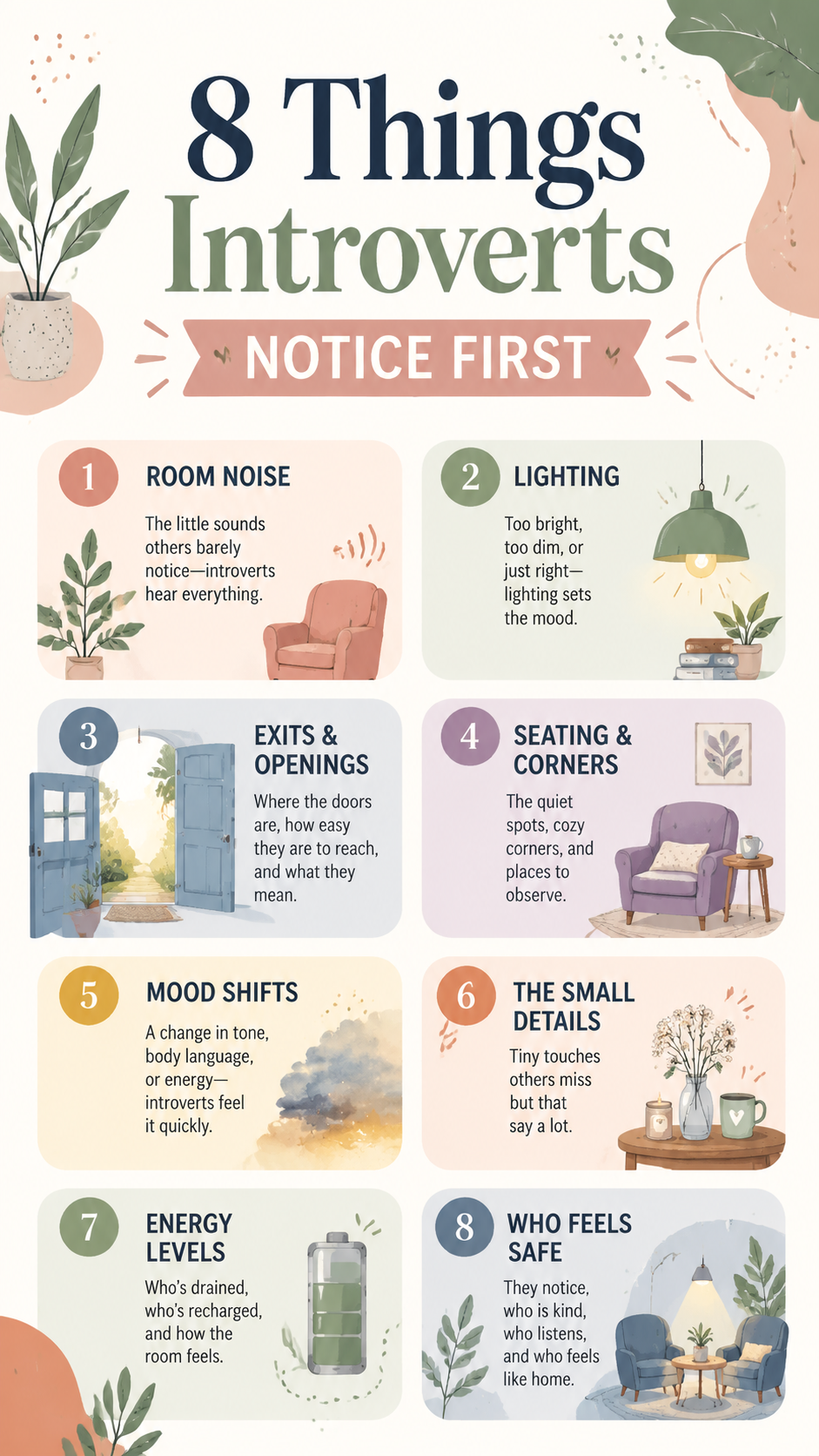
Things Introverts Notice First Quiet Observations Personality Insights
Introverts often experience the world through a lens of careful observation, deep awareness, and quiet understanding. While some people notice only the obvious details in a room or conversation, introverts frequently pick up on subtle changes in atmosphere, emotions, sounds, and surroundings. Their ability to observe before reacting allows them to understand situations in a thoughtful and meaningful way.
The things introverts notice first are often connected to comfort, energy, and emotional signals. From the noise level of a room to the placement of a cozy chair, small details can influence how welcoming or overwhelming an environment feels. This unique perspective is not about being distant or uninterested. Instead, it reflects a natural tendency to process experiences deeply.
Key Takeaways
- Introverts often notice sounds, lighting, and room energy before anything else.
- Small environmental details can strongly affect comfort and mood.
- Observation is a valuable strength linked to mindfulness and emotional awareness.
- Quiet personalities often recognize subtle social signals others may miss.
- Creating peaceful spaces can support relaxation and personal well-being.
The Quiet Awareness of Introverts
Introversion is often misunderstood. Many people associate introverts with simply enjoying solitude, but there is much more behind a quiet personality. Introverts are often highly aware of their surroundings and may spend more time absorbing information before responding.
This thoughtful approach can make everyday experiences feel richer. An introvert entering a new space may immediately notice whether the environment feels peaceful, crowded, bright, noisy, or emotionally comfortable. These observations happen naturally and help them understand where they feel most at ease.
Important: Being observant is one of the greatest strengths of an introverted personality. Paying attention to subtle details can improve emotional understanding, creativity, communication, and personal decision-making.
1. Room Noise and Sound Levels
Why Sound Matters to Introverts
One of the first things many introverts notice is the overall soundscape of a space. Background conversations, loud music, constant movement, or sudden noises can immediately affect how comfortable a room feels.
While some people can easily ignore surrounding sounds, introverts may naturally process these details. A busy restaurant, a crowded event, or a loud workplace can require extra mental energy because there is more information to filter.
Quiet environments often provide space for reflection and focus. This does not mean introverts dislike social settings. Instead, they may prefer spaces where conversations feel balanced and where there is room to think.
2. Lighting and Atmosphere
How Lighting Changes a Space
Lighting plays a powerful role in how a room feels. Harsh fluorescent lights may create a stressful atmosphere, while soft lamps, natural sunlight, and warm tones can make a space feel calm and inviting.
Many introverts notice lighting quickly because visual surroundings influence emotional comfort. A peaceful corner with gentle lighting can feel like a place to recharge, relax, and gather thoughts.
Creating Comfortable Spaces
Simple changes like adding a warm lamp, arranging furniture thoughtfully, or bringing natural elements indoors can transform the feeling of a room. Introvert-friendly spaces often focus on comfort, balance, and peaceful design.
3. Exits, Openings, and Personal Freedom
Another detail introverts may notice is the layout of a room. Knowing where doors, windows, and open spaces are located can create a sense of comfort and control.
This awareness is not necessarily about wanting to leave. Instead, understanding the environment helps many introverts feel prepared and relaxed. Having a clear view of the space allows them to settle in without feeling overwhelmed.
4. Seating Areas and Quiet Corners
The Importance of Comfortable Spaces
Where people sit can influence how connected and comfortable they feel. Introverts often notice cozy corners, window seats, peaceful areas, or places where they can observe without being the center of attention.
A comfortable chair, a small reading area, or a quiet corner can become a personal retreat. These spaces provide opportunities to recharge while still enjoying the surrounding environment.
5. Mood Changes and Emotional Energy
Introverts are often sensitive to emotional shifts around them. They may notice changes in someone’s tone, body language, or overall mood before others recognize that something has changed.
This ability can make introverts thoughtful friends and attentive listeners. They often pick up on small signals that reveal how people are feeling, even when those emotions are not openly expressed.
Understanding Emotional Awareness
Emotional awareness allows people to respond with empathy and patience. For introverts, observing first often leads to more meaningful conversations because they take time to understand the situation.
Expert Insight
- Observation helps people understand their surroundings more clearly.
- Quiet reflection can lead to thoughtful decisions and stronger relationships.
- Noticing small details is a form of awareness, not weakness.
6. Small Details That Reveal Personality
Introverts often appreciate details that others may overlook. The arrangement of objects on a shelf, the feeling of a room, the way a table is decorated, or the presence of meaningful items can all create a sense of connection.
These small details often tell a story. A carefully arranged space can reflect personality, memories, creativity, and personal values.
7. Energy Levels and Social Environments
Introverts frequently notice the energy of a room. They may sense whether a gathering feels relaxed, chaotic, welcoming, or exhausting.
Understanding energy levels helps introverts choose environments where they can feel comfortable and authentic. A calm atmosphere can encourage creativity, conversation, and emotional balance.
8. Feeling Safe Around Others
One of the most meaningful things introverts notice is how people make them feel. Kindness, patience, openness, and respect often stand out immediately.
Introverts may not always seek large social circles, but they often value deep and genuine connections. Feeling safe and accepted allows them to express themselves more naturally.
At a Glance: What Introverts Notice First
Quick Points
- Sound levels influence comfort and focus.
- Lighting shapes emotional atmosphere.
- Room layouts affect feelings of ease.
- Small details reveal personality and care.
- Emotional energy guides social comfort.
Conclusion: Celebrating the Introvert Perspective
The things introverts notice first reveal a unique way of experiencing the world. Their attention to sound, lighting, atmosphere, emotions, and small details allows them to connect with their surroundings in a meaningful way.
Being observant is a valuable quality. It encourages mindfulness, creativity, empathy, and deeper understanding. Whether it is recognizing a subtle mood shift or appreciating a peaceful corner, introverts bring a thoughtful perspective that helps them see what others may miss.
Creating spaces and relationships that respect quiet awareness can help everyone feel more comfortable and understood. The introvert perspective reminds us that sometimes the smallest details create the biggest impact.
Tags
Introvert Life
Quiet Personality
Self Awareness
Cozy Living
Mindful Lifestyle
Personality Insights