Top 10 Healthiest Foods to Eat Daily Best Superfoods for a Healthy Life
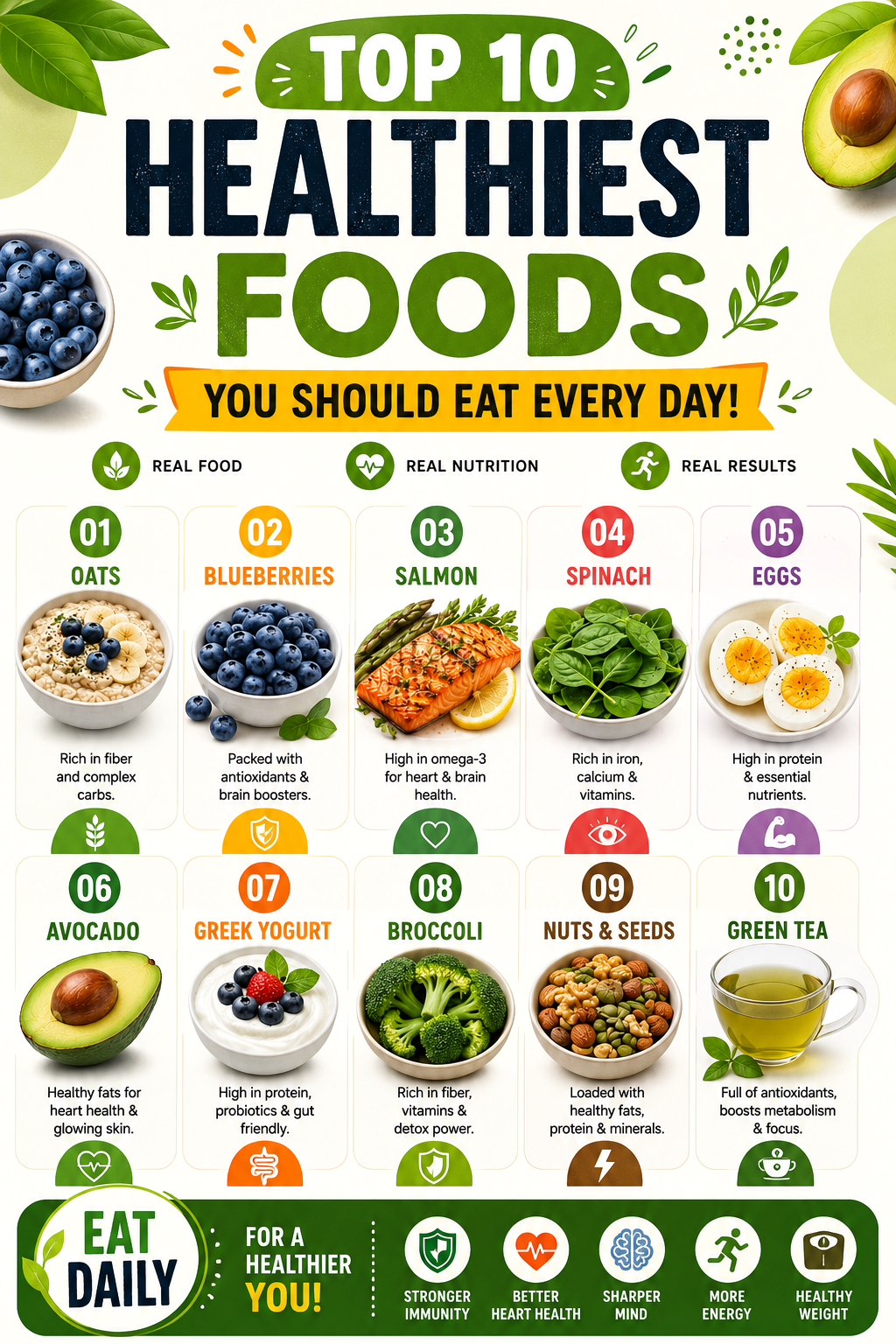
Eating well does not have to mean following complicated rules or building every meal around a long list of ingredients. A strong foundation can come from simple, nutrient-dense foods that provide protein, fiber, healthy fats, vitamins, minerals, and antioxidants. The 10 foods highlighted in this guide offer an easy starting point for creating balanced meals and snacks that support everyday wellness.
From creamy oats and antioxidant-rich blueberries to salmon, spinach, eggs, avocado, Greek yogurt, broccoli, nuts and seeds, and green tea, each option brings something valuable to the table. The goal is not to eat every food every single day. Instead, use this list as inspiration for building variety into your weekly eating routine.
Key Takeaways
- Choose mostly whole and minimally processed foods when possible.
- Combine protein, fiber, healthy fats, and colorful produce for balanced meals.
- Oats, berries, vegetables, eggs, yogurt, and nuts make versatile everyday choices.
- Fatty fish such as salmon can add valuable omega-3 fats to the diet.
- Healthy eating works best when it is varied, practical, and enjoyable.
- Think about your overall eating pattern rather than searching for one perfect food.
1. Oats: A Simple Fiber-Rich Breakfast
Oats are one of the easiest foods to turn into a satisfying breakfast. They contain carbohydrates for energy and provide dietary fiber, including beta-glucan, a type of soluble fiber. Their mild flavor also makes them incredibly adaptable.
A bowl of oats can become a balanced meal when paired with fruit, yogurt, nuts, or seeds. Try topping cooked oats with blueberries and banana, then add a spoonful of nut butter or a sprinkle of chia seeds. This combination brings together carbohydrates, fiber, protein, and healthy fats.
If mornings are busy, overnight oats can be prepared ahead of time. Use rolled oats, milk or a suitable alternative, Greek yogurt, fruit, and seeds for a convenient breakfast that requires little preparation.
2. Blueberries: Small Berries With Big Nutritional Value
Blueberries are an easy way to add color and natural sweetness to meals. They contain fiber and a variety of plant compounds, including anthocyanins, which give the berries their characteristic blue-purple color.
Their versatility makes them particularly useful for healthy eating. Add fresh or frozen blueberries to oatmeal, Greek yogurt, smoothies, or whole-grain breakfast bowls. They can also be enjoyed on their own as a simple snack.
Rather than treating berries as a special dessert ingredient, consider keeping them available for everyday meals. Frozen blueberries can be especially convenient because they are easy to store and use throughout the year.
3. Salmon: A Protein Source With Omega-3 Fats
Salmon stands out on this list because it provides high-quality protein along with omega-3 fatty acids. Protein is important for maintaining and repairing body tissues, while omega-3 fats are an important part of a balanced diet.
A simple salmon dinner can be surprisingly easy. Pair a cooked salmon fillet with roasted broccoli, leafy greens, avocado, or a whole grain for a meal with plenty of nutritional variety.
If you enjoy fish, rotating salmon with other seafood and protein sources can add variety to your weekly menu. Preparation can remain simple with herbs, lemon, garlic, and a small amount of olive oil.
4. Spinach: An Easy Way to Add More Greens
Spinach is a nutrient-dense leafy green that can fit into breakfast, lunch, dinner, and snacks. It provides folate, vitamin K, vitamin A, and other nutrients, making leafy greens a useful part of a varied eating pattern.
Baby spinach can be added to omelets, wraps, salads, pasta dishes, soups, and smoothies. Because it cooks down significantly, a generous handful can disappear into a warm meal without dramatically changing its flavor or texture.
For a quick lunch, combine spinach with eggs, avocado, tomatoes, and a source of whole grains. The result is colorful, filling, and easy to customize.
5. Eggs: Convenient Protein for Any Meal
Eggs are one of the most practical protein-rich foods. They also provide several essential nutrients, including choline, vitamin B12, selenium, and other vitamins and minerals.
Their biggest advantage may be versatility. Boiled eggs work well for meal prep, scrambled eggs make a fast breakfast, and an omelet can become a vehicle for vegetables such as spinach, mushrooms, tomatoes, and peppers.
For a satisfying meal, combine eggs with vegetables and a fiber-rich carbohydrate such as whole-grain toast or oats. This creates a more balanced plate than relying on a single food.
6. Avocado: Creamy Healthy Fats and Fiber
Avocado adds creamy texture, fiber, and mostly monounsaturated fat to meals. It can make simple dishes feel more satisfying without requiring complicated recipes.
Spread avocado over whole-grain toast, add it to a salad, mash it into a simple dip, or serve it alongside eggs. It also works well with beans, tomatoes, leafy greens, and grilled fish.
Because avocado is relatively energy-dense, portion awareness can be useful. A moderate serving can complement a meal while contributing healthy fats and fiber.
Why This Matters
Healthy eating is less about finding a magical food and more about combining different foods that offer complementary nutrients. A meal containing vegetables, a protein source, a fiber-rich carbohydrate, and a source of healthy fat can be more satisfying and nutritionally diverse than a meal built around just one ingredient.
7. Greek Yogurt: Protein and Probiotic Potential
Greek yogurt is a convenient choice for breakfast, snacks, and simple desserts. It is typically higher in protein than many traditional yogurts, although the exact nutritional profile varies between products.
For a balanced snack, combine plain Greek yogurt with blueberries, strawberries, oats, nuts, or seeds. Choosing an unsweetened variety gives you more control over added sugar, while fruit can provide natural sweetness.
Some Greek yogurt products contain live cultures, which can contribute to a varied diet that supports digestive health. Check the product label if this is an important consideration for you.
8. Broccoli: A Colorful Vegetable for Everyday Meals
Broccoli is a cruciferous vegetable that provides fiber, vitamin C, vitamin K, folate, and other beneficial plant compounds. Its firm texture makes it suitable for roasting, steaming, stir-frying, or adding to soups.
Roasted broccoli is especially easy to prepare. Toss florets with a little olive oil and seasoning, then roast until tender with lightly browned edges. Pair it with salmon, eggs, beans, chicken, or another protein source.
Fresh broccoli can also be chopped into grain bowls or salads. Keeping convenient vegetables ready in the refrigerator can make it easier to choose nutritious options when hunger strikes.
9. Nuts and Seeds: Nutrient-Dense Additions
Nuts and seeds provide combinations of healthy fats, protein, fiber, vitamins, minerals, and other plant compounds. Almonds, walnuts, pistachios, pumpkin seeds, sunflower seeds, and chia seeds can all bring different textures and nutrients to a meal.
A small handful makes a convenient snack, while chopped nuts can add crunch to oatmeal, yogurt, salads, and roasted vegetables. Seeds can be sprinkled over smoothies or breakfast bowls.
Choose varieties with little or no added salt or sugar when practical. Since nuts and seeds are energy-dense, a modest serving is usually enough to complement a meal or snack.
Pro Tip: Build a simple topping mix with chopped nuts and seeds, then keep it ready for oatmeal, yogurt, salads, and smoothie bowls. Small additions like this can make healthy meals more satisfying without requiring a new recipe every day.
10. Green Tea: A Refreshing Antioxidant-Rich Drink
Green tea provides fluids and contains naturally occurring polyphenols. It can be a refreshing alternative to heavily sweetened beverages, particularly when enjoyed without added sugar.
Enjoy a warm cup in the morning or afternoon, or prepare it chilled for a refreshing drink. Green tea contains caffeine, so people who are sensitive to caffeine may prefer to drink it earlier in the day.
While green tea can be part of a healthy lifestyle, it is best viewed as one small component of an overall eating pattern rather than a shortcut to weight loss or better health.
How to Turn These Foods Into Balanced Meals
The real value of this list appears when the foods are combined. Instead of asking which single food is the healthiest, think about how different ingredients can work together on your plate.
- Breakfast: Oatmeal topped with blueberries, Greek yogurt, and a small amount of nuts or seeds.
- Quick lunch: A spinach salad with boiled eggs, avocado, broccoli, and a whole-grain side.
- Dinner: Baked salmon with roasted broccoli, spinach, and a fiber-rich grain.
- Snack: Greek yogurt with berries and seeds.
- Simple drink: Unsweetened green tea alongside a balanced meal or snack.
These combinations are flexible. You can swap ingredients based on your preferences, budget, availability, and dietary needs. The goal is to create a pattern you can realistically maintain.
Healthy Eating Tips for Everyday Success
One of the easiest ways to improve your diet is to make nutritious choices convenient. Keep washed fruit visible, prepare vegetables ahead of time, store cooked eggs in the refrigerator, and portion nuts or seeds into ready-to-grab servings.
Variety matters, too. Even nutrient-rich foods should not crowd out every other food. Rotate different fruits, vegetables, legumes, whole grains, seafood, dairy or suitable alternatives, and protein sources throughout the week.
It is also helpful to pay attention to the overall quality of your meals instead of chasing perfection. One meal does not determine your health. Consistent habits built over time are much more meaningful.
Important: The phrase “eat daily” should be treated as inspiration rather than a strict requirement to consume every food on this list every day. Individual nutritional needs differ, and a healthy diet is built around variety, balance, portions, and personal circumstances.
Creating a Simple Weekly Healthy Food Routine
A little planning can turn these foods into an easy weekly system. Start by choosing two or three breakfast combinations, a few simple lunches, and several dinner ideas. Then purchase ingredients that can be reused across multiple meals.
For example, a container of blueberries can be used with oatmeal and yogurt. Spinach can appear in eggs, salads, and dinner bowls. Broccoli can accompany salmon one evening and eggs or another protein source on another day. This approach reduces food waste while keeping meals interesting.
Meal preparation does not need to take an entire weekend. Even 20 to 30 minutes spent washing produce, cooking eggs, portioning nuts, or preparing grains can make healthier choices easier during busy days.
What Makes These Foods a Strong Starting Point?
This collection covers several important categories of nutrition. Oats, fruits, and vegetables contribute fiber and plant nutrients. Eggs, Greek yogurt, and salmon provide protein. Avocado, nuts, seeds, and salmon contribute healthy fats. Green tea provides a flavorful beverage option with naturally occurring polyphenols.
Together, these foods demonstrate an important principle of healthy eating: no single ingredient needs to do everything. A varied diet allows different foods to contribute different nutrients while keeping meals enjoyable.
At a Glance
- Start with whole, nutrient-dense foods.
- Combine protein, fiber, and healthy fats.
- Eat a colorful variety of fruits and vegetables.
- Keep healthy ingredients convenient and ready to use.
- Focus on sustainable habits instead of perfection.
Conclusion: Build Your Healthy Plate One Food at a Time
The healthiest eating routine is not necessarily the most complicated one. Oats, blueberries, salmon, spinach, eggs, avocado, Greek yogurt, broccoli, nuts and seeds, and green tea offer practical inspiration for creating meals filled with a broad range of nutrients.
You do not need to eat all 10 foods every day to benefit from the principles behind this list. Instead, focus on variety, balance, sensible portions, and foods you genuinely enjoy. Add berries to breakfast, include leafy greens at lunch, enjoy vegetables with dinner, and keep simple protein-rich snacks available.
Small choices become powerful when they are repeated consistently. By making nutritious foods a regular part of your meals and keeping your overall diet varied, you can create a sustainable approach to healthy eating that supports your everyday lifestyle.
Tags
Healthy Foods Superfoods Healthy Eating Nutrition Tips Clean Eating Balanced Diet Wellness Tips Healthy Lifestyle