Trauma Trigger Map Understand Your Bodys Emotional Responses and Heal Patterns
Have you ever wondered why a simple message, a quiet room, or a delayed response can suddenly create a strong emotional reaction? Sometimes the body reacts before the mind has time to understand what is happening. A trauma trigger map is a powerful self-awareness tool that helps explain these moments by connecting present-day experiences with past emotional patterns.
Understanding your triggers does not mean something is wrong with you. It means your brain and nervous system learned ways to protect you. By recognizing these automatic responses, you can begin creating healthier reactions, building emotional safety, and developing a deeper connection with yourself.
Key Takeaways
- Trauma triggers are emotional signals that connect current situations with past experiences.
- Your body may respond with fear or stress before your logical mind processes the situation.
- A trigger map helps identify patterns, emotions, and protective responses.
- Grounding techniques can help calm the nervous system during triggering moments.
- Self-awareness is an important step toward emotional healing and resilience.
What Is a Trauma Trigger Map?
A trauma trigger map is a reflection tool designed to help you understand why certain situations create intense emotional reactions. It works by creating a connection between a current event, your body’s response, and possible memories or emotional experiences from the past.
Many people experience moments where their reaction feels bigger than the situation itself. A short conversation, a change in someone’s tone, or a period of silence may create feelings of rejection, fear, or danger. A trigger map helps slow down this process and allows you to explore what is happening beneath the surface.
Important: A trauma trigger is not a sign of weakness. It is often the nervous system attempting to protect you based on previous experiences. Recognizing this pattern creates an opportunity to respond with awareness instead of automatic reactions.
Why Your Body Reacts Before Your Mind Has Proof
The human nervous system is designed to detect possible threats quickly. Before your conscious mind analyzes a situation, your brain may already send signals that prepare your body to protect itself.
This survival system can be helpful when facing real danger, but past emotional wounds can sometimes make ordinary situations feel unsafe. The body remembers patterns, even when the current moment is different from the original experience.
Examples of Everyday Trigger Responses
A trauma trigger does not always appear as a dramatic emotional reaction. It can show up in small, unexpected ways, such as:
- Feeling anxious when someone becomes quiet or distant
- Assuming a delayed reply means someone is upset
- Feeling uncomfortable when receiving criticism
- Experiencing tension during conflict or uncertainty
- Wanting to withdraw, defend yourself, or seek reassurance immediately
These responses often happen automatically. The goal of a trauma trigger map is not to judge these reactions but to understand them.
The Difference Between a Normal Event and a Triggered Response
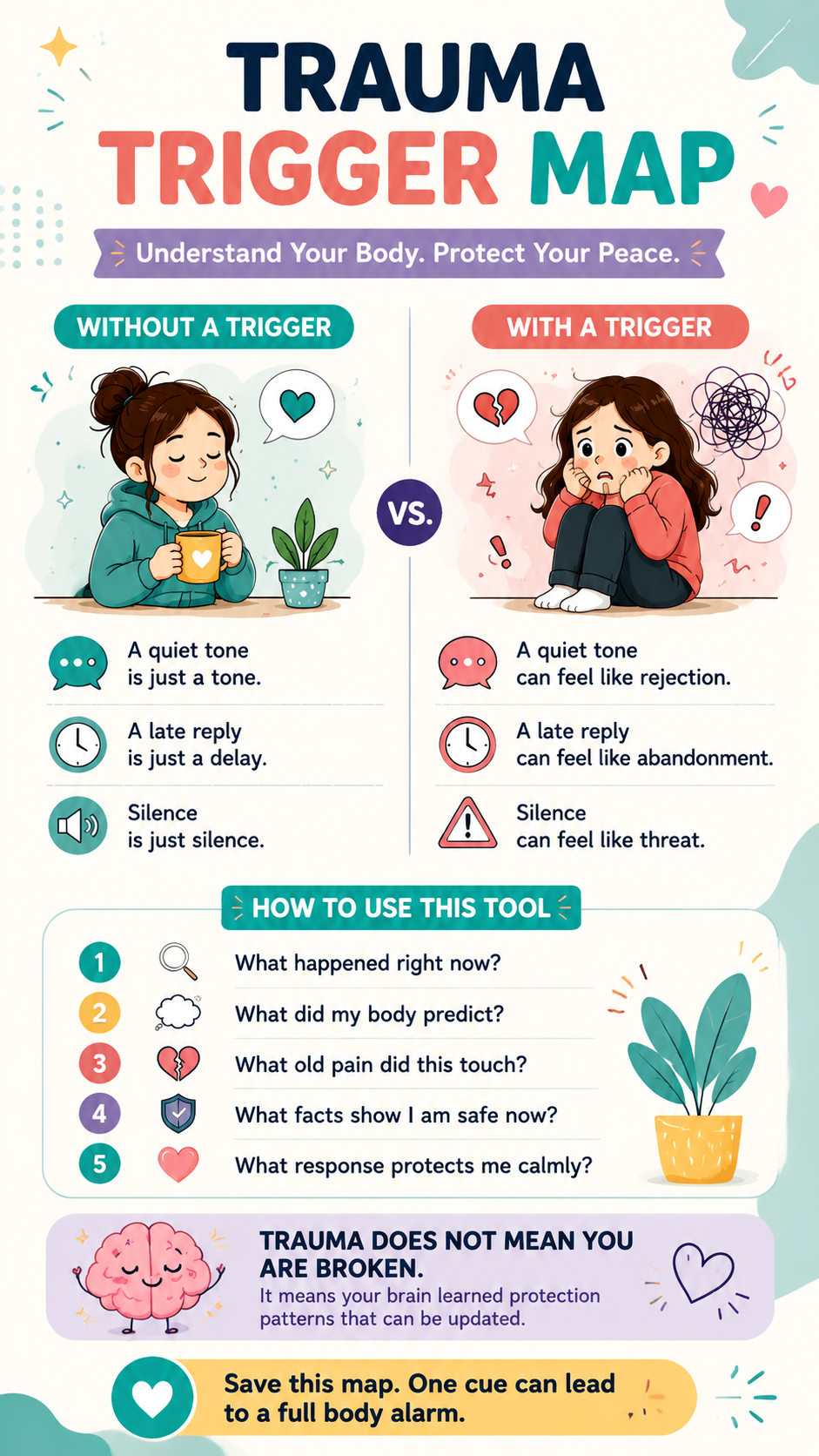
The image concept of a trauma trigger map highlights an important difference: the same situation can feel completely different depending on what your nervous system associates with it.
When There Is No Trigger
Without an emotional trigger, your mind may interpret situations more neutrally. A quiet tone may simply be a quiet tone. A late response may simply mean someone is busy. Silence may simply be a normal moment of pause.
When a Trigger Is Activated
When a trigger appears, the brain may connect the current moment with an older emotional memory. A quiet tone may feel like rejection. A delayed reply may feel like abandonment. Silence may feel threatening.
The situation itself has not necessarily changed. The meaning your nervous system assigns to it has changed.
How to Use a Trauma Trigger Map for Self-Awareness
A trigger map can be used as a personal reflection exercise. It helps you move from confusion to curiosity by exploring different parts of your experience.
Step 1: Identify What Happened
Start by describing the current situation without judgment. Focus on facts rather than assumptions.
Ask yourself:
- What happened right now?
- What words, actions, or situations affected me?
- What did I notice in my surroundings?
Step 2: Notice What Your Body Predicted
Your body often creates a prediction based on previous experiences. You may notice thoughts like “I am going to be rejected,” “I am not safe,” or “Something bad is about to happen.”
These thoughts may feel completely real in the moment. A trigger map helps you recognize them as protective signals rather than absolute facts.
Step 3: Connect the Feeling to Old Patterns
Consider whether the emotion feels familiar. Sometimes a present situation reminds the nervous system of an earlier experience involving fear, loss, criticism, or uncertainty.
This does not mean you need to relive painful memories. The goal is simply to understand the pattern.
Step 4: Find Evidence of Present Safety
One of the most helpful parts of a trauma trigger map is reconnecting with the present moment.
Ask yourself:
- What facts show that I am safe right now?
- What is different about this moment?
- What resources or support do I have today?
Calming the Nervous System After a Trigger
When a trigger is activated, the goal is not to force yourself to stop feeling. Emotions are important signals. Instead, focus on helping your body return to a calmer state.
Helpful Grounding Techniques
- Take slow, steady breaths and focus on the present moment.
- Name five things you can see, four things you can feel, and three things you can hear.
- Place a hand on your chest or body to create a sense of comfort.
- Remind yourself that a feeling is temporary and does not define reality.
- Write down your thoughts instead of reacting immediately.
Expert Insight
Healing often begins with noticing patterns. When you understand why your body reacts, you gain more choice in how you respond. Awareness creates the foundation for emotional regulation and personal growth.
Building a Healthier Relationship With Your Triggers
Triggers are not enemies that need to be eliminated. They are signals that provide information about your emotional history and your current needs.
With patience and practice, you can learn to respond differently. Instead of immediately believing every fear signal, you can pause, gather information, and choose a response that supports your wellbeing.
Important: Emotional healing is a gradual process. Small moments of awareness, compassion, and self-regulation can create meaningful changes over time.
At a Glance: Trauma Trigger Map Benefits
Quick Points
- Recognize emotional triggers more clearly
- Understand body-based reactions
- Create healthier coping responses
- Practice self-compassion during difficult moments
Conclusion: Turning Triggers Into Opportunities for Healing
A trauma trigger map is a reminder that your reactions have meaning. Your body is not trying to create problems. It is trying to protect you using the information it has learned over time.
By identifying triggers, questioning automatic predictions, and practicing grounding techniques, you can create more space between an emotional reaction and your chosen response. This awareness allows you to move toward greater calm, confidence, and emotional balance.
Understanding your triggers is not about changing who you are. It is about learning how your mind and body work together so you can support yourself with kindness and understanding.
Tags
Trauma Healing
Emotional Awareness
Nervous System Regulation
Mental Wellness
Self Healing
Mindful Living
Emotional Regulation