What to Do When Your Brain Shuts Down While Studying Study Burnout Recovery Tips
Every student experiences moments when studying suddenly feels impossible. You sit down with good intentions, open your notes, and then your mind simply refuses to cooperate. Concentration fades, motivation disappears, and even the smallest task feels overwhelming. While it is tempting to label these moments as laziness, they are often signs that your brain needs rest, recovery, or a different approach.
Learning how to respond when your brain shuts down while studying is one of the most valuable academic skills you can develop. Instead of forcing yourself through mental exhaustion, you can use practical strategies that restore focus, protect your energy, and help you return to studying with a clearer mind. Small adjustments often make a bigger difference than pushing yourself harder.
Key Takeaways
- Mental shutdown during studying is often a sign of cognitive fatigue rather than laziness.
- Accepting the situation reduces frustration and helps you recover faster.
- Small, manageable tasks rebuild momentum.
- Physical self-care supports better concentration.
- Consistency matters more than perfection.
Why Your Brain Sometimes Shuts Down During Study Sessions
Your brain works like any other part of your body. After extended periods of concentration, information processing slows down. Decision fatigue builds, memory becomes less efficient, and motivation decreases. This is completely normal.
Long hours without meaningful breaks, poor sleep, dehydration, emotional stress, and academic pressure all contribute to mental exhaustion. Instead of producing better results, continuing to force yourself often leads to lower productivity and increased frustration.
Important: Feeling mentally exhausted does not mean you are incapable of learning. It simply means your brain has reached its temporary limit and needs recovery before performing at its best again.
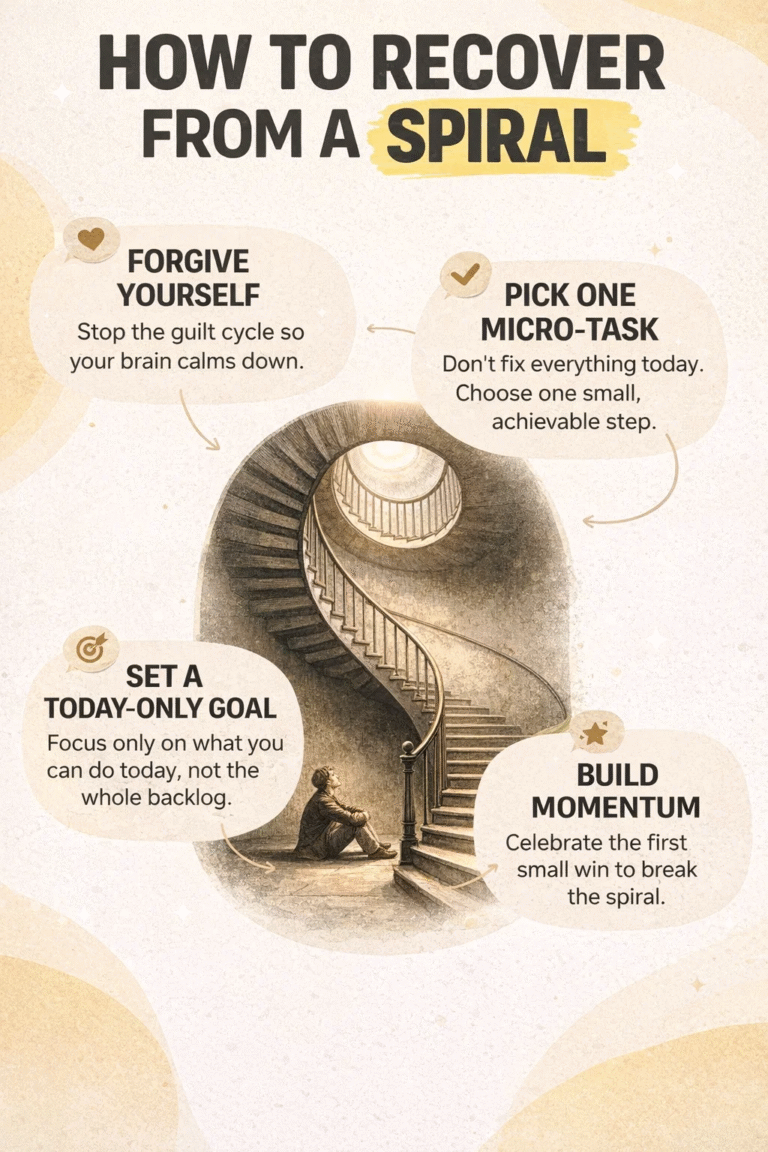
Step One: Stop Fighting the Feeling
Many students waste valuable energy criticizing themselves. Thoughts such as “I should be studying” or “I’m falling behind” increase stress without improving focus.
Instead, acknowledge the experience without judgment.
- Accept that your concentration has temporarily dropped.
- Remind yourself that this feeling will pass.
- Avoid comparing yourself with others.
- Focus on your next small action instead of the entire workload.
Acceptance creates emotional space to recover instead of adding guilt to an already tired mind.
Choose Small Wins Instead of Big Goals
When your energy is low, large assignments become intimidating. Breaking work into tiny tasks reduces resistance and helps restart your momentum.
Examples of Low-Energy Study Tasks
- Read one page.
- Highlight key concepts.
- Review flashcards for five minutes.
- Organize your notes.
- Answer one practice question.
- Watch a short educational explanation.
- Rewrite one important formula.
Completing even one simple task creates a feeling of progress. That progress often leads naturally into more productive work.
Reset Your Body Before Resetting Your Mind
Your physical condition directly influences your mental performance. Before assuming you cannot study, check whether your body needs attention.
Simple Physical Resets
- Drink a full glass of water.
- Eat a balanced snack.
- Stretch your shoulders and neck.
- Walk outside for five to ten minutes.
- Take several slow, deep breaths.
- Open a window for fresh air.
These simple habits increase circulation, reduce muscle tension, and help restore alertness.
Expert Insight
Productivity is not about constantly working harder. Sustainable learning comes from balancing focused study with intentional recovery. Short recovery periods often improve both memory retention and concentration.
Change Your Environment
Sometimes your surroundings contribute to mental fatigue. A small environmental change can refresh your attention without requiring significant effort.
Ideas to Refresh Your Study Space
- Move to another room.
- Study near natural light.
- Clear unnecessary clutter.
- Adjust your chair or desk setup.
- Add a small plant to your workspace.
- Reduce distracting notifications.
A refreshed environment signals a fresh start, making it easier to begin studying again.
Pro Tip: If changing rooms is not possible, simply standing up, reorganizing your desk, or opening your curtains can create enough change to improve your focus.
Write Down Everything on Your Mind
Many study blocks happen because your brain is juggling too many thoughts at once. Writing everything down helps free mental space.
Brain Dump Ideas
- Upcoming assignments
- Personal worries
- Random reminders
- Questions about your coursework
- Things you need to remember later
Once these thoughts exist on paper instead of inside your head, your attention often becomes much easier to direct toward studying.
Do Something That Comforts You
Recovery does not always require a long break. Small comforting activities help lower stress and prepare your brain for another focused session.
- Enjoy a warm drink.
- Listen to calming music.
- Spend a few minutes with a pet.
- Read something enjoyable.
- Practice simple breathing exercises.
- Stretch while listening to relaxing sounds.
The goal is not to avoid studying. The goal is to return with renewed energy.
Practice Self-Compassion
Academic success is not built on constant perfection. Every student has difficult days. Speaking kindly to yourself during those moments actually improves resilience and motivation over time.
Important: Rest is productive when it helps you recover enough to learn effectively. Taking a short break today is often far more valuable than forcing several unproductive hours.
Helpful Reminders
- Your worth is not measured by today’s productivity.
- One difficult study session does not define your abilities.
- Progress happens gradually.
- Consistency beats intensity.
Build Habits That Prevent Mental Shutdown
Although mental fatigue cannot be completely eliminated, healthy habits make it much less frequent.
Daily Habits That Support Better Focus
- Maintain a consistent sleep schedule.
- Drink enough water throughout the day.
- Take regular movement breaks.
- Study in focused blocks with short breaks.
- Limit unnecessary multitasking.
- Eat balanced meals that support steady energy.
- Review material regularly instead of cramming.
Healthy routines reduce mental overload while improving long-term academic performance.
Signs You May Need More Than a Short Break
Occasional mental shutdown is common. However, if exhaustion continues for weeks, affects multiple areas of life, or makes daily activities consistently difficult, it may be helpful to speak with a trusted teacher, counselor, healthcare professional, or mental health specialist.
Seeking support is a sign of strength and self-awareness, not weakness.
At a Glance
- Accept mental fatigue without guilt.
- Focus on one small task.
- Take care of your body first.
- Refresh your environment.
- Choose progress over perfection.
Conclusion
Every student experiences moments when their brain seems to stop cooperating. These moments are not proof that you lack discipline or intelligence. More often, they are reminders that your mind needs a healthier balance between effort and recovery.
By accepting temporary mental fatigue, choosing small achievable tasks, caring for your physical well-being, changing your environment, and treating yourself with compassion, you can overcome study burnout more effectively. Success is not about being perfect every day. It is about continuing to show up, learning from each experience, and building sustainable habits that support both academic achievement and personal well-being.
Tags
Study Motivation Study Burnout Student Wellness Mental Fatigue Study Tips Productivity Focus Techniques Self Care