10 Collagen-Boosting Foods for Glowing Skin, Hair Healthy Aging
Healthy, glowing skin often begins with the choices we make at the table. While skincare products can support your routine from the outside, your body relies on a variety of nutrients from food to build and maintain important structural proteins like collagen. Adding collagen-supporting foods to your meals can be a simple and enjoyable way to nourish your skin, hair, nails, and overall wellness.
The right combination of vitamins, minerals, antioxidants, protein, and healthy fats can help provide the building blocks your body needs for natural collagen production. From colorful berries and citrus fruits to eggs, salmon, nuts, seeds, and leafy greens, many everyday foods contain nutrients linked to healthy-looking skin and a balanced lifestyle.
Key Takeaways
- Vitamin C rich foods help support the natural collagen-building process.
- Protein sources provide amino acids needed for collagen structure.
- Antioxidant-rich fruits and vegetables help protect skin cells from daily stress.
- Healthy fats from foods like salmon, avocado, and nuts support skin moisture and elasticity.
- A balanced diet with colorful whole foods can complement a healthy skincare routine.
How Food Supports Natural Collagen Production
Collagen is one of the most important proteins found in the human body. It helps provide structure and support for the skin, connective tissues, joints, hair, and nails. As part of a healthy lifestyle, eating nutrient-dense foods can help your body maintain the natural processes involved in collagen formation.
Collagen production depends on several key nutrients working together. Vitamin C is especially important because it supports the formation of collagen fibers. Protein provides amino acids, the essential components your body uses to create proteins. Minerals such as zinc and antioxidants also play important roles in maintaining healthy cells.
Important: Supporting collagen naturally is not about relying on one single food. The most effective approach is creating a balanced eating pattern that combines protein, colorful fruits, vegetables, healthy fats, and essential nutrients.
10 Collagen-Supporting Foods to Add to Your Diet
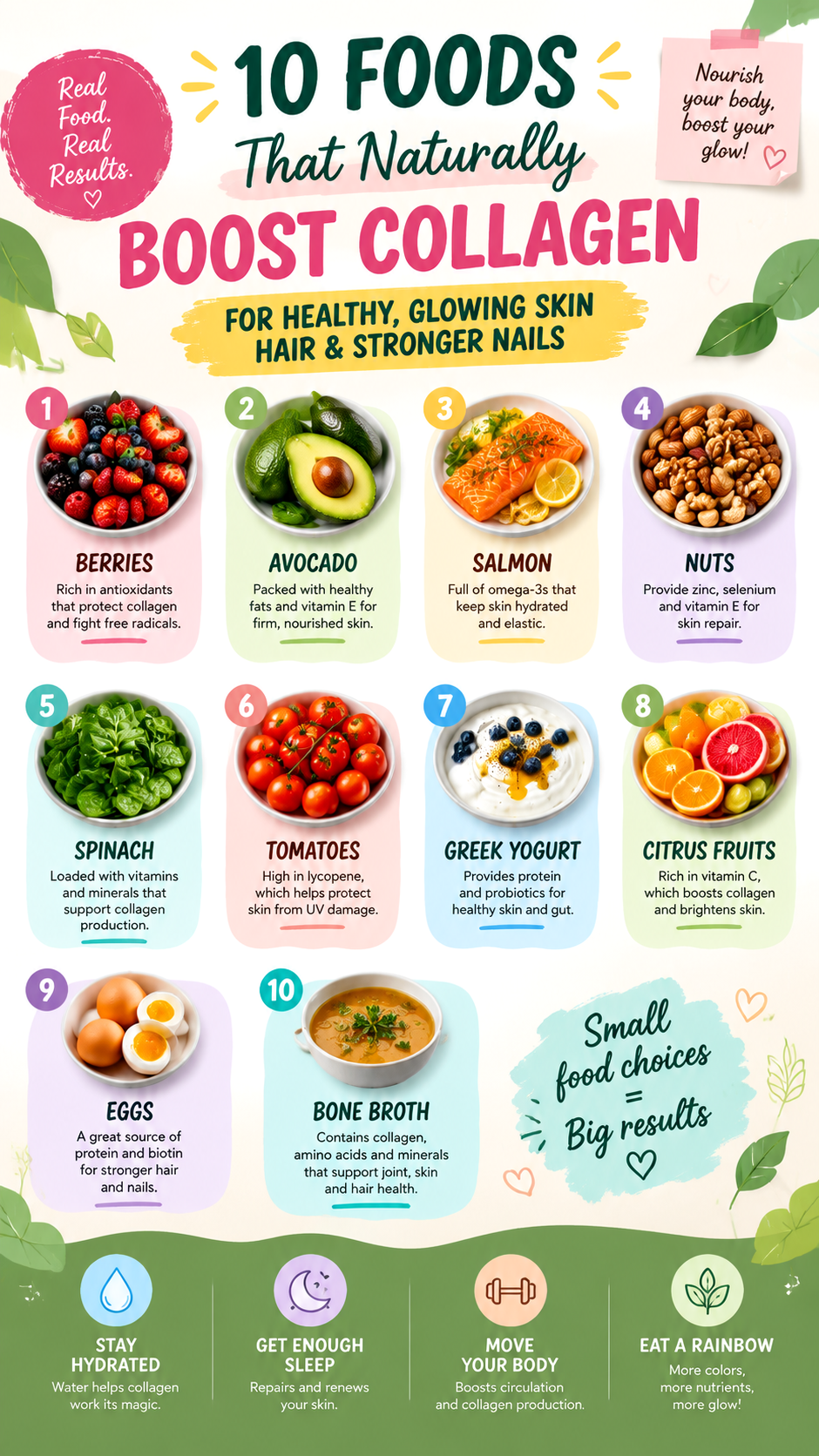
1. Strawberries and Greek Yogurt
Strawberries are a delicious source of vitamin C, a nutrient associated with collagen formation. Pairing them with Greek yogurt adds protein, making this combination a simple breakfast or snack option that supports overall nutrition.
The protein in yogurt provides amino acids that your body can use for many important functions, while the berries add natural sweetness and antioxidants.
2. Kiwi and Berry Smoothies
Kiwis and berries are colorful fruits packed with vitamin C and plant compounds. A smoothie made with kiwi, berries, and a protein source can be a refreshing way to combine multiple collagen-friendly nutrients in one meal.
Adding ingredients such as yogurt, seeds, or nut butter can increase protein and healthy fat content while creating a more satisfying drink.
3. Citrus Fruits
Oranges, grapefruit, and other citrus fruits are well-known sources of vitamin C. This vitamin helps support the body’s natural collagen synthesis and contributes to a healthy diet focused on skin wellness.
Enjoy citrus fruits as a snack, add them to salads, or combine them with other fruits for a nutrient-rich bowl.
4. Eggs and Protein-Rich Meals
Eggs are a convenient source of high-quality protein and contain nutrients that support general health. Since collagen is a protein, getting enough dietary protein is an important part of maintaining the body’s natural repair processes.
Eggs can easily be added to breakfast bowls, avocado toast, salads, and other balanced meals.
5. Salmon and Omega-3 Rich Foods
Salmon is valued for its protein content and omega-3 fatty acids. Healthy fats are important for overall wellness and can help support a balanced approach to skin nutrition.
Including fish, nuts, seeds, and other sources of beneficial fats can help create meals that are both nourishing and satisfying.
6. Avocado and Healthy Fats
Avocados provide healthy fats and nutrients that fit well into a skin-supporting eating pattern. Their creamy texture makes them easy to add to toast, salads, smoothies, and bowls.
Healthy fats help support a balanced diet and can complement other collagen-friendly foods.
7. Spinach and Leafy Greens
Leafy greens such as spinach provide vitamins, minerals, and antioxidants. Adding more greens to your meals is a simple way to increase your intake of plant-based nutrients.
Try adding spinach to breakfast bowls, salads, soups, or smoothies for an easy nutritional boost.
8. Nuts and Seeds
Almonds, pumpkin seeds, chia seeds, and other nuts and seeds contain nutrients such as zinc, vitamin E, and healthy fats. These nutrients support overall wellness and make excellent additions to snacks and meals.
A small handful of nuts or a sprinkle of seeds can add texture and nutrition to yogurt bowls, oatmeal, and salads.
9. Tomatoes
Tomatoes contain antioxidants such as lycopene and also provide vitamin C. Their bright color and fresh flavor make them an easy addition to balanced meals.
Enjoy tomatoes in salads, toast toppings, sauces, or alongside protein-rich foods for a nourishing combination.
10. Tropical Fruits and Yogurt Bowls
Fruits like mango and pineapple add vitamin C, flavor, and natural sweetness to meals. Combined with yogurt or another protein source, they create a balanced option for breakfast or snacks.
Colorful fruit bowls are an easy reminder that healthy eating can also be enjoyable and visually appealing.
Simple Habits That Support Healthy Skin
Food is only one part of maintaining healthy-looking skin. Daily habits can work together with good nutrition to support your overall glow.
- Drink enough water throughout the day to support hydration.
- Prioritize quality sleep to support your body’s natural recovery.
- Choose a variety of fruits and vegetables for a broad range of nutrients.
- Include protein with meals to support balanced nutrition.
- Manage stress with relaxing activities and mindful routines.
Why This Matters
- Collagen support comes from consistent nutrition habits.
- Whole foods provide a combination of nutrients that work together.
- Small daily choices can contribute to long-term wellness.
How to Create a Collagen-Friendly Meal Plan
Building meals around collagen-supporting foods does not need to be complicated. Start by combining a source of protein with colorful produce and healthy fats.
- Choose a protein source such as eggs, fish, yogurt, or plant-based options.
- Add vitamin C rich fruits or vegetables like berries, citrus, or tomatoes.
- Include healthy fats from avocado, nuts, seeds, or fish.
- Add leafy greens and antioxidant-rich foods whenever possible.
A simple breakfast might include Greek yogurt with strawberries and nuts. Lunch could combine leafy greens, tomatoes, avocado, and a protein source. Dinner could feature salmon with vegetables and a colorful side dish.
At a Glance
- Vitamin C supports natural collagen formation.
- Protein provides important building blocks.
- Antioxidants help support healthy cells.
- Healthy fats support balanced nutrition.
Final Thoughts: Nourish Your Glow From Within
Supporting natural collagen production starts with simple, consistent choices. Adding more nutrient-rich foods like berries, citrus fruits, eggs, salmon, leafy greens, nuts, seeds, and colorful fruits can help create a balanced approach to beauty and wellness.
Healthy skin is influenced by many factors, including nutrition, hydration, lifestyle, and daily care. By choosing a variety of whole foods, you give your body the nutrients it needs to support its natural processes and maintain a healthy glow.
Start with one small change, such as adding more vitamin C rich fruits to breakfast or including protein with every meal. Over time, these small habits can become part of a nourishing routine that supports your skin, hair, nails, and overall well-being.
Tags
Collagen Foods
Glowing Skin Nutrition
Healthy Skin Tips
Beauty Nutrition
Natural Beauty
Healthy Eating