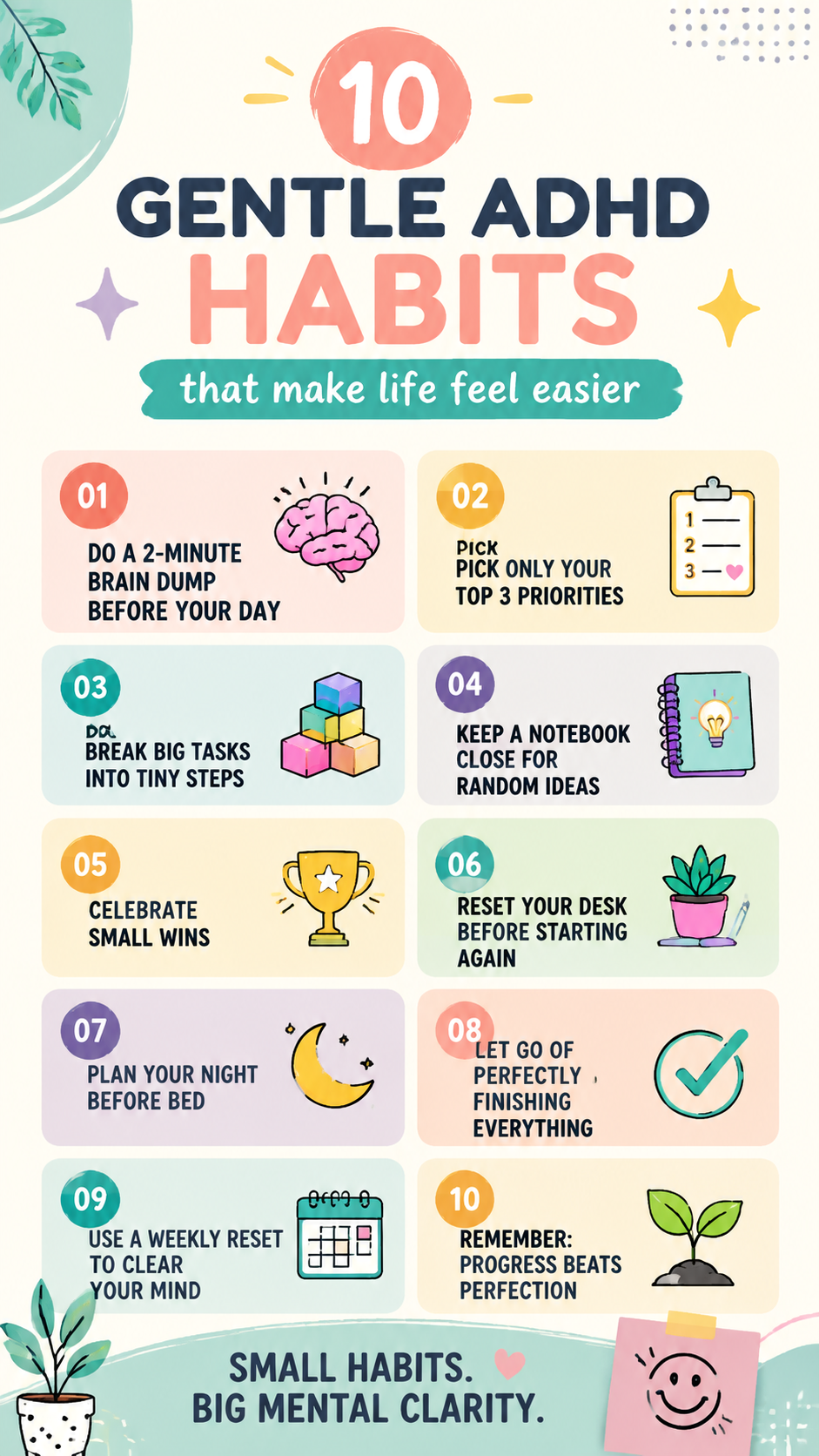
10 Gentle ADHD Habits to Reduce Overwhelm Create Daily Calm
Living with ADHD can often feel like managing a constant stream of thoughts, tasks, and responsibilities. When everything feels urgent at the same time, even simple daily activities can become overwhelming. The good news is that small, gentle habits can create more structure, reduce mental clutter, and make everyday life feel easier to navigate.
The goal is not to create a perfect routine or force yourself into unrealistic productivity standards. Instead, ADHD-friendly habits focus on working with your brain, creating supportive systems, and building small moments of clarity throughout your day.
Key Takeaways
- Small routines can help reduce ADHD-related overwhelm and mental fatigue.
- Brain dumps and simple planning tools help organize busy thoughts.
- Breaking large tasks into smaller steps makes starting easier.
- Progress matters more than perfection when building new habits.
- Gentle resets can improve focus, motivation, and daily confidence.
Why Gentle ADHD Habits Can Make Life Feel More Manageable
ADHD often affects focus, organization, time management, and the ability to transition between tasks. Many people with ADHD do not struggle because they lack motivation. Instead, they may experience challenges with executive function, which helps with planning, prioritizing, remembering, and getting started.
A gentle approach removes the pressure of trying to completely transform your life overnight. Simple habits create external support systems that make your environment easier to manage.
Important: ADHD-friendly routines work best when they are realistic, flexible, and easy to repeat. The purpose of a habit is not to create more rules, but to reduce the number of decisions your brain has to make every day.
10 Gentle ADHD Habits That Reduce Daily Overwhelm
1. Start Your Day With a Two-Minute Brain Dump
A busy ADHD mind can hold dozens of thoughts at once. Writing everything down in a notebook or journal helps move those thoughts from your mind onto paper.
A quick brain dump does not need to be organized. Simply write down tasks, ideas, reminders, worries, or anything taking up mental space.
Simple Brain Dump Ideas
- Things you need to remember
- Tasks you want to complete
- Random ideas or creative thoughts
- Questions you need to answer later
2. Choose Only Your Top Three Priorities
Long to-do lists can quickly become overwhelming. Instead of trying to complete everything, choose three important priorities for the day.
This creates a clearer focus and helps prevent the feeling that you are constantly behind. Your top three tasks can include work, personal goals, or simple life responsibilities.
3. Break Big Tasks Into Tiny Steps
Large projects often feel impossible when your brain cannot see where to begin. Breaking them into smaller actions lowers the mental barrier.
Instead of writing “clean the house,” try smaller steps like “put clothes away,” “clear the desk,” or “wash dishes for five minutes.” Small wins build momentum.
4. Keep a Notebook Nearby for Random Ideas
Many people with ADHD experience sudden bursts of thoughts and ideas. Keeping a notebook nearby creates a safe place to capture those thoughts without interrupting your current activity.
This simple habit can help you stay focused while still respecting your creative thinking style.
5. Celebrate Small Wins
Progress can be easy to overlook when your attention is focused on what remains unfinished. Celebrating small accomplishments helps build motivation and creates a more positive relationship with productivity.
Finishing a short task, organizing one area, or completing a difficult step is still meaningful progress.
6. Reset Your Workspace Before Starting Again
A cluttered environment can increase distractions. A quick desk reset can create a calmer space and make it easier to return to tasks.
You do not need a perfect workspace. Even putting away a few items, clearing your main working area, or preparing your supplies can create a helpful mental reset.
7. Plan Tomorrow the Night Before
Morning decisions can feel exhausting when your brain is already processing many things. Spending a few minutes preparing for tomorrow can make the next day smoother.
- Write your top priorities
- Prepare important items
- Review your schedule
- Choose a simple starting point
8. Let Go of Perfectly Finishing Everything
Perfectionism can make tasks feel heavier than they need to be. Sometimes completing a task at 80% is more helpful than waiting for the perfect moment.
Learning to accept progress over perfection creates more freedom and reduces unnecessary stress.
9. Use a Weekly Reset Routine
A weekly reset helps clear mental and physical clutter. It can become a simple ritual for reviewing your goals, organizing your space, and preparing for the days ahead.
Weekly Reset Activities
- Review upcoming appointments
- Organize important notes
- Plan meals or basic routines
- Clean one small area
10. Remember That Progress Beats Perfection
The most important ADHD habit is practicing self-compassion. Building routines takes time, and some days will feel easier than others.
A gentle mindset allows you to adjust your systems instead of feeling discouraged when something does not work perfectly.
Creating an ADHD-Friendly Routine That Actually Works
The best routine is one you can realistically maintain. Many productivity systems fail because they require too much effort, too many steps, or too much consistency.
ADHD-friendly habits should feel supportive rather than restrictive. Start with one or two habits that feel easy, then slowly add more as they become natural.
Expert Insight
- External tools like planners and notebooks can support memory and organization.
- Simple systems reduce decision fatigue throughout the day.
- Flexible routines are often more sustainable than strict schedules.
At a Glance: Gentle ADHD Habits to Try
- Write down thoughts with a quick brain dump.
- Focus on three important tasks each day.
- Break overwhelming projects into smaller actions.
- Create calming resets for your space and schedule.
- Choose progress instead of perfection.
Conclusion: Small Habits Can Create Big Mental Clarity
ADHD does not mean you cannot build routines, stay organized, or reach your goals. The right habits simply need to match the way your brain works.
Gentle practices like brain dumping, choosing priorities, celebrating progress, and creating simple resets can make daily life feel less overwhelming. The focus is not on becoming perfectly productive, but on creating more calm, confidence, and clarity.
Start small, stay patient with yourself, and remember that every tiny step forward counts.
Tags
ADHD Habits
ADHD Organization
Mental Clarity
Productivity Tips
Executive Function
Daily Routines
Self Care Habits