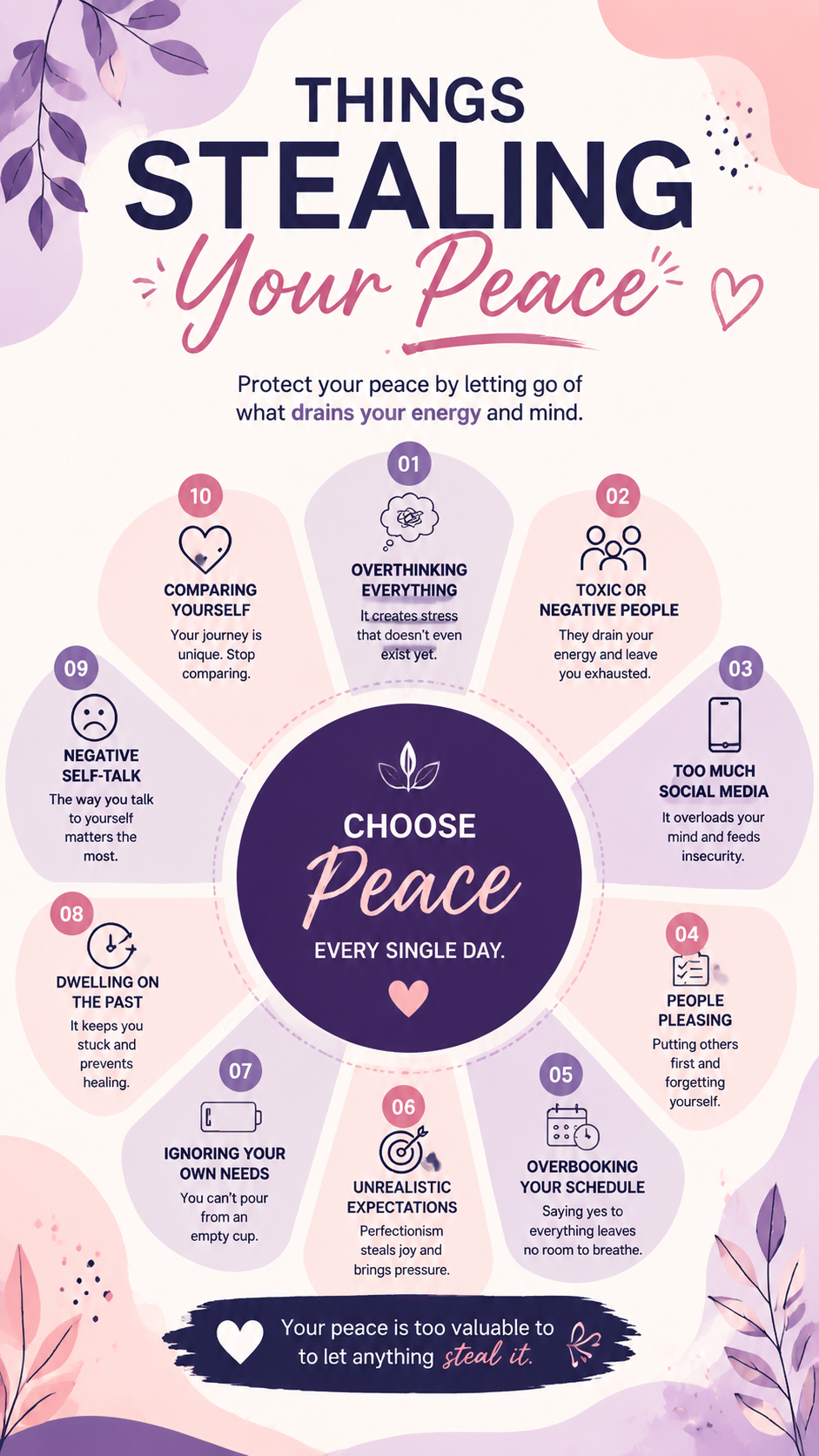
10 Things Stealing Your Peace How to Protect Your Mental Wellness
Peace of mind is one of the most valuable things we can protect, yet many everyday habits, thoughts, and situations quietly take it away. From constant overthinking to negative self-talk, people pleasing, and unrealistic expectations, these hidden stressors can leave you feeling mentally exhausted and disconnected from yourself.
Learning to identify the things stealing your peace is the first step toward building a calmer, healthier, and more balanced life. By becoming aware of what drains your energy, you can create better boundaries, improve your emotional wellness, and make more space for happiness and self-care.
Key Takeaways
- Recognize common habits that quietly drain your mental energy.
- Create boundaries that protect your emotional well-being.
- Replace negative thoughts with healthier mindset practices.
- Prioritize self-care and personal needs without guilt.
- Focus on what you can control instead of unnecessary stress.
Understanding What Steals Your Peace
Peace is not simply the absence of problems. It is the ability to stay grounded, confident, and emotionally balanced even when life feels challenging. Many people search for peace by changing their surroundings, but often the biggest distractions come from internal patterns and daily behaviors.
The things that steal your peace are not always obvious. Sometimes they appear as small habits that seem harmless but slowly increase stress levels. Spending too much time comparing yourself to others, replaying past mistakes, or trying to meet impossible expectations can prevent you from enjoying the present moment.
Important: Protecting your peace begins with awareness. When you understand what drains your energy, you gain the power to make intentional choices that support your mental wellness and emotional balance.
10 Things That May Be Stealing Your Peace
1. Overthinking Everything
Overthinking can turn small concerns into overwhelming problems. Constantly analyzing situations, worrying about the future, or imagining negative outcomes can create unnecessary stress.
While reflection can help you make better decisions, excessive thinking often keeps you trapped in fear instead of allowing you to take action. Learning to recognize when your thoughts are becoming unhelpful is an important step toward a calmer mindset.
How to Reduce Overthinking
- Write down your thoughts instead of carrying them mentally.
- Focus on solutions rather than endless possibilities.
- Practice mindfulness to return to the present moment.
2. Toxic or Negative Relationships
The people around you can influence your emotional state. Relationships filled with criticism, constant negativity, or unhealthy patterns can slowly affect your confidence and happiness.
Protecting your peace does not mean avoiding everyone who challenges you. It means recognizing relationships that consistently leave you feeling drained, anxious, or unappreciated.
3. Spending Too Much Time on Social Media
Social media can be inspiring, but too much scrolling may increase comparison, insecurity, and mental fatigue. Constant exposure to carefully edited versions of other people’s lives can make you feel like you are falling behind.
Creating healthy digital boundaries can help you reconnect with your own goals and appreciate your personal journey.
4. People Pleasing
Wanting to make others happy is natural, but always putting everyone else’s needs before your own can become emotionally exhausting. Saying yes when you want to say no often leads to frustration and resentment.
Healthy boundaries allow you to care for others while still respecting your own time, energy, and emotional needs.
5. Overbooking Your Schedule
A busy lifestyle can make it difficult to slow down and enjoy everyday moments. When your schedule is constantly full, there is little room for rest, creativity, or self-reflection.
Creating space in your calendar is not laziness. Rest is an important part of maintaining emotional health and preventing burnout.
6. Unrealistic Expectations
Expecting perfection from yourself can create constant pressure. Many people delay happiness because they believe they must achieve certain goals before they deserve to feel proud or content.
Replacing perfection with progress allows you to appreciate growth and celebrate small victories along the way.
7. Ignoring Your Own Needs
Your emotional, physical, and mental needs matter. When you constantly give without taking time to recharge, you may eventually feel exhausted and disconnected from yourself.
Self-care is not selfish. It is a necessary practice that helps you show up as your best self.
8. Dwelling on the Past
Past experiences can teach valuable lessons, but constantly replaying old mistakes can prevent you from moving forward. Healing requires accepting what happened while allowing yourself to grow beyond it.
Focus on what the past has taught you rather than allowing it to define your future.
9. Negative Self-Talk
The way you speak to yourself has a powerful impact on your confidence and emotional well-being. Harsh inner criticism can become a constant source of stress.
Practice replacing negative thoughts with supportive and realistic statements. Treat yourself with the same kindness you would offer someone you care about.
10. Comparing Yourself to Others
Comparison can steal joy by making you focus on what you lack instead of appreciating what you already have. Everyone’s journey happens at a different pace.
Instead of measuring your progress against someone else’s life, focus on your own growth, goals, and personal achievements.
How to Protect Your Peace Every Day
Creating a peaceful life requires consistent effort. It is not about eliminating every challenge or avoiding difficult emotions. It is about building habits that help you respond to life with more calm and confidence.
Create Healthy Boundaries
Boundaries help you protect your time, energy, and emotional space. They allow you to communicate your needs clearly and maintain healthier relationships.
Build a Self-Care Routine
Simple practices like journaling, taking walks, resting properly, practicing gratitude, and spending quiet time alone can support emotional wellness.
Focus on What You Can Control
Peace grows when you stop spending energy on things outside your control. Focus on your choices, your actions, and the way you respond.
Why This Matters
- Your energy is limited, so protect where you invest it.
- Peace comes from intentional choices, not perfect circumstances.
- A healthier mindset creates more confidence and emotional balance.
Small Changes That Create More Inner Calm
You do not need to completely change your life overnight to experience more peace. Small adjustments can create meaningful improvements in your daily emotional state.
- Start your day without immediately checking notifications.
- Spend more time doing activities that make you feel present.
- Celebrate progress instead of focusing only on flaws.
- Take regular breaks to recharge your mind.
- Choose environments that support your growth.
At a Glance
- Identify habits that drain your energy.
- Set boundaries without guilt.
- Practice positive self-talk.
- Make time for rest and self-care.
Conclusion: Choose Peace Every Day
Protecting your peace is one of the greatest gifts you can give yourself. The thoughts you hold, the habits you practice, and the relationships you maintain all influence how you experience life.
By recognizing the things stealing your peace and making intentional changes, you can create more room for happiness, confidence, and emotional freedom. Remember that peace is not something you find once and keep forever. It is something you choose and protect every single day.
Tags
Protect Your Peace
Mental Wellness
Self Care Tips
Emotional Healing
Positive Mindset
Inner Peace
Personal Growth