15 Beginner Soap Making Mistakes to Avoid for Perfect Homemade Soap
Making your own soap at home is a rewarding craft that combines creativity, science, and self-care. From choosing beautiful natural ingredients to creating personalized scents and designs, handmade soap making gives you the opportunity to enjoy a product that feels truly unique. However, beginners often face challenges that can affect the texture, appearance, safety, and overall quality of their soap bars.
The good news is that most soap making mistakes are easy to prevent with the right knowledge and preparation. Whether you are trying cold process soap making, experimenting with essential oils, or creating your first batch of homemade soap, understanding common beginner errors can help you achieve smoother, longer-lasting, and more beautiful results.
Key Takeaways
- Accurate measurements are essential for safe and successful soap making.
- Temperature control helps prevent texture problems and soap failures.
- Proper curing creates harder, milder, and longer-lasting soap bars.
- Quality ingredients and tested recipes improve consistency.
- Keeping detailed notes helps you improve every soap batch.
Why Beginner Soap Making Mistakes Happen
Soap making may look simple, but it involves careful balance between oils, liquids, fragrances, and ingredients. A small change in measurements or technique can create noticeable differences in the final product. Beginners sometimes focus only on the creative side of soap making and overlook the importance of accuracy and patience.
Homemade soap requires attention to detail because the process involves chemical reactions that transform oils and lye into soap. Understanding the basics helps you avoid frustration and makes every batch a learning experience.
Important: Successful soap making is not about creating a perfect first batch. It is about learning proper techniques, following reliable recipes, and making small improvements with every attempt.
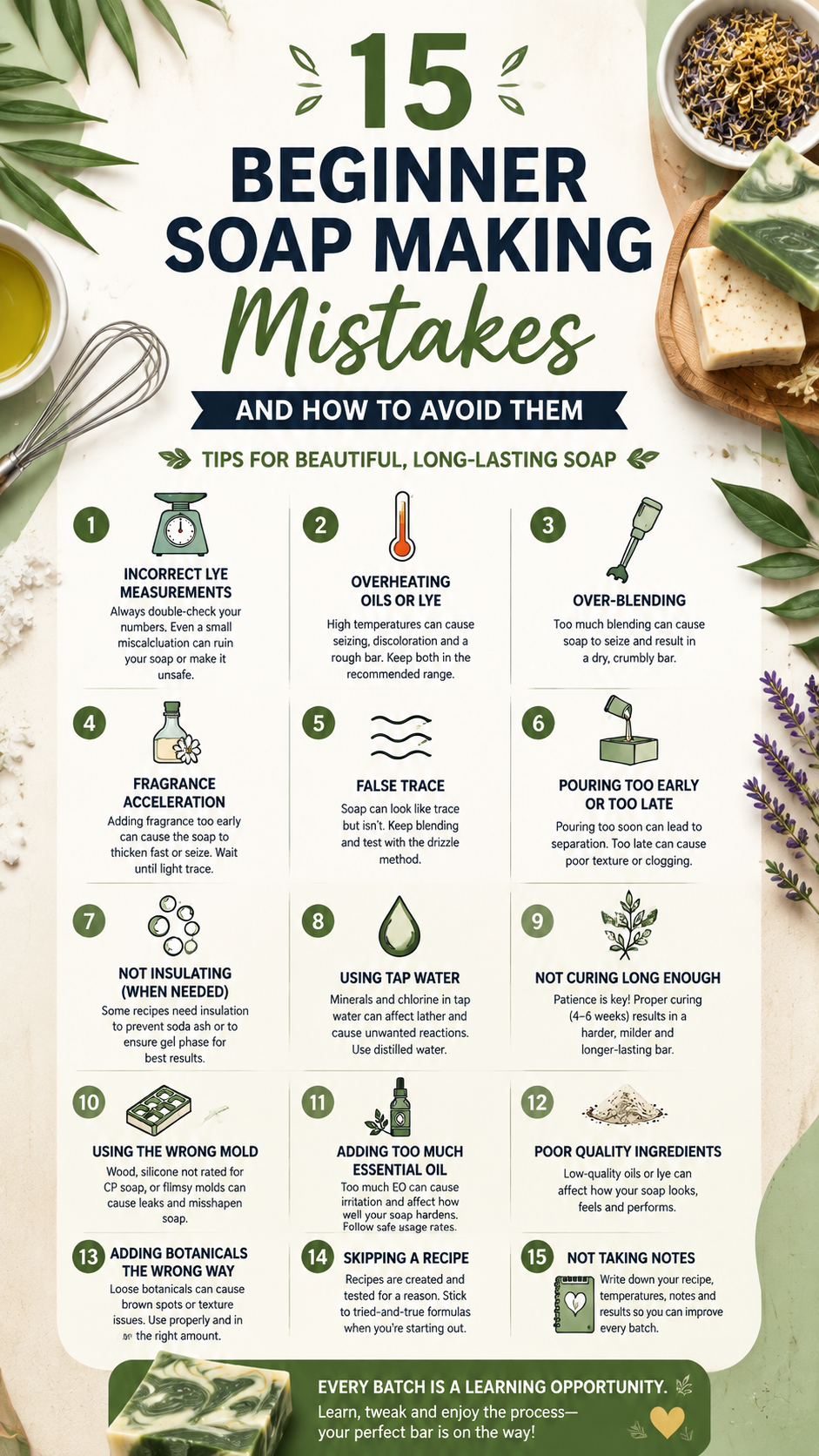
15 Beginner Soap Making Mistakes to Avoid
1. Using Incorrect Lye Measurements
One of the most important parts of soap making is accurate measurement. Using too much or too little lye can affect the safety, texture, and quality of your soap. Even small measurement errors can create problems with the final bar.
Always use a reliable digital scale and carefully measure each ingredient. Soap calculators can also help determine the correct balance between oils and lye for your recipe.
2. Overheating Oils or Lye
Temperature plays a major role in soap making. Oils and lye solution that are too hot can lead to problems such as discoloration, separation, or a rough texture.
Keeping ingredients within the recommended temperature range helps create a smoother mixing process and a more attractive finished soap bar.
3. Over-Blending the Soap Mixture
Blending helps soap reach trace, which is the stage where oils and lye water begin combining properly. However, blending for too long can cause the mixture to become too thick too quickly.
Over-blended soap can become difficult to pour into molds and may result in a dry or uneven texture. Use short bursts of blending and check the consistency regularly.
4. Adding Fragrance Too Early
Some fragrances and essential oils can speed up the soap making process. Adding them at the wrong time may cause the soap mixture to thicken before you are ready.
Test your fragrances and add them carefully according to your recipe instructions for better control.
5. Confusing False Trace With True Trace
False trace happens when oils become thick because of temperature changes rather than because the soap mixture has properly emulsified. This can make beginners think their soap is ready when it is not.
Learning how true trace looks and behaves will help you create consistent results.
6. Pouring at the Wrong Time
Pouring soap into molds too early or too late can create issues. A mixture that is too thin may separate, while a mixture that is too thick can create an uneven appearance.
7. Skipping Insulation When Needed
Some soap recipes benefit from insulation after pouring because it helps the soap complete the gel phase. Without proper insulation, some batches may look different or develop texture variations.
8. Using Tap Water Instead of Distilled Water
Tap water may contain minerals that can affect the soap making process. Distilled water is often preferred because it provides a cleaner base and reduces the chance of unwanted reactions.
9. Not Allowing Enough Curing Time
Curing is one of the most important steps in cold process soap making. Freshly made soap needs time to harden, become milder, and improve in quality.
Pro Tip: Patience creates better soap. Allowing enough curing time can transform a soft homemade bar into a harder, longer-lasting product with improved performance.
10. Choosing the Wrong Mold
The mold you choose affects the shape and ease of removing your soap. Some materials work better than others, especially for cold process soap recipes.
Using molds designed for soap making helps prevent sticking, leaking, and uneven shapes.
11. Adding Too Much Essential Oil
Natural scents can make handmade soap feel special, but more is not always better. Too much essential oil may cause skin irritation and can affect the final texture of the soap.
12. Using Poor Quality Ingredients
The quality of your oils, colors, and additives influences the appearance and feel of your soap. Fresh, reliable ingredients usually create better and more predictable results.
13. Adding Botanicals Incorrectly
Dried flowers, herbs, and natural additives can create beautiful designs, but using too much or adding them incorrectly may cause rough textures or unwanted spots.
14. Skipping a Tested Recipe
Experimenting is part of the fun, but beginners often benefit from starting with trusted recipes. A tested formula helps you understand how different ingredients work together.
15. Not Taking Notes
Keeping records of your recipes, temperatures, ingredients, and results makes future batches easier. Notes allow you to repeat successful soaps and adjust recipes when needed.
How to Improve Your Soap Making Skills
Improving as a soap maker takes practice, observation, and curiosity. Instead of seeing mistakes as failures, treat each batch as valuable experience. Small changes in technique can lead to major improvements over time.
Expert Insight
- Measure carefully before starting your soap session.
- Prepare all tools and ingredients in advance.
- Focus on mastering basic recipes before experimenting.
Many experienced soap makers recommend creating a simple routine: prepare your workspace, measure ingredients carefully, follow your recipe step by step, and record your results afterward.
At a Glance: Beginner Soap Making Success Tips
- Use accurate measurements every time.
- Control temperatures carefully.
- Choose quality ingredients.
- Allow proper curing time.
- Keep notes for future improvements.
Conclusion
Creating homemade soap is a creative and rewarding hobby that becomes easier with knowledge and practice. By avoiding these common beginner soap making mistakes, you can improve your confidence, create better-quality bars, and enjoy the process even more.
Every batch teaches you something new. With careful measurements, thoughtful ingredient choices, patience during curing, and a willingness to learn, your handmade soap journey can become a relaxing and enjoyable craft.
Tags
Soap Making
Beginner Soap Making
Homemade Soap
Cold Process Soap
DIY Crafts
Natural Skincare