Complete Kitchen Utensils Guide Essential Tools for Cutting, Cooking Serving
A well-equipped kitchen starts with the right utensils. Whether you are preparing fresh vegetables, slicing bread, cooking a family meal, or serving guests, having the right kitchen tools makes everyday tasks easier, faster, and more enjoyable. From essential cutting knives and chopping boards to versatile cooking spoons, measuring cups, strainers, and specialty gadgets, each utensil has a purpose in creating an efficient cooking space.
Building a practical kitchen does not mean purchasing every gadget available. The goal is to understand the different types of kitchen utensils, learn what each tool does, and choose reliable essentials that suit your cooking habits. With the right combination of cutting, food preparation, cooking, serving, and measuring tools, you can create a kitchen that feels organized, functional, and ready for almost any recipe.
Key Takeaways
- Choose essential kitchen knives and preparation tools for safe, efficient food prep.
- Use the right cooking utensils to stir, flip, whisk, mash, and serve different foods.
- Keep measuring tools, strainers, and specialty gadgets available for everyday recipes.
- Select durable materials that suit your cookware, cooking style, and cleaning routine.
- Organize frequently used utensils within easy reach to simplify meal preparation.
- Build your kitchen collection gradually instead of buying unnecessary gadgets.
1. Cutting and Food Preparation Utensils
Cutting and preparation tools are among the most important kitchen essentials because many recipes begin with chopping, slicing, peeling, or grating ingredients. The right equipment helps you work more precisely while making repetitive tasks less tiring.
Chef’s Knife
A chef’s knife is a versatile kitchen essential used for chopping vegetables, slicing meat, mincing herbs, and preparing a wide range of ingredients. Its broad blade and balanced handle make it suitable for many everyday cutting tasks.
For most home cooks, one comfortable, well-maintained chef’s knife is more useful than a large collection of inexpensive knives. Choose a size that feels secure in your hand and provides good control over the cutting board.
Paring Knife
A paring knife has a smaller blade designed for detailed work. It is useful for peeling apples, trimming strawberries, removing blemishes from vegetables, and cutting small ingredients that require precision.
Its compact size makes it a practical companion to a chef’s knife. Keep the blade sharp and use a stable cutting surface whenever possible, even when handling smaller foods.
Bread Knife
A bread knife features a serrated edge that grips crusty surfaces without crushing the soft interior. It works well for slicing sourdough, baguettes, sandwich loaves, and other baked goods.
The same serrated design can also help slice certain soft-skinned fruits and delicate foods. Use a gentle sawing motion rather than pressing straight down through the ingredient.
Santoku Knife and Cleaver
A Santoku knife is a versatile Japanese-style kitchen knife commonly used for slicing, chopping, and dicing vegetables, fish, and boneless meat. Its relatively broad blade can make ingredient transfer from the cutting board convenient.
A cleaver has a heavier, wider blade and is useful for specific chopping tasks, depending on its design. Not every cleaver is intended for bones, so choose the correct type for the job and follow the manufacturer’s guidance.
Kitchen Shears
Kitchen shears are useful for snipping fresh herbs, trimming vegetables, opening food packaging, and cutting poultry using shears designed for that purpose. Some models separate for easier cleaning, making them convenient for regular use.
Keep kitchen shears separate from general household scissors, especially when they are used for raw meat or other food preparation tasks. Wash them thoroughly after use.
Peelers, Graters, and Mandolines
A vegetable peeler removes thin skins from potatoes, carrots, cucumbers, and apples with minimal waste. A julienne peeler creates narrow strips that work well in salads, stir-fries, and vegetable garnishes.
A box grater offers several surfaces for shredding cheese, grating vegetables, and preparing ingredients with different textures. A fine grater, often called a microplane, is especially useful for citrus zest, hard cheese, ginger, and garlic.
A mandoline slicer creates consistent slices and can speed up preparation for dishes such as gratins, homemade chips, and salads. However, its exposed blade requires careful handling. Use the hand guard or a suitable cut-resistant glove according to the manufacturer’s instructions.
Chopping Boards
A chopping board protects your work surface and provides a stable area for cutting ingredients. Wood and bamboo boards are popular for everyday preparation, while plastic boards are often convenient for tasks involving raw meat because many can be washed in a dishwasher.
Choose a board large enough for your usual ingredients and make sure it does not slide across the counter. Separate boards for raw meat and ready-to-eat foods can help reduce cross-contamination.
Important: Sharp knives, stable chopping boards, and careful cutting techniques work together to improve kitchen safety. A dull knife may require more pressure and slip unexpectedly, so maintain your blades and keep your fingers away from the cutting path.
2. Cooking Utensils for Everyday Recipes
Cooking utensils help you stir sauces, turn food, mix ingredients, and control portions as you prepare meals. The best collection includes a few versatile tools that can handle different cooking methods without overcrowding your drawers.
Wooden Spoons
A wooden spoon is a classic utensil for stirring soups, mixing sauces, folding ingredients, and scraping the bottom of a saucepan. Wood feels comfortable to hold and is generally gentle on cookware surfaces.
Choose a smooth, well-finished spoon and clean it according to the manufacturer’s instructions. Allow wooden utensils to dry completely before storing them, and replace any that become deeply cracked or damaged.
Slotted Spoons and Soup Ladles
A slotted spoon lifts solid ingredients while allowing liquid to drain away. It is useful for removing vegetables from broth, transferring poached eggs, and serving foods from cooking water.
A soup ladle makes it easier to portion soups, stews, sauces, and other liquids into bowls. A ladle with a comfortable handle and a bowl size suited to your cookware can make serving cleaner and more consistent.
Spatulas and Turners
Spatulas come in several shapes and materials. Flexible silicone spatulas are ideal for scraping mixing bowls, folding cake batter, and stirring delicate mixtures. Flat turners are designed to lift, flip, and transfer foods during cooking.
A slotted turner allows excess oil or liquid to drain when lifting food from a pan. A fish turner typically has a thin, flexible surface that helps slide beneath delicate fish fillets without breaking them apart.
For nonstick cookware, select heat-resistant silicone or another material specifically labeled as safe for the pan’s coating. Metal turners are better reserved for cookware that can tolerate them.
Whisks and Balloon Whisks
A whisk incorporates air into ingredients while helping combine liquids smoothly. Use one to beat eggs, mix salad dressings, prepare pancake batter, or blend sauces without lumps.
A balloon whisk has a rounded, expanded wire shape that is particularly useful for whipping cream and aerating egg whites. Smaller whisks are convenient for mixing dressings, sauces, and small quantities of ingredients.
Tongs and Serving Utensils
Kitchen tongs provide a secure grip for turning vegetables, lifting pasta, handling grilled foods, and serving salads. They are especially practical when you need to move hot ingredients without piercing them.
Serving spoons, serving forks, and serving tongs help transfer prepared food to plates and platters. A carving fork stabilizes larger pieces of cooked meat while slicing, making it useful for roast dinners and special occasions.
Potato Mashers and Pasta Servers
A potato masher breaks down cooked potatoes and other soft vegetables for smooth or rustic side dishes. It can also help mash beans and selected cooked ingredients for soups, dips, and fillings.
A pasta server features prongs or a shaped bowl that helps lift and portion long pasta. It is a useful tool for spaghetti, linguine, and similar noodles, especially when serving directly from a pot.
Expert Insight
You do not need a separate utensil for every recipe. Start with a wooden spoon, a heat-safe spatula, a turner, a whisk, a ladle, and a pair of tongs. These everyday cooking tools cover a wide range of tasks, allowing you to add specialized utensils only when your cooking habits call for them.
3. Kitchen Essentials for Baking and Preparation
Baking and dough preparation often require a different set of tools from everyday stovetop cooking. Even if you bake occasionally, a few practical essentials can make measuring, rolling, shaping, and decorating much easier.
Rolling Pin
A rolling pin helps flatten dough evenly for cookies, pastry, pizza, and homemade flatbreads. Wooden rolling pins are traditional and comfortable to use, while other materials may be easier to clean or better suited to particular baking techniques.
Dust the work surface lightly with flour when needed, and rotate the dough as you roll to encourage an even shape. Too much flour, however, can change the texture of some recipes.
Dough Scraper
A dough scraper is a simple but versatile tool for dividing dough, gathering chopped ingredients, and cleaning flour or sticky dough from a work surface. Some models have flexible edges, while rigid bench scrapers are particularly helpful for portioning bread and pastry dough.
It can also make transferring chopped vegetables from a board to a bowl more efficient. Use the scraper carefully and avoid dragging a blade across surfaces that could be scratched.
Pastry Brush and Offset Spatula
A pastry brush spreads egg wash, melted butter, oil, and glazes over baked goods. It can also help coat baking surfaces when a recipe calls for it. Silicone brushes are convenient to wash, while traditional bristle brushes offer a familiar feel for delicate applications.
An offset spatula has a narrow blade that helps spread frosting, smooth fillings, lift delicate baked items, and apply toppings evenly. It is useful for cakes, pastries, and other desserts that benefit from neat finishing.
Measuring Cups and Measuring Spoons
Measuring cups and spoons help portion ingredients consistently. Measuring cups are useful for ingredients such as flour, sugar, milk, and broth, while measuring spoons are designed for smaller quantities of spices, extracts, baking powder, and other concentrated ingredients.
For baking, a digital kitchen scale can provide even greater precision, especially when recipes specify ingredient weights. If you use measuring cups, remember that dry and liquid measuring cups are designed differently, and accurate measuring techniques matter.
Pro Tip: Measure ingredients before you begin mixing. This simple habit, often called preparing your ingredients in advance, reduces interruptions and makes it easier to follow recipes accurately. It is especially helpful when baking or preparing several dishes at once.
4. Strainers, Colanders, and Draining Tools
Straining tools help separate liquids from solids, rinse ingredients, and remove excess water. Although a colander and a fine-mesh sieve may look similar in purpose, each performs a slightly different job.
Colander
A colander is a bowl-shaped utensil with drainage holes. It is commonly used to drain pasta, rinse vegetables, wash fruit, and remove water from cooked ingredients. Models with sturdy handles and a stable base are easier to manage when filled.
Choose a size that fits comfortably in your sink and can hold the quantities you typically prepare. Stainless steel and durable food-safe plastic are common options.
Fine-Mesh Strainer or Sieve
A fine-mesh strainer is useful for rinsing small grains, removing seeds from sauces, sifting powdered sugar, and filtering liquids. Its closely spaced mesh catches smaller particles that may pass through a colander.
For baking, a sieve can help distribute flour or powdered ingredients evenly. After use, rinse it promptly to prevent food from drying between the mesh openings.
5. Specialty Kitchen Gadgets That Make Cooking Easier
Specialty kitchen gadgets are designed to simplify particular tasks. They are not all essential for every household, but the right ones can save time when used regularly.
Garlic Press
A garlic press crushes garlic cloves into small pieces or a paste, depending on the design. It is convenient for sauces, marinades, dressings, and dishes where finely crushed garlic blends easily with other ingredients.
Some models can be rinsed or disassembled for cleaning. Remove garlic residue promptly because dried pieces can become difficult to clear from small openings.
Lemon Squeezer
A lemon squeezer extracts juice for salad dressings, marinades, drinks, sauces, and baking. A handheld citrus press is easy to store and can help keep seeds out of freshly squeezed juice.
For the best results, roll the fruit gently on the counter before cutting it. This can help release juice and make squeezing easier.
Can Opener and Bottle Opener
A can opener provides access to canned beans, vegetables, tomatoes, and other pantry staples. Choose one that feels comfortable to operate and creates a clean edge. Take care around freshly opened cans because their edges can be sharp.
A bottle opener is a compact tool for opening bottles with compatible caps. Keeping one in a kitchen drawer or utensil organizer makes it easy to find when needed.
Mortar and Pestle
A mortar and pestle crushes, grinds, and combines ingredients by hand. It is particularly useful for grinding whole spices, crushing garlic, preparing herb pastes, and making small batches of seasoning blends.
Stone models are sturdy and suitable for many grinding tasks, while other materials may be preferred for lighter ingredients. Keep the mortar clean and dry, and follow any care instructions supplied with the set.
Potato Masher and Measuring Tools
A potato masher is useful for creating mashed potatoes, soft vegetable mixtures, and rustic purees. If you frequently prepare soups, side dishes, or homemade fillings, it can be a worthwhile addition to your utensil collection.
Measuring cups and measuring spoons are also essential for repeatable results. Keep them together in a drawer or container so you can quickly measure ingredients without searching through the kitchen.
Chopsticks and Other Serving Tools
Chopsticks can be used for eating, picking up small ingredients, and handling certain foods during preparation. They are particularly useful for dishes inspired by East Asian cooking and can be stored alongside other everyday utensils.
Serving utensils should match the meals you prepare. A large serving spoon works well for rice and vegetables, serving tongs are convenient for salads and roasted foods, and a serving fork can help portion firmer ingredients neatly.
6. Choosing the Best Materials for Kitchen Utensils
The material of a kitchen utensil affects its durability, cleaning requirements, heat resistance, and compatibility with cookware. Choosing suitable materials can help your kitchen tools last longer and protect the surfaces you cook with.
Stainless Steel
Stainless steel is commonly used for ladles, whisks, tongs, measuring spoons, strainers, and many cutting tools. It is generally durable, easy to clean, and resistant to rust when properly maintained.
Metal utensils can scratch some nonstick coatings, so check cookware recommendations before using stainless steel tools in coated pans.
Wood and Bamboo
Wooden spoons, chopping boards, and rolling pins offer a natural appearance and comfortable grip. They are often gentle on cookware and fit beautifully into kitchens with traditional or minimalist styling.
Wooden tools usually need more careful drying than metal utensils. Avoid prolonged soaking, inspect them for cracks, and follow the recommended cleaning instructions.
Silicone and Heat-Resistant Materials
Silicone spatulas and brushes are popular because they are flexible and can be suitable for use with nonstick cookware. However, heat resistance varies between products, so check the stated temperature limits before using a utensil in a hot pan.
Look for food-contact-safe materials and avoid using utensils that show signs of melting, splitting, or other damage.
Plastic and Other Materials
Food-safe plastic utensils can be lightweight and affordable, while some are designed for specific tasks such as scraping bowls or handling delicate cookware. Check the product’s heat limits and cleaning instructions before use.
Stone, ceramic, and other materials are also common in specialty tools. For every material, durability and safety depend on product quality, construction, and appropriate care.
7. How to Organize Kitchen Utensils Efficiently
A kitchen can contain excellent tools and still feel difficult to use if everything is stored in the wrong place. Simple organization makes meal preparation smoother and helps prevent duplicate purchases.
Group Tools by Purpose
Start by sorting utensils into practical categories. Keep cutting tools together, cooking utensils in another section, baking supplies in a separate drawer, and measuring tools near your usual preparation area.
- Cutting station: Store knives safely near the chopping board.
- Cooking station: Keep spatulas, wooden spoons, ladles, and tongs close to the stove.
- Baking station: Group measuring cups, measuring spoons, rolling pins, and dough scrapers together.
- Serving station: Store serving spoons, forks, and tongs where you plate or serve food.
- Specialty tools: Place less frequently used gadgets in a clearly organized drawer or container.
Use Drawer Dividers and Utensil Holders
Drawer dividers prevent smaller tools from becoming tangled together. A countertop utensil holder can keep frequently used spoons and spatulas within easy reach, provided it is positioned safely away from heat and splashes.
Knife blocks, protective blade covers, and suitable in-drawer knife organizers can help store cutting tools securely. Keep sharp edges protected and avoid leaving knives loose in crowded drawers.
Keep Only What You Use
Review your utensils occasionally and identify tools that are damaged, duplicated, or rarely used. A smaller collection of reliable essentials is often easier to maintain than drawers filled with single-purpose gadgets.
Before buying a new tool, consider how often you will use it, whether another utensil can perform the same task, and how much storage space it requires.
8. Cleaning and Maintaining Kitchen Utensils
Regular cleaning and proper storage help maintain kitchen tools and support good food hygiene. Different utensils require different care, so follow the manufacturer’s instructions rather than assuming every item can be washed in the same way.
- Wash utensils promptly after use, especially when they have been in contact with raw meat, eggs, or dairy products.
- Use hot, soapy water where appropriate and sanitize food-contact surfaces when needed.
- Dry wooden utensils and chopping boards thoroughly before storing them.
- Clean fine-mesh strainers carefully to remove trapped food particles.
- Check knives, shears, and other sharp tools regularly for damage.
- Replace utensils with cracked, warped, melted, or badly worn surfaces.
- Keep raw-food preparation tools separate from utensils used for ready-to-eat foods.
Dishwasher safety depends on the material and construction of each utensil. Some stainless steel tools are dishwasher-safe, while wooden items, certain knives, and utensils with delicate handles may require handwashing.
Kitchen Safety Tip: Never leave sharp knives hidden in a sink full of soapy water. Wash them carefully when they can be seen, handle them by the grip, and store them in a secure location after cleaning. Safe habits are just as important as choosing quality kitchen utensils.
9. Essential Kitchen Utensils for Beginners
If you are setting up your first kitchen, start with tools that serve multiple purposes. You can always add specialty equipment as you discover which recipes you enjoy making most often.
A Practical Starter Checklist
- One chef’s knife: For chopping, slicing, and dicing.
- One paring knife: For peeling and detailed preparation.
- One chopping board: For a stable food preparation surface.
- One vegetable peeler: For quickly removing skins.
- One wooden spoon: For stirring and mixing.
- One heat-safe spatula: For scraping bowls and stirring mixtures.
- One turner: For flipping and lifting food.
- One pair of tongs: For gripping and transferring ingredients.
- One whisk: For eggs, sauces, and batters.
- One ladle: For soups and liquid dishes.
- One colander or sieve: For rinsing and draining food.
- Measuring cups and spoons: For consistent portions and recipes.
- A can opener: For opening canned ingredients.
Once these basics are covered, consider adding a box grater, kitchen shears, a fine-mesh strainer, a rolling pin, or a mortar and pestle according to your needs. This approach keeps costs manageable and prevents clutter.
10. Quick Points: Kitchen Utensils at a Glance
At a Glance
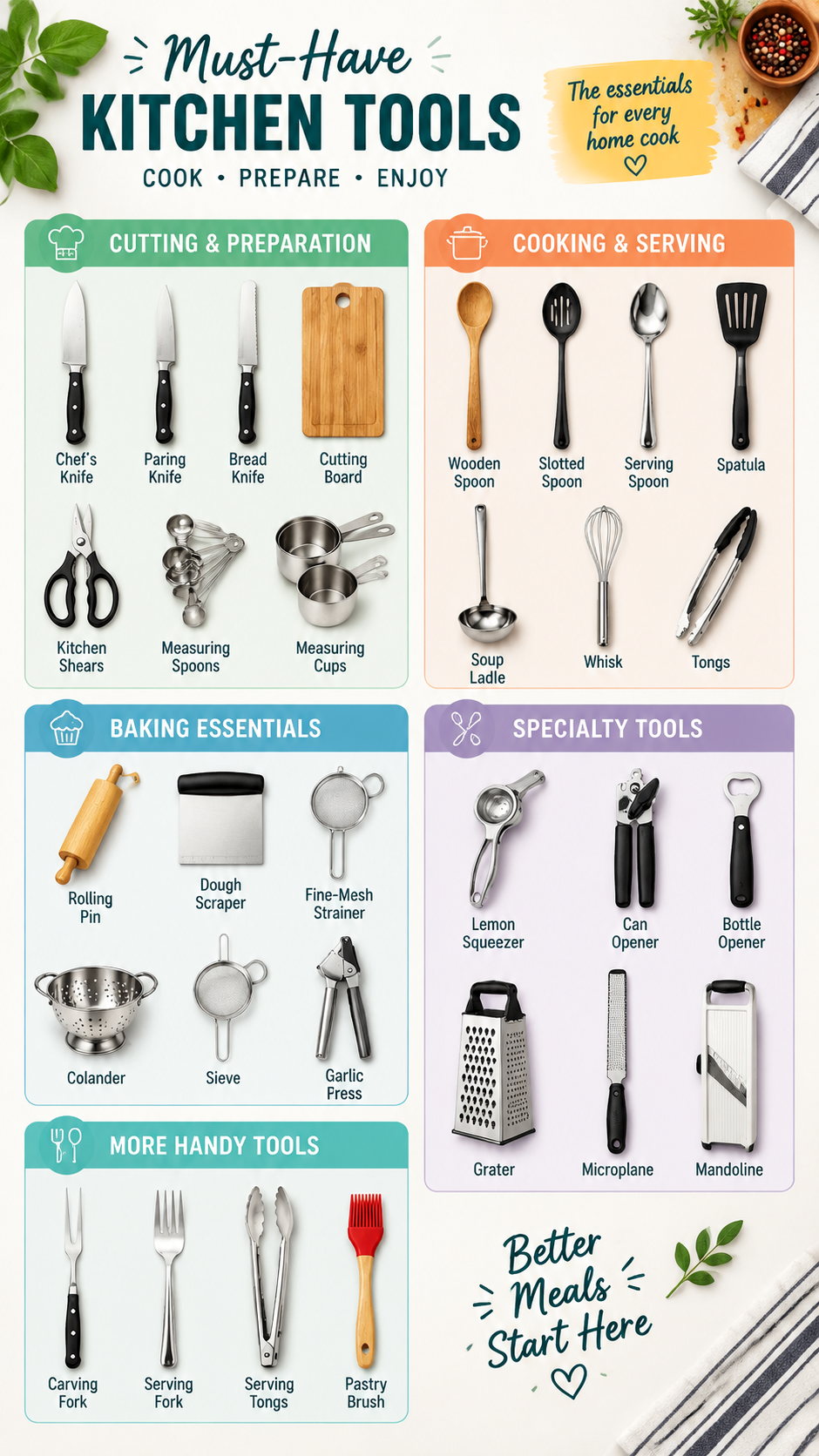
- Cutting: Chef’s knives, paring knives, bread knives, and kitchen shears.
- Preparation: Chopping boards, peelers, graters, and mandolines.
- Cooking: Wooden spoons, spatulas, turners, whisks, ladles, and tongs.
- Baking: Rolling pins, dough scrapers, pastry brushes, and offset spatulas.
- Measuring and draining: Measuring cups, measuring spoons, colanders, and fine-mesh sieves.
- Specialty tasks: Garlic presses, lemon squeezers, can openers, and mortar and pestle sets.
Conclusion: Build a Kitchen That Works for You
The best kitchen utensil collection is one that supports the way you cook every day. From cutting knives and chopping boards to cooking spoons, spatulas, strainers, measuring tools, and serving utensils, each item can contribute to a more organized and enjoyable cooking experience.
Focus on useful essentials first, choose materials that suit your cookware, and maintain your tools with regular cleaning and safe storage. Add specialty gadgets when they solve a real problem or make a favorite recipe easier to prepare.
A thoughtful collection of kitchen utensils can help you prepare ingredients efficiently, cook with greater confidence, and serve meals neatly. Whether you are organizing a small apartment kitchen or refreshing a well-used family cooking space, choosing the right tools is a practical step toward making every meal easier.
Save this kitchen utensil guide as a handy reference when organizing your drawers, planning a kitchen upgrade, or choosing tools for a new home. With the right essentials close at hand, you will be better prepared for everyday meals, weekend baking, and special occasions.
Tags
Kitchen Utensils
Kitchen Essentials
Cooking Tools
Food Preparation
Kitchen Gadgets
Kitchen Organization
Baking Utensils
Cooking Tips