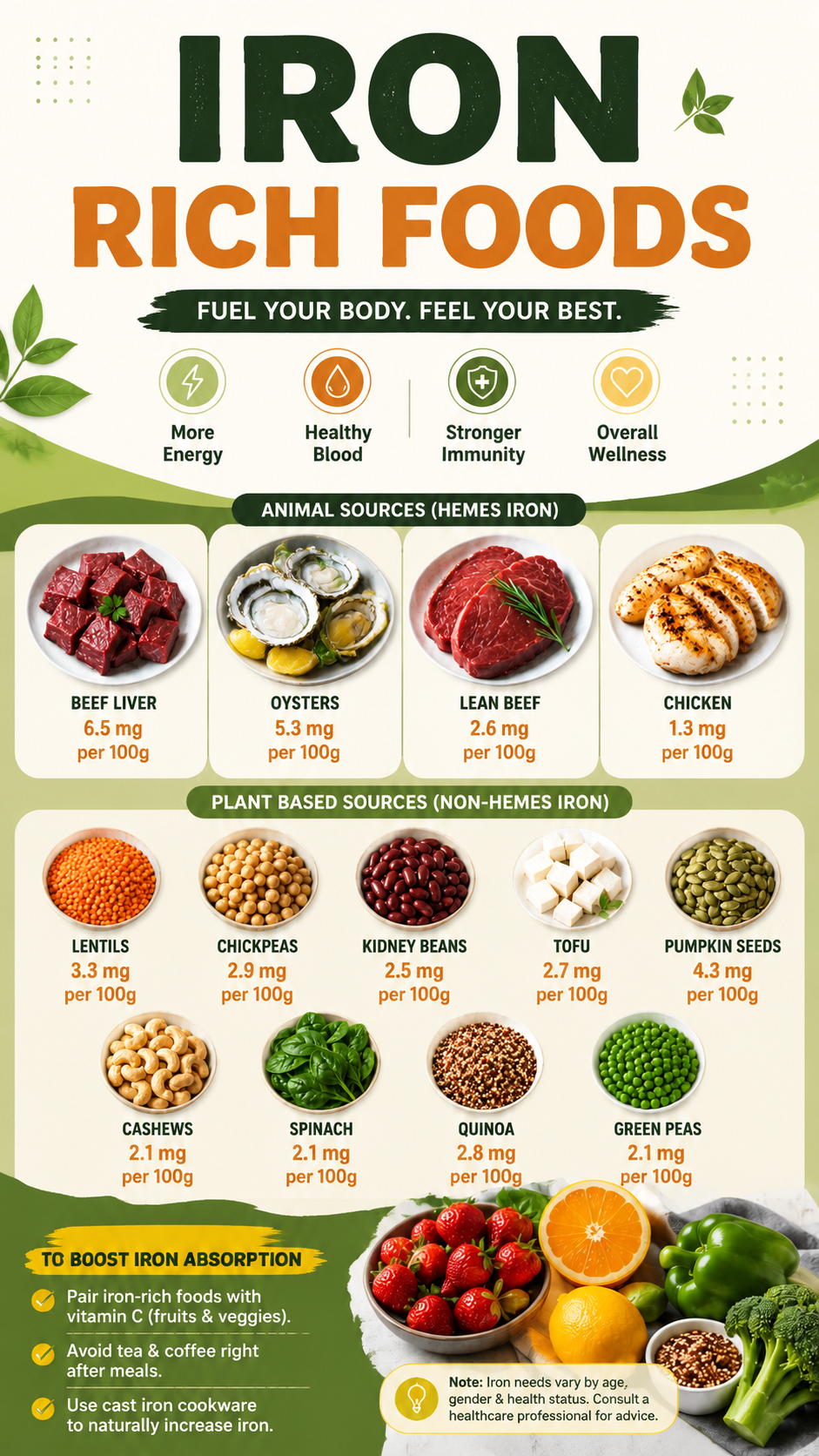
20 Iron-Rich Foods in the UK to Boost Energy Support Healthy Blood
Iron is one of the most important nutrients for maintaining daily energy, supporting healthy blood, and helping your body function at its best. If you often feel tired, struggle with low energy, or simply want to improve your nutrition, adding more iron-rich foods to your meals can be a smart step toward a healthier lifestyle.
From animal-based sources like beef liver, oysters, lean beef, and chicken to plant-based options such as lentils, chickpeas, beans, tofu, spinach, quinoa, nuts, and seeds, there are plenty of delicious ways to increase your iron intake naturally. Understanding the difference between these foods and how to improve iron absorption can help you make more informed choices every day.
Key Takeaways
- Iron supports energy production, oxygen transport, and overall wellness.
- Animal foods provide heme iron, which is generally easier for the body to absorb.
- Plant foods offer valuable non-heme iron along with fiber and other nutrients.
- Vitamin C-rich foods can help improve iron absorption from meals.
- Balanced food choices can make it easier to meet daily iron needs.
Why Iron Is Essential for Energy and Health
Iron plays a key role in the production of hemoglobin, a protein in red blood cells that carries oxygen throughout the body. When your body does not get enough iron, oxygen delivery can become less efficient, which may affect energy levels, focus, and overall well-being.
Many people associate iron only with meat, but a wide variety of foods can contribute to healthy iron intake. A balanced diet that includes both animal and plant sources can provide different nutrients while helping support your body’s needs.
Important: Iron is not just about preventing tiredness. It supports oxygen transport, normal energy metabolism, and many essential processes that help your body work efficiently every day.
Best Animal Sources of Heme Iron
Animal-based foods contain heme iron, a form of iron that the body can absorb more easily compared with plant-based non-heme iron. Including these foods in meals can be a convenient way to increase iron intake.
Beef Liver: A Nutrient-Dense Iron Source
Beef liver is one of the richest natural sources of iron. It is also packed with other important nutrients, making it a popular choice for people looking to add more nutrient-dense foods to their diet.
Because liver is very concentrated in nutrients, it is usually enjoyed in moderate portions as part of a varied eating pattern.
Oysters and Seafood Options
Oysters are another excellent source of iron. Seafood can also provide other valuable nutrients, including protein and minerals that support a balanced diet.
Lean Beef and Chicken
Lean beef provides heme iron along with protein, while chicken offers a lighter source of iron that can easily be added to everyday meals. Foods like grilled chicken, beef stir-fries, and balanced protein bowls can make increasing iron intake simple and enjoyable.
Top Plant-Based Sources of Non-Heme Iron
Plant-based foods contain non-heme iron and are an important part of a healthy diet. Vegetarians and anyone wanting to eat more plant-focused meals can get iron from legumes, vegetables, seeds, grains, and soy-based foods.
Lentils, Chickpeas, and Beans
Lentils, chickpeas, and kidney beans are affordable, versatile foods that can easily be added to soups, salads, curries, and grain bowls. They provide iron while also contributing plant-based protein and fiber.
Tofu and Soy-Based Foods
Tofu is a useful iron-rich option for plant-based meals. It absorbs flavors well, making it suitable for stir-fries, salads, wraps, and many different recipes.
Pumpkin Seeds, Cashews, and Quinoa
Nuts, seeds, and whole grains can add extra iron to snacks and meals. Pumpkin seeds, cashews, and quinoa are easy additions to breakfast bowls, smoothies, salads, or homemade snack mixes.
Spinach and Leafy Greens
Spinach is a well-known plant source of iron and provides additional vitamins and minerals. Adding leafy greens to omelets, smoothies, soups, and side dishes is an easy way to increase nutrient variety.
How to Improve Iron Absorption Naturally
Choosing iron-rich foods is important, but how you combine foods can also affect how much iron your body absorbs. Small meal adjustments can help you get more nutritional value from your diet.
Add Vitamin C to Iron-Rich Meals
Vitamin C helps improve the absorption of non-heme iron from plant foods. Try pairing lentils with tomatoes, spinach with peppers, or beans with a fresh citrus salad.
Be Mindful of Tea and Coffee Timing
Tea and coffee contain compounds that may reduce iron absorption when consumed alongside iron-rich meals. Consider enjoying these drinks between meals instead of immediately after eating.
Use Cast Iron Cookware
Cooking certain foods in cast iron cookware may naturally increase the amount of iron transferred into food. It is a simple kitchen habit that can complement a nutritious eating routine.
Expert Insight
- Combining different iron sources creates a more balanced approach to nutrition.
- Simple meal pairings can improve how your body uses the nutrients you consume.
- Consistency matters more than adding a single iron-rich food occasionally.
Easy Ways to Add More Iron to Your Daily Meals
Building iron-rich meals does not need to be complicated. A few small changes can help you create satisfying and nutrient-packed dishes.
- Add lentils or beans to soups, stews, and salads.
- Sprinkle pumpkin seeds or cashews over breakfast bowls and yogurt.
- Include leafy greens in smoothies, wraps, or cooked meals.
- Choose lean meats or seafood when including animal proteins.
- Pair iron sources with colorful fruits and vegetables.
Understanding Daily Iron Needs
Iron requirements can vary depending on age, gender, and individual health factors. Some people may need more iron than others, particularly during certain life stages.
Important: If you are concerned about your iron levels or experience ongoing fatigue, it is best to speak with a healthcare professional for personalized guidance and appropriate testing.
At a Glance
- Choose from animal and plant-based iron sources.
- Combine iron foods with vitamin C for better absorption.
- Add legumes, greens, seeds, and protein foods regularly.
- Create balanced meals that support energy and wellness.
Conclusion: Build a Stronger Diet with Iron-Rich Foods
Adding iron-rich foods to your meals is a simple and effective way to support energy, healthy blood, and overall nutrition. Whether you prefer animal-based choices like beef, seafood, and chicken or plant-based options like lentils, beans, tofu, and spinach, there are many delicious ways to enjoy more iron every day.
The key is creating balanced meals, combining foods wisely, and focusing on consistent healthy habits. With a variety of iron-rich ingredients in your kitchen, supporting your body’s nutritional needs can become a natural part of your lifestyle.
Tags
Iron Rich Foods
Healthy Eating
UK Nutrition Tips
High Iron Diet
Plant Based Iron
Energy Boosting Foods
Healthy Meal Ideas