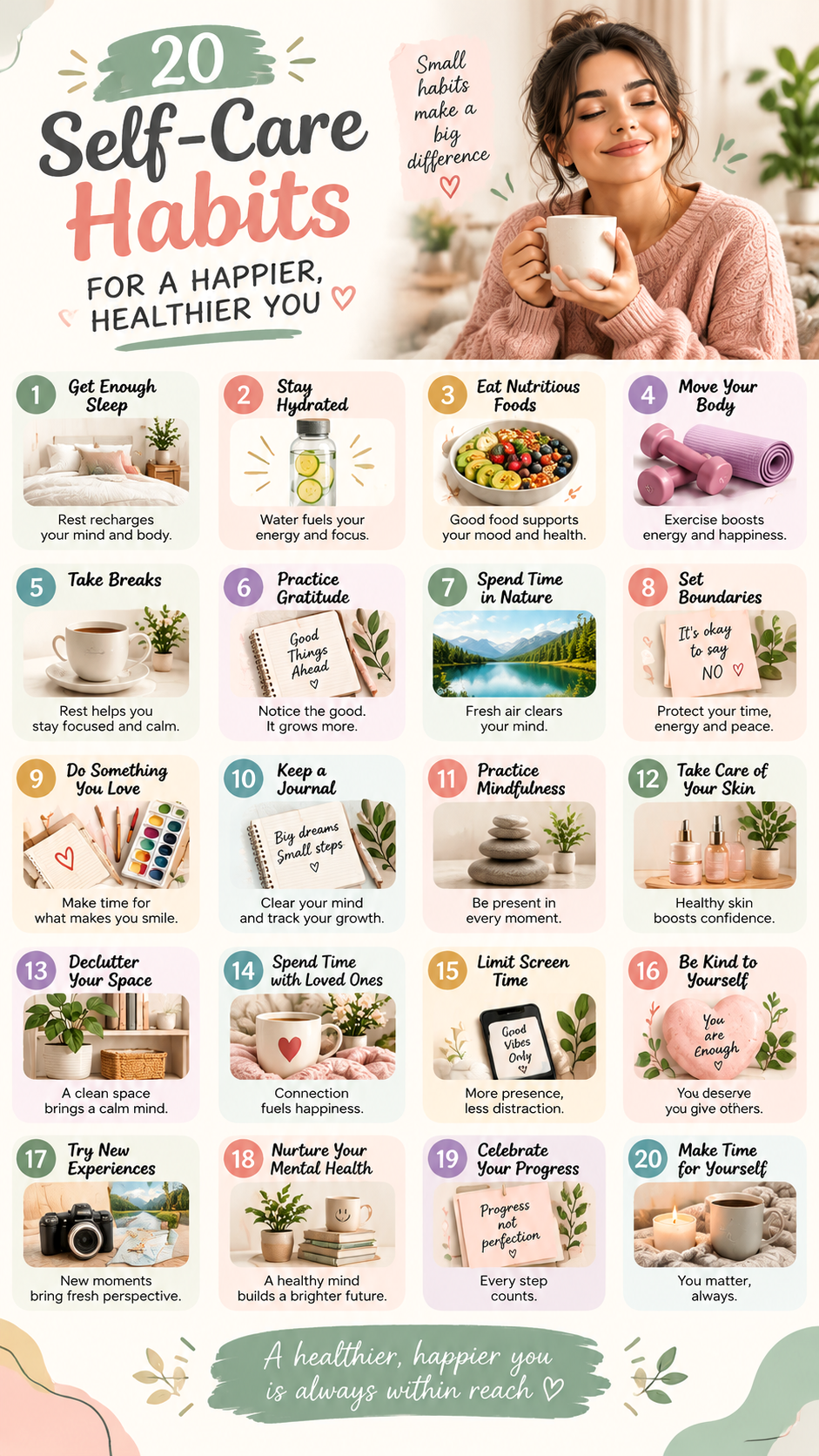
20 Self-Care Habits for Women to Boost Wellness, Happiness Daily Well-Being
Taking care of yourself does not have to mean changing your entire lifestyle or following a complicated wellness routine. Sometimes, the most meaningful improvements begin with small, everyday choices, such as getting enough sleep, drinking more water, enjoying a nourishing meal, or taking a few quiet minutes to breathe. These simple self-care habits can help you feel more balanced, energized, and connected to yourself.
For women juggling work, family, relationships, personal goals, and countless daily responsibilities, making time for personal well-being can easily fall to the bottom of the list. However, self-care is not selfish, and it does not need to be expensive or time-consuming. With a little intention, you can create a daily self-care routine that supports your physical health, emotional well-being, and overall happiness.
From practicing gratitude and spending time in nature to setting boundaries and limiting screen time, these 20 self-care habits offer practical ways to nurture yourself. The goal is not perfection. It is to discover small actions that make you feel better and gradually turn them into sustainable habits.
Key Takeaways
- Build a self-care routine around small habits you can realistically maintain.
- Prioritize sleep, hydration, nourishing foods, and regular movement.
- Support your mental wellness through mindfulness, gratitude, journaling, and time outdoors.
- Protect your energy by setting boundaries and taking breaks from digital distractions.
- Make room for hobbies, meaningful relationships, and activities that bring you joy.
- Celebrate your progress and remember that consistency matters more than perfection.
What Is Self-Care and Why Does It Matter?
Self-care refers to the everyday actions you take to support your physical health, emotional balance, mental well-being, and personal needs. It can include practical activities such as preparing healthy meals, maintaining a comfortable living space, getting sufficient rest, or scheduling time for an important appointment.
It can also involve less visible choices, including saying no when your schedule is already full, asking for help, recognizing your emotions, or allowing yourself to rest without feeling guilty.
Self-care looks different for everyone. One woman might feel refreshed after a morning walk, while another might prefer reading a book, enjoying a quiet cup of tea, or spending time with friends. The most effective routine is one that reflects your needs, values, circumstances, and energy levels.
Important: Self-care is not another demanding task to add to your to-do list. Think of it as a way to support yourself through everyday life. Start with one small change, notice how it makes you feel, and build from there.
20 Self-Care Habits for a Happier, Healthier Life
1. Get Enough Quality Sleep
Sleep is one of the foundations of a healthy self-care routine. Rest allows your body and mind to recover from the demands of the day and supports attention, mood, memory, and everyday functioning.
For most adults, aiming for seven to nine hours of sleep each night is a useful starting point. Your individual needs may vary, but a consistent sleep schedule can help you establish a more restful routine.
Try going to bed at a similar time each evening, creating a relaxing bedtime ritual, and making your bedroom comfortable, quiet, and dark. Limiting stimulating activities before bed may also make it easier to unwind.
2. Stay Hydrated Throughout the Day
Drinking enough water is a simple way to support your daily well-being. Water helps regulate body temperature, transport nutrients, and maintain normal bodily functions. Your hydration needs depend on factors such as activity, climate, diet, and individual health.
Keep a reusable water bottle nearby, drink water with meals, and take regular sips throughout the day. If plain water feels boring, add lemon slices, cucumber, mint, or berries for a refreshing twist.
Rather than worrying about a perfect daily number, pay attention to your body’s signals and follow any personalized hydration advice from your healthcare professional.
3. Eat Nourishing Foods
Food provides the energy and nutrients your body needs to function. Building balanced meals with vegetables, fruits, whole grains, protein sources, and healthy fats can support overall health and help you feel satisfied throughout the day.
Self-care does not require a restrictive diet or a complicated meal plan. Start with manageable changes, such as adding fruit to breakfast, including vegetables at lunch, or preparing a nourishing snack before a busy afternoon.
Enjoy your favorite foods without turning meals into a source of guilt. A flexible, balanced approach is generally more sustainable than trying to follow rigid food rules.
4. Move Your Body in a Way You Enjoy
Physical activity can support cardiovascular health, mobility, strength, sleep, and emotional well-being. It does not have to involve an intense gym session or a strict workout schedule.
Choose movement that feels enjoyable and appropriate for your abilities. You might try walking, stretching, dancing, swimming, cycling, yoga, or a short home workout. Even a brief movement break can be a helpful way to interrupt long periods of sitting.
The key is to make activity fit your life rather than forcing yourself into a routine you dislike. Begin with a realistic goal and gradually increase your activity as you feel comfortable.
5. Take Regular Breaks
Constantly moving from one responsibility to another can leave you feeling mentally tired. Short breaks give you an opportunity to pause, reset your attention, and notice what you need before continuing with the day.
Step away from your desk, stretch your shoulders, make a warm drink, sit somewhere peaceful, or take a few slow breaths. If possible, move away from screens during some of these breaks to give your eyes and attention a rest.
You do not have to wait until you feel exhausted to take a pause. Small moments of rest can become a natural part of a balanced daily routine.
6. Practice Gratitude
Gratitude is the practice of noticing and appreciating positive or meaningful parts of your life. It does not mean pretending that difficulties do not exist. Instead, it encourages you to make room for moments of appreciation alongside your challenges.
Each morning or evening, write down three things you appreciate. They might include a supportive friend, a delicious meal, a peaceful morning, a personal achievement, or a small moment that made you smile.
Keep your practice simple and genuine. Some days, you may have several things to write about. On other days, recognizing one small comfort is enough.
7. Spend Time in Nature
Fresh air and natural surroundings can offer a welcome change from busy schedules and indoor routines. Spending time outside may help you feel calmer, refresh your attention, and create space for reflection.
Visit a local park, walk along a tree-lined street, sit in a garden, or enjoy your morning coffee near an open window. If you have limited access to outdoor spaces, caring for houseplants or spending time near natural light can bring a little nature into your environment.
Make these moments enjoyable rather than turning them into another performance goal. Leave your phone in your bag when possible and notice the sounds, colors, and details around you.
8. Set Healthy Boundaries
Healthy boundaries help you protect your time, energy, personal space, and emotional well-being. They can be especially valuable when you are balancing work, relationships, family responsibilities, and your own goals.
Start by noticing situations that leave you feeling overwhelmed or resentful. You might need to reduce unnecessary commitments, establish clearer work hours, ask others to share responsibilities, or limit conversations that consistently drain you.
You can communicate boundaries kindly and directly. For example, say, “I cannot take that on this week,” or “I need some quiet time before we continue this conversation.”
Setting boundaries does not mean you care less about other people. It means recognizing that your needs matter, too.
9. Make Time for Activities You Love
Personal hobbies give you opportunities to explore your interests, express yourself, and enjoy something beyond your everyday responsibilities. They can also help you reconnect with parts of yourself that become overlooked during busy periods.
Try painting, baking, gardening, reading, photography, crafting, cooking a new recipe, or learning a musical instrument. You do not need to be talented or productive for an activity to be worthwhile.
Choose hobbies because they interest you, not because they need to lead to an achievement. Give yourself permission to enjoy the process without judging the outcome.
10. Keep a Journal
Journaling provides a private space to organize your thoughts, explore your feelings, and reflect on personal experiences. Writing can help you identify recurring concerns, recognize patterns, and clarify what matters most to you.
You do not need an elaborate journal or a perfect writing style. Spend five minutes answering a simple question, such as “What is taking up most of my mental energy today?” or “What would make tomorrow feel a little easier?”
You can also use your journal to track goals, record small wins, plan your week, or write about moments that made you feel proud. If writing feels uncomfortable, try a voice note or a short list instead.
11. Practice Mindfulness
Mindfulness means paying attention to the present moment with curiosity rather than immediately judging what you notice. It can be practiced during meditation, walking, eating, stretching, or completing ordinary daily activities.
Begin with a simple breathing exercise. Sit comfortably, relax your shoulders, and notice the natural rhythm of your breath for a minute or two. When your mind wanders, gently bring your attention back without criticizing yourself.
You can also practice mindfulness while washing dishes, drinking tea, or taking a shower. Focus on the sensations, sounds, and movements involved rather than automatically thinking about the next task.
Mindfulness is not about eliminating every thought. It is about learning to notice what is happening without feeling that you must react to everything immediately.
12. Take Care of Your Skin
A simple skincare routine can become a pleasant daily ritual. Cleansing, moisturizing, and protecting your skin from the sun are useful basics for many people, although individual needs vary depending on skin type, sensitivity, and other factors.
In the morning, consider using a gentle cleanser if needed, a suitable moisturizer, and broad-spectrum sunscreen with SPF 30 or higher. In the evening, remove makeup and sunscreen, cleanse gently, and moisturize.
Introduce new products gradually and avoid assuming that an expensive or complicated routine is automatically better. If you have persistent irritation or a skin concern that does not improve, a qualified healthcare professional or dermatologist can offer personalized guidance.
13. Declutter Your Space
Your surroundings can influence how comfortable and organized your daily life feels. Clutter may make it harder to locate important items or relax in a room, especially when you already have a lot on your mind.
You do not need to transform your entire home in one afternoon. Start with a small area, such as your bedside table, desk, bathroom counter, or handbag. Put away items you use regularly, remove things you no longer need, and create a simple place for everyday essentials.
Choose an organizing system that is easy to maintain. A calm space is not about achieving a picture-perfect home. It is about making your environment work better for you.
14. Spend Time With Loved Ones
Meaningful relationships can provide companionship, encouragement, and a sense of connection. Making time for people who treat you with respect and care is an important part of emotional well-being.
Send a thoughtful message, arrange a relaxed coffee date, call a family member, or plan a simple evening with a close friend. You can also strengthen relationships through small gestures, such as listening carefully or asking someone how they are really doing.
Focus on the quality of your connections rather than the number of people in your social circle. Healthy relationships make room for honesty, mutual support, and personal boundaries.
15. Limit Screen Time
Phones and digital devices help us work, communicate, and stay informed, but constant notifications and scrolling can interrupt rest, concentration, and face-to-face connection.
Start by identifying the times when screen use feels least helpful. Perhaps you reach for your phone immediately after waking up, check social media during every break, or continue scrolling long after you intended to go to bed.
Try creating phone-free periods during meals, the first few minutes of your morning, or the hour before bedtime. Turn off nonessential notifications and keep your phone away from your sleeping area if it regularly distracts you.
Pro Tip: Replace one automatic scrolling session with an activity that genuinely refreshes you. A short walk, a few pages of a book, a conversation, or five minutes of quiet can make your break feel more intentional.
16. Be Kind to Yourself
The way you speak to yourself can shape how you respond to mistakes, setbacks, and difficult days. Self-compassion means treating yourself with the understanding you would offer someone you care about.
When something goes wrong, notice whether your inner voice becomes harsh or critical. Instead of saying, “I never do anything right,” try a more balanced response, such as, “This did not go as planned, but I can learn from it.”
Being kind to yourself does not mean avoiding responsibility. You can acknowledge mistakes, make changes, and still recognize that you deserve patience and respect.
Practice accepting that your energy and abilities may change from day to day. You do not have to earn rest, kindness, or a sense of worth by accomplishing everything on your list.
17. Try a Digital Detox
A digital detox involves intentionally stepping away from some or all digital devices for a set period. Unlike simply reducing screen time, it creates a clear opportunity to reconnect with offline activities and give your attention a break.
You might start with a 30-minute phone-free period, spend an afternoon without social media, or leave your phone in another room while reading or enjoying a meal. Choose an approach that fits your responsibilities and comfort level.
Use the time for something meaningful to you, such as preparing food, taking a walk, working on a creative project, or enjoying an uninterrupted conversation.
If you rely on your phone for work, caregiving, accessibility, or emergencies, adapt the idea rather than aiming for complete disconnection. The goal is to use technology intentionally, not to create unnecessary stress.
18. Nurture Your Mental Health
Mental wellness includes recognizing your emotions, responding to stress, maintaining supportive relationships, and seeking help when you need it. It is not about feeling happy every moment or managing every challenge independently.
Give yourself opportunities to identify what you are feeling. You might write in a journal, talk with someone you trust, take a quiet break, or make a plan to address a stressful situation one step at a time.
Pay attention to ongoing changes in your mood, sleep, motivation, or ability to manage daily responsibilities. If emotional difficulties persist, interfere with your life, or feel overwhelming, consider speaking with a qualified mental health professional.
Asking for help is a constructive form of self-care. You deserve support when life becomes difficult, just as you deserve encouragement when things are going well.
19. Celebrate Your Progress
Personal growth often happens through small, repeated actions rather than dramatic changes. Recognizing your progress can help you appreciate the effort you are making, even when the results are not immediately visible.
Celebrate the moments when you follow through on a healthy habit, speak up about your needs, complete a difficult task, or choose rest instead of pushing yourself too far.
You can keep a weekly list of accomplishments, mark milestones in your journal, or share good news with someone supportive. Your celebrations do not need to involve purchases or elaborate plans. Sometimes, simply pausing to acknowledge your effort is enough.
Remember that progress is rarely perfectly consistent. Missing a day does not erase what you have already achieved. Return to your routine when you can and keep moving forward at a manageable pace.
20. Make Time for Yourself Every Day
Personal time gives you a chance to check in with yourself without constantly responding to other people’s needs. It can be especially valuable when your days feel crowded with responsibilities.
Set aside 10 to 15 minutes for an activity that helps you feel comfortable and refreshed. Enjoy a cup of tea, read a few pages of a book, stretch, listen to music, write in your journal, or sit quietly without a specific goal.
If your schedule is unpredictable, attach this moment to something you already do. You could enjoy a peaceful drink after breakfast, stretch after work, or read briefly before bed.
The purpose is not to complete another wellness task. It is to create a little space in which you can notice your needs and choose how you want to spend your time.
How to Build a Self-Care Routine You Can Maintain
Knowing which habits support your well-being is helpful, but turning them into a consistent routine can be more challenging. A practical approach begins with choosing a few habits that fit your current lifestyle instead of trying to change everything at once.
Start With One or Two Habits
Choose habits that address your most immediate needs. If you feel tired, focus on a more consistent bedtime. If your days are sedentary, add a short walk. If your mind feels crowded, try journaling for a few minutes in the evening.
Once these actions become easier to maintain, consider adding another habit. A gradual approach can make self-care feel more manageable and reduce the pressure to create a perfect routine immediately.
Connect New Habits to Existing Routines
It can be easier to remember a new habit when you connect it to an activity that is already part of your day. This approach makes self-care more practical because you do not need to find an entirely new place in your schedule.
- After waking up, drink a glass of water and open the curtains.
- After breakfast, spend two minutes planning your priorities.
- After lunch, take a short walk or stretch.
- After work, put your phone away for a brief reset.
- Before bed, write down one thing you appreciated about your day.
Make Your Routine Flexible
Your schedule, responsibilities, and energy levels will change. A routine that works on a quiet weekend may not be realistic on a busy weekday, so create smaller alternatives for demanding days.
For example, if you cannot fit in a full workout, stretch for five minutes. If you do not have time for a long journaling session, write one sentence. If cooking a complete meal is not possible, choose a simple combination of foods that meets your needs.
Why This Matters: Sustainable self-care depends on finding habits that work in real life, including imperfect and stressful days. A smaller action you can repeat is often more practical than an ambitious routine you struggle to maintain.
A Simple Daily Self-Care Schedule
If you are unsure where to begin, use this sample schedule as inspiration. Adjust the activities to match your work hours, family commitments, preferences, and energy levels.
Morning: Start With Intention
- Drink water and enjoy a balanced breakfast if it suits your routine.
- Open the curtains or spend a few minutes outside in natural light.
- Stretch gently or take a short walk.
- Choose one or two realistic priorities for the day.
Afternoon: Protect Your Energy
- Take short breaks between demanding tasks.
- Eat a nourishing meal and drink water regularly.
- Step away from your screen when possible.
- Check your schedule before accepting additional commitments.
Evening: Slow Down and Recharge
- Spend time on a hobby or connect with someone you care about.
- Prepare your space for a more comfortable evening.
- Write down a few thoughts or reflect on something positive.
- Reduce stimulating screen activities before bedtime.
- Give yourself enough time to wind down and sleep.
Remember that this is a flexible guide, not a list of requirements. Choose the parts that help you feel supported and leave out anything that makes your day more stressful.
Common Self-Care Mistakes to Avoid
Self-care should make your life more supportive, not create another source of pressure. A few common misunderstandings can make it harder to build a routine that genuinely meets your needs.
Trying to Change Everything at Once
Starting a new diet, exercise plan, bedtime, journaling practice, and digital detox simultaneously may feel exciting, but managing too many changes can quickly become overwhelming. Choose a small number of priorities and give yourself time to adjust.
Comparing Your Routine With Others
Social media often presents carefully selected moments from people’s lives. Your needs, resources, health, and responsibilities may be very different from theirs. Use other people’s routines for inspiration rather than as a standard you must meet.
Believing Self-Care Must Be Expensive
You do not need luxury skincare products, expensive fitness memberships, or a perfect home to care for yourself. Walking, resting, drinking water, writing in a notebook, and spending time with supportive people can all be part of an accessible self-care routine.
Feeling Guilty About Rest
Rest is a normal human need, not a reward that must be earned through constant productivity. If you find it difficult to slow down, start with short breaks and remind yourself that caring for your well-being is a legitimate use of your time.
Expecting Immediate Results
Some habits may help you feel better quickly, while others take time to become part of your routine. Focus on how practical and supportive a habit feels instead of expecting every change to transform your life overnight.
How to Stay Consistent With Your Self-Care Habits
Consistency becomes easier when your habits are simple, meaningful, and connected to your everyday life. Rather than relying on motivation alone, create an environment that reminds you to care for yourself.
- Keep your tools visible: Place your journal beside your bed, keep a water bottle nearby, or leave your walking shoes where you can easily find them.
- Use gentle reminders: Add a short break to your calendar or set a reminder to begin winding down in the evening.
- Track small wins: Use a checklist to notice your efforts without turning every missed day into a failure.
- Choose habits you enjoy: If you dislike a particular activity, explore another way to meet the same need.
- Review your routine: Every week or two, ask what is helping, what feels difficult, and what you would like to change.
It is also helpful to remember that different seasons of life call for different forms of self-care. During a busy period, you may need more rest and simpler meals. During a calmer period, you might have more time for exercise, hobbies, or personal projects.
Your routine is allowed to evolve. The aim is to support the person you are today, not to follow an unchanging plan forever.
Quick Points: Self-Care at a Glance
Your Daily Wellness Checklist
- Prioritize restful sleep and regular hydration.
- Move your body and enjoy nourishing meals.
- Make space for mindfulness, gratitude, and reflection.
- Set boundaries and take breaks from digital distractions.
- Connect with loved ones and enjoy activities that bring you joy.
- Celebrate small improvements and treat yourself with kindness.
Conclusion: Small Self-Care Habits Can Make Everyday Life Feel Better
Building a healthier, happier life does not require a complete lifestyle transformation. Often, it begins with small decisions that help you feel more rested, organized, connected, and supported. Getting enough sleep, drinking water, eating nourishing foods, moving your body, and making time for quiet moments are practical ways to begin.
As you explore these 20 self-care habits, remember that you do not need to adopt every suggestion. Choose the ideas that fit your current needs and start with one or two actions you can realistically repeat. Give yourself time to discover what works, and adjust your routine when your circumstances change.
Most importantly, let self-care be an expression of respect for yourself rather than another measure of achievement. You are allowed to rest, ask for help, protect your time, enjoy your interests, and celebrate your progress, even when life is not perfectly organized.
A happier, healthier routine is built one choice at a time. Start small, stay flexible, and keep making room for the things that help you feel like yourself. Your everyday well-being deserves attention, and the care you give yourself today can become a meaningful part of the life you are creating.
Tags
Self-Care Habits
Women’s Wellness
Daily Self-Care Routine
Mental Wellness
Self-Love
Healthy Lifestyle
Mindfulness
Personal Growth