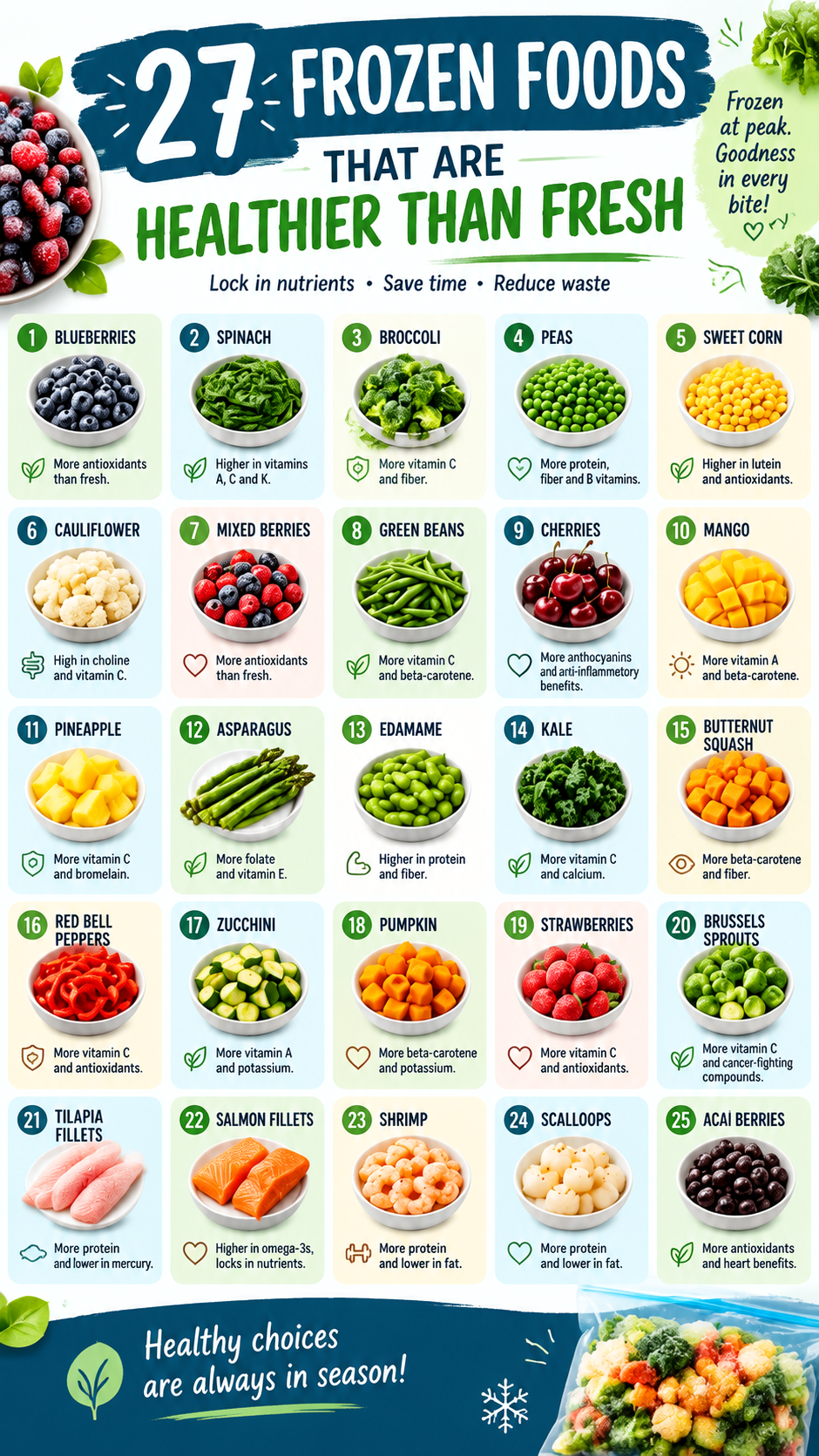
27 Frozen Foods That Are Healthier Than Fresh for Easy Healthy Eating
Frozen foods deserve a permanent place on your grocery list, especially when you want to eat healthier without spending hours shopping, chopping, and cooking. From antioxidant-rich blueberries and colorful mixed berries to nutrient-packed spinach, broccoli, salmon, and shrimp, your freezer can hold a surprising variety of nutritious ingredients. Many frozen fruits and vegetables are harvested when ripe and frozen soon afterward, helping preserve their quality, flavor, and nutrients.
Fresh produce is wonderful, but it is not always the most convenient or affordable option. Frozen foods offer flexibility, reduce food waste, and make it easier to prepare balanced meals throughout the week. Some frozen ingredients can even provide more of certain nutrients than fresh produce that has spent several days in storage.
Whether you are planning healthy breakfasts, quick lunches, satisfying dinners, or simple smoothies, these 27 healthy frozen foods can help you build a more nutritious and practical eating routine.
Key Takeaways
- Frozen fruits and vegetables can retain important vitamins, minerals, fiber, and antioxidants.
- Berries, spinach, broccoli, peas, and edamame are convenient additions to a balanced diet.
- Frozen salmon, tilapia, shrimp, and scallops provide practical protein options for quick meals.
- Frozen produce can help reduce food waste and make meal preparation easier.
- Choose plain frozen ingredients whenever possible to limit added sugar, sodium, and unnecessary sauces.
- Proper freezer storage and safe thawing help maintain food quality and safety.
Why Frozen Foods Can Be Healthier Than You Think
Frozen food often gets an unfair reputation for being less nutritious than fresh food. In reality, freezing is an effective preservation method that slows the activity of microorganisms and enzymes responsible for food deterioration. It also allows many fruits and vegetables to be stored for extended periods without relying on heavy processing.
Many vegetables are harvested at a suitable stage of ripeness, briefly blanched when appropriate, and frozen soon afterward. This process can help preserve their nutritional quality. Fruits are often frozen with minimal processing, although some products contain added sugar or syrup.
The nutritional comparison between fresh and frozen foods depends on several factors, including the type of food, how quickly it was frozen, how long it was stored, and how it was prepared. Fresh produce eaten shortly after harvest can be highly nutritious, while frozen produce may retain certain nutrients better than fresh items that have traveled long distances or spent considerable time in storage.
Important: Frozen foods are not automatically healthier than fresh foods in every situation. Their biggest advantages are convenience, longer storage life, reduced spoilage, and the ability to keep nutritious ingredients available whenever you need them.
27 Healthy Frozen Foods to Add to Your Grocery List
1. Blueberries
Frozen blueberries are an easy way to add natural sweetness, fiber, and antioxidants to your meals. They contain anthocyanins, the plant compounds responsible for their deep blue color, which are studied for their role in supporting overall health.
Add frozen blueberries to oatmeal, yogurt, overnight oats, smoothies, or homemade whole-grain muffins. You can also warm them in a saucepan to create a simple fruit topping without needing much additional sweetener.
2. Spinach
Frozen spinach is a convenient source of folate, vitamin K, and other nutrients. It is especially useful when fresh spinach tends to wilt before you finish the package.
Stir it into soups, omelets, pasta sauces, curries, casseroles, or lentil dishes. Frozen spinach usually works best in cooked meals because freezing changes its texture. Squeeze out excess water when necessary to prevent watery sauces and fillings.
3. Broccoli
Frozen broccoli provides fiber, vitamin C, vitamin K, and other beneficial plant compounds. Its florets are already prepared, making it easy to add a green vegetable to meals without washing and cutting a whole head.
Roast frozen broccoli in a hot oven, steam it for a quick side dish, or add it to stir-fries and pasta. For better texture, avoid overcrowding the baking tray and allow moisture to escape during roasting.
4. Green Peas
Green peas contain plant-based protein, fiber, folate, and several vitamins. Their mild sweetness makes them suitable for children and adults alike.
Keep a bag in the freezer for soups, rice dishes, vegetable curries, pasta, and quick side dishes. Peas cook rapidly, so they can often be added near the end of a recipe to preserve their color and texture.
5. Sweet Corn
Frozen sweet corn offers carbohydrates for energy, fiber, and carotenoids such as lutein and zeaxanthin. These naturally occurring compounds are associated with eye health.
Add corn to vegetable soups, bean salads, grain bowls, homemade salsa, or scrambled eggs. Plain frozen corn is particularly convenient because it can be cooked directly from frozen in many recipes.
6. Cauliflower
Frozen cauliflower is a useful source of vitamin C, fiber, and choline. Its neutral flavor makes it easy to incorporate into different cuisines.
Roast it with garlic and spices, blend it into creamy soups, or add it to vegetable curries. You can also use finely chopped cauliflower in grain bowls or mix it with rice to increase the amount of vegetables in your meal.
7. Mixed Berries
A frozen berry blend typically combines fruits such as strawberries, blueberries, raspberries, and blackberries. Each fruit contributes a different mix of vitamins, fiber, and plant compounds.
Mixed berries are ideal for smoothies, chia puddings, yogurt bowls, fruit sauces, and homemade frozen desserts. Choose unsweetened blends to enjoy their natural flavor without added sugar.
8. Green Beans
Frozen green beans provide fiber, vitamin C, vitamin K, and folate. They are also an easy way to add more vegetables to everyday meals.
Steam them for a simple side dish, sauté them with garlic, or add them to soups and stews. For a more flavorful option, roast them with olive oil, black pepper, and your favorite herbs.
9. Cherries
Frozen cherries offer natural sweetness, fiber, vitamin C, and anthocyanins. They are a convenient alternative when fresh cherries are expensive or unavailable.
Add them to oatmeal, smoothies, yogurt, or homemade fruit compotes. Check whether the cherries are pitted before using them in recipes, and choose plain frozen fruit rather than products packed with added sugar.
10. Mango
Frozen mango is rich in vitamin C and provides provitamin A carotenoids, which the body can convert into vitamin A. It also adds a naturally creamy texture to blended drinks.
Use mango chunks in tropical smoothies, fruit bowls, yogurt parfaits, homemade sorbets, or fresh-tasting salsas. Because the fruit is already cut, it saves preparation time and helps reduce waste from overripe mangoes.
11. Pineapple
Frozen pineapple supplies vitamin C and contains bromelain, a group of enzymes naturally present in pineapple. Its bright flavor makes it a refreshing ingredient for sweet and savory dishes.
Blend pineapple with yogurt and banana, add it to smoothies, or use it in cooked sauces and stir-fries. Look for unsweetened pineapple chunks to keep the ingredient list simple.
12. Asparagus
Frozen asparagus provides folate, vitamin K, and other nutrients. It is a practical choice when fresh asparagus is out of season or difficult to find at a reasonable price.
Add it to omelets, vegetable pasta, grain bowls, or creamy soups. Cook it until tender but not overly soft, and season it with lemon juice, black pepper, and a small amount of olive oil.
13. Edamame
Edamame consists of young soybeans and is an excellent plant-based source of protein and fiber. It also contributes folate, iron, and other important nutrients.
Add shelled edamame to salads, rice bowls, noodle dishes, and vegetable stir-fries. You can also serve steamed edamame as a snack with a little lemon juice or your preferred seasoning.
14. Kale
Frozen kale provides vitamins K, A, and C, along with fiber and various plant compounds. It is particularly useful in cooked recipes where its firmer texture becomes tender.
Mix kale into soups, stews, pasta sauces, lentil dishes, or green smoothies. If you prefer a milder taste, combine it with sweeter ingredients such as banana, mango, or berries.
15. Butternut Squash
Frozen butternut squash contains beta-carotene, which the body can convert into vitamin A. It also supplies carbohydrates, fiber, and a naturally sweet flavor.
Use squash cubes in roasted vegetable medleys, curries, soups, and grain bowls. For a comforting meal, blend cooked squash with vegetable stock, onion, garlic, and spices to make a smooth soup.
16. Red Bell Peppers
Frozen red bell peppers are a convenient source of vitamin C and carotenoids. They bring sweetness, color, and flavor to many everyday recipes.
Add pepper strips to fajitas, omelets, pasta sauces, soups, or stir-fries. Frozen peppers tend to soften more than fresh ones, so they are best suited to cooked dishes rather than crisp salads.
17. Zucchini
Frozen zucchini provides vitamin C, potassium, and a small amount of fiber. Because zucchini contains plenty of water, its texture changes during freezing, making it more suitable for cooked recipes.
Use frozen zucchini in vegetable soups, pasta sauces, casseroles, and blended sauces. Drain excess moisture when needed, especially if you are adding it to dishes that should remain thick.
18. Pumpkin
Frozen pumpkin is a useful source of beta-carotene and fiber. Its mild sweetness makes it a versatile ingredient for both savory meals and desserts.
Add pumpkin cubes to soups, stews, curries, or roasted vegetable dishes. You can also use suitable cooked pumpkin in oatmeal or puree it for baking. Check the package to distinguish plain pumpkin from sweetened pumpkin preparations.
19. Strawberries
Frozen strawberries supply vitamin C, fiber, and antioxidant plant compounds. They are especially helpful when fresh berries are out of season or spoil before you can finish them.
Blend them into smoothies, stir them into oatmeal, or thaw them for yogurt and overnight oats. Their natural juices can also create a flavorful topping for whole-grain pancakes or homemade chia pudding.
20. Brussels Sprouts
Frozen Brussels sprouts provide vitamin C, vitamin K, fiber, and compounds found in cruciferous vegetables. They can be an easy way to include more variety in your vegetable intake.
Roast them with olive oil, garlic, and black pepper, or add them to sheet-pan dinners with other vegetables. If roasting from frozen, spread them in a single layer to encourage browning rather than steaming.
21. Tilapia Fillets
Frozen tilapia is a convenient source of lean protein. Its mild flavor makes it suitable for many seasonings and cooking styles, particularly when you want a quick alternative to heavier main dishes.
Bake tilapia with lemon, herbs, and black pepper, or serve it with brown rice and steamed vegetables. Follow package instructions for thawing and cooking, and choose products from reputable suppliers.
22. Salmon Fillets
Frozen salmon is one of the most useful freezer staples for balanced meals. It supplies high-quality protein and omega-3 fatty acids, including EPA and DHA, which play important roles in normal body function.
Serve salmon with roasted broccoli, sweet potatoes, or whole grains for a satisfying dinner. Plain frozen fillets are versatile, while pre-seasoned options can save time if you check their sodium content and added ingredients.
23. Shrimp
Frozen shrimp is a quick-cooking source of protein that is generally low in calories when prepared without heavy sauces or excessive added fat. It also provides vitamin B12, selenium, and other nutrients.
Add shrimp to vegetable stir-fries, soups, tacos, pasta, or rice bowls. Since shrimp cooks quickly, keep an eye on it to avoid a tough, rubbery texture. Cook it thoroughly according to food safety guidance.
24. Scallops
Frozen scallops offer lean protein and nutrients such as vitamin B12 and selenium. Their delicate flavor pairs well with simple seasonings and vegetable-based sides.
Thaw them safely, pat them dry, and cook according to package directions. Serve with asparagus, peas, whole grains, or a fresh vegetable side for a balanced meal. Check labels for added sodium or phosphate-based ingredients if those are a concern.
25. Acai Berries
Acai is a dark purple fruit often sold frozen as puree or pulp. It contains plant compounds, including anthocyanins, and can add a rich berry flavor to breakfast bowls and smoothies.
Blend unsweetened acai with frozen berries and banana, then top with oats, nuts, seeds, or fresh fruit. Acai bowls can become high in sugar and calories when loaded with sweetened puree, syrups, and large portions of toppings, so balance is important.
26. Banana Slices
Frozen banana slices provide carbohydrates, potassium, and vitamin B6. Freezing ripe bananas is also a practical way to use fruit before it becomes overripe.
Peel and slice bananas before freezing them in a single layer. Once frozen, transfer the pieces to a sealed container or freezer bag. Use them in smoothies, oatmeal, or homemade banana-based frozen desserts.
27. Avocado Chunks
Frozen avocado chunks are convenient when you want the creamy texture and unsaturated fats of avocado without worrying about an entire fruit becoming overripe.
Add avocado to smoothies, spreads, or blended sauces. The texture may be softer after thawing, so frozen avocado is often better suited to mashed or blended dishes than to recipes requiring firm, fresh slices.
How to Choose the Healthiest Frozen Foods
Frozen foods can be nutritious, but shopping choices still matter. The simplest options are often plain fruits, vegetables, and seafood without added sugar, heavy sauces, or unnecessary ingredients.
Read the Ingredient List
For frozen fruit and vegetables, look for packages that list the food itself as the main or only ingredient. Some products contain sauces, salt, sugar, or seasonings that change their nutritional profile.
For seafood, check whether the product is plain or seasoned and whether the package lists added salt, breading, or other ingredients. Compare nutrition labels when you want to manage sodium or added sugars.
Choose a Variety of Colors
Different colored fruits and vegetables contain different combinations of vitamins and plant compounds. Blueberries, red strawberries, orange squash, green spinach, and yellow corn can all contribute to a varied eating pattern.
Instead of buying only one vegetable, keep a selection of colors and textures in your freezer. This makes meals more interesting and helps you include a wider range of nutrients over time.
Check the Package Condition
Choose packages that are intact and keep frozen foods cold during transport. Large amounts of loose ice or obvious clumping may indicate that a product has partially thawed and refrozen, although these signs are not conclusive on their own.
At home, place frozen foods in the freezer promptly and follow the storage guidance on the label. A freezer maintained at 0°F (-18°C) keeps food frozen and helps preserve quality.
Easy Ways to Use Frozen Foods Every Day
One of the greatest advantages of frozen ingredients is how easily they fit into a busy schedule. You do not need complicated recipes to turn them into nutritious meals.
Make a Quick Breakfast
Blend frozen blueberries, strawberries, banana, and plain yogurt for a simple smoothie. For a more filling option, add oats, chia seeds, or nut butter. You can also warm frozen berries and spoon them over oatmeal or whole-grain pancakes.
Build a Balanced Lunch Bowl
Combine a whole grain such as brown rice or quinoa with edamame, broccoli, corn, and a protein source. Add lemon juice, herbs, or a simple homemade dressing to bring the ingredients together.
This flexible approach allows you to use whatever vegetables you already have in the freezer, reducing the need for last-minute grocery trips.
Prepare a Fast Weeknight Dinner
Bake frozen salmon or tilapia according to package directions and serve it with broccoli, peas, or cauliflower. Alternatively, cook shrimp with frozen peppers and green beans for a quick stir-fry.
For a plant-based dinner, combine edamame, spinach, butternut squash, and chickpeas in a curry or stew. Serve with whole grains or another satisfying carbohydrate source.
Create Healthier Snacks and Desserts
Frozen banana slices and berries can help make naturally sweet snacks. Blend frozen bananas until creamy, or mix berries with plain yogurt for a simple dessert.
For a balanced snack, pair fruit with a source of protein or healthy fat, such as plain yogurt, nuts, or seeds. This combination can make the snack more satisfying than fruit alone.
Why This Matters
A healthy freezer is most useful when it supports meals you genuinely enjoy. Keep a mix of fruits, vegetables, and protein foods that match your usual cooking habits. When nutritious ingredients are ready to use, it becomes easier to prepare balanced meals instead of relying on less satisfying last-minute choices.
Does Freezing Destroy Nutrients?
Freezing does not destroy all nutrients, and it can help preserve many of them. However, the effect varies depending on the nutrient and the food’s handling before and after freezing.
Some water-soluble vitamins, including vitamin C and certain B vitamins, can be affected by processing, storage, and cooking. Vegetables that are blanched before freezing may lose some sensitive nutrients during that step, while freezing slows many subsequent changes.
Minerals, fiber, protein, and many fat-soluble nutrients are generally more stable during frozen storage, although preparation methods still matter. Prolonged boiling can cause water-soluble nutrients to move into the cooking water, whether the vegetables started fresh or frozen.
To make the most of your frozen produce, steam it, microwave it with a small amount of water, or add it directly to soups and stews. When appropriate, use the cooking liquid in the final dish rather than discarding it.
Frozen Food Storage and Safety Tips
Good storage habits help frozen foods retain their flavor and quality. Although food kept continuously frozen at 0°F (-18°C) remains safe for a long time, its texture and taste can gradually decline.
- Keep the freezer cold: Maintain a temperature of 0°F (-18°C) or below.
- Seal opened packages: Use airtight freezer-safe containers or resealable bags to limit exposure to air.
- Label your food: Write the purchase or freezing date on packages so you can rotate older items first.
- Prevent freezer burn: Remove excess air from packaging and keep food tightly sealed.
- Follow thawing instructions: Thaw seafood and other perishable foods in the refrigerator, in cold water using a leakproof package, or in the microwave when appropriate. Cook promptly after cold-water or microwave thawing.
- Avoid unsafe thawing: Do not leave perishable foods at room temperature for extended periods.
- Follow package directions: Some frozen foods can be cooked directly from frozen, while others require thawing first.
Pro Tip: Frozen fruits and vegetables are often ready to cook straight from the freezer, but seafood and prepared products may have specific instructions. Always follow the package directions and use a food thermometer when needed to confirm safe cooking temperatures.
Common Mistakes to Avoid When Buying Frozen Foods
Even nutritious ingredients can become less suitable for your goals when they are prepared with large amounts of added sugar, sodium, or saturated fat. A few simple shopping habits can help you make better choices.
- Assuming every frozen meal is healthy: Plain frozen produce is different from heavily breaded meals or products with rich sauces. Read the nutrition label.
- Choosing sweetened fruit without checking: Some fruit products contain added sugar or syrup. Plain frozen fruit is usually the more flexible option.
- Ignoring serving sizes: Nutritional information is often listed per serving. Check how many servings the package contains.
- Buying more than you can store: An overcrowded freezer can make it harder to organize food and maintain convenient access to everyday ingredients.
- Overcooking vegetables: Long cooking times can soften vegetables excessively and reduce certain heat-sensitive nutrients. Cook them until they reach your preferred texture.
- Forgetting protein and fiber balance: A meal made only of vegetables may not be as satisfying as one that also includes protein, whole grains, and healthy fats.
How to Build a Healthy Freezer on a Budget
Frozen foods can make healthy eating more manageable when fresh ingredients are expensive or difficult to find. Buying larger packages of frequently used ingredients may reduce the cost per serving, although prices vary by store and season.
Start with a few versatile staples rather than purchasing all 27 foods at once. A small selection of berries, spinach, broccoli, peas, and a protein option can support many different meals.
Plan two or three meals around the ingredients you already own. For example, broccoli can be used in a soup, a rice bowl, and a pasta dish. Frozen berries can be divided between breakfast smoothies and yogurt snacks.
Use the first-in, first-out approach by placing older packages toward the front of the freezer. This makes it easier to remember what you have and reduces the chance that food will remain forgotten for months.
Most importantly, choose ingredients you will actually eat. A reasonably priced bag of vegetables that becomes part of your weekly meals offers more practical value than an expensive specialty product that stays untouched.
At a Glance: The Best Frozen Foods for Different Needs
- For antioxidants: Blueberries, mixed berries, cherries, strawberries, and acai.
- For leafy greens: Spinach and kale.
- For plant-based protein: Edamame and green peas.
- For lean protein: Tilapia, shrimp, and scallops.
- For omega-3 fats: Salmon.
- For convenient smoothies: Mango, pineapple, banana slices, and frozen berries.
- For quick vegetable sides: Broccoli, cauliflower, green beans, and Brussels sprouts.
Conclusion: Make Your Freezer Part of a Healthier Lifestyle
Eating well does not have to mean buying fresh produce every few days or preparing every meal from scratch. Frozen foods offer a practical way to keep nutritious ingredients ready for breakfasts, lunches, dinners, snacks, and desserts.
From blueberries, strawberries, and mango to broccoli, spinach, edamame, salmon, and shrimp, these 27 frozen foods provide plenty of options for adding variety to your diet. Many supply valuable vitamins, minerals, fiber, protein, healthy fats, and beneficial plant compounds.
The key is to choose mostly minimally processed ingredients, check labels for added sugar and sodium, store foods correctly, and prepare them in ways that preserve their quality. Pair frozen vegetables with protein and whole grains, use frozen fruit to make simple breakfasts, and keep a few reliable ingredients available for busy evenings.
Frozen foods do not need to replace fresh produce completely. Both can contribute to a healthy eating pattern, and the best choice is often the one that fits your budget, preferences, and schedule.
Next time you shop, take a look down the freezer aisle. A few thoughtful additions can make everyday meals easier, reduce food waste, and help you enjoy a wider variety of nutritious foods throughout the year.
Tags
Healthy Frozen Foods
Frozen Fruits
Frozen Vegetables
Healthy Grocery List
Nutrition Tips
Healthy Meal Prep
Freezer Staples
Healthy Eating Ideas