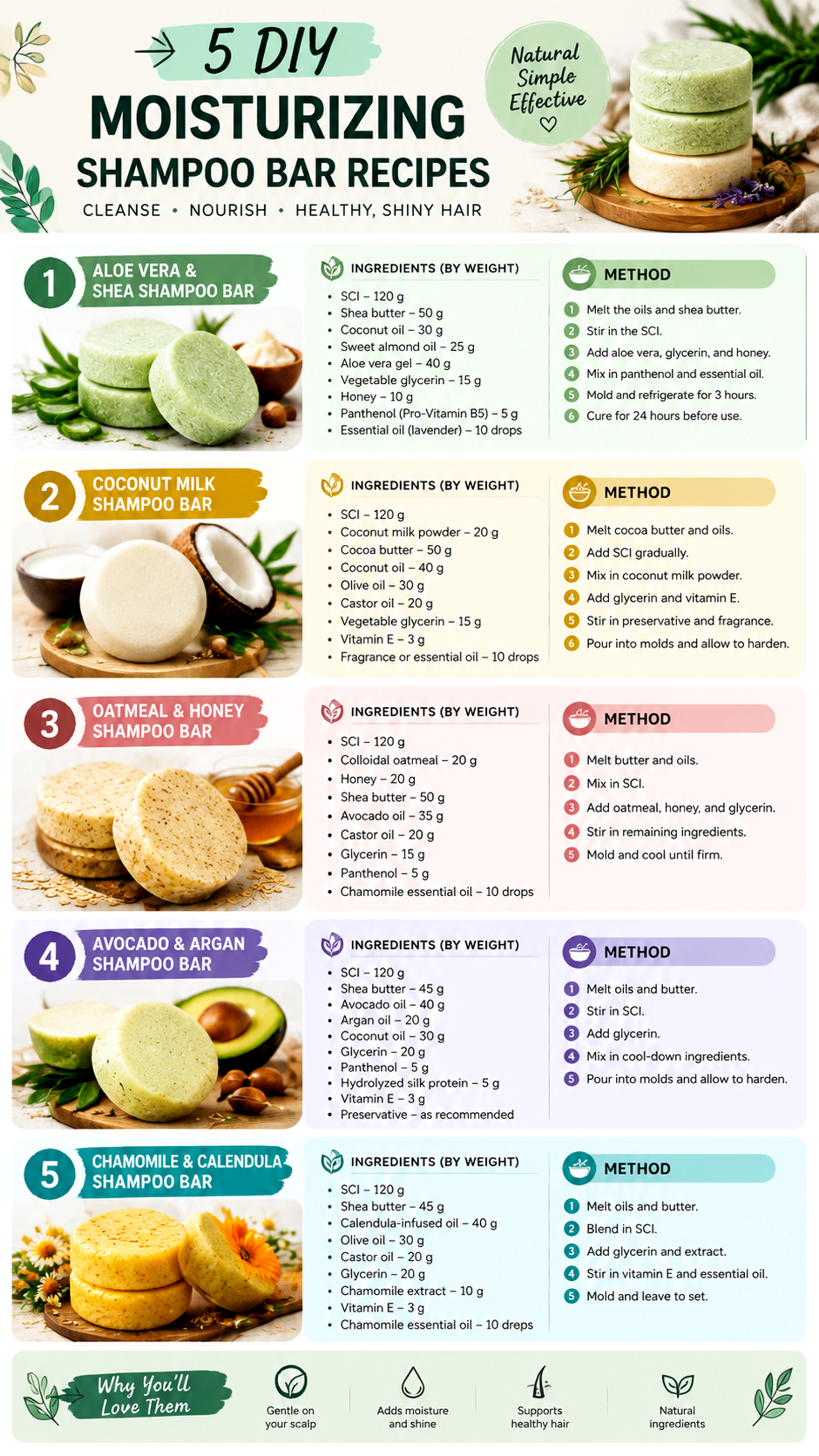
5 Moisturizing Shampoo Bar Recipes for Dry Hair and Natural Hair Care
Creating a healthier hair care routine does not always require complicated products or long ingredient lists. Handmade shampoo bars have become a popular choice for people looking for gentle cleansing, moisturizing benefits, and a more sustainable approach to beauty. With nourishing ingredients like shea butter, aloe vera, coconut milk, oatmeal, honey, avocado oil, and botanical extracts, these solid hair care options offer a simple way to support dry, damaged, or sensitive hair needs.
The right shampoo bar recipe can help transform your regular washing routine into a more intentional self-care experience. Whether your hair feels dry after washing, your scalp needs extra comfort, or you want to explore eco-friendly beauty alternatives, moisturizing shampoo bars provide plenty of creative possibilities.
Key Takeaways
- Moisturizing shampoo bars combine gentle cleansing with nourishing ingredients.
- Natural additions like aloe vera, shea butter, and oils support softer-looking hair.
- Different recipes can be customized for dry, sensitive, or damaged hair types.
- Solid shampoo bars are a convenient option for reducing traditional plastic packaging.
- Proper storage helps extend the life of handmade shampoo bars.
Why Moisturizing Shampoo Bars Are Gaining Popularity
Many people are moving toward simpler beauty routines that focus on effective ingredients and mindful choices. Shampoo bars fit perfectly into this movement because they offer a compact, easy-to-use alternative to traditional liquid shampoos.
Unlike many conventional hair products that may contain long ingredient lists, handmade shampoo bars allow creators to choose specific ingredients based on hair goals. Moisturizing formulas often include rich butters, lightweight oils, and conditioning ingredients designed to leave hair feeling refreshed without a heavy buildup.
Important: A well-balanced shampoo bar is about more than cleansing. The combination of gentle surfactants, moisturizing oils, and conditioning ingredients can create a more comfortable washing experience, especially for hair that feels dry or rough.
Understanding the Main Ingredients in Moisturizing Shampoo Bars
Shea Butter for Deep Nourishment
Shea butter is a common ingredient in moisturizing hair products because of its rich texture and conditioning qualities. In shampoo bars, it helps create a creamy formula that feels gentle during use. It is especially popular in recipes designed for dry or brittle hair.
When combined with cleansing ingredients, shea butter can help balance the formula by adding softness and a smoother feel to the finished bar.
Aloe Vera for a Gentle Hair Care Routine
Aloe vera is often included in natural beauty recipes because of its refreshing and soothing reputation. In shampoo bars, aloe vera can add a lightweight moisturizing element while supporting a gentle cleansing experience.
It is commonly paired with ingredients such as glycerin, honey, or botanical extracts to create formulas that feel balanced rather than overly stripping.
Plant Oils for Softness and Shine
Oils such as coconut oil, avocado oil, argan oil, olive oil, and sweet almond oil appear frequently in handmade shampoo bar recipes. Each oil brings its own texture and characteristics to a formula.
- Coconut oil: A popular choice for creating a rich, conditioning feel.
- Avocado oil: Often selected for recipes focused on nourishment.
- Argan oil: Known for its lightweight feel in beauty routines.
- Olive oil: A traditional ingredient used in many moisturizing formulas.
Exploring Different Shampoo Bar Recipe Ideas
Aloe Vera and Shea Shampoo Bar
This type of shampoo bar is designed around moisture-focused ingredients. Aloe vera, shea butter, and gentle conditioning additions create a formula that suits people looking for a soft and comfortable hair washing experience.
The combination works well as inspiration for anyone creating a handmade shampoo bar collection because it highlights the balance between cleansing and hydration.
Coconut Milk Shampoo Bar
Coconut milk is often associated with rich, creamy beauty treatments. A coconut milk shampoo bar recipe focuses on creating a nourishing feel while using ingredients that complement dry or fragile hair routines.
This style of bar is especially appealing for those who enjoy tropical-inspired natural beauty products.
Oatmeal and Honey Shampoo Bar
Oatmeal and honey are classic ingredients in gentle skincare recipes, and they also make interesting additions to hair care products. This combination is often chosen for sensitive routines because of its comforting and simple ingredient profile.
Avocado and Argan Shampoo Bar
For hair that has experienced heat styling, coloring, or environmental stress, richer oils are often included in conditioning-focused formulas. Avocado and argan oil create a luxurious combination that works well in handmade beauty recipes.
Chamomile and Calendula Shampoo Bar
Botanical ingredients add a natural touch to shampoo bars. Chamomile and calendula are popular choices in gentle beauty products because they create a calming, plant-inspired experience.
How to Use a Shampoo Bar Correctly
Switching from liquid shampoo to a solid bar may require a small adjustment. The technique you use can affect how well the product performs.
- Wet your hair thoroughly before applying the shampoo bar.
- Rub the bar between your hands to create a light lather, or gently glide it over your hair.
- Massage the shampoo into your scalp and hair.
- Rinse completely to remove residue.
- Allow the shampoo bar to dry between uses.
Tips for Making Shampoo Bars Last Longer
Proper storage plays an important role in maintaining the quality of a shampoo bar. Because these bars are activated by water, keeping them dry between uses helps prevent unnecessary softening.
- Store shampoo bars on a draining soap dish.
- Keep them away from constant water flow in the shower.
- Allow air circulation around the bar after each use.
- Cut larger bars into smaller pieces if you prefer easier handling.
Why Handmade Hair Care Can Be a Rewarding Hobby
Creating homemade shampoo bars can become more than a beauty project. It allows you to experiment with different textures, scents, and ingredient combinations while building a more personalized routine.
Many people enjoy handmade hair care because it connects everyday self-care with creativity. From choosing botanical ingredients to designing beautiful bars, the process can feel both practical and relaxing.
Why This Matters
- Natural hair care routines encourage more mindful ingredient choices.
- Shampoo bars offer a compact and convenient beauty option.
- Custom formulas allow you to explore what works best for your hair needs.
At a Glance: Moisturizing Shampoo Bar Benefits
- Gentle cleansing with nourishing ingredients
- Creative options for different hair types
- Simple addition to natural beauty routines
- Easy storage and travel-friendly design
Conclusion: Create a More Nourishing Hair Care Routine
Moisturizing shampoo bars are a wonderful way to explore natural hair care while focusing on ingredients that support a gentle and nourishing routine. From aloe vera and shea butter to coconut milk, oatmeal, and botanical extracts, each recipe style offers inspiration for creating a personalized washing experience.
Whether you are interested in handmade beauty, eco-conscious living, or simply finding a better match for dry hair, shampoo bars provide an exciting opportunity to simplify your routine. With thoughtful ingredients and proper care, these little bars can become a valuable part of everyday self-care.
Tags
Shampoo Bar Recipes
Natural Hair Care
DIY Beauty
Moisturizing Hair Care
Handmade Shampoo
Eco Friendly Beauty