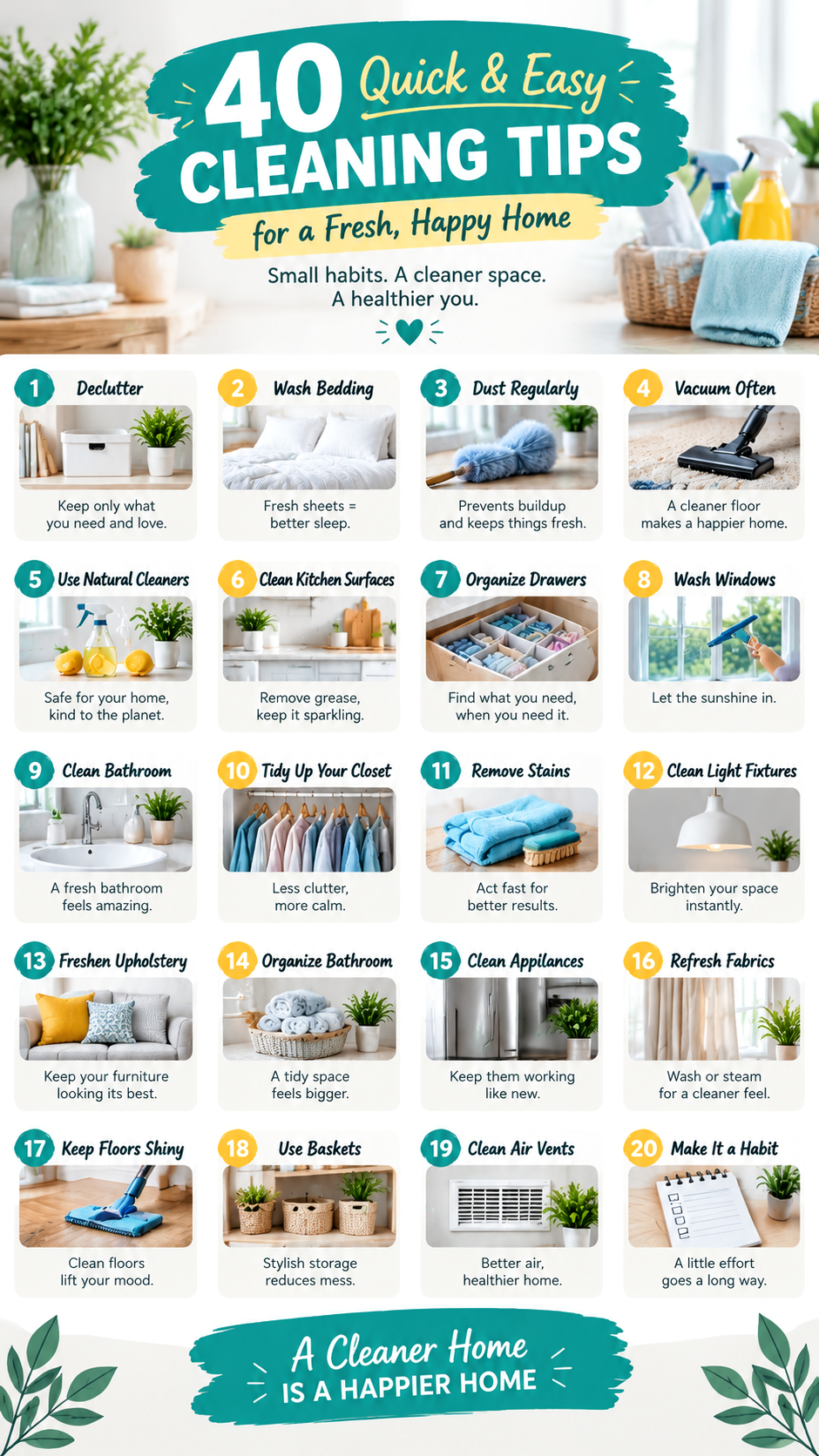
50 Bedroom Cleaning Hacks for a Fresh, Clean Organized Home
A clean, organized bedroom can make your entire home feel more peaceful, comfortable, and inviting. However, keeping your bedroom tidy does not have to mean spending hours scrubbing, dusting, and sorting through clutter. With a few clever bedroom cleaning hacks, you can make everyday chores easier, freshen up your sleeping space, and create a room that feels wonderful to walk into each morning.
From washing bedding and removing dust to organizing drawers and keeping floors spotless, these easy bedroom cleaning tips cover the small tasks that make a big difference. Whether you are refreshing a guest room, tackling a weekend deep clean, or simply trying to maintain a more organized home, these practical ideas will help you build a cleaning routine that works for your lifestyle.
Key Takeaways
- Make your bed daily to give the entire bedroom a tidier appearance.
- Wash bedding regularly and clean pillows, curtains, and mattresses according to their care instructions.
- Use storage bins, drawer dividers, and matching hangers to reduce clutter.
- Dust from top to bottom and vacuum under furniture to remove hidden dirt.
- Freshen the room with good ventilation, clean fabrics, and simple organizing habits.
- Follow a realistic cleaning schedule instead of waiting for clutter and dust to build up.
1. Start With Simple Daily Bedroom Cleaning Habits
The easiest way to maintain a clean bedroom is to take care of small tasks before they become overwhelming. A few minutes of daily tidying can reduce the amount of work needed during your weekly cleaning session.
1. Make Your Bed Every Morning
Making your bed is one of the simplest bedroom cleaning habits you can develop. Smooth the sheets, straighten the comforter, and arrange the pillows neatly. This quick task creates an instant sense of order, even if you have not finished cleaning the rest of the room.
Keep your bedding easy to manage by choosing a comfortable arrangement that does not require lots of decorative pillows or complicated layers. If you enjoy extra cushions, store the ones you do not use for sleeping in a designated basket or on a shelf.
2. Put Clothes Away Immediately
Clothes scattered across chairs, beds, and floors can make even a recently cleaned bedroom look messy. After changing, place dirty clothing directly in the laundry basket and return clean items to their proper drawers or hangers.
Create a small designated spot for clothes that you plan to wear again. A single hook or an organized section of your closet can prevent the familiar pile from growing on a chair.
3. Clear Nightstands and Bedroom Surfaces
Nightstands often collect water glasses, charging cables, books, receipts, and small accessories. Take a moment each day to remove anything that does not belong there. Keep only the essentials, such as a lamp, an alarm clock, or your current reading material.
Clear surfaces are easier to dust and make the room feel more spacious. Use a small tray to group everyday items so they remain accessible without creating visual clutter.
4. Empty the Bedroom Trash Bin Regularly
Paper scraps, packaging, tissues, and other waste can quickly accumulate in a bedroom. Empty the trash bin before it becomes full, and replace the liner when needed. Wipe the inside of the bin occasionally, following the cleaning product’s directions.
A small bin placed in a convenient location makes it easier to dispose of rubbish immediately instead of leaving it on your desk or nightstand.
2. Freshen Bedding, Pillows, and Your Mattress
Your bed is the centerpiece of the bedroom, so keeping it clean can make a noticeable difference. Sheets, pillowcases, blankets, and mattress surfaces need regular attention to help remove everyday dust, body oils, and accumulated debris.
5. Wash Bedding in the Correct Water Temperature
Strip the bed and wash sheets and pillowcases according to their care labels. Use an appropriate detergent and select a water temperature suitable for the fabric. Hot water may be appropriate for some items, but it can damage or shrink others.
Allow bedding to dry completely before putting it back on the mattress. Clean, fresh sheets instantly make a bedroom feel more inviting.
6. Use Baking Soda Carefully to Address Mattress Odors
Baking soda is a familiar household ingredient that may help absorb some surface odors. If your mattress manufacturer permits it, sprinkle a light layer over the dry mattress surface, leave it briefly, and vacuum it thoroughly using a suitable upholstery attachment.
Always test your cleaning approach against the mattress care instructions first. Avoid soaking the mattress, as excess moisture can encourage mold growth. Baking soda is not a substitute for removing stains properly or addressing the source of persistent odors.
7. Air Out Your Mattress
When changing your sheets, give the mattress a little time to air out if practical. Open a window when outdoor conditions are suitable and allow the bedding to breathe before making the bed again. Avoid exposing a mattress to excessive humidity or direct sunlight unless the manufacturer recommends it.
This small habit helps prevent trapped moisture from lingering beneath freshly washed bedding.
8. Use a Mattress Protector
A washable mattress protector creates a practical barrier against everyday spills, sweat, and surface debris. Choose one that fits securely and follow its washing instructions. Clean the protector regularly along with your bedding, particularly after spills or other messes.
9. Fluff Pillows and Cushions
Fluff pillows and cushions regularly to restore their shape and keep the bed looking neat. Check care labels before washing pillows, since filling materials require different cleaning methods. Make sure washable pillows are completely dry before returning them to the bed.
10. Protect Pillows With Washable Covers
Removable pillow covers help protect decorative cushions from dust and everyday marks. Choose covers that can be washed easily and clean them according to the fabric instructions. Keeping a spare set makes it convenient to refresh your bedroom whenever needed.
3. Remove Dust From Every Bedroom Corner
Dusting is an essential part of a bedroom cleaning routine because dust settles on furniture, shelves, lamps, decorative objects, and other surfaces. A consistent top-to-bottom approach helps you clean efficiently without repeatedly covering already-cleaned areas.
11. Use a Lint Roller for Dust and Pet Hair
A lint roller is useful for lifting loose hair and lint from suitable fabric surfaces. Run it over upholstered headboards, decorative cushions, fabric lampshades that permit this method, and other appropriate materials. Replace the adhesive sheet when it stops picking up debris effectively.
For delicate fabrics, test a small hidden area first. Some materials can snag or become marked by adhesive rollers.
12. Dust Shelves With a Microfiber Cloth
Microfiber cloths are convenient for collecting dust from shelves, dressers, bedside tables, and window ledges. Use a clean cloth and fold it into sections so you can switch to a fresh surface as dust accumulates.
For light dust, a dry cloth may be enough. For sticky marks, use a slightly damp cloth that is suitable for the surface, then dry the area when necessary.
13. Clean Lampshades and Light Fixtures
Lampshades can collect dust that becomes noticeable when the light shines through the fabric. Turn off the lamp and allow the bulb to cool before cleaning. Use a soft brush, microfiber cloth, or vacuum attachment if the manufacturer’s instructions allow it.
For delicate shades, avoid excessive pressure and moisture. Never spray liquid cleaner directly onto a lamp or electrical component.
14. Wipe Walls and Remove Small Marks
Fingerprints and everyday marks can appear around light switches, door frames, and frequently touched areas. Start with a soft cloth and a small amount of suitable cleaner. Test an inconspicuous spot first, especially on painted walls or wallpaper.
Avoid abrasive sponges and harsh chemicals that could damage the finish. Gentle cleaning is usually the safest first step for minor marks.
15. Clean Ceiling Fans and High Surfaces
Ceiling fan blades and high shelves can collect dust that eventually falls onto lower surfaces. Turn off the fan and wait until it stops completely. Use an appropriate extendable duster or a carefully positioned cloth to remove buildup.
Clean high surfaces before dusting bedside tables and other furniture below them. This order prevents you from having to repeat your work.
Expert Insight: Clean From Top to Bottom
Work in a consistent order: ceiling fans and high shelves first, followed by furniture, bedside tables, and finally the floor. This simple strategy prevents dust from landing on surfaces you have already cleaned and makes your bedroom cleaning routine more efficient.
4. Keep Bedroom Floors and Carpets Spotless
Floors collect dust, lint, hair, and debris from everyday activities. Cleaning them regularly helps your entire bedroom feel fresher, especially around the bed, under furniture, and near the closet.
16. Vacuum Under the Bed
The space beneath your bed is easy to overlook, but it can collect dust and pet hair. Move lightweight items out of the way and vacuum underneath using an attachment that reaches into narrow spaces. If the bed is difficult to move, use an extendable tool designed for the task.
Keep under-bed storage organized so you can access the area whenever it is time to clean. Avoid overcrowding this space with items that collect dust or block airflow around stored belongings.
17. Vacuum Carpet Edges and Corners
Dust and debris tend to accumulate along baseboards, behind doors, and in the corners of a room. Use a crevice attachment to reach narrow gaps and edges. Move furniture when practical to access areas that are usually hidden.
For hard flooring, use a vacuum setting or attachment suitable for the surface. Follow with an appropriate mop if needed, using minimal moisture on materials that are sensitive to water.
18. Brush Rugs Regularly
Small rugs can trap hair and loose debris between their fibers. Vacuum them regularly and use a suitable brush when the care label permits it. Shake out small rugs outdoors when practical and appropriate.
Different rug materials require different cleaning methods, so avoid aggressive brushing on delicate fibers. Address spills promptly using a method recommended for the rug’s material.
19. Use a Steam Cleaner Only on Suitable Surfaces
A steam cleaner may help with certain deep-cleaning tasks, but it is not appropriate for every bedroom floor, carpet, mattress, or upholstered item. Before using one, confirm that both the surface manufacturer and the steam cleaner manufacturer approve the method.
Excess heat and moisture can damage wood finishes, adhesives, delicate fabrics, and some flooring materials. If steam cleaning is unsuitable, use the recommended cleaning method instead.
20. Remove Crumbs and Small Debris With a Handheld Vacuum
A handheld vacuum is useful for collecting crumbs from upholstered furniture, fabric-covered storage ottomans, and other suitable surfaces. Use the correct attachment and avoid placing the nozzle too close to delicate materials.
For small debris on a mattress or cushion, check the manufacturer’s cleaning recommendations before vacuuming. A soft upholstery attachment can help make the process gentler.
5. Organize Closets, Drawers, and Small Items
Bedroom organization and cleaning work best together. When belongings have designated places, it becomes easier to tidy surfaces, vacuum floors, and find the things you need without creating another mess.
21. Use Storage Bins for Small Items
Storage bins are ideal for accessories, extra bedding, seasonal clothing, and miscellaneous belongings. Choose sizes that fit your shelves or closet and label them when the contents are not immediately visible.
Transparent bins can make it easier to locate items, while fabric bins offer a softer appearance on open shelves. Measure the available space before purchasing containers to avoid overcrowding your storage areas.
22. Organize Drawers With Dividers
Drawer dividers help separate socks, underwear, accessories, and other small items. Instead of searching through a mixed drawer, you can see where everything belongs.
Start by emptying one drawer, removing items you no longer need, and grouping similar belongings together. Add dividers only after measuring the drawer so they fit properly.
23. Use Matching Hangers
Matching hangers can create a cleaner, more consistent look inside your closet. Choose a hanger style that suits the clothing you own, using sturdy options for heavier garments and appropriate shapes for delicate pieces.
Arrange clothes by category, color, or frequency of use. Keep enough space between garments so you can see your options and return items without disturbing the entire closet.
24. Store Seasonal Items Properly
Seasonal clothing, spare blankets, and occasional accessories can take up valuable everyday storage space. Place clean, completely dry items in suitable containers and store them on an accessible shelf or in a designated closet area.
Label containers clearly so you can find winter accessories, summer bedding, or other seasonal belongings without opening every box.
25. Keep Jewelry in a Box or Tray
Small jewelry pieces can easily become tangled or misplaced when left on a dresser. Use a divided jewelry box or shallow tray to separate earrings, rings, necklaces, and bracelets.
Choose a location away from excessive humidity and direct sunlight, and return each piece to its assigned compartment after use. This makes your morning routine more organized while keeping the dresser surface tidy.
26. Use a Storage Ottoman
A storage ottoman offers a practical place to keep spare blankets, pillows, or other items while providing extra seating. Select one that fits the room without blocking walking paths or making the bedroom feel crowded.
Keep the contents organized and avoid treating the ottoman as a place to hide items you never use. Periodically review what is stored inside and remove anything that no longer belongs there.
6. Clean Curtains, Mirrors, and Bedroom Decor
Windows, curtains, mirrors, and decorative accessories influence how bright and fresh your bedroom feels. Giving these areas occasional attention helps maintain a polished appearance without adding too many complicated chores to your routine.
27. Wash Curtains Seasonally
Curtains can collect dust and may absorb cooking odors, smoke, or other airborne smells depending on the home environment. Check the care label before washing, as some fabrics require gentle laundering or professional cleaning.
Clean curtain rods and window ledges while the curtains are removed. Make sure the fabric is completely dry before rehanging it if its care instructions require this.
28. Clean Mirrors Without Leaving Streaks
Mirrors can quickly show fingerprints, water spots, and dust. Apply a suitable glass cleaner to a microfiber cloth rather than spraying directly near the mirror’s edges. Wipe the surface evenly and finish with a clean, dry cloth if needed.
For a simple alternative, a small amount of diluted vinegar may work on suitable glass surfaces. However, avoid getting acidic solutions onto natural stone, sensitive finishes, or mirror edges where moisture could cause damage.
29. Let Natural Light Into the Room
Open curtains or blinds during the day when outdoor conditions allow. Natural light can make a room feel more welcoming and help you spot dust, fingerprints, and other marks that may be harder to see in dim lighting.
Wipe window ledges and clean blinds according to their materials. If privacy or glare is a concern, open the coverings only as much as feels comfortable.
30. Keep Shoes in a Designated Place
Shoes near the bedroom entrance can introduce dirt and make the floor look cluttered. Use a shoe rack, shelf, or storage basket to keep pairs together. Clean visible dirt from footwear before placing it in the storage area.
Keeping outdoor shoes away from the bed and main walking areas can also make routine floor cleaning easier.
7. Freshen Your Bedroom and Manage Everyday Odors
A fresh-smelling bedroom starts with cleanliness rather than simply adding fragrance. Laundry, damp fabrics, overflowing trash, and poor ventilation can all contribute to unwanted odors. Addressing the source is more effective than covering it up.
31. Ventilate the Room When Practical
Open a window when the weather, outdoor air quality, and security conditions allow. Good ventilation can help reduce stuffiness and allow moisture from everyday activities to escape. If opening windows is unsuitable, use an appropriate ventilation system.
Make sure damp towels and clothing are removed promptly, and investigate persistent musty smells instead of relying on air fresheners.
32. Use Fabric Sprays Carefully
A fabric spray can add a pleasant scent to compatible curtains, bedding, or upholstery. Read the label and test the product on an inconspicuous area before applying it to a larger surface.
Use sprays sparingly, allow treated fabrics to dry as directed, and avoid spraying near your face or breathing in the mist. Fragrance-free cleaning and regular laundering may be preferable for anyone sensitive to scented products.
33. Try Baking Soda for Suitable Odor-Prone Areas
Baking soda may help reduce some unwanted odors when used appropriately. For example, it can be used on certain dry, compatible surfaces according to their care instructions. Vacuum any loose powder thoroughly after use.
Do not sprinkle powders into electronic devices, delicate mechanisms, or materials that cannot be cleaned safely. Persistent odors often signal a source that needs attention, such as damp laundry, spills, or poor ventilation.
34. Consider Essential Oils With Care
Essential oils can provide fragrance, but they are concentrated substances that should be used cautiously. Never apply them directly to bedding, pillows, or skin unless the product is specifically designed for that purpose and its directions permit it.
Some oils may irritate the respiratory system, trigger sensitivities, or be unsafe around pets. If you choose to use a diffuser, follow the manufacturer’s directions, ventilate the room appropriately, and check whether the oils are suitable for everyone in the household.
35. Keep a Laundry Basket in the Bedroom
A laundry basket gives dirty clothing a convenient home and prevents piles from collecting on the floor. Choose a breathable basket when possible, and empty it regularly rather than allowing damp garments to sit for long periods.
If your bedroom is small, consider a narrow basket or one that fits inside a closet. A designated laundry spot makes it easier for everyone in the household to maintain the same habit.
8. Clean Tricky Items and Stubborn Spots Safely
Some bedroom cleaning tasks require more care than everyday dusting. The right method depends on the surface, fabric, or material involved, so always check manufacturer instructions before trying an unfamiliar household hack.
36. Clean Small Crevices With a Suitable Brush
Dust and lint can accumulate around furniture joints, narrow shelf edges, and decorative grooves. A clean, soft brush can loosen debris from these spaces before you wipe or vacuum it away.
Choose a brush that will not scratch the finish, and use a vacuum attachment to collect loosened dirt. Avoid pushing debris deeper into narrow openings.
37. Remove Small Stains With a Suitable Cleaner
Small marks on washable fabric or hard surfaces are easier to address when noticed early. Blot fresh spills rather than rubbing them aggressively, and choose a cleaning product approved for the material.
Toothpaste is sometimes suggested as a household stain remover, but it can contain abrasives and other ingredients that damage finishes. Avoid using it on clothing, painted furniture, wood, or delicate materials unless the surface manufacturer explicitly approves it.
38. Clean Pet Hair With the Right Tool
Pet hair can cling to blankets, upholstered furniture, and rugs. A vacuum with a suitable upholstery attachment or a purpose-made pet hair brush can help remove it. Some rubber brushes are useful on compatible fabrics, but test a small area before cleaning the entire surface.
Wash pet blankets regularly and clean the places where your pet sleeps. If allergies are a concern, consider vacuuming more frequently and choosing bedding that can be laundered easily.
39. Keep Cleaning Wipes Handy
Cleaning wipes can be convenient for occasional touch-ups on compatible hard surfaces. Keep them in a designated storage area and follow the product instructions, including any required contact time.
Do not flush wipes unless they are explicitly designed for that purpose and local guidance permits it. Never use a surface wipe on skin or on materials that may be damaged by its ingredients.
40. Use Dryer Sheets Only Where Appropriate
Dryer sheets are sometimes used to freshen drawers or reduce static, but their fragrances and residues may not suit every surface or household. A clean drawer liner or a regularly washed fabric sachet may be a better option for some spaces.
Keep scented products away from pets and anyone sensitive to fragrance, and do not place dryer sheets on surfaces where residue could transfer to clothing or bedding.
Important cleaning safety tip: Never mix cleaning products, especially bleach with vinegar, ammonia, or other cleaners. Dangerous fumes can result. Use one product at a time, follow the label, provide appropriate ventilation, and keep cleaning supplies away from children and pets.
9. Build a Bedroom Cleaning Routine That Lasts
The most useful bedroom cleaning hacks are the ones you can repeat consistently. Instead of trying to complete every task in one afternoon, divide your routine into daily, weekly, and occasional jobs. This makes cleaning feel more manageable and helps prevent clutter from returning.
41. Create a Five-Minute Evening Reset
Before going to bed, spend a few minutes returning items to their proper places. Put away clothes, collect cups, clear the nightstand, and prepare the room for the next morning.
A short reset is especially helpful on busy days because it prevents several small messes from becoming a larger cleaning project.
42. Follow a Weekly Bedroom Cleaning Checklist
Choose a regular day for the main bedroom cleaning tasks. Your checklist might include changing bedding, dusting furniture, cleaning mirrors, emptying trash, vacuuming floors, and tidying the closet.
Adjust the schedule to suit your household. Homes with pets, frequent visitors, or high levels of dust may need more frequent cleaning than rooms that are used less often.
43. Declutter Before Deep Cleaning
Removing unnecessary items before dusting and vacuuming makes every step easier. Work through one surface or drawer at a time and sort belongings into categories: keep, relocate, donate, recycle, or discard.
Avoid pulling everything out of the bedroom at once. Small, completed sections provide a visible sense of progress and reduce the chance of leaving the room in greater disarray.
44. Keep Cleaning Supplies Organized
Store your commonly used cloths, brushes, and appropriate cleaning products together in a safe, accessible place. Check supplies periodically and wash reusable cloths according to their care instructions.
Keep chemicals in their original labeled containers and away from food, children, and pets. Organized supplies reduce the time spent preparing for a cleaning session.
45. Make the Bed the Center of Your Cleaning Routine
Because the bed occupies a large part of most bedrooms, keeping it neat can have an immediate visual impact. Start with the sheets, arrange pillows, and remove anything that does not belong on the bed before moving on to the rest of the room.
When the bed looks tidy, it becomes easier to notice other areas that need attention, such as the nightstands, floor, or closet.
10. Small Bedroom Cleaning Hacks That Make a Big Difference
Once your basic routine is in place, a few extra habits can help your bedroom stay comfortable and organized without requiring a major effort.
46. Fold Clothes Neatly
Neatly folded clothing is easier to store and find. Fold similar items in a consistent way, and arrange them so you can see what is inside each drawer. Avoid packing drawers too tightly, as overfilled storage becomes difficult to maintain.
47. Keep a Fresh, Simple Bedroom Layout
Too many decorative objects can make a bedroom feel crowded and create more surfaces to dust. Choose a few meaningful accessories and leave some open space on dressers and shelves.
A simple layout is easier to clean and can make a small bedroom feel more open. Keep pathways clear so you can reach furniture and vacuum without constantly moving objects.
48. Clean Under Furniture Regularly
Dust often gathers beneath dressers, chairs, and bedside tables. Add these areas to your cleaning schedule and use a suitable attachment or extendable duster to reach them. Move furniture carefully when necessary, asking for help with heavy pieces.
Cleaning hidden spaces periodically helps prevent dust from accumulating unnoticed and keeps your whole bedroom cleaner.
49. Choose a Simple Laundry and Linen System
Separate clean linens from dirty laundry and designate a shelf or basket for spare pillowcases, sheets, and towels. Keep only the amount of bedding you can store comfortably, and label shelves or containers if that helps your household stay organized.
When every item has a designated home, changing the bed and putting away clean laundry become much quicker tasks.
50. Make a Personalized Cleaning Schedule
A cleaning schedule helps you remember tasks without trying to do everything every day. Write down the jobs that matter most, then assign them to manageable time slots throughout the week or month.
For example, you might tidy surfaces daily, change bedding weekly or as needed, clean mirrors during your weekly reset, and wash curtains or clean hard-to-reach areas seasonally. Adapt the timing to your room, lifestyle, and product care instructions.
Your Bedroom Cleaning Routine at a Glance
Quick Points
- Daily: Make the bed, put away clothes, clear nightstands, and collect rubbish.
- Weekly: Wash bedding as needed, dust furniture, clean mirrors, and vacuum floors.
- Monthly: Check drawers, clean under accessible furniture, and refresh overlooked areas.
- Seasonally: Wash suitable curtains, review storage, and clean seasonal bedding according to care labels.
- Whenever needed: Address spills, remove damp laundry, and investigate persistent odors promptly.
Conclusion: Enjoy a Cleaner, Fresher, More Organized Bedroom
Creating a clean and organized bedroom does not require expensive products or complicated routines. Small habits, such as making the bed, putting clothes away, wiping down surfaces, and vacuuming under furniture, can transform the way your space looks and feels.
Use storage bins and drawer dividers to control clutter, clean bedding according to its care instructions, and tackle dust from top to bottom. Remember that not every hack suits every surface, so choose methods that are safe for your furniture, fabrics, flooring, and household.
The best bedroom cleaning routine is one you can maintain. Start with two or three simple habits, build a weekly checklist, and gradually add deeper cleaning tasks as needed. Over time, these small changes can help your bedroom stay comfortable, tidy, and ready for a restful night.
Choose your favorite ideas from these 50 bedroom cleaning hacks, put them into practice, and save this checklist for your next cleaning day. A fresher, more organized home can begin with just a few minutes of effort each day.
Tags
Bedroom Cleaning
Cleaning Hacks
Bedroom Organization
Home Cleaning Tips
Decluttering Tips
Organized Home
Bedroom Deep Cleaning
Cleaning Routine