How to Remove Sweat Smell from Clothes 6 Easy Tips That Work
That stubborn sweat smell lingering in your favorite shirts, gym clothes, or everyday outfits can be frustrating, especially when freshly washed laundry still smells less than clean. The good news is that you do not always need expensive detergents or special cleaning products to tackle unwanted clothing odors. With a few simple laundry techniques and common household ingredients, you can help remove sweat smell from clothes and keep your wardrobe fresher for longer.
Sweat odor often develops when bacteria break down substances in perspiration, particularly in areas such as the underarms, collars, and back. Body oils, deodorant residue, and detergent buildup can also contribute to lingering smells. The right washing method, combined with proper drying and storage, can make a noticeable difference.
Key Takeaways
- White vinegar can help reduce lingering odors when used appropriately during a laundry presoak.
- Baking soda can help control unpleasant smells and freshen washable fabrics.
- Treating underarm areas before washing can help remove sweat and deodorant residue.
- Follow garment care labels to choose a safe water temperature and washing method.
- Dry clothes thoroughly before putting them away to prevent musty odors.
- Never mix cleaning products, especially vinegar with bleach or hydrogen peroxide with vinegar.
Why Do Clothes Smell Like Sweat After Washing?
If your clothes come out of the washing machine smelling sweaty, there may be more than one reason. Understanding what causes persistent odors helps you choose the most effective laundry solution instead of repeatedly washing the same garment without results.
Bacteria and Body Oils
Fresh perspiration is not always strongly scented. Much of the familiar body odor develops when skin bacteria break down components of sweat. These substances can transfer to clothing, where they mix with body oils and remain trapped in the fibers.
Areas that experience frequent sweating, especially underarms, collars, waistbands, and the backs of shirts, can become particularly difficult to freshen. Synthetic athletic fabrics may hold onto oily residue and odors even after a regular wash.
Detergent Buildup and Washing Habits
Using too much detergent does not necessarily make clothes cleaner. Excess product can leave residue behind, particularly when the washing machine is overloaded or the rinse cycle is insufficient. That residue can contribute to unpleasant smells over time.
Leaving damp laundry inside the washing machine for hours can also encourage musty odors. A dirty washer, blocked drainage, or detergent buildup around the door seal may transfer unwanted smells to otherwise clean clothes.
Clothes That Never Dry Completely
Even properly washed clothing can develop a stale smell if it remains damp. Thick towels, sweatshirts, gym clothes, and garments hung too close together may take longer to dry than expected.
Make sure laundry has enough airflow during drying and that garments are completely dry before storage. This simple habit can help prevent odors from returning.
How to Remove Sweat Smell From Clothes: 6 Easy Methods
The best approach depends on the fabric, how strong the odor is, and whether the garment has already been washed. Start with the gentlest suitable method and avoid combining household cleaning ingredients.
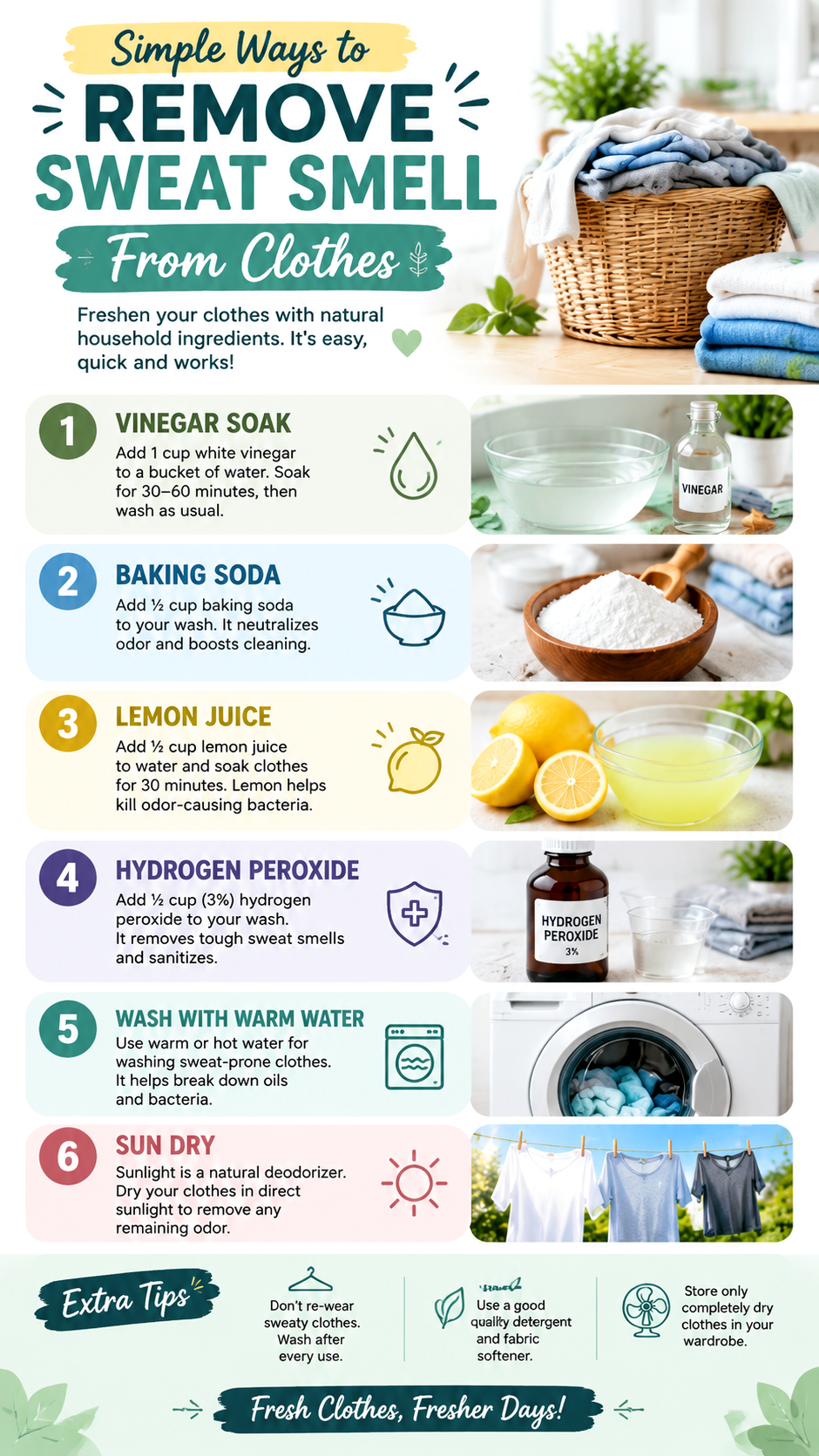
1. Soak Clothes in Diluted White Vinegar
White vinegar is a popular household laundry aid because its acidity can help loosen certain residues and reduce some unpleasant odors. It can be useful for washable cotton shirts, everyday clothing, and other garments that tolerate the treatment.
How to Use White Vinegar Safely
- Check the garment care label before soaking.
- Mix approximately one cup of plain white vinegar with a bucket of cool water.
- Submerge suitable garments for 30 minutes, checking the fabric periodically.
- Wash the clothes with regular laundry detergent according to the care label.
- Dry the garments completely before wearing or storing them.
For delicate fabrics, dark garments, or clothing with special finishes, test a hidden area first or skip the vinegar treatment if the care instructions advise against it.
Important: Never mix vinegar with chlorine bleach or hydrogen peroxide. These combinations can create hazardous reactions or irritating substances. Use one cleaning method at a time, rinse as appropriate, and wash with detergent separately.
2. Use Baking Soda to Freshen Laundry
Baking soda is another common household ingredient used to help manage unpleasant odors. It can be useful when clothing smells stale or when regular washing has not fully removed lingering smells.
Steps for Using Baking Soda
- Check the care label to confirm that the garment is suitable for routine washing.
- Add approximately half a cup of baking soda to a suitable load, adjusting the amount to the load size and product instructions.
- Add your usual laundry detergent in the recommended amount.
- Wash using the appropriate cycle and water temperature.
- Dry the garments fully and check whether the odor has disappeared.
A baking soda presoak may also be an option for suitable fabrics. Dissolve the powder in water before adding clothes, and avoid rubbing dry powder aggressively into delicate fibers.
Remember that baking soda is not a substitute for detergent. It works best as an occasional laundry aid rather than a reason to use excessive cleaning products.
3. Try a Lemon Juice Treatment With Caution
Lemon juice is sometimes recommended as a natural laundry freshener, but it is not the best first choice for removing sweat odor. Its acidity may affect dyes, and it can leave marks or contribute to discoloration on some fabrics.
If you want to try a lemon-based treatment, use it only on suitable, colorfast garments after testing a hidden area. A safer approach for most everyday clothing is to use detergent and an appropriate presoak instead.
- Avoid applying lemon juice directly to dark or brightly colored clothing.
- Do not use lemon juice on delicate fabrics unless the care instructions permit it.
- Do not rely on lemon juice as a disinfectant or proven way to eliminate all odor-causing bacteria.
- Never combine lemon juice with bleach or other household cleaning chemicals.
If you are dealing with stubborn underarm odor, a laundry detergent formulated for sweat and body-oil removal is generally a more practical option.
4. Treat Tough Odors With the Right Laundry Product
Hydrogen peroxide is sometimes used in laundry stain treatments, but it requires extra care. It can bleach or discolor clothing, and its suitability depends on the garment, dye, concentration, and product directions.
For most people, a laundry detergent designed for sportswear or a color-safe oxygen-based laundry product is a simpler starting point. These products are formulated for laundry use and provide instructions for appropriate fabrics and concentrations.
How to Choose an Odor-Fighting Product
- For everyday cotton: Use a regular detergent and pretreat the underarm area if necessary.
- For gym clothes: Choose a detergent suitable for synthetic performance fabrics.
- For colored clothing: Look for a color-safe formula and follow its label carefully.
- For delicate garments: Use a fabric-appropriate detergent and avoid unapproved chemical treatments.
- For persistent odors: Repeat an appropriate wash treatment rather than combining several cleaning agents.
Never mix hydrogen peroxide with vinegar, bleach, ammonia, or other cleaning products. If you choose a peroxide-based laundry treatment, use a product specifically intended for the purpose and follow its label. Test colorfastness before treating a garment.
5. Wash Sweat-Prone Clothes at the Correct Temperature
Water temperature can affect how well detergent works and how much residue is removed. Warm water may help clean some heavily soiled garments, but hot water is not automatically better for every fabric.
Always check the care label first. Cotton shirts, synthetic sportswear, wool, and delicate blends may have different washing requirements. Using a temperature that is too high can shrink clothing, damage elastic, fade colors, or weaken certain fibers.
Better Washing Habits for Fresh-Smelling Clothes
- Turn shirts inside out so the underarm areas are more accessible to detergent and water.
- Pretreat noticeable sweat or deodorant buildup with a fabric-safe laundry product.
- Avoid overloading the washing machine because clothes need room to move.
- Measure detergent according to the product label and load size.
- Choose an extra rinse when recommended by the garment or detergent instructions.
- Remove clean clothes promptly after the cycle finishes.
For particularly smelly gym clothes, a detergent formulated for sportswear may help address the combination of sweat, oils, and residues that ordinary washing sometimes leaves behind.
6. Dry Clothes Thoroughly in Fresh Air or Sunlight
Drying is an important part of odor removal. Clean clothes left damp in a pile or stored before they are completely dry can develop a musty smell, even when they have just come out of the washing machine.
Whenever practical, hang clothes outdoors in a well-ventilated area. Sunlight can help freshen laundry, and airflow helps moisture evaporate. However, prolonged direct sunlight can fade some colors and weaken certain fabrics, so shade drying may be better for dark or delicate garments.
Tips for Faster, Fresher Drying
- Shake out each garment before hanging it.
- Leave space between clothes so air can circulate.
- Turn thick garments or pockets inside out when appropriate.
- Use a clean, well-maintained dryer if the care label permits tumble drying.
- Check seams, waistbands, and underarm areas to make sure they are fully dry.
Pro Tip: If clothes still smell sweaty after washing, do not simply cover the odor with fabric perfume. Rewash the garment using an appropriate detergent, check for residue, and dry it completely. Fragrance may mask an odor without removing its underlying cause.
How to Remove Sweat Smell From Different Types of Clothing
Not every fabric responds to the same cleaning method. Choosing a treatment based on the material helps you remove odors while protecting your clothes.
Cotton T-Shirts and Everyday Shirts
Cotton shirts are generally straightforward to wash, provided you follow their care labels. Turn them inside out, pretreat the underarm area if needed, and wash with a suitable detergent. A diluted vinegar presoak may be appropriate for compatible garments when ordinary washing is not enough.
Use the warmest water permitted by the label rather than automatically choosing a hot cycle. Dry the shirt completely before putting it away.
Gym Clothes and Synthetic Fabrics
Polyester, nylon, and stretchy performance fabrics can hold onto body oils and odors. Wash them soon after exercising instead of leaving them in a closed gym bag. Turn garments inside out and use a detergent intended for sportswear when appropriate.
Avoid excessive fabric softener on performance clothing unless the manufacturer specifically allows it. Some softeners can leave a coating that affects moisture-wicking performance and may contribute to residue buildup.
Delicate Fabrics and Dark Clothing
Silk, wool, rayon, and specialty fabrics may require gentle washing or professional cleaning. Strong acidic treatments, peroxide, and other household remedies can damage fibers or affect color.
Check the care label before attempting a presoak. If a garment says dry clean only, follow those instructions rather than experimenting with household cleaning ingredients.
Towels, Hoodies, and Thick Clothing
Thick fabrics can retain moisture longer than lightweight shirts. Avoid leaving damp towels and sweatshirts in a laundry basket for extended periods. Wash them using an appropriate cycle and make sure they dry all the way through.
If a musty odor persists across several loads, inspect your washing machine and laundry storage area. The problem may be related to the appliance or drying conditions rather than the clothes themselves.
Why This Matters
The most effective odor-removal routine combines the right detergent, a suitable water temperature, enough room in the washing machine, and complete drying. Household ingredients can sometimes help, but using several remedies at once may damage fabric or create chemical hazards. Start with a fabric-safe method and change one step at a time.
How to Prevent Sweat Smell From Coming Back
Once your clothes smell fresh again, a few simple habits can make future laundry days easier. Prevention is especially useful for gym clothes, work shirts, uniforms, and garments worn in hot weather.
Wash Sweaty Clothes Promptly
Do not leave heavily sweat-soaked clothing in a sealed gym bag or laundry hamper for days. If you cannot wash it immediately, allow it to air out in a suitable place until you can launder it. Keep damp garments separate from clean laundry.
Use the Right Amount of Detergent
Follow the detergent manufacturer’s instructions and account for load size and water conditions. Adding extra detergent may leave residue rather than improve cleaning. Clean the washing machine periodically according to its manual, including the detergent drawer, filter, and door seal where applicable.
Avoid Wearing Damp Clothes Again
Allow clothing to dry fully between uses. Rewearing a shirt that still contains moisture and sweat residue can make body odor more noticeable, especially during warm weather or exercise.
Store Laundry Only When It Is Completely Dry
Before folding clothes or hanging them in a wardrobe, check that thicker seams, underarms, and waistbands are dry. Keep wardrobes reasonably ventilated and avoid packing damp clothing into drawers or storage bins.
Common Laundry Mistakes That Make Odors Worse
Even a good detergent may struggle if everyday laundry habits allow residue or moisture to build up. Avoid these common mistakes when trying to remove sweat smell from clothes.
- Overloading the washer: Crowded clothing may not move freely enough for effective washing and rinsing.
- Using too much detergent: Excess product can leave residue on fibers and inside the appliance.
- Leaving laundry in the machine: Damp clothes can develop unpleasant odors when left sitting for too long.
- Ignoring care labels: Excessive heat or unsuitable cleaning products can damage fabrics and cause fading or shrinkage.
- Masking smells with fragrance: Scented products may hide odors temporarily without removing sweat and oil residue.
- Mixing household cleaners: Combining vinegar, bleach, peroxide, or other cleaners can cause hazardous reactions.
- Storing damp clothes: Moisture trapped in a wardrobe or laundry basket can encourage musty smells.
What to Do When Sweat Odor Will Not Go Away
Sometimes a garment continues to smell even after several washes. Before giving up on it, try a more methodical approach.
- Inspect the fabric. Look for visible deodorant residue, oily patches, or areas that may need pretreatment.
- Check the care instructions. Make sure the previous wash temperature and cleaning products were appropriate.
- Pretreat the problem areas. Apply a suitable laundry stain remover or detergent according to its instructions.
- Wash without overcrowding. Use the correct detergent dose and allow enough space for the clothes to move.
- Check the washing machine. If several garments smell unpleasant after washing, the machine itself may need cleaning.
- Dry thoroughly. Make sure the garment is completely dry before checking whether the odor has gone.
If the garment is valuable, delicate, or labeled for professional cleaning, consider consulting a cleaner rather than experimenting with stronger household chemicals.
Also pay attention to odors that seem to come from the washing machine rather than individual garments. Follow the appliance manufacturer’s cleaning instructions and inspect the drain filter and detergent drawer if your model has accessible components.
Quick Points: A Simple Sweat-Odor Removal Routine
- Before washing: Turn garments inside out and pretreat sweaty areas when needed.
- During washing: Use a suitable detergent, follow the care label, and avoid overloading the washer.
- For stubborn odors: Consider a compatible vinegar presoak or a fabric-safe odor-removing laundry product.
- After washing: Remove clothes promptly and dry them completely with good airflow.
- For prevention: Wash sweaty garments promptly and store only fully dry clothing.
Conclusion: Keep Your Clothes Fresh With Simple Laundry Habits
Learning how to remove sweat smell from clothes does not have to involve expensive products or complicated routines. The most reliable starting point is to use a suitable detergent, treat stubborn areas when necessary, wash according to the garment care label, and dry everything thoroughly.
White vinegar and baking soda may help freshen compatible garments, while sportswear detergents can be useful for clothing that regularly absorbs sweat and body oils. Lemon juice and hydrogen peroxide require greater caution because they can affect fabric color, damage certain materials, or create risks when mixed with other cleaners.
Most importantly, do not let sweaty clothes sit damp for too long. Give laundry enough room in the washing machine, avoid excessive detergent, and make sure every garment is completely dry before putting it away.
With these practical laundry tips, you can tackle lingering body odor, care for your favorite shirts, and maintain a fresher-smelling wardrobe. Choose the method that suits your fabric, stay consistent with good washing habits, and enjoy clothes that feel clean and ready to wear.
Tags
Remove Sweat Smell
Laundry Tips
Clothing Odor Removal
Baking Soda Cleaning
White Vinegar Laundry
Fresh-Smelling Clothes
Gym Clothes Care
Natural Laundry Hacks