DIY Ayurvedic Bath Water for Relaxation, Glowing Skin Natural Self-Care
Transform an ordinary bath into a peaceful self-care ritual with homemade Ayurvedic bath water. This simple herbal bath combines neem leaves, tulsi leaves, turmeric, and oat powder to create a botanical bathing experience inspired by traditional Ayurvedic wellness practices. With a few accessible ingredients and a little preparation, you can bring a spa-like atmosphere into your bathroom and make time for a relaxing break from your daily routine.
Herbal bath water is an appealing option for anyone who enjoys natural skincare, plant-inspired beauty rituals, and mindful self-care. Fresh leaves, warm water, and a calming environment can make bathing feel more intentional. Whether you want to explore traditional wellness practices or create a soothing evening routine, this recipe offers a simple starting point.
Key Takeaways
- Prepare herbal bath water with neem leaves, tulsi leaves, turmeric, and oat powder.
- Gently simmer the fresh leaves in water for 5 to 10 minutes before straining.
- Allow the herbal infusion to cool and add it to comfortably warm bath water.
- Enjoy a relaxing soak for approximately 10 to 15 minutes if the temperature and your skin tolerate it comfortably.
- Patch-test new ingredients first and avoid bathing with anything that causes irritation.
- Remember that herbal bath water is a personal care ritual, not a proven medical treatment for skin conditions.
What Is Ayurvedic Bath Water?
Ayurvedic bath water is a herbal bathing preparation inspired by Ayurveda, a traditional Indian system of wellness that emphasizes balance, daily routines, and the use of natural ingredients. Depending on the recipe, herbal bath water may include leaves, flowers, spices, grains, or other plant-based ingredients.
The idea is straightforward: prepare a gentle infusion, combine it with bath water, and create a bathing experience that feels refreshing and calming. Some people enjoy herbal baths because of their connection to traditional beauty practices, while others appreciate the natural fragrance, warm water, and opportunity to slow down.
This particular recipe features neem, tulsi, turmeric, and oats. Each ingredient has a distinct role in the preparation, from providing a botanical element to adding a soft, comforting texture when used appropriately.
It is important to distinguish traditional use from proven medical benefits. Although some of these ingredients have been studied for properties relevant to skincare, their effectiveness and safety depend on the preparation, concentration, and individual skin sensitivity. Adding them to bath water does not guarantee that they will treat acne, eczema, infections, or other skin conditions.
Benefits of a Homemade Herbal Bath
A herbal bath can be a lovely addition to a personal wellness routine. The most dependable benefits come from taking time to relax, enjoying comfortably warm water, and creating a pleasant environment. The botanical ingredients can add variety to the experience, although their effects on the skin may differ from person to person.
1. Encourages Relaxation and Mindful Self-Care
One of the simplest reasons to enjoy a herbal bath is to create a pause in a busy day. Preparing the ingredients, filling the tub, and soaking without distractions can become a calming ritual that encourages you to slow down.
For an even more relaxing experience, dim the lights, use a soft towel, and keep your phone away from the bathtub. Gentle music or a quiet room can help make the experience feel more personal.
A warm bath may also help some people feel more comfortable before bedtime. However, water that is excessively hot can cause discomfort, dryness, or dizziness, so keep the temperature pleasant rather than intense.
2. Adds a Botanical Touch to Your Skincare Routine
Plant-based ingredients are popular in traditional beauty routines because they offer a connection to nature and provide different textures and preparation methods. Neem and tulsi leaves are commonly associated with traditional Indian herbal practices, while turmeric is widely used in food, cosmetics, and household beauty recipes.
When used in a bath, these ingredients create a botanical infusion rather than a concentrated skincare treatment. Their presence may make the routine feel special, but it is best not to assume that the mixture will cleanse pores, remove blemishes, or improve a particular skin condition.
If your main goal is healthy skin, gentle cleansing, appropriate moisturization, and sun protection remain more reliable foundations than homemade herbal treatments.
3. Offers a Simple Alternative to a Home Spa
You do not need expensive bath products to make your bathroom feel inviting. A clean bathtub, fresh towels, a small bowl of prepared herbal water, and a few minutes of uninterrupted time can create a spa-inspired atmosphere at home.
Natural greenery and flowers can also make the setting feel fresh and peaceful. If you enjoy decorative bath arrangements, keep flowers and leaves clean, avoid plants that may be irritating or toxic, and remove all botanical material before draining the tub.
4. Encourages a More Intentional Daily Routine
Small, repeatable habits can make self-care easier to maintain. A herbal bath may become an occasional weekend treat, a quiet evening activity, or a way to transition from work into personal time.
There is no need to make the ritual complicated. Preparing a mild infusion, checking the water temperature, and setting aside a short period for relaxation are enough to create a meaningful routine.
Ingredients for Ayurvedic Bath Water
This recipe uses four main ingredients. The quantities below follow the proportions shown in the recipe concept and are intended for a small home preparation. You can adjust the total amount of water to suit your bathtub, but avoid making the infusion excessively concentrated.
Additional ingredient: Clean water is needed to prepare the infusion. Use enough to cover the leaves comfortably in a small saucepan, then add the strained liquid to your bath. The recipe does not require essential oils, perfumes, or other additives.
How to Make Ayurvedic Bath Water at Home
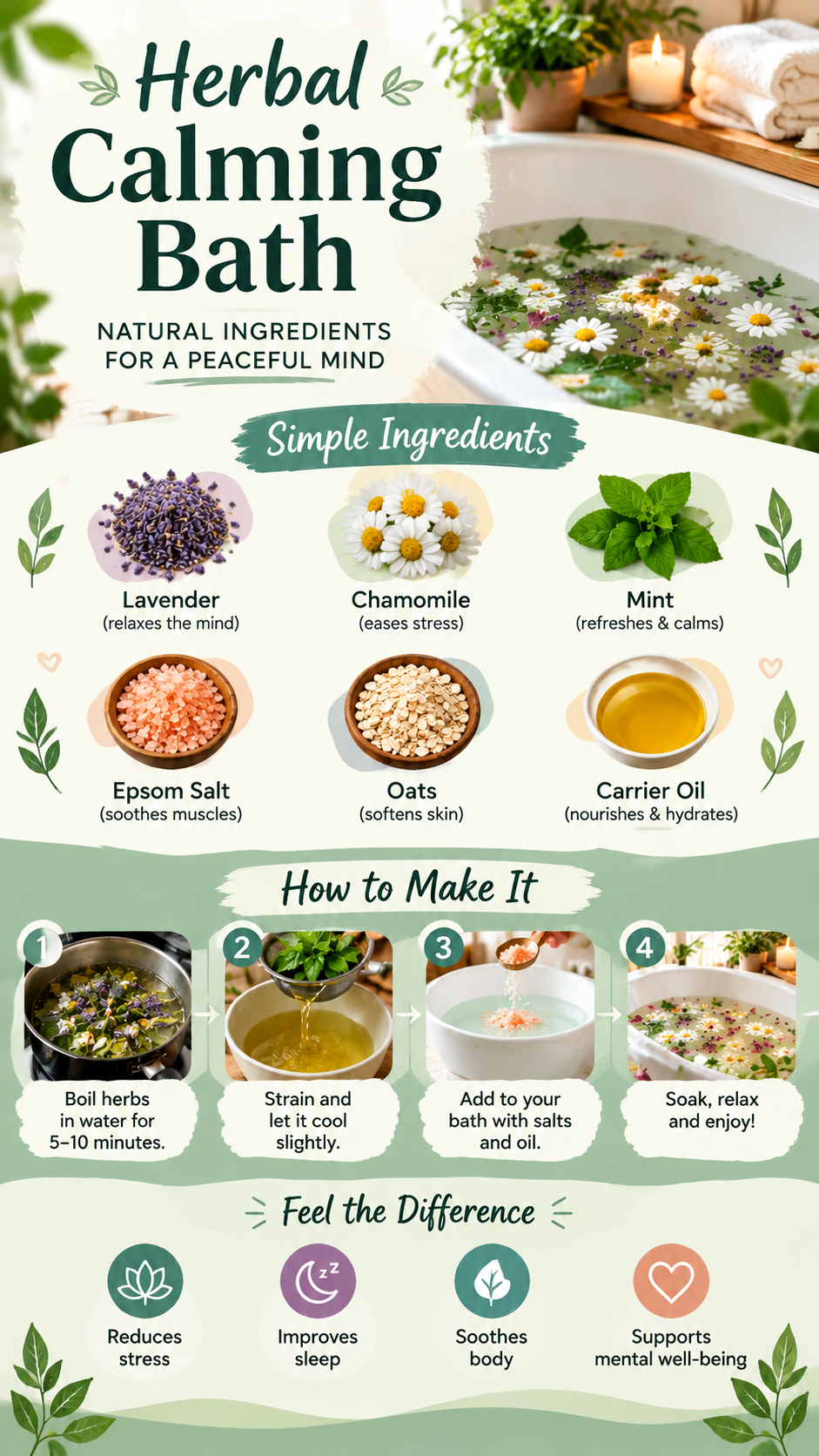
Preparing this herbal bath water involves simmering the leaves, straining the infusion, and combining it with warm bath water. Allow enough time for the mixture to cool before using it, and keep the process simple so you can focus on comfort and cleanliness.
Step 1: Wash the Fresh Leaves
Measure one handful of neem leaves and one handful of tulsi leaves. Rinse them thoroughly under clean running water to remove visible dirt and debris.
Inspect the leaves and discard any that appear spoiled, moldy, or contaminated. If you are using leaves from your garden, make sure they have not been treated with unsuitable pesticides or other chemicals.
Step 2: Simmer the Leaves
Place the cleaned leaves in a small saucepan and add enough water to cover them. Bring the water to a gentle boil, then reduce the heat and simmer for approximately 5 to 10 minutes.
The water may develop a light green or golden-brown color as the leaves steep. There is no need to boil the mixture aggressively or continue cooking it for an extended period.
Once the leaves have simmered, turn off the heat and allow the infusion to cool. Keep the saucepan covered while it cools to help prevent dust or other contaminants from entering.
Step 3: Strain the Herbal Infusion
Pour the cooled or partially cooled liquid through a clean, fine-mesh strainer into a heat-safe bowl. Remove all leaves and solid plant material.
Straining is especially important when preparing bath water because loose leaves can stick to the skin, collect around the drain, or create a slippery surface. Never pour hot liquid directly into a bathtub that already contains bathers.
Step 4: Add Turmeric and Oat Powder
Measure half a teaspoon of turmeric powder and two tablespoons of finely ground oat powder. Add them to a small amount of the cooled infusion and stir until the mixture is reasonably smooth.
Oat powder may not dissolve completely, and turmeric can leave visible particles or residue. If the mixture becomes thick or gritty, strain it again through a suitable fine filter before adding it to the bath. Avoid using a preparation that leaves slippery clumps on the tub surface.
For a more predictable skincare option, consider using a commercially prepared colloidal oatmeal product according to its label instructions instead of ordinary kitchen oats.
Step 5: Mix with Lukewarm Bath Water
Fill the bathtub with comfortably warm water, then add the prepared infusion gradually while stirring the water gently. Check the temperature before getting in. The bath should feel pleasant rather than hot.
Use only enough herbal infusion to give the bath a light botanical character. A stronger mixture is not necessarily more effective and may increase the chance of irritation or staining.
Important safety tip: Always patch-test the prepared mixture on a small area of skin before taking a full bath. Wait to see whether redness, itching, swelling, or burning develops. Do not use the mixture on broken, freshly shaved, or irritated skin, and stop immediately if discomfort occurs.
Step 6: Soak and Relax
If the mixture is comfortable for your skin, enjoy a brief soak of around 10 to 15 minutes. Keep the bathroom well ventilated and have a towel ready for when you finish.
There is no need to scrub your skin or repeatedly pour the mixture over your body. A gentle bath is enough for a relaxing self-care experience. If you feel lightheaded, unusually warm, itchy, or uncomfortable, leave the bath carefully and rinse your skin with clean water.
How to Enjoy a More Relaxing Herbal Bath
The ingredients are only one part of the experience. A comfortable setting and a simple routine can make your herbal bath feel more restorative without adding unnecessary products.
Prepare Your Bathroom Before Filling the Tub
Place a clean towel and comfortable clothing within reach. Make sure the floor is dry, the tub is clean, and the drain is free from debris. If you like a spa-inspired atmosphere, use soft lighting or play quiet music at a comfortable volume.
Keep candles away from towels, curtains, and other flammable materials. Never leave a lit candle unattended, and consider using an electric candle if you prefer a lower-risk alternative.
Keep the Water Temperature Comfortable
Very hot water can strip away some of the skin’s natural oils and may worsen dryness or irritation. Warm water is usually a more comfortable choice for a short self-care bath.
If you are sensitive to heat, feel dizzy easily, or have a medical condition affected by hot bathing, choose a milder temperature and follow your healthcare professional’s advice.
Moisturize After Bathing
After your soak, rinse with clean lukewarm water if any residue remains. Gently pat your skin dry with a soft towel instead of rubbing it vigorously.
If your skin tends to become dry, apply a fragrance-free moisturizer while the skin is still slightly damp. This can help support the skin barrier and is generally a more dependable way to manage dryness than relying on a homemade herbal infusion.
Understanding the Ingredients and Their Limitations
Natural ingredients are not automatically gentle or suitable for every skin type. Each component of this bath recipe has different characteristics, so understanding its limitations can help you make a safer choice.
Neem and Skin Sensitivity
Neem has a long history of traditional use in personal care, but evidence for a particular benefit from neem-infused bath water is limited. Preparations can vary considerably, and neem products may cause contact reactions in some individuals.
Choose a different bathing option if you have reacted to neem previously. Avoid applying concentrated neem oil to the skin as a substitute for the diluted leaf infusion described here.
Tulsi and Botanical Allergies
Tulsi provides the traditional herbal element of this recipe. Like other plants, it can cause irritation or an allergic reaction in susceptible people. A plant-based ingredient should not be considered universally safe simply because it is natural.
If you have a known allergy to basil or related plants, avoid tulsi unless a qualified healthcare professional advises otherwise. Use fresh, clean leaves and never use plants that have not been correctly identified.
Turmeric and Staining
Turmeric’s bright pigment can stain fabrics, towels, grout, and some bathtub finishes. Although it is popular in traditional beauty preparations, that does not mean every turmeric mixture is suitable for every skin type.
Use a small quantity, avoid contact with the eyes, and rinse the bathtub thoroughly after use. If your skin develops a yellow residue, gently wash it away with mild cleanser rather than scrubbing aggressively.
Oats and Gentle Skin Care
Colloidal oatmeal is used in certain skincare products because it can help soothe and moisturize dry, itchy skin. However, the effect of a homemade oat mixture depends on how finely the oats are ground and how the preparation is used.
People with an oat allergy should avoid oat-based bath preparations. Ordinary oat powder may also leave particles in the bath, so choose a finely milled product and take care to prevent a slippery surface.
Why This Matters
A soothing bath should leave your skin comfortable, not irritated. Herbal ingredients vary in strength and purity, and a recipe that works for one person may not suit another. Keep the mixture mild, introduce only one new ingredient at a time when possible, and discontinue use if your skin reacts.
Who Should Avoid This Herbal Bath?
Although this recipe uses familiar botanical ingredients, it is not appropriate for everyone. Take extra care if you have a history of allergies, eczema, contact dermatitis, or reactions to herbal skincare products.
- People with sensitive or damaged skin: Avoid using the mixture on active rashes, cuts, burns, or inflamed areas.
- Anyone with known ingredient allergies: Leave out any ingredient that has previously caused a reaction. If you are unsure about a suspected allergy, seek professional advice rather than testing it in a full bath.
- People with persistent skin symptoms: Do not use herbal bathing as a replacement for medical evaluation or prescribed treatment.
- Pregnant or breastfeeding individuals: Ask a healthcare professional before regularly using unfamiliar herbal preparations, especially concentrated products or essential oils.
- Children: Use extra caution with homemade botanical preparations because children’s skin may be more sensitive. Seek pediatric guidance before introducing herbal baths for a child with a skin concern.
Never drink the bath infusion. Keep the preparation away from the eyes and intimate areas, and do not add concentrated essential oils or other strong ingredients without appropriate safety guidance.
Common Mistakes to Avoid When Making Herbal Bath Water
Using Too Much of Each Ingredient
Adding extra herbs or spices does not guarantee a better result. A highly concentrated preparation may be more irritating and can make cleanup difficult. Begin with the modest quantities described in the recipe.
Adding Hot Infusion Directly to the Bath
Always allow the herbal liquid to cool before adding it to bath water. Check the final temperature carefully, particularly if you prepare a concentrated infusion in advance.
Skipping the Straining Step
Loose leaves and coarse oat particles can cling to your skin and collect around the drain. Straining the infusion helps make the bathing experience more comfortable and simplifies cleaning.
Assuming Natural Means Risk-Free
Herbal ingredients can still cause allergic reactions, irritation, or staining. Patch-test the mixture, avoid ingredients that are unsuitable for you, and stop using the preparation if a reaction develops.
Leaving the Bathtub Slippery
Plant material and oat residue can make a wet bathtub slippery. Remove all visible residue and clean the surface thoroughly after bathing. Take care when entering and leaving the tub.
How Often Can You Enjoy an Ayurvedic Herbal Bath?
There is no universally established schedule for this particular homemade recipe. How often you use it should depend on your skin’s response, the ingredients, and your overall bathing routine.
If you decide to try it, start with one brief bath rather than introducing it as a daily habit. Pay attention to any dryness, itching, redness, or discomfort afterward. If your skin feels irritated, discontinue the mixture and return to a simple bathing routine.
For many people, a plain warm-water bath followed by a gentle moisturizer is enough for regular self-care. A botanical bath can remain an occasional variation rather than something you need to use frequently.
Easy Ways to Personalize Your Bath Ritual
You can make your bathing routine feel special without adding more ingredients to the water. Focus on simple details that support comfort, cleanliness, and relaxation.
- Choose a calm time: Set aside 10 to 15 minutes when you are unlikely to be interrupted.
- Prepare a clean towel: A soft towel and comfortable clothes can make the transition after bathing more pleasant.
- Keep your routine simple: Avoid combining several new herbs, fragrances, and skincare products at once.
- Create a peaceful atmosphere: Try gentle lighting, quiet music, or a tidy bathroom counter.
- Follow with basic skincare: Rinse if needed, pat dry, and use a moisturizer that suits your skin.
These small details help make a herbal bath feel intentional without relying on exaggerated skincare claims or expensive products.
Quick Points: Ayurvedic Bath Water at a Glance
- Main ingredients: Neem leaves, tulsi leaves, turmeric, and finely ground oats.
- Preparation: Simmer the leaves for 5 to 10 minutes, cool, and strain.
- Bath temperature: Use comfortably warm or lukewarm water.
- Suggested soak: Around 10 to 15 minutes if comfortable and well tolerated.
- Essential precaution: Patch-test first, avoid known allergens, and stop if irritation occurs.
Conclusion: Make Time for a Calming Herbal Bath
Homemade Ayurvedic bath water offers a simple way to bring botanical ingredients and mindful self-care into your bathing routine. With neem leaves, tulsi leaves, a little turmeric, and finely ground oats, you can prepare a gentle herbal infusion and enjoy a spa-inspired experience at home.
The best approach is to keep the recipe simple, use clean ingredients, strain the infusion carefully, and make sure the water is comfortably warm. Treat the bath as an opportunity to unwind rather than a cure for skin problems, and remember that even natural ingredients can cause irritation in some people.
Whether you enjoy this ritual after a busy day or save it for a quiet weekend, the goal is to create a moment that feels comfortable and restorative. Start gently, listen to your skin, and make your self-care routine work for you.
A Gentle Reminder
Self-care does not have to be complicated. A clean, comfortable bath, a few quiet minutes, and a simple skincare routine can be enough to make your day feel a little more peaceful.
Tags
Ayurvedic Bath Water
DIY Herbal Bath
Neem Leaves
Tulsi Leaves
Natural Self-Care
Herbal Skincare
Relaxing Bath Ritual
At-Home Spa