8 Common Cooking Mistakes You Didnt Know You Were Making And How to Fix Them
Great cooking is not just about following a recipe. It is also about knowing which small mistakes to avoid along the way. From pressing a steak with a spatula to rinsing pasta after boiling, a few common kitchen habits can affect the flavor, texture, and quality of your favorite meals. The good news is that these cooking mistakes are easy to correct once you understand why they happen. Whether you are a beginner learning the basics or an experienced home cook looking to improve your skills, these practical cooking tips will help you prepare juicier steak, flavorful garlic, perfectly cooked pasta, fluffy rice, and delicious fish with greater confidence.
Key Takeaways
- Let steak develop a flavorful crust without repeatedly pressing it with a spatula.
- Add garlic at the right stage to prevent burning and bitter flavors.
- Keep pasta water starch on the noodles when preparing sauces that benefit from it.
- Cook onions slowly when you want sweetness and deeper flavor.
- Allow fish skin to crisp before flipping the fillet.
- Choose cooking oils according to the temperature and cooking method.
1. Pressing Steak With a Spatula
One of the most common steak cooking mistakes is pressing the meat against the pan with a spatula. It may seem like a good way to help the steak cook faster, but pressing does not improve the sear. Instead, it can force flavorful juices out of the meat and create unnecessary splattering.
A delicious steak starts with a hot pan, a dry surface, and enough time to develop a rich, browned crust. When the steak makes contact with the hot cooking surface, the exterior gradually browns and develops the savory flavors that make a properly seared steak so appealing.
How to Cook Steak Without Drying It Out
- Pat the steak dry: Use paper towels to remove surface moisture before seasoning. A dry surface browns more effectively than a wet one.
- Preheat the pan: Heat a suitable skillet before adding the steak, following the recommended temperature for your cooking method.
- Leave it alone: Let the first side develop a crust before turning the steak.
- Use tongs: Turn the meat gently rather than repeatedly pressing or moving it around.
- Check doneness: Use a meat thermometer for a reliable reading instead of judging by color alone.
- Rest before slicing: Give the steak a few minutes to rest so the juices redistribute as the temperature evens out.
Important: Pressing a steak does not automatically ruin it, but it offers little benefit during ordinary pan-searing. Focus on heat control, surface dryness, and proper doneness for a more flavorful result.
A Simple Tip for Better Steak
Season the steak with salt and your preferred spices, then allow the pan to do the work. Avoid overcrowding the pan because too much meat can lower the temperature and encourage steaming instead of browning. For thicker cuts, finish cooking with a gentler heat after the crust forms.
2. Adding Garlic Too Early
Garlic adds wonderful flavor to pasta, soups, stir-fries, roasted vegetables, sauces, and countless other dishes. However, it is also easy to burn. Garlic contains small pieces that can brown quickly in a hot pan, particularly when finely chopped or minced.
When garlic burns, its flavor can become sharp, bitter, and unpleasant. Adding it at the beginning of every recipe without considering the cooking temperature is a common kitchen mistake that can affect the entire dish.
When Should You Add Garlic?
The ideal timing depends on the recipe. For many sautés and quick-cooking dishes, garlic works best after the onions or other firm aromatics have softened. Cook it briefly until fragrant, then add the remaining ingredients or liquid to prevent it from browning too much.
- For pasta sauces: Gently cook minced garlic in oil before adding tomatoes, broth, or other sauce ingredients.
- For stir-fries: Add garlic when the pan is ready and be prepared to add the other ingredients quickly.
- For soups: Follow the recipe’s order, often adding garlic after the onion has started to soften.
- For roasted dishes: Consider adding delicate minced garlic later if the cooking time is long or the oven temperature is high.
Keep an eye on the pan rather than relying only on a timer. Garlic can move from fragrant to burnt in a short period, especially over high heat. If the garlic has turned very dark and smells bitter, starting again is often better than trying to cover the taste with extra seasoning.
3. Rinsing Pasta After Boiling
Another common cooking mistake is rinsing pasta immediately after draining it. For most hot pasta dishes, this removes the surface starch that helps sauce cling to the noodles. It can also cool the pasta before it has a chance to combine properly with the sauce.
When pasta cooks in water, some starch moves from the noodles into the cooking liquid. That starchy water can help bring a sauce together, creating a smoother coating rather than leaving the sauce pooled at the bottom of the plate.
How to Cook Pasta the Right Way
- Bring a pot of water to a boil before adding the pasta.
- Season the water with salt according to your taste and recipe.
- Stir shortly after adding the pasta to reduce sticking.
- Cook until the pasta reaches your preferred texture, checking the package instructions as a guide.
- Reserve a cup of pasta water before draining.
- Drain the pasta without rinsing it when preparing a typical hot sauce-based dish.
- Combine the pasta and sauce, adding small amounts of reserved pasta water until the consistency looks right.
When Is Rinsing Pasta Appropriate?
Rinsing is not always wrong. Cold pasta salads may benefit from rinsing to cool the noodles quickly and remove excess surface starch. Some recipes for chilled noodle dishes also call for rinsing. The important thing is to match the technique to the final dish.
Pro Tip: Before draining pasta, scoop out some of the cooking water. A splash can help emulsify sauces made with cheese, butter, olive oil, or other ingredients, making the finished dish more cohesive and silky.
4. Cracking Eggs on the Edge of a Bowl
Cracking an egg against the rim of a bowl is a familiar habit, but it can push shell fragments into the egg. This is especially frustrating when you are preparing scrambled eggs, baking a cake, or separating yolks from whites.
A flatter surface can create a cleaner crack and reduce the chance of pushing shell fragments inward. A countertop or another clean, flat work surface is often a practical choice, provided it is suitable for food preparation and kept clean.
The Best Way to Crack an Egg
- Wash your hands before handling eggs and food.
- Tap the egg gently against a clean, flat surface to create a crack.
- Hold the egg over a small, separate bowl.
- Use your thumbs to open the shell and release the contents.
- Check for shell fragments before adding the egg to your main mixture.
- Transfer the egg to your recipe once you are satisfied with its condition.
Using a separate bowl is particularly helpful when baking. If an egg has an unusual smell or appearance, you can discard it without wasting the other ingredients. It also makes it easier to remove a small shell fragment before it gets mixed into the batter.
Extra Egg Safety Tips
Store eggs according to local food safety guidance and avoid leaving them at room temperature longer than recommended. For dishes containing raw or lightly cooked eggs, use pasteurized eggs when appropriate, particularly when serving people who are more vulnerable to foodborne illness.
5. Cooking Onions Over High Heat
Onions can add sweetness, aroma, and depth to everything from soups and stews to burgers, pasta sauces, and vegetable dishes. Yet rushing the process is one of the easiest ways to lose the flavor you want.
When onions are cooked slowly over moderate or low heat, they gradually soften and develop a sweeter, more rounded flavor. When the heat is too high, their exterior may brown or burn before the pieces have softened evenly.
How to Cook Onions for Better Flavor
- Choose the right cut: Slice onions evenly so the pieces cook at a similar rate.
- Use moderate heat: Start with a little oil or butter in a suitable pan.
- Stir occasionally: Move the onions around to encourage even cooking and prevent scorching.
- Adjust the heat: Lower it if the onions brown too quickly before becoming tender.
- Allow enough time: Soft, translucent onions require less time than deeply caramelized onions.
Soft Onions Versus Caramelized Onions
These two results are related but not identical. Softened onions are tender and often translucent, making them a good foundation for soups, curries, and sauces. Caramelized onions are cooked for much longer, allowing their natural sugars and other compounds to develop a deeper brown color and complex sweetness.
For either result, patience matters. If the pan becomes too dry or the onions start sticking, adjust the heat and add a small splash of water when appropriate. Do not confuse rapid browning with proper caramelization, because burnt onions can taste bitter rather than sweet.
6. Lifting the Lid While Rice Is Cooking
Rice may look simple to prepare, but small changes in heat, water, and timing can affect its texture. One common mistake is repeatedly lifting the lid while rice cooks on the stovetop. Every time the lid is removed, steam escapes and the temperature inside the pot can change.
Steam plays an important role in cooking rice evenly. The grains absorb water as they heat, and the covered pot helps maintain a consistent environment. Frequent interruptions can make the cooking process less predictable, especially when the water level is already low.
How to Make Fluffy Rice
- Measure carefully: Follow the water-to-rice ratio recommended for your variety and cooking method.
- Rinse when appropriate: Rinsing many varieties of rice before cooking removes excess surface starch and can help produce more separate grains.
- Bring the liquid to a boil: Once boiling, reduce the heat to maintain a gentle simmer.
- Cover the pot: Keep the lid in place during cooking unless your recipe instructs otherwise.
- Avoid stirring repeatedly: Excessive stirring can disturb the grains and release more starch.
- Let the rice rest: After cooking, leave it covered for the recommended resting period.
- Fluff gently: Use a fork or rice paddle to separate the grains before serving.
Different rice varieties need different amounts of water and cooking time. Long-grain rice, short-grain rice, brown rice, and specialty varieties do not always behave the same way, so a single ratio will not work perfectly for every pot.
Why This Matters
Fluffy rice depends on more than keeping the lid closed. Consistent heat, an appropriate amount of liquid, and enough resting time all help create a better result.
- Use a pot with a well-fitting lid.
- Follow instructions for your particular rice variety.
- Let the finished rice rest before fluffing and serving.
7. Moving Fish Around Too Much in the Pan
Fish is delicate, and handling it too frequently can cause it to break apart before it develops a proper crust. This is especially common when cooking fillets with the skin on. Moving the fish repeatedly or attempting to flip it too early can tear the skin and leave pieces stuck to the pan.
For a crisp exterior and tender interior, preparation and timing are essential. The surface should be reasonably dry, the pan should be appropriately heated, and the fish should have enough undisturbed contact with the cooking surface to brown.
How to Pan-Sear Fish Successfully
- Dry the surface: Pat the fillet dry with paper towels before seasoning.
- Preheat the pan: Use a suitable skillet and an oil appropriate for the intended cooking temperature.
- Place the fish carefully: Lower it into the pan without splashing hot oil.
- Let the first side cook: Resist the urge to move the fillet before the crust has formed.
- Use a thin spatula: Slide it gently beneath the fish when the fillet releases more easily from the pan.
- Flip only when needed: Turn the fish carefully and finish cooking the second side.
How to Tell When Fish Is Ready
Cooking time depends on the thickness and type of fish, the pan temperature, and the cooking method. The flesh should become opaque and separate easily with a fork. For food safety, follow recognized guidance for the fish you are preparing; a common recommendation for most finfish is an internal temperature of 145°F (63°C).
Remember that not every fish needs a crisp skin. Skinless fillets and delicate varieties may benefit from gentler heat or a different technique. The goal is to match the cooking method to the fish rather than force every fillet to behave the same way.
8. Using Extra-Virgin Olive Oil for Every High-Heat Task
Extra-virgin olive oil is valued for its distinctive flavor and versatility, but not every cooking oil performs the same way at every temperature. One common kitchen mistake is assuming that a single oil is ideal for every recipe, whether the task involves gentle sautéing, roasting, or intense searing.
The smoke point is the temperature at which an oil begins producing visible smoke under the cooking conditions. It varies with the oil’s composition, refinement, age, and condition. Extra-virgin olive oil can work well for many everyday cooking methods, but its smoke point is not identical across all products.
Choosing the Right Oil for Your Recipe
- Extra-virgin olive oil: A flavorful option for dressings, finishing dishes, roasting, and many moderate-heat cooking tasks.
- Refined olive oil: Often suitable when you want an olive-derived oil with a milder flavor and different heat-handling characteristics.
- Avocado oil: Refined versions are often used for higher-temperature cooking because of their relatively high smoke point.
- Canola oil: A neutral-flavored option for sautéing, roasting, and other everyday cooking methods.
- Peanut oil: Commonly used for frying, provided peanut allergies are not a concern.
These are general guidelines rather than absolute rules. Always check the product label, consider the flavor you want, and use an oil suited to the recipe and cooking temperature.
What Should You Do if Oil Starts Smoking?
Reduce the heat and move the pan away from the burner if it is safe to do so. Avoid adding wet ingredients to smoking oil because they can cause dangerous splattering. If oil becomes heavily overheated or smells burnt, let it cool safely and start again with fresh oil.
Never leave hot oil unattended. If a grease fire occurs, do not pour water onto it. Turn off the heat if safe and cover the pan with a suitable lid or use an appropriate fire extinguisher. If the fire cannot be controlled immediately, leave the area and contact emergency services.
More Simple Kitchen Habits That Improve Your Cooking
Correcting these eight cooking mistakes is a great starting point, but a few additional habits can make everyday meal preparation easier and more consistent.
Prepare Ingredients Before You Start
Professional kitchens often use a method called mise en place, which means preparing and organizing ingredients before cooking. You can use the same approach at home by chopping vegetables, measuring spices, preparing sauces, and checking cooking times before turning on the stove.
This habit is particularly useful when preparing recipes that cook quickly. You will be less likely to burn garlic, overcook fish, or forget an important ingredient while searching through your cupboards.
Do Not Overcrowd the Pan
When too much food is added to a pan at once, the temperature can drop and moisture may accumulate. Instead of browning, ingredients may steam and become soft. Cooking in batches can help maintain heat and create better color and texture.
This is useful when browning steak, sautéing mushrooms, cooking chicken pieces, or roasting vegetables. Give ingredients enough room to make good contact with the cooking surface.
Taste and Adjust as You Cook
Seasoning is not something you need to leave entirely until the end. Taste suitable foods during preparation and adjust salt, acidity, herbs, spices, and other seasonings gradually. A squeeze of lemon, a little vinegar, or a handful of fresh herbs can sometimes improve a dish more effectively than adding extra salt.
Use a clean spoon for tasting and avoid tasting food that is still unsafe to eat. When cooking raw meat, poultry, seafood, or eggs, follow safe handling practices and use appropriate temperature checks.
Learn to Control Heat
High heat is useful for searing and quick browning, but it is not the answer to every cooking challenge. Moderate heat helps onions soften, garlic release its aroma without burning, and thicker ingredients cook more evenly. Low heat can be useful for simmering sauces and gently cooking delicate foods.
Pay attention to the sound, smell, and appearance of your food. These signals can help you recognize when to lower the heat, add liquid, or allow ingredients to cook undisturbed.
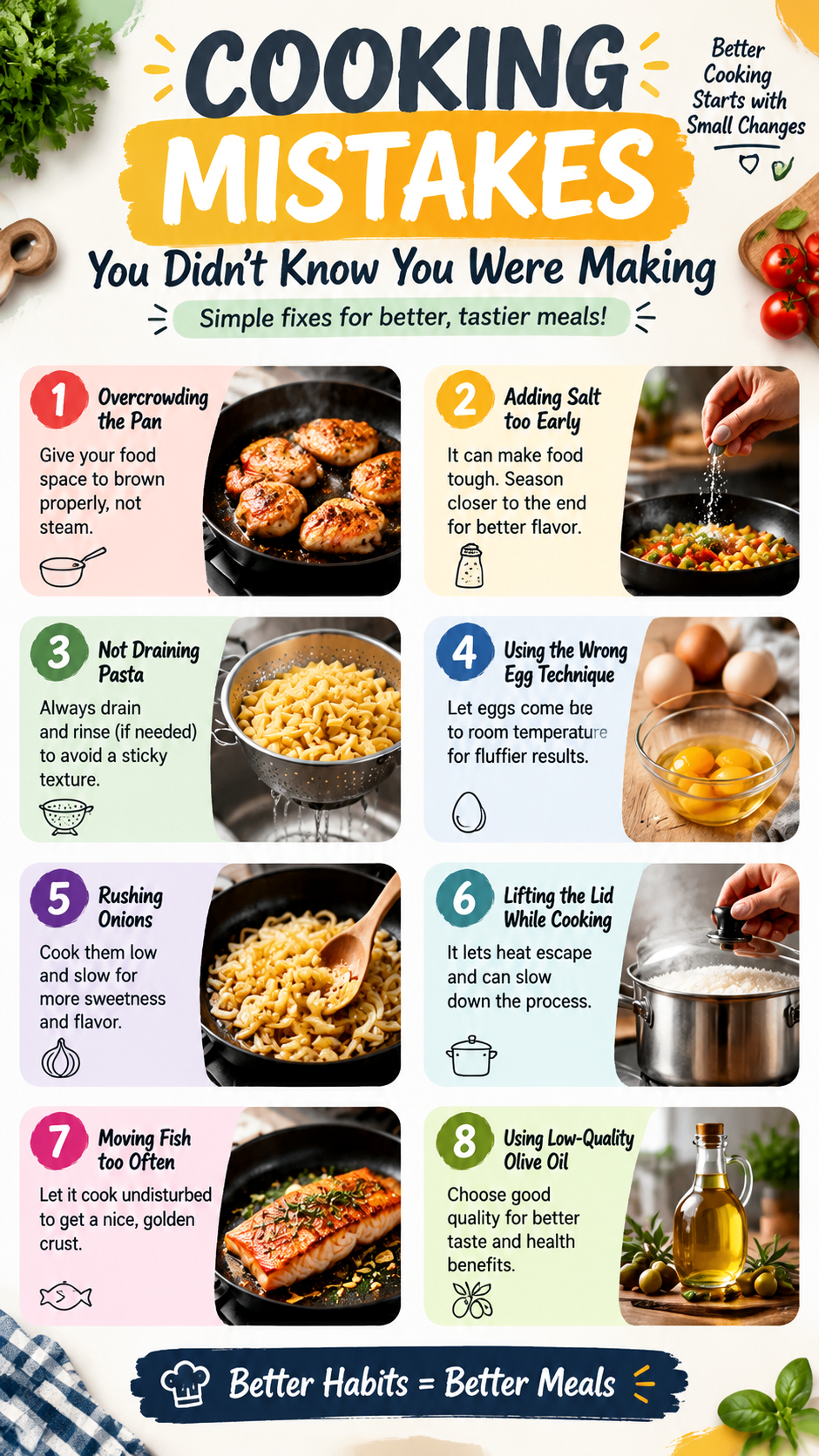
Quick Points: Eight Cooking Mistakes to Avoid
- Steak: Avoid pressing it repeatedly. Let the crust develop naturally.
- Garlic: Add it at the right time to prevent bitter, burnt flavors.
- Pasta: Skip rinsing for most hot pasta dishes and reserve some cooking water for the sauce.
- Eggs: Crack them on a clean, flat surface to reduce shell fragments.
- Onions: Use moderate heat and allow enough time for the desired texture.
- Rice: Keep the lid closed during cooking and allow the grains to rest.
- Fish: Let the surface brown before turning the fillet carefully.
- Olive oil: Choose an oil that suits the cooking temperature and watch for smoke.
Conclusion: Small Cooking Changes Make a Big Difference
Improving your cooking does not require expensive equipment, complicated recipes, or professional training. Often, the biggest improvements come from understanding a few basic techniques and using them consistently. Let steak sear without pressing it, add garlic before it burns, save pasta water for your sauce, and give onions enough time to soften. Keep the lid on your rice pot, handle fish gently, crack eggs carefully, and select cooking oils according to the job.
Most importantly, treat cooking as a skill you can develop one meal at a time. Pay attention to heat, texture, aroma, and timing, and learn from the results. If a dish turns out differently than expected, consider what you can adjust next time rather than giving up on the recipe.
Save these practical kitchen tips for your next cooking session and revisit them whenever you need a quick reminder. With a little patience and a better understanding of common cooking mistakes, you can make everyday meals more flavorful, more consistent, and much more enjoyable.
Tags
Cooking Tips
Common Cooking Mistakes
Kitchen Hacks
Cooking for Beginners
Steak Cooking Tips
Perfect Pasta
Home Cooking
Food Preparation Tips