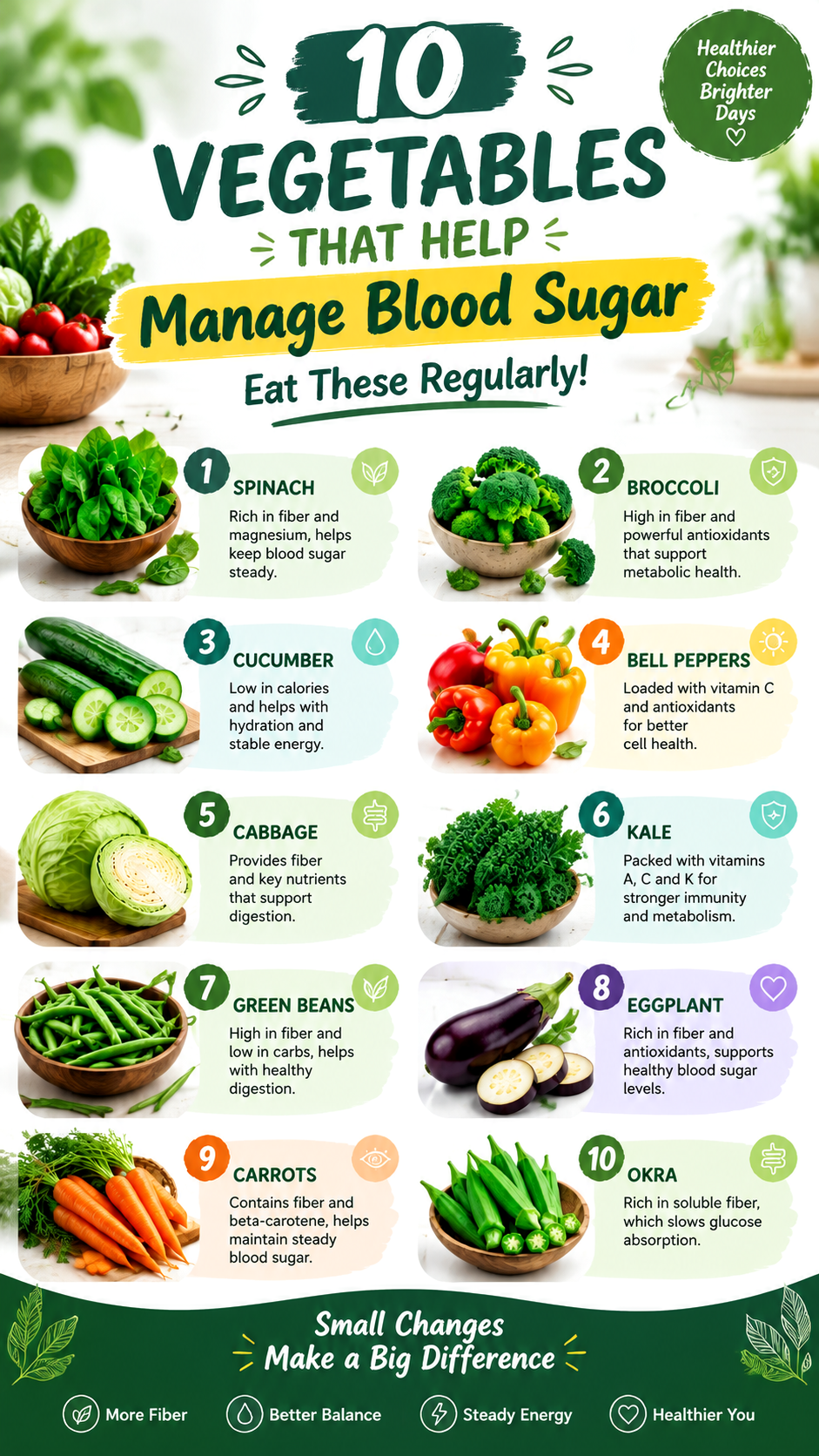
10 Blood Sugar-Friendly Vegetables to Add to Your Healthy Diet
Building a balanced eating routine often starts with simple choices, and vegetables are some of the most valuable foods to include when focusing on blood sugar-friendly meals. The right vegetables can add flavor, color, fiber, and important nutrients while helping create satisfying plates that support overall wellness.
From leafy greens like spinach to crunchy vegetables like cucumbers and bell peppers, many low-carbohydrate vegetable options can easily become part of everyday meals. Whether you are planning diabetes-friendly recipes, improving your nutrition habits, or simply looking for healthier food inspiration, adding more vegetables is a practical step.
Key Takeaways
- Fiber-rich vegetables can support a balanced approach to blood sugar management.
- Leafy greens and non-starchy vegetables are versatile choices for daily meals.
- Vegetable variety helps create nutritious and satisfying plates.
- Portion awareness and overall meal balance still matter.
- Fresh, frozen, and cooked vegetables can all be part of a healthy eating pattern.
Why Vegetables Matter for a Blood Sugar-Friendly Diet
Vegetables are an important part of many healthy eating patterns because they provide fiber, vitamins, minerals, and plant compounds while often being naturally lower in carbohydrates compared with many other food groups. Including a variety of vegetables can help create meals that feel complete and satisfying.
For people who are paying attention to blood sugar levels, choosing vegetables with plenty of fiber and fewer digestible carbohydrates can be a helpful strategy. Fiber can slow digestion and contribute to a steadier release of glucose from meals.
Important: Vegetables can support a balanced diet, but they are only one part of blood sugar management. Regular activity, medication when prescribed, and an overall nutritious meal plan also play important roles.
10 Vegetables That Can Be Part of a Blood Sugar-Friendly Diet
1. Spinach
Spinach is a nutrient-packed leafy green that is naturally low in carbohydrates and rich in fiber. It is easy to add to salads, soups, smoothies, omelets, and cooked dishes.
This versatile vegetable provides a simple way to increase vegetable intake without adding many carbohydrates to a meal. Its mild flavor also makes it easy to combine with other healthy ingredients.
2. Broccoli
Broccoli is a popular choice for balanced meals because it contains fiber and a variety of plant nutrients. It can be roasted, steamed, stir-fried, or added to casseroles for extra texture and flavor.
Pairing broccoli with a source of protein and healthy fats can create a satisfying meal that supports steady energy throughout the day.
3. Cucumber
Cucumbers are refreshing vegetables with a high water content and relatively low carbohydrate content. They make a great addition to salads, wraps, and light snacks.
Sliced cucumbers can also provide a crunchy alternative to higher-carbohydrate snack options.
4. Bell Peppers
Bell peppers add natural sweetness, bright colors, and valuable nutrients to meals. Red, yellow, and green peppers can be used in salads, roasted vegetable dishes, or stuffed recipes.
Their crisp texture makes them a convenient vegetable choice for adding variety to everyday meals.
5. Cabbage
Cabbage is an affordable and versatile vegetable that provides fiber while being relatively low in digestible carbohydrates. It can be enjoyed raw in slaws, cooked in soups, or used as a side dish.
Adding cabbage to meals is an easy way to increase vegetable volume and create more satisfying portions.
6. Bitter Gourd (Karela)
Bitter gourd, also known as karela, is traditionally used in many cuisines and is often associated with blood sugar support. It has a unique bitter flavor and is commonly prepared in cooked vegetable dishes.
While it is a popular traditional food, research on its effects in humans is still developing, so it is best viewed as part of an overall balanced eating pattern.
7. Green Beans
Green beans are a fiber-containing vegetable that can add color and crunch to meals. They work well as a side dish, in salads, or combined with other vegetables.
Their satisfying texture makes them a useful option for creating balanced plates.
8. Eggplant (Brinjal)
Eggplant is a fiber-rich vegetable with a soft texture when cooked. It can be grilled, roasted, baked, or included in flavorful vegetable-based recipes.
Because eggplant absorbs flavors easily, it is a great ingredient for creating satisfying meals with herbs and spices.
9. Carrots
Carrots contain fiber and important nutrients while providing natural sweetness. Although they contain more carbohydrates than some leafy greens, they can still fit into a balanced diet when enjoyed in appropriate portions.
Raw carrots make a convenient snack, while cooked carrots can add flavor to soups and vegetable dishes.
10. Okra (Bhindi)
Okra is a popular vegetable known for its unique texture and fiber content. It can be prepared in many ways, including sautéed dishes, stews, and traditional recipes.
The soluble fiber in okra is one reason it is often included in conversations about balanced meals and digestive health.
How to Add More Blood Sugar-Friendly Vegetables to Your Meals
Making vegetables a regular part of your routine does not require complicated recipes. Small changes can make a big difference over time.
Build a Balanced Plate
A simple meal structure can include vegetables alongside protein sources and healthy fats. This combination can help create satisfying meals that support overall nutrition.
Experiment With Cooking Methods
Roasting can bring out natural flavors, steaming helps maintain texture, and stir-frying creates quick meals packed with vegetables. Trying different cooking styles can make vegetables more enjoyable.
Keep Healthy Options Available
Having washed greens, chopped vegetables, or ready-to-use frozen options available makes it easier to include vegetables in busy schedules.
Why This Matters
A vegetable-focused eating pattern is not about restriction. It is about creating meals with more nutrients, more variety, and better balance.
Common Mistakes to Avoid
- Relying on only one type of vegetable instead of enjoying variety.
- Adding large amounts of high-calorie sauces that change the nutritional balance of a meal.
- Ignoring portion sizes and the overall combination of foods on your plate.
- Expecting one food to replace a complete healthy lifestyle approach.
At a Glance
- Choose vegetables with fiber for satisfying meals.
- Add colorful vegetables to increase variety.
- Use different cooking methods to keep meals interesting.
- Remember that overall diet balance matters most.
Conclusion
Vegetables can be a simple and delicious foundation for a blood sugar-friendly eating pattern. Options like spinach, broccoli, cucumber, bell peppers, cabbage, bitter gourd, green beans, eggplant, carrots, and okra offer plenty of ways to create flavorful and balanced meals.
The goal is not perfection. It is building consistent habits that include nourishing foods you enjoy. By adding more vegetables, exploring new recipes, and creating balanced plates, you can make healthy eating feel easier and more enjoyable every day.
Tags
Blood Sugar Friendly Diet
Diabetes Friendly Foods
Low Carb Vegetables
Healthy Eating Tips
Fiber Rich Foods
Vegetable Recipes