How to Make Elderberry Syrup at Home Natural Immune Support Recipe
The transition toward natural wellness has moved from a niche interest to a mainstream lifestyle for many households. People are increasingly looking for ways to support their health using ingredients found in nature rather than relying solely on synthetic alternatives. One of the most legendary and effective remedies in the herbal world is elderberry syrup. This dark, rich liquid is celebrated for its remarkable ability to support the immune system, particularly during the colder months when seasonal challenges are at their peak.
While you can find many versions of this syrup on health food store shelves, there is something incredibly rewarding about making it yourself. Creating your own elderberry syrup at home allows you to control the quality of every ingredient, from the potency of the dried berries to the type of honey used. It also happens to be much more cost effective. In this guide, we will explore the science and tradition behind this powerhouse berry and walk through the simple steps to creating your own batch of liquid gold.
Why Elderberries are the Ultimate Immune Ally
Elderberries, specifically those from the Sambucus nigra plant, have been used in traditional medicine for centuries. They are famous for being packed with antioxidants, specifically anthocyanins, which give the berries their deep purple color. These compounds are known for their ability to combat oxidative stress and support the body’s natural inflammatory response.
Beyond general wellness, elderberries are specifically sought after for their role in seasonal health. Studies have suggested that certain compounds in elderberries may help prevent viruses from entering human cells, potentially shortening the duration of common winter ailments. When you combine these berries with other therapeutic ingredients like ginger and cinnamon, you create a synergistic blend that tastes great and works hard for your health.
The Benefits of Ginger and Cinnamon
In our homemade recipe, we do not just stop at the berries. Adding fresh grated ginger provides a spicy kick and brings its own set of medicinal properties. Ginger is widely known for its ability to soothe digestion and act as a natural anti-inflammatory. It helps warm the body and can be incredibly comforting if you are feeling under the weather.
Cinnamon serves a dual purpose as well. While it adds a beautiful, woody sweetness to the syrup, it is also antimicrobial and loaded with antioxidants. These warming spices transform the syrup from a simple berry juice into a complex, flavorful tonic that feels like a treat to take every morning.
The Essential Ingredient List
Before you begin the cooking process, it is important to gather high quality ingredients. Since this is a health tonic, the purity of what you put in directly impacts the effectiveness of the final product. Here is what you will need to get started:
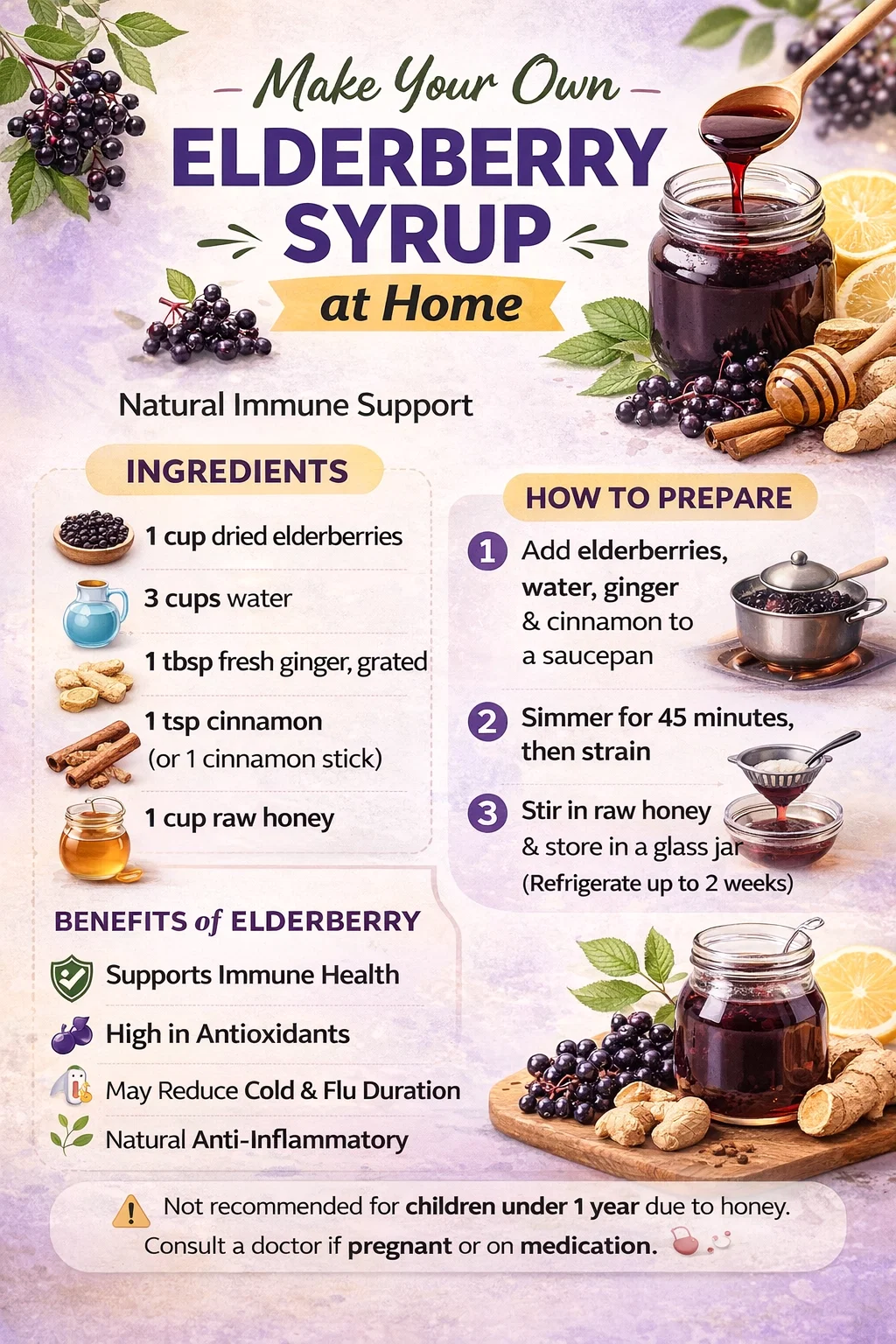
- 1 cup Dried Elderberries: Ensure you are using black elderberries (Sambucus nigra). These are widely available online and in health food stores.
- 3 cups Filtered Water: Using filtered water ensures that no chlorine or impurities interfere with the flavor or shelf life of your syrup.
- 1 tablespoon Fresh Grated Ginger: Fresh is always better than powdered here for maximum potency.
- 1 teaspoon Cinnamon or 1 Cinnamon Stick: A whole stick is great for simmering, but high quality ground cinnamon works just as well.
- 1 cup Raw Honey: This is the secret ingredient. Raw honey contains its own enzymes and pollen that support health, and it acts as the primary preservative for the syrup.
Selecting the Right Honey
While any honey will sweeten the syrup, raw, local honey is the gold standard. Local honey is often used by those looking to support their body against local allergens. More importantly, raw honey should never be boiled. Adding it to the mixture only after it has cooled ensures that the beneficial enzymes and nutrients remain intact. If you are making this for a vegan household, you can substitute the honey with maple syrup, though the shelf life may be slightly shorter.
Step by Step Instructions for Home Brewing
The process of making elderberry syrup is quite similar to making a concentrated tea or a decoction. It requires a bit of patience as the liquid reduces, but the actual hands on time is very minimal. Follow these steps to ensure a perfect batch every time.
Simmering the Berries
Start by adding your dried elderberries, filtered water, ginger, and cinnamon into a medium saucepan. Do not add the honey yet. Bring the mixture to a rolling boil, then immediately reduce the heat to a low simmer. You want the liquid to stay at a gentle bubble rather than a hard boil. Let the mixture simmer uncovered for about 45 minutes to an hour. During this time, the liquid should reduce by nearly half, resulting in a thick, dark, and concentrated purple juice.
Straining and Cooling
Once the liquid has reduced, remove the pan from the heat. It is vital to let the mixture cool down until it is just lukewarm. If you add the honey while the liquid is still steaming hot, you will lose many of the health benefits that raw honey provides. While it cools, you can use a spoon to mash the berries against the side of the pot to release any remaining juice.
After it has cooled sufficiently, pour the mixture through a fine mesh strainer into a clean glass bowl or jar. Use the back of a spoon to press firmly on the berry solids until all the liquid has been extracted. You can compost the leftover berries afterward.
The Final Blend
Now comes the finishing touch. Add your one cup of raw honey to the strained liquid and stir vigorously until it is completely incorporated. The syrup should look glossy and dark. At this stage, you can do a quick taste test. If you prefer a thicker or sweeter syrup, you can add a bit more honey, but the one to three ratio usually provides the perfect balance.
Best Practices for Storage and Safety
Because this is a natural product without chemical preservatives, how you store it matters. Pour your finished syrup into a clean glass jar with a tight fitting lid. A mason jar or a swing top glass bottle works perfectly. Always store the syrup in the refrigerator. Cold temperatures help keep the honey and berry mixture stable.
Shelf Life and Potency
Typically, homemade elderberry syrup will stay fresh in the refrigerator for about two weeks. Some find it lasts up to a month, but it is always best to check for any changes in scent or flavor before use. If you find that you have made too much to consume in two weeks, you can actually freeze the syrup in silicone ice cube trays. This allows you to pop out a single serving whenever you need it, and it will keep in the freezer for several months.
A Note on Safety
It is crucial to remember that elderberry syrup containing honey should never be given to children under the age of one due to the risk of botulism. Additionally, while elderberries are wonderful for many, those who are pregnant, nursing, or on specific medications should always consult with a healthcare professional before adding new herbal supplements to their routine. Safety first ensures that your wellness journey remains a positive experience.
Creative Ways to Use Your Elderberry Syrup
While many people take a spoonful of elderberry syrup straight as a daily tonic, there are plenty of other ways to enjoy it. Its deep berry flavor and hint of spice make it a versatile ingredient in the kitchen. If you have children who are picky about taking vitamins, getting creative with the syrup can be a game changer.
In Your Morning Routine
Try drizzling a tablespoon of the syrup over a bowl of oatmeal or Greek yogurt. It adds a beautiful color and a natural sweetness that replaces processed sugars. You can also stir it into a cup of warm herbal tea for a soothing evening drink. Just remember not to put it into boiling water to preserve the honey’s benefits.
Smoothies and Cold Drinks
Elderberry syrup is a fantastic addition to a morning fruit smoothie. It pairs exceptionally well with blueberries, raspberries, and bananas. For a refreshing afternoon pick me up, try stirring a spoonful of syrup into some sparkling water with a squeeze of fresh lime. It makes for a sophisticated, health conscious mocktail that feels much more special than a standard soda.
Taking Charge of Your Wellness
In a world where we are often overwhelmed by complex choices and long ingredient labels, making something as simple and effective as elderberry syrup is empowering. It connects us back to the traditions of the past while utilizing the best of what nature provides today. By spending just an hour in your kitchen, you are creating a tool that supports your family’s health and brings a bit of natural magic into your home.
Whether you are a seasoned herbalist or a beginner looking for your first DIY project, this recipe is a perfect starting point. It is forgiving, delicious, and incredibly rewarding. Once you see how easy it is to brew your own immune support, you might find yourself looking for even more ways to fill your pantry with homemade, natural remedies.
Conclusion
Homemade elderberry syrup is more than just a recipe. It is a commitment to proactive health and a celebration of natural ingredients. By combining the antioxidant power of elderberries with the warming properties of ginger and cinnamon, you create a potent syrup that is as delicious as it is beneficial. This simple process reminds us that we have the power to support our wellness right from our own kitchens.
As you bottle up your dark, flavorful creation, you can take pride in knowing exactly what is inside every drop. Keep it tucked away in your fridge, ready to provide a boost whenever it is needed. Natural immune support does not have to be complicated or expensive. It can be as simple as a handful of berries, a splash of water, and a touch of honey. Enjoy the process and stay well.