12 Hidden Truths About Prescription Drugs Your Pharmacist Wont Tell You
Walking into a pharmacy can often feel like a rushed transaction. You hand over a paper or a digital request, wait in a line, and eventually walk away with a small plastic bottle and a staple-shut bag of warnings you probably will not read. But behind that counter stands a professional with a doctorate degree who holds a wealth of knowledge that rarely makes it into those four-minute consultations. The truth is that the world of prescription medicine is far more complex than a simple dosage instruction. There are nuances to how drugs interact with your body, your wallet, and even your dinner plate that could fundamentally change your health outcomes.
The Hidden Complexities of the Pharmacy Counter
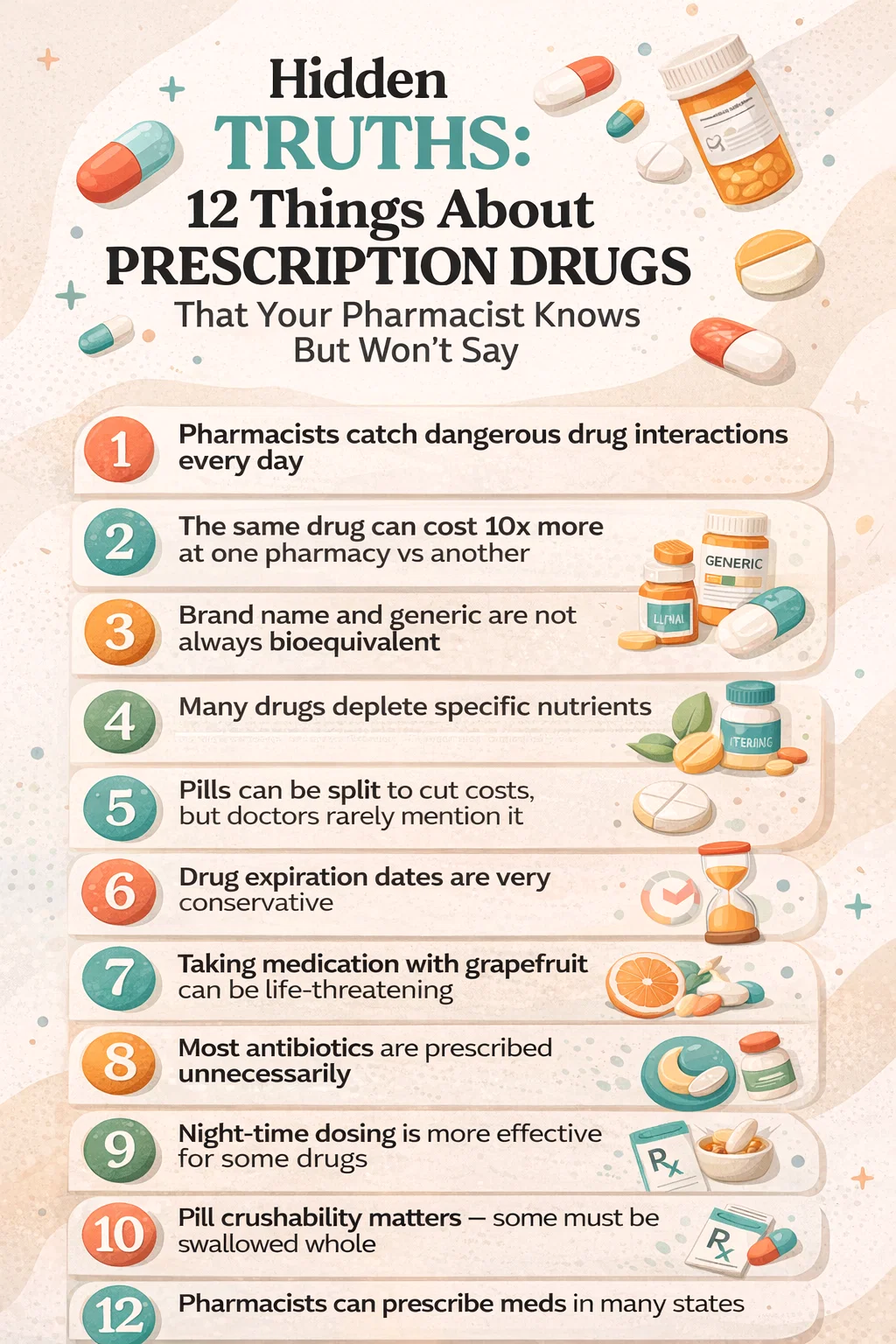
Most patients view the pharmacist as a dispenser, but they are actually the final safety net in the medical system. Every single day, pharmacists identify dangerous drug interactions that could have resulted in hospitalization or worse. Interestingly, the relationship between doctors and pharmacists is not always a perfect harmony. It is a common occurrence for a pharmacist to flag a concern only for a physician to override the warning. This creates a situation where the patient must be their own best advocate. Understanding that your pharmacist has a deep level of expertise can help you bridge the gap between a written prescription and actual wellness.
The Disparity in Prescription Pricing
One of the most shocking realities of the pharmaceutical industry is the lack of price transparency. You might assume that a standard medication costs the same regardless of where you buy it, but the reality is startling. The exact same drug can cost ten times more at one pharmacy compared to another right across the street. Patients are rarely encouraged to price-compare, yet doing so can save hundreds of dollars a year. This is not just about choosing between big-chain retailers and local shops; it is about understanding how insurance contracts and pharmacy benefit managers influence what you pay out of pocket.
Bioequivalence and the Generic Versus Brand Name Debate
The common wisdom is that generic drugs are identical to brand-name versions. While they contain the same active ingredients, the FDA actually allows for a 20 percent variance in absorption. For many people, this minor difference is negligible. However, for those with high sensitivity or medications with a narrow therapeutic index, that variance can be the difference between a controlled condition and a flare-up. Knowing that brand and generic are not always perfectly bioequivalent allows you to monitor how your body reacts when a switch is made at the pharmacy level.
The Nutritional Cost of Staying Healthy
We take medication to get better, but many drugs actually deplete specific, vital nutrients from our systems. This is a side effect that is rarely discussed during a standard doctor visit. For example, statins, which are widely prescribed for cholesterol, are known to deplete CoQ10, a vital enzyme for heart health and energy. Metformin, a staple for managing blood sugar, can lead to significant B12 deficiencies over time. Even common acid-reflux medications like PPIs can block the absorption of magnesium. If you are taking these long-term, you may actually be creating a secondary health issue while trying to solve the first one.
Practical Hacks for Medication Management
Cost-saving measures do not always involve switching pharmacies. Sometimes, they involve the physical form of the pill itself. Many tablets are designed with a score mark down the middle, specifically intended for splitting. In many cases, a higher dose pill costs nearly the same as a lower dose. By getting a higher dose and splitting the tablets, patients can effectively cut their medication costs in half. However, this must be done with caution, as not all pills are safe to split. Always check with your pharmacist to see if your specific prescription is a candidate for this method.
The Truth About Expiration Dates
Most people treat the expiration date on a medicine bottle like the one on a carton of milk, fearing that the contents will become toxic overnight. In reality, these dates are often incredibly conservative. Military studies have demonstrated that many common medications remain stable and effective for 10 to 15 years past their printed expiration date. While certain liquids and life-saving medications like insulin or EpiPens must be replaced strictly on schedule, many household tablets simply lose a tiny percentage of potency over a decade rather than becoming dangerous. This knowledge can prevent unnecessary waste in your home medicine cabinet.
Food Interactions You Need to Know
What you eat can be just as important as the medicine you take. One of the most dangerous and under-discussed interactions involves grapefruit. This fruit contains compounds that block specific liver enzymes responsible for breaking down medication. When these enzymes are blocked, the drug stays in your system at much higher, potentially toxic levels. This affects over 85 common drugs, including those for blood pressure and cholesterol. It is a life-threatening interaction that is often buried in the fine print of a patient information leaflet.
Timing is Everything for Maximum Efficacy
Taking your medication at the right time of day can significantly boost its effectiveness. For instance, the body produces the most cholesterol at night, which is why evening dosing is often superior for statins. Similarly, certain blood pressure medications and even some antihistamines work better when synced with the body’s natural circadian rhythms. If your instructions simply say to take it once a day, it is worth asking if there is a specific hour that will yield better results for your specific condition.
Understanding Rebound Effects and Withdrawal
When patients stop taking a medication and their symptoms return immediately, they often assume it is because they still need the drug. However, this is frequently a rebound effect. This is particularly common with nasal sprays, acid reflux meds, and certain mental health prescriptions. The body becomes accustomed to the chemical intervention and reacts strongly when it is removed. Distinguishing between a return of the original disease and a temporary rebound effect is crucial for anyone looking to eventually transition off of long-term medication.
The Importance of Pill Integrity
Swallowing large pills can be difficult, leading many people to crush their medication or mix it with food. This can be a dangerous mistake. Extended-release medications are engineered to dissolve slowly over many hours. If you crush an extended-release pill, you are receiving the entire 24-hour dose all at once. This can lead to an immediate overdose or severe side effects. Before you reach for a pill crusher or a mortar and pestle, you must verify with a professional that the integrity of the pill can be compromised without risking your health.
The Evolving Role of the Pharmacist
In many regions, the legal authority of a pharmacist is expanding, though it remains underutilized. In most states, pharmacists actually have prescriptive authority for common, minor conditions like smoking cessation, hormonal birth control, or even certain infections. Because they are the most accessible healthcare providers, utilizing them for these common needs can save you a trip to the doctor and an expensive co-pay. They are highly trained clinicians who are often waiting for patients to ask the right questions.
Conclusion: Taking Control of Your Health Journey
The healthcare system is often a maze of quick appointments and technical jargon. Your pharmacist is one of the few people who can provide clarity in that confusion. By understanding the “hidden truths” of the industry, from nutrient depletion to the realities of expiration dates, you move from being a passive consumer to an active participant in your own wellness. The next time you find yourself at that counter, remember that you are not just picking up a bottle; you are accessing a wealth of doctoral-level expertise. Take the extra five minutes to ask the important questions. Your health, and your wallet, will certainly thank you for it.