Top 8 Foods That Build Collagen Naturally Best High Collagen Diet for Skin Joint Health
Ever wonder why some people seem to have a natural radiance that defies their age? While expensive creams and serums have their place, the real secret to youthful skin and flexible joints often lies on your dinner plate. Collagen is the most abundant protein in our bodies, acting as the glue that holds everything together. From the elasticity of your skin to the strength of your ligaments, this powerhouse protein is essential for your overall well-being. As we age, our natural production of collagen begins to slow down, but the good news is that you can fuel your body with the right building blocks to keep your levels high.
The Essential Role of Collagen in Your Body
Collagen is much more than just a beauty buzzword. It is a structural protein that provides a framework for various tissues. Think of it as the scaffolding of a building. Without it, the structure begins to sag and lose its integrity. In the human body, collagen is responsible for giving skin its plumpness, ensuring our joints move smoothly, and even contributing to the health of our gut lining.
There are several types of collagen, but types 1, 2, and 3 are the most common in the human body. Type 1 is found in skin, tendons, and bone; Type 2 is primary in cartilage; and Type 3 supports the structure of muscles and organs. By consuming a variety of collagen-rich foods, you provide your body with the amino acids like glycine, proline, and hydroxyproline needed to synthesize these different types of protein naturally.
Top Foods to Naturally Boost Your Collagen Levels
If you are looking to revitalize your health from the inside out, focusing on whole foods is the most effective strategy. While supplements are popular, the bioavailability of nutrients found in real food is often superior. Let us dive into the specific foods that are scientifically recognized for their collagen-boosting properties.
1. Bone Broth: The Gold Standard
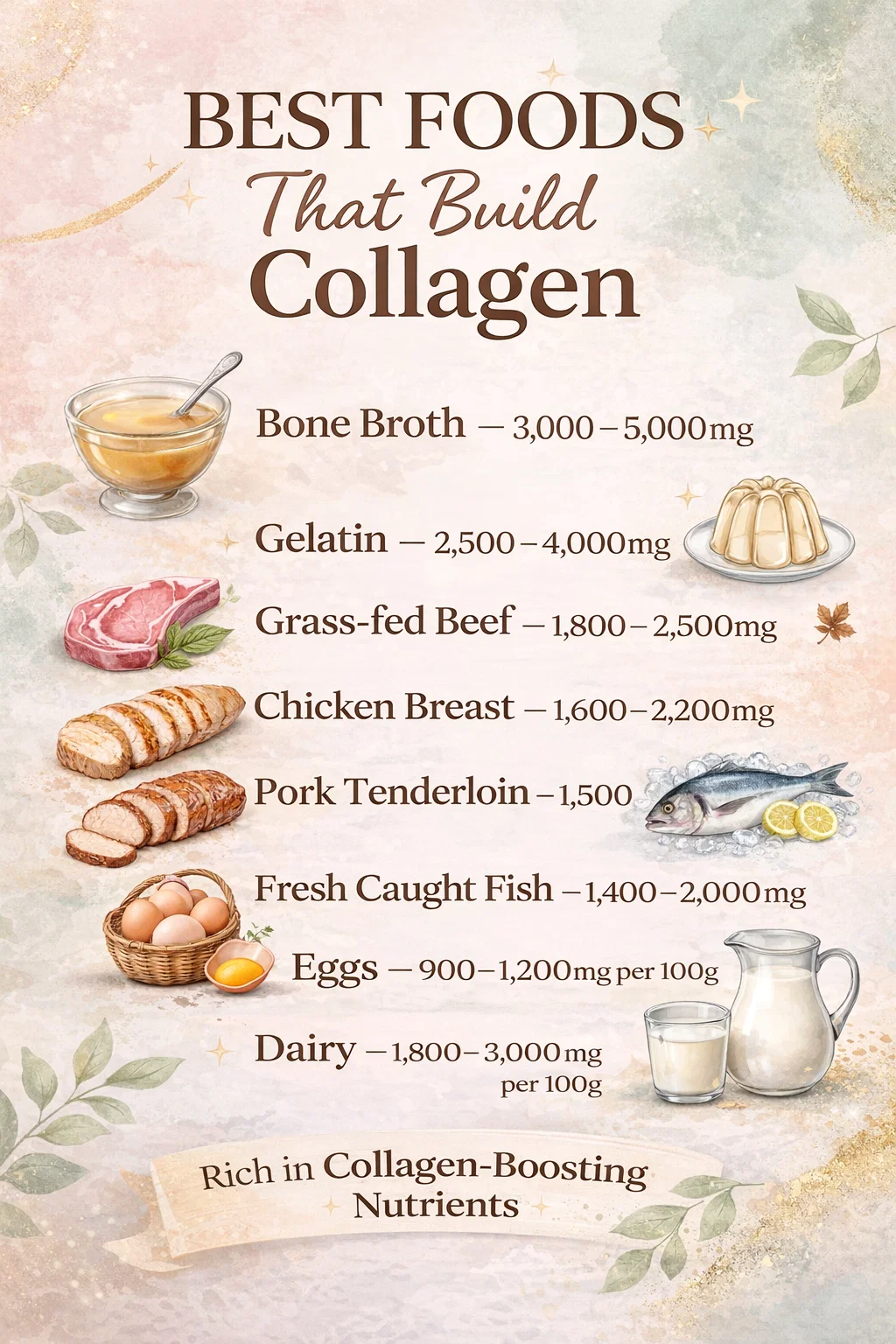
As seen in our guide, bone broth is a nutritional powerhouse, offering between 3,000 and 5,000 mg of collagen per serving. By simmering animal bones and connective tissue for extended periods, the collagen is broken down into gelatin, which is easily absorbed by the body. Beyond collagen, bone broth is rich in minerals like calcium, magnesium, and phosphorus, making it a comprehensive tonic for bone and joint health.
2. Gelatin: More Than Just a Dessert
Gelatin is essentially cooked collagen. With a profile of 2,500 to 4,000 mg, it is an incredible addition to your diet. It is particularly beneficial for gut health because it helps to repair the intestinal lining. You can incorporate gelatin into your routine by making homemade fruit gummies or adding unflavored gelatin powder to your morning coffee or smoothies.
3. Grass Fed Beef
Beef is a significant source of Type 1 and Type 3 collagen. Choosing grass fed varieties ensures you are getting a higher concentration of omega 3 fatty acids and fewer inflammatory markers. With 1,800 to 2,500 mg of collagen potential, a lean cut of beef provides the zinc and protein necessary for the body to repair its own connective tissues.
4. Chicken Breast and Skin
Many collagen supplements are actually derived from chicken. Chicken breast offers a solid 1,600 to 2,200 mg of collagen building blocks. If you enjoy the skin, you are getting even more direct collagen. Chicken is particularly high in Type 2 collagen, which is the variety most associated with supporting healthy, pain free joints.
Marine and Dairy Sources for Variety
Expanding your palate to include different animal proteins ensures a wider range of amino acids. Not all collagen is created equal, and diversifying your sources can lead to better results for your skin and hair.
Fresh Caught Fish
Fish collagen, often referred to as marine collagen, is known for having smaller particles that are easier for the body to absorb. Fish like salmon and mackerel are not only great for their 1,400 to 2,000 mg of collagen potential but also for their high levels of omega 3 fatty acids, which protect the skin from inflammation and UV damage. Most of the collagen in fish is concentrated in the skin and scales, so try to consume the skin when possible.
Dairy Products
Dairy is an often overlooked hero in the collagen world. With 1,800 to 3,000 mg per 100 grams, high quality dairy provides the amino acids proline and glycine. These are fundamental components that your body uses as raw materials to manufacture its own collagen. Greek yogurt and aged cheeses are excellent choices for those who tolerate dairy well.
The Power of Eggs
Eggs are unique because they contain collagen in the yolks and the membranes of the shell. While the amount is slightly lower compared to bone broth (around 900 to 1,200 mg per 100g), eggs are rich in sulfur. Sulfur is a trace mineral required for collagen production and helps the liver detoxify, which in turn leads to clearer, healthier skin.
The Science of Synthesis: Beyond Just Eating Collagen
It is a common misconception that simply eating collagen immediately turns into collagen in your skin. In reality, your body breaks down these proteins into amino acids. To turn those amino acids back into collagen, your body requires specific co-factors. Without these, even a high collagen diet might not yield the results you want.
Vitamin C: The Crucial Catalyst
Vitamin C is perhaps the most important nutrient for collagen production. It acts as a cofactor for the enzymes that stabilize and cross link collagen fibers. If you are eating plenty of beef and broth but skipping your greens and citrus, your body will struggle to build strong collagen. Always pair your protein sources with bell peppers, strawberries, kale, or citrus fruits.
Copper and Zinc
These trace minerals play a vital role in the production of elastin and collagen. Zinc acts as a cofactor for collagen synthesis and helps prevent its breakdown. Copper activates an enzyme called lysyl oxidase which is required for the cross linking of collagen and elastin, giving your tissues their strength and flexibility.
Lifestyle Habits That Protect Your Collagen
While adding the right foods is essential, it is equally important to stop the things that destroy the collagen you already have. Modern life is full of collagen thieves that can accelerate the aging process.
- Limit Sugar Intake: High sugar consumption leads to a process called glycation. This is where sugar molecules attach to collagen fibers, making them brittle and weak.
- Sun Protection: UV rays break down collagen fibers in the dermis. Always wear sunscreen to protect the structural integrity of your skin.
- Stay Hydrated: Collagen needs a hydrated environment to function correctly. Water helps the fibers stay resilient.
- Prioritize Sleep: During deep sleep, the body undergoes tissue repair and growth, which is when the majority of collagen synthesis occurs.
How to Create a Collagen Boosting Meal Plan
Integrating these foods into your daily life does not have to be complicated. Start your morning with a scoop of gelatin in your tea or a bowl of Greek yogurt topped with berries. For lunch, a grilled chicken breast salad with plenty of colorful vegetables provides both the protein and the Vitamin C needed for synthesis. For dinner, consider a slow cooked beef stew made with bone broth or a piece of pan seared fish with the skin on.
Consistency is key. You will not see a change overnight, but after several weeks of focused nutrition, many people report improved skin texture, faster growing nails, and less joint discomfort during exercise.
Conclusion
Building collagen naturally is a holistic process that combines the right nutritional building blocks with healthy lifestyle choices. By prioritizing high quality sources like bone broth, grass fed beef, and fresh fish, you are giving your body the premium materials it needs to maintain its strength and beauty. Remember that your body is a reflection of what you put into it. When you nourish yourself with these nutrient dense foods, you are not just eating for today, you are investing in your future health and vitality. Start incorporating these collagen rich options into your next grocery haul and enjoy the journey toward a more radiant and resilient you.