Curly Hair Tips 9 Expert Secrets for Healthy, Defined, Frizz-Free Curls Every Day
Healthy, defined curls do not happen by chance. They are the result of consistent care, smart product choices, and techniques that work with your hair’s natural texture rather than against it. Whether your curls are loose waves, springy ringlets, or tight coils, following a thoughtful curly hair routine can transform dry, frizzy strands into soft, bouncy, and well-defined curls.
Many people struggle with common curly hair concerns such as frizz, dryness, tangles, and lack of definition. Fortunately, these issues often improve with a few simple adjustments to your daily and weekly routine. From choosing the right products to protecting your curls while you sleep, every small habit contributes to healthier hair over time.
Key Takeaways
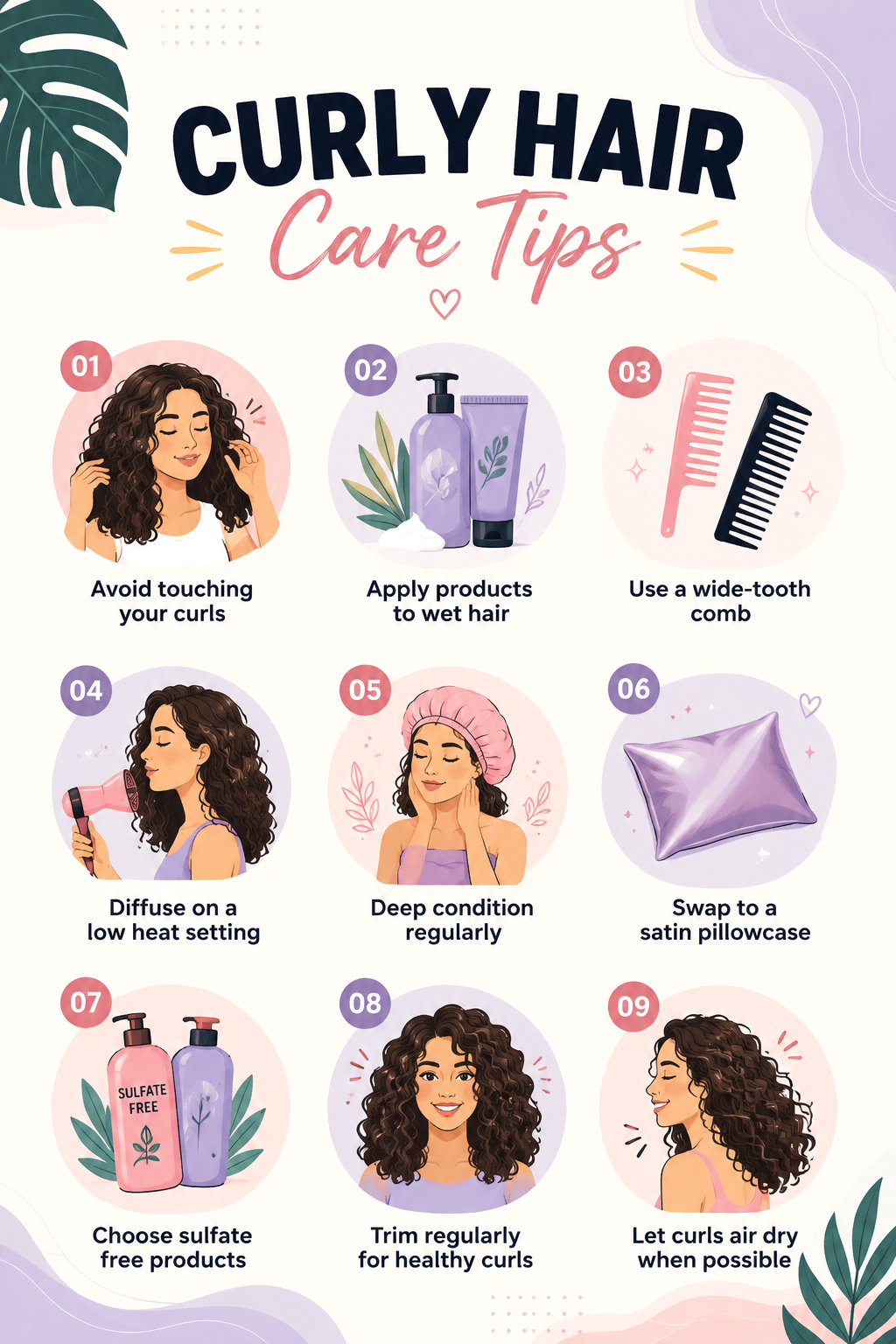
- Apply styling products to wet hair for better curl definition.
- Use a wide-tooth comb to minimize breakage and preserve curl patterns.
- Deep condition weekly to maintain moisture and softness.
- Reduce heat exposure and diffuse on a low setting when needed.
- Protect curls overnight with a satin pillowcase.
- Choose sulfate-free products for gentle cleansing.
Understanding What Curly Hair Needs
Curly hair naturally has bends and twists along each strand. These curves make it harder for natural scalp oils to travel from the roots to the ends, which is why curls tend to be drier than straight hair. Moisture retention becomes the foundation of every successful curly hair routine.
Hydration, gentle handling, and consistent maintenance help curls stay elastic, shiny, and resilient. Instead of fighting your natural texture, learning how curls behave allows you to work with them more effectively.
Important: Healthy curls begin with moisture. Before focusing on styling products or techniques, prioritize hydration through conditioners, leave-in treatments, and gentle cleansing habits.
Avoid Touching Your Curls Too Often
One of the simplest yet most effective curly hair tips is to avoid constantly touching your hair after styling. Every time you run your fingers through your curls, you disturb the curl clumps that create definition.
Excessive touching also transfers oils from your hands onto your hair while increasing friction, which contributes to frizz throughout the day.
How to Reduce Frizz
- Allow curls to dry completely before fluffing.
- Avoid repeatedly adjusting your hairstyle.
- Sleep on smooth fabrics to minimize friction.
- Use lightweight finishing oils only when necessary.
Apply Products to Wet Hair
Applying curl creams, leave-in conditioners, and styling gels while your hair is soaking wet helps lock in moisture and encourages better curl formation. Water distributes products more evenly, allowing each strand to receive hydration.
Many curl enthusiasts use the “praying hands” method or gentle scrunching techniques to evenly coat every section without disrupting the natural curl pattern.
After application, avoid rough towel drying. Instead, gently blot excess water with a microfiber towel or a soft cotton T-shirt.
Choose a Wide-Tooth Comb
Traditional brushes often separate curl clumps, creating unwanted volume and frizz. A wide-tooth comb allows curls to remain grouped together while removing knots with less stress on the hair shaft.
The ideal time to detangle is during conditioning when the hair is saturated with moisture and has plenty of slip.
Best Detangling Practices
- Begin at the ends.
- Work upward toward the roots.
- Detangle while conditioner is still in the hair.
- Separate large sections instead of tiny strands.
- Never force stubborn knots.
Expert Insight
Small changes often create the biggest improvements. Switching from aggressive brushing to gentle detangling with plenty of conditioner can significantly reduce breakage while helping curls maintain their natural shape.
Diffuse on Low Heat
Air drying remains one of the healthiest drying methods, but when time is limited, using a diffuser attachment can speed up drying without disrupting curl formation.
A low heat setting minimizes moisture loss while reducing the risk of heat damage. Keep the diffuser moving slowly and avoid blasting curls with high temperatures.
Pro Tip: Hover diffusing first allows a protective cast to form around your curls before gently scrunching upward with the diffuser bowl for extra volume.
Deep Condition Regularly
Deep conditioning replenishes moisture that everyday washing and environmental exposure gradually remove. Weekly treatments improve elasticity, softness, and overall manageability.
Look for ingredients such as:
- Shea butter
- Aloe vera
- Argan oil
- Coconut oil
- Avocado oil
- Glycerin
Leave the treatment on for 15 to 30 minutes before rinsing thoroughly.
Sleep on a Satin Pillowcase
Nighttime friction is one of the biggest causes of flattened curls and morning frizz. Cotton pillowcases absorb moisture while creating friction against delicate curl patterns.
Satin pillowcases allow curls to glide smoothly during sleep, helping preserve definition while reducing tangles.
Nighttime Curl Protection
- Use a satin pillowcase.
- Wear a satin bonnet if preferred.
- Try a loose pineapple hairstyle.
- Avoid sleeping with wet hair whenever possible.
Choose Sulfate-Free Hair Products
Sulfates create rich lather but can strip natural oils from curly hair. Sulfate-free shampoos cleanse more gently while helping maintain moisture levels.
Pair gentle cleansers with nourishing conditioners formulated specifically for textured hair.
Important: Product consistency matters more than constantly buying new products. Give your routine several weeks before deciding whether it works for your curls.
Trim Your Hair Regularly
Split ends travel upward if left untreated, making curls appear dry and uneven. Regular trims every few months help maintain healthy ends and improve the overall appearance of your curls.
Even small trims make curls look fuller, healthier, and easier to style.
Let Your Curls Air Dry When Possible
Whenever your schedule allows, air drying remains one of the gentlest options for curly hair. It preserves moisture while minimizing heat exposure.
If you prefer extra volume, gently scrunch your curls before allowing them to dry naturally. Resist the temptation to touch them until they are completely dry.
Creating a Weekly Curly Hair Routine
Wash Day
- Cleanse with sulfate-free shampoo.
- Apply moisturizing conditioner.
- Detangle with a wide-tooth comb.
- Apply leave-in conditioner.
- Style on wet hair.
Midweek Refresh
- Lightly mist curls with water.
- Add a small amount of leave-in conditioner.
- Scrunch curls back into shape.
Weekly Treatment
- Deep conditioning treatment.
- Scalp massage.
- Check ends for dryness.
- Clean styling tools.
Common Mistakes to Avoid
- Using high heat regularly.
- Brushing dry curls.
- Skipping conditioner.
- Overwashing the hair.
- Using products that contain harsh cleansing agents.
- Touching curls constantly after styling.
Why This Matters
- Healthy curls retain moisture longer.
- Gentle routines reduce breakage and frizz.
- Consistent care produces better long-term results than frequent product changes.
Building Long-Term Healthy Curl Habits
Beautiful curls are created through consistency rather than perfection. Small daily habits such as using the right comb, sleeping on satin, applying products to wet hair, and deep conditioning weekly gradually improve curl health over time.
Rather than searching for a miracle product, focus on building a balanced routine that provides moisture, protection, and gentle handling. As your hair becomes healthier, you’ll notice stronger definition, reduced frizz, increased softness, and easier styling.
At a Glance
- Hydrate curls consistently.
- Style on wet hair.
- Use gentle tools and products.
- Protect curls overnight.
- Deep condition every week.
Conclusion
Developing healthy curls does not require an overly complicated routine. By combining gentle cleansing, deep hydration, careful styling techniques, and protective habits, you can enjoy softer, shinier, and more defined curls throughout the year. Consistency remains the biggest factor in achieving lasting results, and even small improvements in your routine can make a noticeable difference over time. Treat your curls with patience, provide them with the moisture they crave, and embrace their natural texture with confidence.
Tags
Curly Hair Tips Curly Hair Care Healthy Curls Frizz Control Sulfate Free Hair Care Curl Routine Natural Hair Hair Care Tips