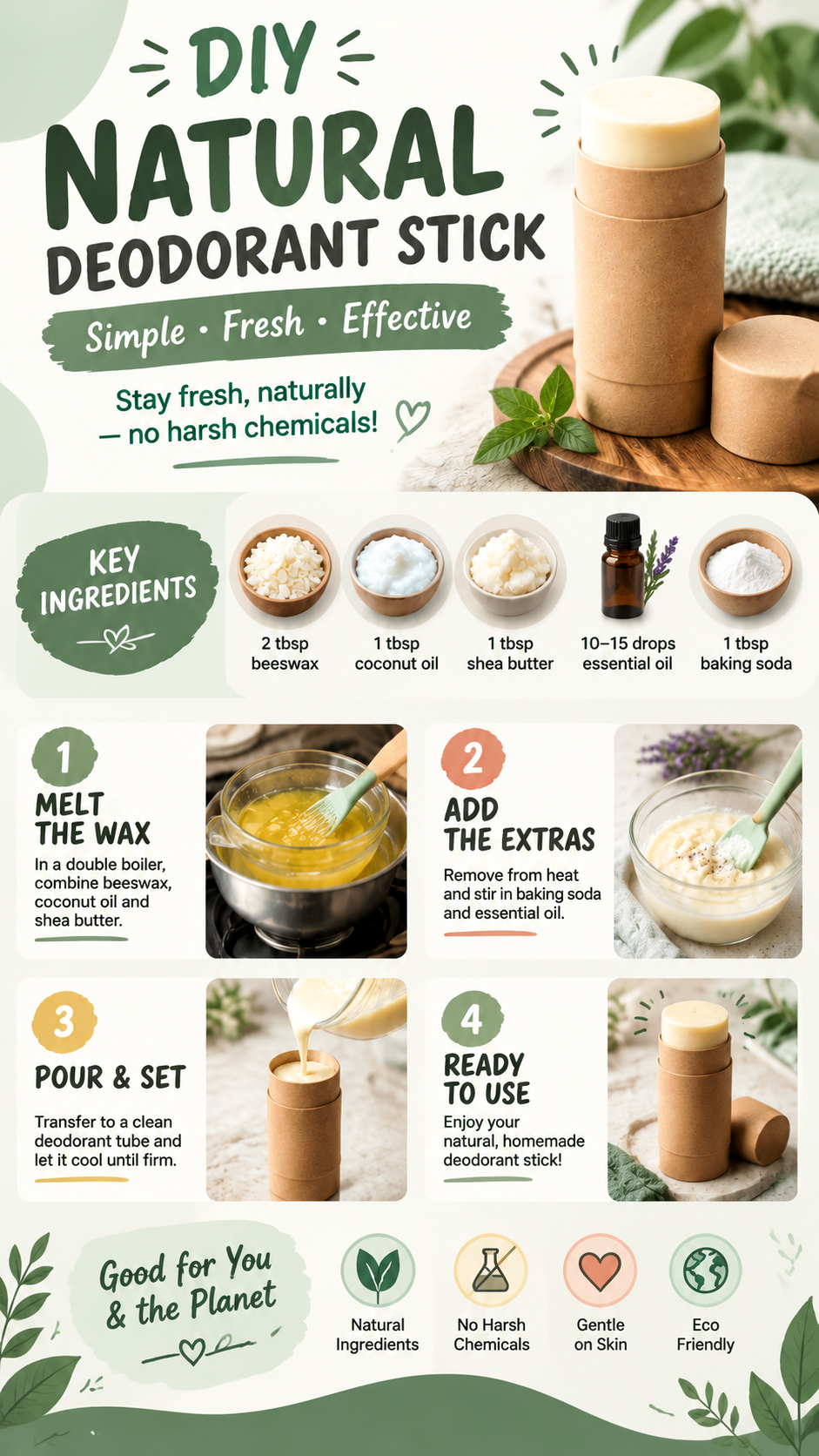
DIY Natural Deodorant Stick Recipe Easy Homemade Natural Deodorant with 5 Ingredients
Looking for a simple way to refresh your daily routine with homemade personal care products? This DIY natural deodorant stick recipe is an easy project that combines a handful of familiar ingredients into a creamy deodorant you can make at home. With beeswax, coconut oil, shea butter, baking soda, and your favorite essential oil, you can create a convenient stick that fits beautifully into a natural skincare routine.
Making your own deodorant gives you more control over the ingredients, scent, and packaging you choose. It can also be a fun introduction to DIY beauty, especially if you enjoy creating practical products with a few carefully selected ingredients. Whether you are exploring homemade skincare for the first time or looking for a reusable alternative to conventional packaging, this recipe offers a straightforward place to start.
In this guide, you will learn what each ingredient does, how to prepare your homemade deodorant stick step by step, how to adjust the texture, and what to consider when using a baking soda-based formula on your skin.
Key Takeaways
- This homemade deodorant stick uses five basic ingredients: beeswax, coconut oil, shea butter, baking soda, and essential oil.
- Beeswax helps the mixture hold its shape, while coconut oil and shea butter contribute a smooth, creamy texture.
- Baking soda helps absorb odors, but it may irritate sensitive skin.
- Essential oils add fragrance and should be used carefully to reduce the risk of skin reactions.
- A clean, reusable deodorant tube makes application convenient and can reduce packaging waste.
- Allow the mixture to cool and fully solidify before using your finished deodorant.
Why Make Your Own Natural Deodorant Stick?
Homemade deodorant is appealing because it allows you to choose what goes into a product you use regularly. Instead of selecting a ready-made formula, you can experiment with a simple blend of waxes, plant oils, and odor-controlling ingredients to find a texture and fragrance that suit your preferences.
Another benefit is the flexibility to customize the recipe. You can choose a reusable container, leave out fragrance if you prefer unscented products, or explore alternative ingredients if your skin does not tolerate baking soda. Small adjustments can make your DIY personal care routine feel more individual and practical.
There is also something satisfying about making a useful product from scratch. The process involves melting a few ingredients, stirring them together, pouring the mixture into a container, and allowing it to set. You do not need complicated equipment or advanced crafting skills to get started.
However, natural does not automatically mean gentle, hypoallergenic, or suitable for everyone. Homemade deodorant should be treated like any other leave-on skincare product, with careful attention to ingredient quality, hygiene, and individual skin sensitivity.
DIY Natural Deodorant Stick Ingredients
The recipe uses five ingredients that work together to create a solid deodorant with a creamy consistency. Each ingredient has a different purpose, from helping the stick maintain its shape to contributing fragrance or odor control.
Ingredients You Will Need
- 2 tablespoons beeswax: Helps the deodorant solidify and maintain its shape at ordinary room temperatures.
- 1 tablespoon coconut oil: Contributes a smooth texture and helps the ingredients blend into a spreadable mixture.
- 1 tablespoon shea butter: Adds richness and helps create a creamy consistency that glides across the skin.
- 10 to 15 drops essential oil: Provides fragrance, depending on the oil selected and its suitability for leave-on skin products.
- 1 tablespoon baking soda: Helps control odor by affecting the compounds responsible for unpleasant smells.
Important: Baking soda can cause redness, itching, burning, or irritation in some people, particularly when applied repeatedly to delicate underarm skin. If you have sensitive skin, consider a baking soda-free formula instead. Essential oils can also trigger irritation or allergic reactions, so more fragrance does not necessarily make a better deodorant.
1. Beeswax for a Firm Deodorant Stick
Beeswax is the structural ingredient in this recipe. When melted, it blends with the oils and butter. As the mixture cools, the wax helps everything set into a firmer consistency that can fit inside a deodorant tube.
The amount of beeswax influences how hard the finished stick feels. A formula with too much wax may drag across the skin, while one with too little may soften easily in a warm room. If you decide to adjust the recipe, make small changes and test the consistency after it cools completely.
Beeswax is an animal-derived ingredient, so this recipe is not vegan. If you prefer a vegan deodorant, you can investigate suitable plant-based waxes, but you will need to adjust the formula because different waxes have different melting points and firmness.
2. Coconut Oil for a Smooth Texture
Coconut oil helps soften the formula and makes it easier to spread. It is solid in cooler conditions but becomes softer as temperatures rise, so the finished deodorant may feel different depending on where it is stored.
Choose a cosmetic-quality ingredient from a reputable supplier and keep it clean during preparation. If you know that coconut oil does not agree with your skin, do not assume that its popularity in DIY beauty makes it the right choice for you.
3. Shea Butter for Creaminess
Shea butter gives the deodorant a rich, creamy feel. It helps balance the firmer beeswax and contributes to a smoother application, making it an important part of the overall texture.
Use clean, cosmetic-grade shea butter and measure it carefully. Different suppliers may offer slightly different textures, so your first batch is a useful opportunity to learn how the particular ingredients you have behave together.
4. Essential Oil for Fragrance
Essential oils can give homemade deodorant a fresh, herbal, floral, or citrus-inspired scent. Lavender is a familiar option for a gentle floral aroma, while other oils may create brighter or more earthy fragrance profiles.
Nevertheless, essential oils are concentrated substances, not automatically skin-safe perfumes. Their suitability depends on the specific oil, its concentration, and how it is used. Some citrus oils can also increase sensitivity to sunlight, depending on the oil and whether it is phototoxic.
For a product that remains on the skin, follow reliable supplier guidance for the specific essential oil and intended application. Do not exceed the recommended skin-use concentration, and consider leaving fragrance out entirely if you have reactive skin.
5. Baking Soda for Odor Control
Baking soda is commonly included in homemade deodorant recipes because it can help neutralize some odor-causing compounds. It is inexpensive and easy to find, making it a popular ingredient in beginner-friendly DIY formulas.
Its main drawback is that it can be too alkaline for some people’s skin. Underarm irritation may develop after repeated use, even if the product initially feels comfortable. Avoid applying the deodorant to broken, freshly shaved, or already irritated skin.
If you have experienced a rash from baking soda deodorant before, skip it rather than trying to push through the discomfort. A baking soda-free formula using an appropriate alternative may be a better option.
Tools and Supplies for Homemade Deodorant
Before beginning, gather your ingredients and equipment. Having everything ready makes the melting and pouring stages easier because the mixture can begin to set as it cools.
- A heat-safe glass measuring cup or small heat-resistant bowl.
- A saucepan for creating a double boiler.
- A spoon or small spatula for stirring.
- Measuring spoons or a kitchen scale for accurate quantities.
- A clean, dry deodorant tube or suitable cosmetic container.
- A clean work surface and paper towels for tidying up.
Choose a container that can safely hold the warm mixture. A reusable deodorant tube is convenient, but a small cosmetic jar can also work if you prefer applying the product with clean fingers or a dedicated spatula.
How to Make DIY Natural Deodorant Stick Step by Step
This homemade deodorant recipe follows four simple stages: melt the base ingredients, add the remaining ingredients, pour the mixture into its container, and allow it to set. Work carefully with the warm mixture and avoid rushing the cooling process.
Step 1: Melt the Beeswax, Coconut Oil, and Shea Butter
Measure 2 tablespoons of beeswax, 1 tablespoon of coconut oil, and 1 tablespoon of shea butter. Place them in a heat-safe container that fits securely over a saucepan containing a small amount of gently simmering water.
Heat the ingredients slowly, stirring occasionally as the beeswax melts. Continue until the mixture is fully liquid and the oils and butter are combined.
A double boiler provides indirect heat, which helps reduce the risk of scorching the ingredients. Keep water out of the mixture and handle the hot container with appropriate protection.
Pro Tip: Gentle, controlled heating is more useful than trying to melt everything quickly. Avoid overheating the mixture, and keep your container stable throughout the process.
Step 2: Add the Baking Soda and Essential Oil
Once the beeswax, coconut oil, and shea butter have melted together, carefully remove the container from the heat. Allow the mixture to cool slightly while it remains liquid.
Stir in 1 tablespoon of baking soda gradually, mixing thoroughly to reduce visible clumps. Add your selected essential oil according to the oil’s safety guidance and the intended concentration for a leave-on product.
Keep stirring until the ingredients appear evenly distributed. Baking soda does not dissolve completely in the oil-based mixture, so the finished deodorant may have a slightly powdery texture.
If you want a smoother product, consider testing a suitable baking soda-free formula rather than simply adding more oil or fragrance. Any change to the ingredients may affect the texture and skin tolerance.
Step 3: Pour the Mixture Into a Clean Deodorant Tube
Place your clean, dry deodorant tube on a stable surface. Carefully pour the mixture into the container while it is still fluid enough to flow.
Pour slowly to avoid splashing or creating large air pockets. If the mixture begins to thicken before you finish, you can gently warm it again using the double boiler method.
Do not fill the container so close to the rim that the product spills when the tube is moved. Leave enough room for the mixture to settle neatly, and wipe away any drips before they harden.
Step 4: Let the Deodorant Cool and Set
Leave the filled container upright in a cool, undisturbed location. Allow the mixture to return to room temperature and solidify completely before attempting to raise or apply the stick.
The setting time depends on the container, room temperature, and ingredient proportions. A small tube may firm up relatively quickly, while a larger container may need longer.
Once the deodorant is firm, check that the stick moves properly and has a consistent texture. If it remains too soft, melts easily, or separates, you may need to adjust the proportions in your next batch.
Congratulations! Your homemade natural deodorant stick is ready for a cautious first use. Apply a small amount to clean, dry, intact skin and watch for any signs of irritation.
Why This Matters
A successful homemade deodorant is not just about getting a firm stick. The formula also needs to feel comfortable on your skin, remain stable during storage, and be easy to apply. Start with a small batch, test the texture and skin response, and make only one adjustment at a time so you can understand what works.
How to Customize Your Homemade Deodorant
One of the most enjoyable parts of DIY beauty is adjusting a basic recipe to suit your preferences. The key is to change ingredients thoughtfully rather than assuming that every natural addition will improve the result.
Adjust the Firmness
If the deodorant feels too soft, the ratio of wax to oils may need adjustment. A modest increase in beeswax can produce a firmer stick, while a slight increase in the liquid or softer oils may make the product glide more easily.
Make small changes in separate test batches. Large adjustments can create a product that is either difficult to apply or too soft to hold its shape.
Choose a Fragrance You Enjoy
Lavender, rosemary, and other familiar essential oils may appeal to people who enjoy herbal scents, but fragrance choice should always come after safety. Some essential oils are more irritating than others, and individual reactions vary.
If you prefer a fragrance-free product, leave out the essential oil. Do not replace it with an untested fragrance ingredient or increase another ingredient to compensate for the missing scent.
Consider a Baking Soda-Free Formula
For people who experience irritation, a baking soda-free deodorant may be a more comfortable starting point. Some DIY formulations use other odor-control ingredients, such as cosmetic-grade magnesium hydroxide or suitable starches, but these alternatives behave differently and are not interchangeable in equal amounts.
Any alternative formula should be developed with appropriate ingredient guidance and tested for texture, stability, and skin tolerance. Simply removing the baking soda from this recipe may change its consistency and performance.
Natural Deodorant vs. Antiperspirant: What Is the Difference?
Before switching to homemade deodorant, it helps to understand what deodorants do and what they do not do. Deodorants primarily address body odor, while antiperspirants are designed to reduce sweating.
Body odor develops when microorganisms on the skin interact with substances in sweat. Deodorant ingredients can help reduce or mask unpleasant smells, but the effectiveness of a particular formula depends on its composition and how your body responds to it.
Antiperspirants generally use active ingredients designed to temporarily reduce the flow of sweat to the skin’s surface. The five-ingredient recipe described here is not formulated or tested as an antiperspirant, so you should not expect it to prevent sweating.
Natural deodorant can be a useful choice for someone who wants to experiment with a simpler personal care routine. However, it is not automatically more effective, safer, or less irritating than a commercially formulated product.
How to Use and Store Your DIY Deodorant Stick
Use your homemade deodorant sparingly at first. Apply a thin layer to clean, dry, intact underarm skin and see how it feels throughout the day. You may find that only a small amount is needed for comfortable application.
- Apply gently: Avoid pressing or rubbing the stick aggressively against your skin.
- Skip irritated areas: Do not apply it to cuts, rashes, or freshly shaved skin if shaving leaves you sensitive.
- Keep the container clean: Avoid sharing the stick and prevent dirt or moisture from entering the product.
- Store away from heat: Coconut oil and shea butter soften as temperatures rise, so a hot car or sunny windowsill may affect the stick.
- Check the product regularly: Discard it if you notice an unusual smell, visible contamination, or a significant change in texture.
Because this is a homemade, water-free product, it does not contain an intentionally added water phase. That does not guarantee that it is sterile or that it will remain safe indefinitely. The ingredients and equipment can introduce contamination, especially if water gets into the container.
Make small batches, use clean equipment, and avoid adding fresh plant material or other ingredients that introduce moisture. There is no reliable universal shelf life for every homemade formula, so do not assume that it will last as long as a commercially tested deodorant.
Troubleshooting Common Homemade Deodorant Problems
Why Is My Deodorant Stick Too Soft?
A soft stick may result from a low wax proportion, warm storage conditions, or differences between ingredient brands. Try storing it somewhere cooler and observe whether it firms up. If the formula remains too soft, adjust the wax-to-oil balance in a new test batch.
Why Does My Deodorant Feel Grainy?
Graininess can occur when ingredients do not cool evenly or when powders form small clumps. Stir the mixture thoroughly while preparing it and distribute the baking soda gradually. If the texture remains uncomfortable, reconsider whether this formula is right for your skin rather than trying to mask the problem with extra fragrance.
Why Does My Underarm Feel Irritated?
Potential causes include baking soda, essential oils, friction, or another ingredient that does not agree with your skin. Stop using the product if you develop burning, itching, redness, or a rash. Wash the area gently and allow the skin to recover before trying another deodorant.
If the reaction is severe, persistent, spreading, or accompanied by swelling, seek medical advice. Do not continue applying the product in the hope that your skin will become accustomed to it.
Why Does the Deodorant Leave Marks on Clothing?
Oil-based ingredients can leave residue on fabric, especially if too much product is applied. Use a thin layer, allow it to settle before dressing, and wash clothing according to its care instructions. Test the deodorant with older clothing first if you are concerned about marks.
Is Homemade Natural Deodorant Eco-Friendly?
Making deodorant at home may help you reduce packaging waste, particularly when you reuse a suitable container and purchase ingredients in practical quantities. It can also encourage you to think more carefully about what you buy and how you use everyday personal care products.
Still, eco-friendly results depend on the full picture. Ingredient sourcing, manufacturing, transportation, packaging, cleaning, and product waste all influence the environmental impact of a personal care item.
A reusable tube is only useful if it can be cleaned properly and reused safely. If the container is difficult to sanitize or the formula repeatedly becomes contaminated, a different container or a well-formulated commercial product may be the more practical choice.
For a more mindful DIY routine, purchase ingredients from reputable suppliers, avoid unnecessary packaging, measure carefully to reduce waste, and make only as much deodorant as you are likely to use within a reasonable period.
Quick Points: DIY Natural Deodorant at a Glance
- Recipe base: Beeswax, coconut oil, and shea butter.
- Odor control: Baking soda, which may irritate sensitive skin.
- Fragrance: Essential oil used at a skin-appropriate concentration, or no fragrance at all.
- Preparation: Melt, stir, pour, and allow the mixture to set.
- Storage: Keep the product clean, dry, and away from excessive heat.
Frequently Asked Questions About DIY Natural Deodorant
Can I Make This Homemade Deodorant Without Beeswax?
Yes, but the texture will change. Beeswax helps the stick stay firm, so a vegan alternative such as a suitable plant-based wax may require different proportions. Follow the supplier’s formulation guidance and test a small batch before filling a full deodorant tube.
Can I Leave Out the Essential Oil?
Yes. You can omit the essential oil for a fragrance-free version. The scent will be milder and mostly reflect the natural aroma of the other ingredients. Fragrance-free formulas can be a useful option for people who prefer to avoid unnecessary fragrance exposure, although the remaining ingredients may still cause irritation.
Does Natural Deodorant Stop Sweating?
No. This recipe is intended to help manage odor, not to stop perspiration. If reducing sweat is your main goal, an appropriately formulated antiperspirant may be more suitable.
How Often Can I Apply Homemade Deodorant?
Frequency depends on your skin’s tolerance and the product’s performance. Begin with a small amount and avoid repeated application if you notice discomfort. Stop using it if irritation develops, and do not apply it to damaged skin.
Can I Give Homemade Deodorant as a Gift?
You can share a carefully prepared product, but remember that homemade cosmetics have not necessarily undergone professional stability, contamination, or safety testing. Clearly label the ingredients, preparation date, and any fragrance used. Avoid giving it to someone without checking for known sensitivities, and do not present it as suitable for every skin type.
Conclusion: Create Your Own DIY Natural Deodorant Stick
This DIY natural deodorant stick recipe is a simple introduction to homemade personal care. With beeswax, coconut oil, shea butter, baking soda, and carefully selected essential oil, you can create a solid deodorant using a straightforward melt-and-pour process.
The most important part is finding a formula that balances convenience, texture, and skin comfort. Take your time when melting the ingredients, mix the powder thoroughly, choose a suitable container, and let the stick set completely before using it. Start with a small amount and pay attention to how your skin responds.
Remember that natural ingredients are not automatically harmless, and this recipe is not an antiperspirant. Baking soda and essential oils can cause irritation, so consider a fragrance-free or baking soda-free alternative if you have sensitive skin. Good hygiene and sensible storage are also essential when making products at home.
Once you understand the basics, you can explore other DIY skincare projects and make thoughtful choices about ingredients and packaging. Keep your first batch small, record any adjustments you make, and enjoy learning which options work best for your routine.
Ready to try your own homemade deodorant? Gather your ingredients, prepare a clean container, and save this recipe for your next natural beauty project.
Tags
DIY Natural Deodorant
Homemade Deodorant
Natural Skincare
DIY Beauty
Zero-Waste Beauty
Natural Personal Care
Homemade Skincare Recipes
Eco-Friendly Beauty