Hair Porosity Guide How to Identify Low, Medium High Porosity Hair
Understanding your hair is one of the most important steps toward creating a routine that actually works. Hair porosity plays a major role in how your strands absorb, hold, and release moisture. Whether your hair feels dry, gets weighed down easily, struggles with frizz, or simply never seems to respond well to products, learning your hair porosity can help you make smarter choices.
Key Takeaways
- Hair porosity determines how easily your hair absorbs and retains moisture.
- Low porosity hair benefits from lightweight hydration and gentle product layering.
- Medium porosity hair usually needs a balanced approach between moisture and protein.
- High porosity hair often requires deeper conditioning and moisture sealing.
- Choosing products based on your porosity can improve your overall hair routine.
What Is Hair Porosity and Why Does It Matter?
Hair porosity refers to your hair’s ability to absorb and retain moisture. It is influenced by the condition and structure of the hair cuticle, the outer protective layer of each strand. When the cuticles are tightly closed, moisture may have difficulty entering. When they are more open, moisture can enter quickly but may escape just as easily.
Understanding whether you have low, medium, or high porosity hair can help you select better products, adjust your styling methods, and create a more effective hair care routine. Instead of following every trending treatment, you can focus on what your unique strands actually need.
Important: Hair porosity is not about whether your hair is naturally straight, wavy, curly, or textured. Any hair type can have low, medium, or high porosity. The key is understanding how your strands interact with moisture.
The Three Main Types of Hair Porosity
Low Porosity Hair: When Moisture Has Trouble Getting In
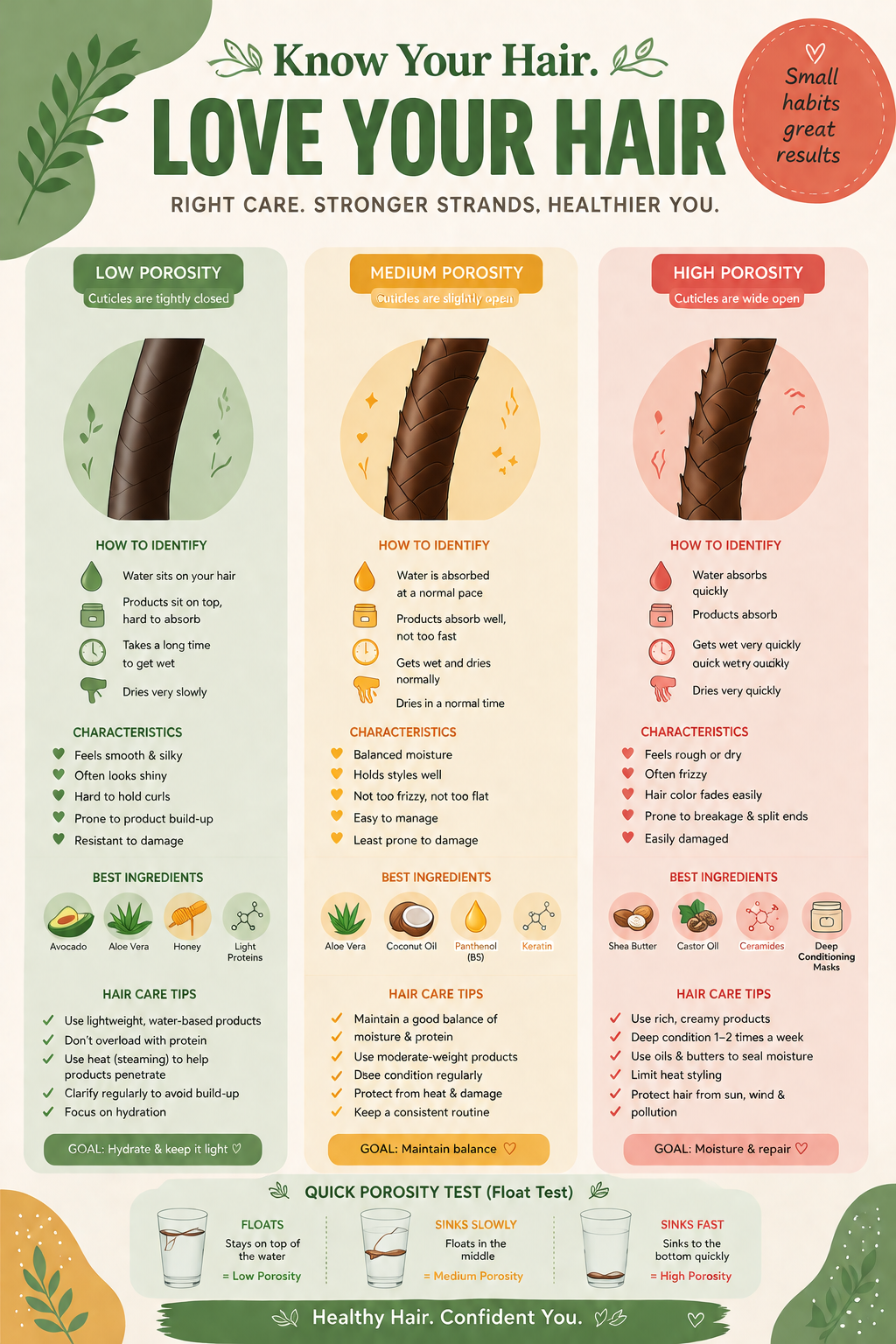
Low porosity hair has tightly closed cuticles, which can make it challenging for water and products to penetrate the strand. People with this hair type often notice that products sit on the surface instead of absorbing quickly.
Common signs of low porosity hair include slow drying time, product buildup, and difficulty absorbing heavier creams or oils. Hair may feel smooth and appear shiny, but it can still need proper hydration techniques.
Best Care Tips for Low Porosity Hair
- Choose lightweight, water-based products.
- Avoid applying too many heavy oils or thick creams.
- Use gentle heat or steaming to help products absorb.
- Clarify regularly to prevent buildup.
- Focus on hydration without overwhelming the hair.
Helpful Ingredients
Ingredients such as aloe vera, lightweight oils, hydrating serums, and light proteins are often popular choices for low porosity hair because they provide moisture without creating excessive weight.
Medium Porosity Hair: The Balanced Hair Type
Medium porosity hair typically absorbs moisture at a balanced rate and is often easier to manage. The cuticle layer allows hydration to enter while still helping moisture stay inside the strand.
Many people with medium porosity hair find that their strands respond well to different styling methods. However, maintaining balance remains important because too much moisture or too much protein can still create issues.
Best Care Tips for Medium Porosity Hair
- Maintain a balance between moisture and protein.
- Use moderate-weight conditioners and treatments.
- Protect hair from excessive heat styling.
- Deep condition regularly.
- Create a consistent routine that supports healthy strands.
Helpful Ingredients
Medium porosity hair often responds well to ingredients like coconut oil, panthenol, aloe vera, and balanced protein treatments. The goal is maintaining healthy moisture levels without creating imbalance.
High Porosity Hair: When Moisture Escapes Quickly
High porosity hair has more open cuticles, allowing moisture to enter quickly. However, the same openness can make it difficult for hair to retain hydration, leading to dryness, frizz, and increased sensitivity.
This type of hair may become wet quickly and dry quickly. It can also be more prone to breakage, split ends, and damage caused by environmental factors or styling habits.
Best Care Tips for High Porosity Hair
- Use rich conditioners and moisturizing treatments.
- Seal moisture with oils or butters.
- Deep condition consistently.
- Limit excessive heat styling.
- Protect hair from environmental stress.
Helpful Ingredients
High porosity hair often benefits from richer ingredients like shea butter, castor oil, ceramides, and deep conditioning masks that help improve moisture retention.
Expert Insight
The best hair routine is not about using the most products. It is about choosing the right products for your hair’s needs. Knowing your porosity can help you avoid unnecessary steps and create a simpler, more effective routine.
- Observe how your hair reacts after washing.
- Pay attention to moisture absorption and drying speed.
- Adjust products based on your hair’s changing needs.
How to Identify Your Hair Porosity
There are several ways to understand your hair porosity. One common method is observing how your hair behaves after getting wet and how quickly it absorbs products.
Signs of Low Porosity Hair
- Water tends to sit on the hair surface.
- Products take longer to absorb.
- Hair takes a long time to become fully wet.
- Drying time is often longer.
Signs of Medium Porosity Hair
- Water absorbs at a comfortable pace.
- Hair dries at a normal speed.
- Products generally work well.
- Hair is easier to style and maintain.
Signs of High Porosity Hair
- Water absorbs very quickly.
- Hair becomes wet and dry quickly.
- Moisture disappears easily.
- Hair may feel rough or dry.
Understanding the Hair Porosity Float Test
The float test is a popular method often used to estimate hair porosity. It involves placing a clean strand of hair in water and observing whether it floats, stays in the middle, or sinks quickly. While this test can provide a general idea, your daily hair behavior is often a more useful indicator.
Your hair’s response to washing, conditioning, styling products, and environmental conditions can reveal important clues about its moisture needs.
Building a Hair Routine Based on Porosity
A successful hair routine starts with understanding what your strands need. Low porosity hair usually benefits from lightweight hydration, medium porosity hair needs balance, and high porosity hair often requires moisture protection and repair-focused care.
Remember that your hair can change over time. Heat styling, chemical treatments, coloring, and environmental exposure may affect your hair’s porosity level.
Pro Tip: Keep track of how your hair reacts to different products. A simple hair journal can help you discover which ingredients, routines, and techniques create the best results.
At a Glance
- Low porosity: focus on lightweight moisture.
- Medium porosity: maintain balance.
- High porosity: protect and seal hydration.
- Your routine should match your hair’s behavior.
Conclusion: Find What Works for Your Hair
Hair porosity is a simple concept that can completely change the way you approach hair care. By understanding whether your strands are low, medium, or high porosity, you can choose products more intentionally and build habits that support healthier-looking hair.
Every person’s hair is unique, and the perfect routine is the one that helps your strands feel hydrated, manageable, and strong. Use your porosity knowledge as a guide, experiment with what works, and enjoy the process of caring for your hair.
Tags
Hair Porosity Healthy Hair Care Natural Hair Tips Hair Routine Moisture Balance Hair Care Tips Curly Hair Care