DIY Aloe Vera Flaxseed Hair Mask for Frizzy Hair Smooth, Soft Shiny Hair Recipe
If frizz, dryness, and dull-looking hair have become part of your daily routine, nature may already have the solution sitting in your kitchen. A DIY aloe vera and flaxseed hair mask combines two well-known natural ingredients that are loved for their ability to hydrate, soften, and improve the overall appearance of hair. This simple recipe is easy to prepare, budget friendly, and suitable for many hair types that need extra moisture and care.
Unlike many commercial treatments packed with synthetic ingredients, a homemade hair mask allows you to control exactly what goes onto your hair. Aloe vera delivers lightweight hydration while flaxseed creates a smooth gel that coats the hair, helping reduce frizz and improve manageability. When blended with a small amount of coconut oil, the result is a nourishing treatment that fits perfectly into a weekly hair care routine.
Key Takeaways
- Aloe vera helps moisturize dry, frizzy hair.
- Flaxseed gel naturally smooths strands and enhances shine.
- Coconut oil adds extra nourishment for dry ends.
- The mask is easy to prepare with simple household ingredients.
- Weekly use can support softer, healthier-looking hair.
Why Aloe Vera and Flaxseed Make an Excellent Hair Care Duo
Natural hair care continues to grow in popularity because many people are looking for simple alternatives that support healthy hair without unnecessary additives. Aloe vera and flaxseed complement one another remarkably well. One focuses on hydration while the other creates a protective, smoothing layer that helps improve the feel and appearance of hair.
Aloe vera contains mostly water along with naturally occurring vitamins, minerals, amino acids, and plant compounds that help moisturize both the scalp and hair. Its lightweight texture makes it especially appealing for people who want hydration without leaving hair feeling greasy.
Flaxseed, when boiled into a gel, produces a slippery consistency that easily coats individual strands. This coating helps reduce friction, making hair easier to detangle while creating the appearance of smoother, shinier locks.
Important: Consistent hair care often delivers better results than occasional intensive treatments. Using a nourishing DIY hair mask once a week may gradually improve softness, manageability, and overall hair appearance when combined with a balanced hair care routine.
Benefits of This DIY Hair Mask
1. Helps Reduce Frizz
One of the biggest reasons people choose this recipe is its ability to smooth unruly hair. Hydrated strands naturally lie flatter, reducing flyaways and making styling easier.
2. Adds Lightweight Moisture
Unlike heavy creams that can weigh hair down, aloe vera provides refreshing hydration that leaves hair feeling softer without excessive buildup.
3. Improves Shine
Smooth hair reflects more light. The conditioning effects of flaxseed gel help create a glossy finish that makes hair appear healthier.
4. Makes Hair Easier to Manage
Many users appreciate how flaxseed gel improves slip, making combing and detangling simpler while helping minimize breakage caused by rough brushing.
5. Supports Scalp Comfort
Hydrating ingredients may leave the scalp feeling refreshed while helping maintain a comfortable moisture balance.
Ingredients You’ll Need
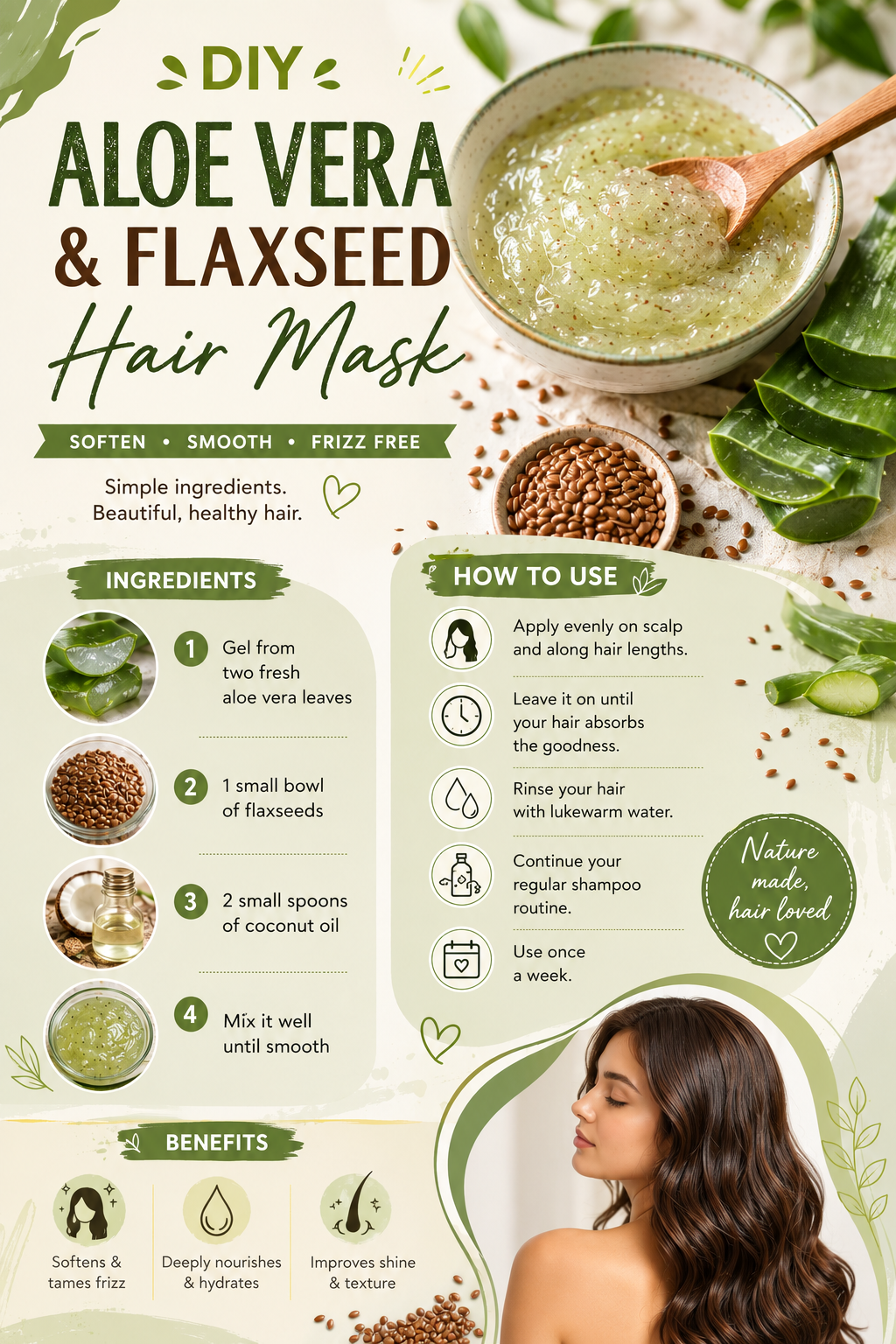
- Fresh gel from two aloe vera leaves
- One small bowl of prepared flaxseed gel
- Two teaspoons of coconut oil
These ingredients are widely available and work together to create a creamy mask that spreads easily through the hair.
How to Prepare the Hair Mask
- Extract fresh aloe vera gel from the leaves.
- Prepare flaxseed gel until it reaches a smooth consistency.
- Add coconut oil.
- Blend everything until creamy and lump free.
- Transfer the mixture into a clean bowl for easy application.
The finished mask should have a smooth texture that glides easily onto both the scalp and hair.
Expert Insight
Applying the mask to slightly damp hair often allows the mixture to spread more evenly while helping every strand receive consistent coverage.
Step-by-Step Application Guide
- Divide your hair into manageable sections.
- Apply the mask evenly from the scalp through the lengths.
- Massage gently using your fingertips.
- Leave the mask on long enough for the hair to absorb the moisture.
- Rinse thoroughly with water.
- Continue with your normal shampoo routine.
- Skip conditioner if your hair already feels soft and moisturized.
Using the treatment once every week is usually enough for most hair care routines.
Pro Tip: Focus extra product on the mid-lengths and ends if these areas tend to become dry or frizzy first. They usually benefit the most from added hydration.
Who Can Benefit From This Recipe?
This homemade treatment works well for many different hair types.
- Dry hair needing additional moisture
- Frizzy hair that is difficult to manage
- Curly hair seeking more definition
- Wavy hair needing smoother texture
- Hair exposed to frequent heat styling
- Color-treated hair that feels dry
Because the ingredients are lightweight, many people also enjoy using the mask without making their hair feel overly heavy.
Tips for Better Results
- Use freshly extracted aloe vera whenever possible.
- Blend the mixture until completely smooth.
- Apply evenly for consistent coverage.
- Avoid using excessive amounts of coconut oil on fine hair.
- Rinse thoroughly before shampooing.
- Stay consistent with weekly treatments.
Common Mistakes to Avoid
Using Too Much Product
Applying more mask does not necessarily produce better results. Even coverage is more important than thickness.
Skipping Regular Hair Care
A nourishing mask works best alongside gentle cleansing, careful detangling, and minimizing excessive heat styling.
Inconsistent Use
Natural hair care often delivers gradual improvements rather than overnight transformation.
How This Recipe Fits Into a Healthy Hair Routine
Think of this treatment as one piece of a complete hair care plan. Healthy-looking hair also benefits from balanced nutrition, staying hydrated, gentle towel drying, regular trims, and protecting hair from excessive heat and environmental stress.
Combining these healthy habits with a weekly aloe vera and flaxseed mask can help your hair feel softer, smoother, and easier to style over time.
Frequently Asked Questions
How often should I use this mask?
Once per week is a practical starting point for most people.
Can I use it on curly hair?
Yes. The moisturizing properties and natural slip make it popular among people with curly and wavy hair.
Should I shampoo after using it?
Many people prefer rinsing thoroughly before continuing with their normal shampoo routine.
Can I prepare extra?
Freshly prepared masks generally provide the best texture and overall experience. If storing leftovers, keep them refrigerated in a clean container and use them promptly.
At a Glance
- Natural ingredients with simple preparation.
- Supports softer, smoother, shinier hair.
- Ideal for weekly hair care routines.
- Great for reducing the appearance of frizz.
- Easy to customize for different hair needs.
Conclusion
A DIY aloe vera and flaxseed hair mask is an easy way to add more natural care to your weekly beauty routine. With moisturizing aloe vera, smoothing flaxseed gel, and nourishing coconut oil, this recipe offers a simple approach to improving softness, reducing frizz, and enhancing shine. While no single treatment can completely transform hair overnight, regular use combined with healthy hair habits can make a noticeable difference in how your hair looks and feels. Whether you have straight, wavy, curly, or dry hair, this homemade mask is a practical addition that encourages healthier-looking, more manageable strands.
Tags
DIY Hair Mask Aloe Vera Hair Care Flaxseed Gel Natural Hair Care Frizzy Hair Healthy Hair Homemade Hair Treatment Hair Care Tips