Healthy Lunch Box Ideas for Kids 6-Day Healthy School Lunch Meal Plan
Packing a healthy lunch for children does not have to be complicated. With a little planning and a variety of colorful, wholesome ingredients, you can create lunch boxes that are both nutritious and exciting to eat. A balanced lunch helps children stay focused in school, supports healthy growth, and provides lasting energy throughout the day. By combining vegetables, fruits, whole grains, healthy fats, and protein, every lunch can become an opportunity to build lifelong healthy eating habits.
Whether you’re preparing meals for preschoolers, elementary school children, or older kids, having a simple weekly plan removes the stress from busy mornings. Rotating different foods throughout the week also encourages children to try new flavors while ensuring they receive a wide range of nutrients.
Key Takeaways
- Create balanced lunch boxes with protein, whole grains, fruits, and vegetables.
- Offer colorful foods to make lunches more appealing for children.
- Rotate ingredients throughout the week to avoid boredom.
- Include healthy snacks that provide lasting energy.
- Prepare ingredients ahead of time for faster weekday mornings.
Why Healthy School Lunches Matter
Children spend a large part of their day at school, making lunch one of their most important meals. A nutritious lunch supports concentration, learning, physical activity, and healthy development. Instead of relying on heavily processed foods, a homemade lunch box allows parents to control ingredients and portion sizes.
Important: Consistently offering balanced meals helps children develop healthier eating habits that can last well into adulthood. Small improvements made today can have long-term benefits for their overall well-being.
The Formula for a Balanced Lunch Box
A well-rounded lunch includes several food groups working together to provide nutrition and satisfaction.
Whole Grains
Whole grain wraps, parathas, sandwiches, rice dishes, and other grain-based meals provide carbohydrates that fuel active children throughout the school day.
Protein
Protein helps build muscles and keeps children feeling full longer. Foods such as lentils, chickpeas, dairy, nuts, seeds, and legumes are excellent additions to lunch boxes.
Fresh Fruits and Vegetables
Adding colorful fruits and vegetables increases vitamin, mineral, and fiber intake. Sliced apples, grapes, cucumbers, carrots, bananas, melon, citrus fruits, and pomegranate are convenient choices that travel well.
Healthy Fats
Healthy fats from almonds, mixed seeds, and similar foods support brain development while adding satisfying crunch and nutrition.
Why This Matters
Offering a variety of textures and colors encourages children to eat a wider selection of foods. Small changes in presentation often make healthy ingredients much more appealing.
A Simple 6-Day Healthy Lunch Box Plan
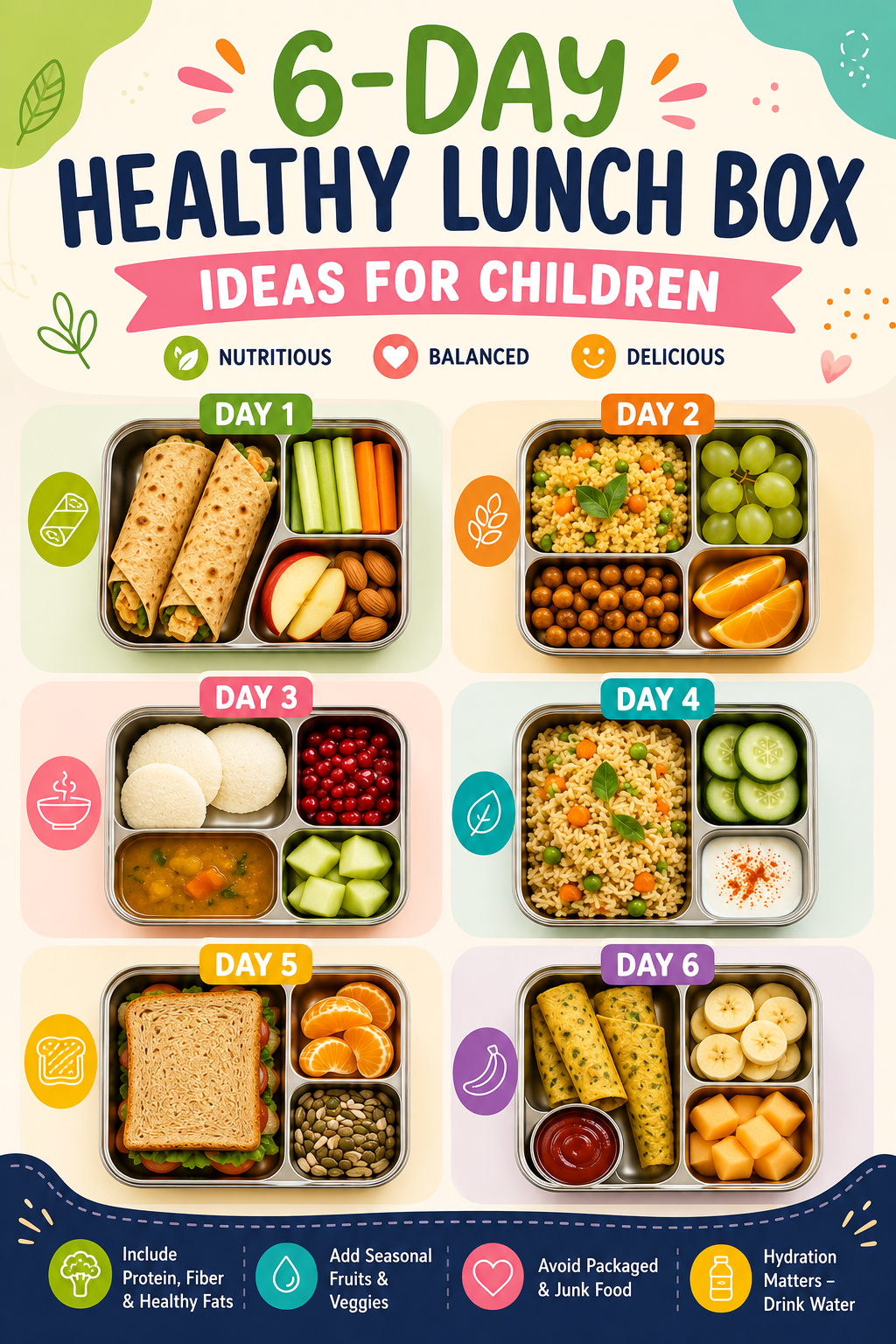
Day 1: Whole Grain Wrap with Fresh Sides
A vegetable-filled wrap paired with crunchy cucumber and carrot sticks creates a satisfying lunch. Add apple slices and almonds for natural sweetness and healthy fats.
- Vegetable wrap
- Fresh vegetable sticks
- Apple slices
- Almonds
Day 2: Vegetable Grain Bowl
A vegetable-based grain dish served with grapes, roasted chickpeas, and orange slices offers fiber, vitamins, and plant-based protein in one balanced meal.
Day 3: Traditional Comfort Meal
Soft grain cakes served alongside a vegetable-based soup or stew create a comforting lunch. Fresh pomegranate seeds and cucumber cubes provide refreshing contrast.
Pro Tip: Including one familiar favorite with one new fruit or vegetable is an easy way to introduce variety without overwhelming picky eaters.
Day 4: Vegetable Rice Bowl
A colorful vegetable rice dish served with cucumber slices and yogurt creates a balanced combination of carbohydrates, vegetables, protein, and calcium.
Day 5: Healthy Sandwich Lunch
A vegetable-packed sandwich paired with citrus fruit and mixed seeds delivers a combination of energy, fiber, and healthy fats.
Day 6: Savory Pancake Roll
A savory lentil-based roll served with banana slices, melon cubes, and a small dipping sauce provides a fun and satisfying end to the week’s lunch rotation.
Tips for Making Lunch Boxes More Appealing
- Use colorful fruits and vegetables.
- Cut foods into fun, bite-sized pieces.
- Keep wet and dry foods separate.
- Include a balance of familiar and new foods.
- Choose reusable containers with divided compartments.
Meal Prep Strategies for Busy Parents
Preparing ingredients in advance makes weekday mornings much easier. Wash and cut fruits and vegetables, portion snacks into containers, cook grains ahead of time, and prepare sandwich fillings or wraps the night before when possible.
Creating a weekly shopping list based on your planned lunch menu also helps reduce food waste and saves valuable time.
Smart Snack Ideas to Include
- Fresh fruit slices
- Grapes
- Melon cubes
- Banana slices
- Carrot sticks
- Cucumber slices
- Roasted chickpeas
- Mixed seeds
- Almonds
- Plain yogurt
Hydration Is Part of a Healthy Lunch
Nutritious food works best when paired with proper hydration. Packing a reusable water bottle encourages children to drink water throughout the school day. Staying hydrated supports concentration, physical activity, and overall health.
Important: Water should be the primary drink included in a lunch box. Fresh fruits with high water content can also contribute to hydration while adding valuable nutrients.
Encouraging Healthy Eating Habits
Children are more likely to enjoy healthy lunches when they help choose ingredients or assemble parts of their meals. Letting them pick between different fruits, vegetables, or healthy snacks gives them a sense of ownership while keeping nutrition on track.
Celebrate variety rather than perfection. Every balanced lunch contributes to healthier eating patterns over time, and small improvements are often more sustainable than drastic changes.
Quick Points
- Balance every lunch with protein, grains, fruits, and vegetables.
- Rotate meals weekly to keep lunches interesting.
- Prepare ingredients ahead of busy mornings.
- Pack water alongside every healthy lunch.
- Focus on colorful, minimally processed foods.
Conclusion
Healthy lunch boxes can be simple, colorful, and enjoyable without requiring complicated recipes. A thoughtful weekly plan filled with whole grains, fresh produce, protein-rich foods, and healthy snacks provides children with the nutrition they need to learn, grow, and stay active. By preparing ingredients in advance and offering a variety of balanced meals, parents can reduce daily stress while making lunchtime something children look forward to every day.
Tags
Healthy Lunch Box Ideas Kids School Lunch Meal Prep Healthy Kids Meals School Lunch Ideas Balanced Nutrition Kid Friendly Meals Healthy Eating