DIY Hair Mist for Humid Summer Days Frizz Control Hydrated, Silky Hair
Hot, humid weather can turn a good hair day into a frizzy mess in minutes. When your hair feels dry, puffy, or difficult to manage, a lightweight DIY hair mist can be a simple addition to your summer hair care routine. Made with ingredients such as rose water, aloe vera gel, coconut water, and argan oil, this homemade hair mist offers a refreshing way to help your strands feel softer, smoother, and more manageable throughout the day.
Instead of reaching for heavy styling products every time humidity strikes, try a refreshing hair spray that focuses on lightweight moisture and a natural-looking finish. This DIY hair mist is designed for quick touch-ups, everyday hydration, and a little extra shine when your hair needs it most.
Key Takeaways
- Create a refreshing DIY hair mist with rose water, aloe vera gel, coconut water, and a small amount of argan oil.
- Use a light mist to refresh dry or damp hair without soaking your strands.
- Focus on the mid-lengths and ends to help dry hair feel softer and smoother.
- Keep the formula lightweight to reduce the risk of greasy roots or product buildup.
- Store homemade water-based hair products safely and prepare small batches for freshness.
- Adjust your hair care routine to your hair type, texture, and response to humidity.
Why Use a DIY Hair Mist for Humid Summer Days?
Summer humidity can make hair harder to style, especially when strands are already dry or prone to frizz. Moisture in the air can affect the way hair fibers behave, causing some textures to swell, lose definition, or develop unwanted flyaways. Heat, sun exposure, frequent washing, and swimming can also leave hair feeling less manageable.
A homemade hair mist provides a convenient way to refresh your hair between washes. Depending on its ingredients, it may help add a little moisture, improve softness, and make strands easier to comb or restyle. It can also be useful when your hair looks dull after spending time outdoors.
The goal is not to make your hair completely resistant to humidity. No simple water-based spray can guarantee frizz-free results in every weather condition. Instead, a well-balanced hair mist can support a routine that keeps hair feeling comfortable, hydrated, and easier to manage.
Benefits of a Lightweight Hair Refreshing Spray
- Quick refresh: A few sprays can help revive hair that feels dry or looks tired between washes.
- Softness and manageability: Suitable conditioning ingredients may help reduce the rough feeling associated with dry strands.
- Natural-looking shine: A small amount of a suitable hair oil can improve the appearance of the hair surface.
- Convenient styling: A mist is easy to keep in your routine for post-workout refreshes, travel, and summer outings.
- Customizable care: You can adapt the formula to your hair’s needs, provided you use compatible ingredients and sensible amounts.
DIY Hair Mist Ingredients and Their Benefits
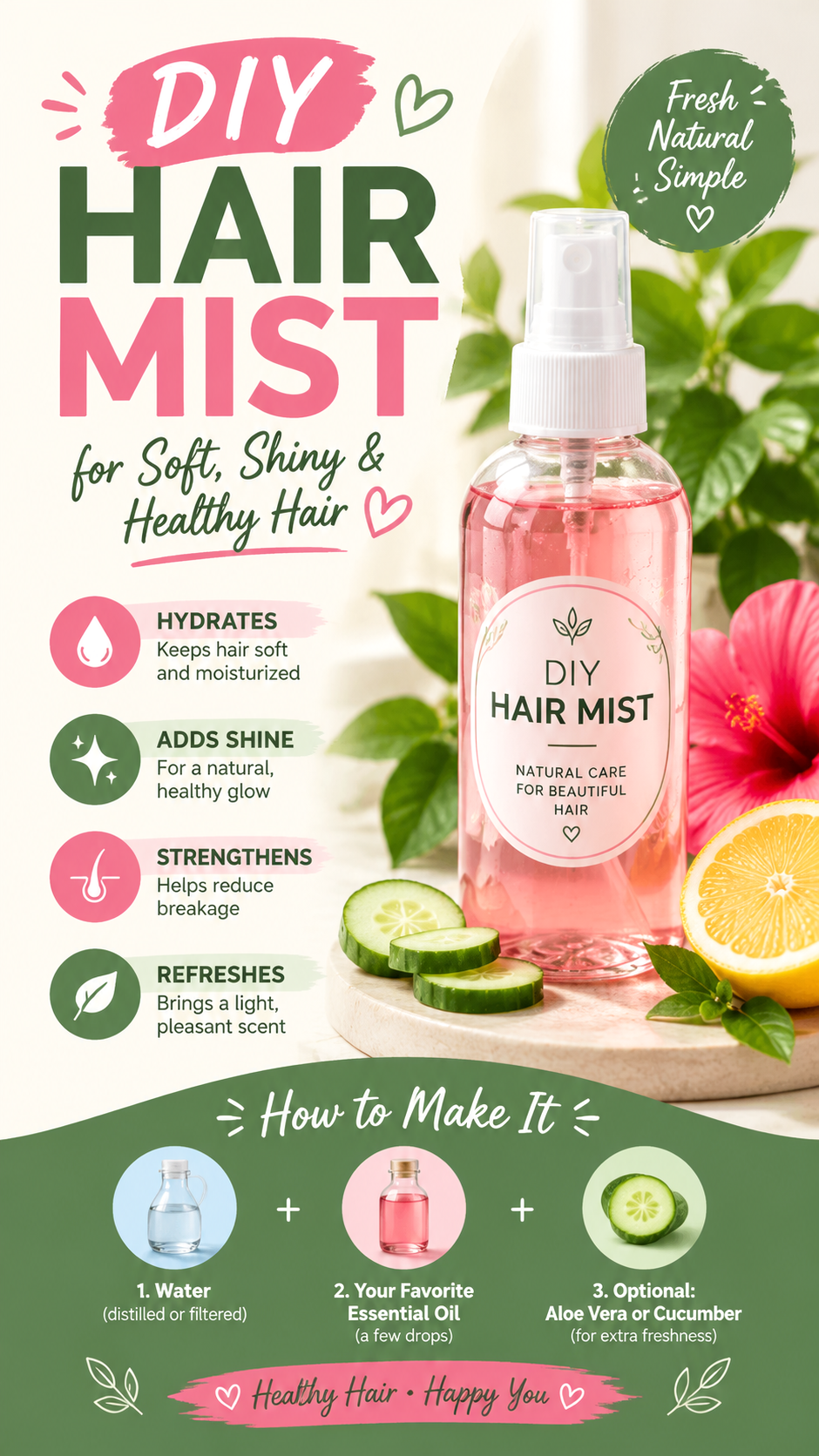
The pictured hair mist highlights four familiar ingredients: rose water, aloe vera gel, coconut water, and argan oil. Each ingredient has a different role in a homemade hair care formula. Understanding those differences can help you create a spray that feels refreshing without leaving your hair sticky or weighed down.
1. Rose Water for a Refreshing Base
Rose water is commonly used in beauty routines because of its light feel and pleasant floral character. In a hair mist, it can serve as the main water-based ingredient, making the spray feel refreshing when applied to dry or damp strands.
Choose a product intended for cosmetic use with a clear ingredient list. Avoid assuming that every rose water product is suitable for hair or that a fragranced version will agree with a sensitive scalp.
How to Use Rose Water
- Use it as the main liquid in a small, freshly prepared batch.
- Apply a fine mist rather than saturating the hair.
- Keep the spray away from your eyes and stop using it if irritation occurs.
2. Aloe Vera Gel for a Soft, Conditioned Feel
Aloe vera gel is a popular ingredient in homemade beauty recipes. In hair care, a small amount may help strands feel smoother and more manageable. However, different gels contain different thickeners, preservatives, fragrances, and other additives, so their performance in a spray can vary.
For a fine hair mist, select a lightweight cosmetic aloe product that can be diluted appropriately. Thick gels may clog a spray nozzle or leave a tacky coating when used in excessive amounts.
If your hair is fine, begin with very little aloe vera gel. Curly, coily, or particularly dry hair may tolerate a somewhat richer formula, but the ideal amount depends on the individual product and your hair’s response.
3. Coconut Water for a Lightweight Refresh
Coconut water is often featured in summer-inspired beauty recipes because of its light, refreshing character. In a DIY hair mist, it can contribute to the watery base and help create a simple spray for occasional use.
However, coconut water is not a proven standalone solution for humidity-related frizz. It also contains organic compounds that can support microbial growth, making proper storage especially important in homemade water-based products.
For convenience, use a small quantity in a fresh batch rather than preparing a large bottle intended to last for weeks. If you have a coconut allergy or a history of reactions to coconut-derived ingredients, choose a different formula.
4. Argan Oil for Shine and Smoother-Looking Ends
Argan oil is widely used in hair care products to improve softness, reduce the feeling of roughness, and add shine. It can be particularly useful for hair ends that feel dry or look dull after heat styling.
Because oil does not mix evenly with water on its own, simply adding argan oil to rose water can create an unstable mixture. The oil may float on the surface or collect in droplets, so shaking the bottle does not guarantee that every spray contains the same amount.
Important: A homemade water-and-oil mixture is not the same as a professionally formulated hair mist. For a more consistent spray, use a cosmetic formula designed to combine oil and water safely, or apply one or two drops of argan oil separately to the ends of your hair.
How to Make a Simple DIY Hair Mist at Home
You do not need a complicated beauty routine to refresh your hair during summer. The easiest approach is to prepare a small amount of a lightweight mist using cosmetic-grade ingredients and a clean spray bottle. Keep the formula simple, especially if you are new to homemade hair care.
What You Will Need
- 2 tablespoons of cosmetic-grade rose water or distilled water.
- A small amount of lightweight, water-compatible aloe vera product, following its label directions.
- A clean, fine-mist spray bottle.
- Optional: a professionally formulated hair-mist base or a compatible solubilizer, used according to its manufacturer’s instructions.
- Optional: a separate lightweight hair oil for application to the ends after misting.
These amounts are intended for a tiny experimental batch, not a preserved commercial product. If you use a product containing coconut water, make only enough for immediate use and discard leftovers. Adding fresh plant-based ingredients to water increases the need for careful handling.
Step-by-Step Instructions
- Clean your equipment. Wash your hands and clean the spray bottle and any utensils thoroughly. Let them dry completely before use.
- Choose your liquid base. Add a small amount of cosmetic rose water or distilled water to the bottle.
- Add a compatible aloe product. Follow its directions and use only a small quantity that will not make the mixture too thick for the nozzle.
- Mix gently. Close the bottle and shake it if appropriate for the ingredients. Remember that shaking does not create a stable oil-and-water mixture.
- Test the spray. Apply a little to a small section of hair to check how it feels and whether it leaves residue.
- Use immediately. Because this simple mixture is not preserved, prepare only what you can use at once and discard the remainder.
Pro Tip: If you want a bottle that can safely stay in your bathroom or handbag for repeated use, choose a commercially preserved hair mist or a professionally developed formula. Homemade water-based products can develop harmful microbial contamination even when they still look and smell normal.
How to Apply Hair Mist for Frizz Control
Using the right amount is just as important as choosing the ingredients. Too much product can leave hair damp, sticky, or limp, while a light application may provide a quick refresh without disrupting your style.
For Damp Hair After Washing
After washing, gently squeeze excess water from your hair with a soft towel. Spray a small amount of mist onto the mid-lengths and ends, then use your fingers or a wide-tooth comb to distribute it. Avoid aggressive brushing, particularly if your hair is curly or easily tangled.
If you use a leave-in conditioner, apply it according to its directions. Your DIY mist should complement your normal routine rather than replace products that provide the conditioning your hair needs.
For Dry Hair During the Day
When humidity causes flyaways or your hair begins to feel dry, spray a little mist into your palms or directly onto the areas that need refreshing. Smooth your hands lightly over the surface of your hair instead of repeatedly spraying the entire head.
For curly and wavy hair, gently scrunch the mist into individual sections to help refresh the natural shape. For straight or fine hair, concentrate on the ends and avoid the roots if they become oily easily.
For Dry Ends and Extra Shine
If your ends feel rough after misting, smooth a tiny amount of a suitable hair oil over them separately. Begin with less than you think you need, since adding more is easier than removing an oily coating.
Remember that shine and softness are cosmetic effects. A mist cannot permanently repair split ends or reverse structural damage, but a suitable conditioning routine can improve the way hair looks and feels.
Choose the Best Hair Mist for Your Hair Type
Hair texture, density, porosity, and scalp oiliness all affect how a product performs. A formula that feels wonderful on thick curls may leave fine, straight hair looking flat. Start with a light application and adjust based on the results.
Fine or Straight Hair
Fine hair often benefits from lightweight products that do not leave a heavy coating. Choose a simple water-based mist and use only a small amount. Keep oils away from the roots, and avoid thick gels that may make individual strands stick together.
Wavy and Curly Hair
Wavy and curly hair may need extra help maintaining definition in humid weather. Apply mist section by section and scrunch gently to refresh the pattern. A compatible leave-in conditioner or styling cream may provide more lasting conditioning and frizz control than a watery spray alone.
Coily, Textured, or Very Dry Hair
Coily and highly textured hair can benefit from a routine that combines gentle cleansing, conditioning, and a suitable leave-in product. A hair mist can help refresh sections between wash days, but it may not provide enough conditioning on its own.
Try misting a small section, followed by a leave-in conditioner or a little hair oil if your routine calls for it. Avoid repeatedly wetting the same section without allowing it to dry appropriately, especially if your hair is prone to tangling or buildup.
Color-Treated or Heat-Styled Hair
Hair that has been colored, bleached, or frequently heat-styled may feel more fragile or dry. Use a gentle mist and pair it with conditioning products designed for your hair’s needs. A hair mist does not replace a heat protectant, and it should not be treated as a sunscreen for hair unless it is specifically formulated for that purpose.
Why This Matters
Frizz control works best when a refreshing mist is part of a complete routine. Water can temporarily improve the feel of dry hair, but lasting smoothness often depends on conditioning and styling products that suit your texture.
- Use lightweight products if your hair becomes oily or flat quickly.
- Combine misting with suitable conditioning for dry or textured hair.
- Consider a humidity-resistant styling product when you need a longer-lasting finish.
Common DIY Hair Mist Mistakes to Avoid
Homemade beauty recipes are appealing because they can be simple and customizable. Still, a few common mistakes can make a hair mist less effective or less suitable for everyday use.
Adding Too Much Oil
Oil can help improve the feel of dry ends, but excess oil may make hair greasy and difficult to style. It also does not naturally dissolve in water. Use a properly formulated product or apply a small amount of oil separately rather than relying on an unstable homemade mixture.
Using Too Much Aloe Vera Gel
Thick aloe gel may clog the spray nozzle or leave a sticky film. Choose a lightweight product that is compatible with spray applications and begin with a very small amount. If the mist does not spray evenly, do not force the nozzle or apply the mixture to your hair.
Keeping Homemade Mist for Too Long
Water-based products can support the growth of bacteria, yeast, and mold. A clean-looking bottle is not proof that the contents remain safe. Homemade mixtures without a validated preservative system should not be stored for extended periods or treated as shelf-stable cosmetics.
Ignoring Scalp Sensitivity
Even familiar botanical ingredients can cause irritation or allergic reactions in some people. Test a new product on a small area first, avoid applying it to broken or irritated skin, and discontinue use if you notice itching, burning, redness, or a rash.
Expecting a Mist to Eliminate All Frizz
Humidity affects different hair types in different ways. A light spray may refresh your style, but it will not necessarily prevent frizz in very damp conditions. If you need more reliable hold, consider a compatible anti-frizz serum, leave-in conditioner, or humidity-resistant styling product.
Extra Summer Hair Care Tips for Smooth, Silky Hair
A DIY hair mist can be a helpful addition to your routine, but everyday habits also influence how your hair behaves in hot and humid weather. Small adjustments can help reduce unnecessary dryness, tangling, and breakage.
- Use a gentle shampoo: Choose a cleanser that suits your scalp and avoid washing more often than your hair needs.
- Condition regularly: Apply conditioner to the lengths and ends to improve softness and detangling.
- Handle wet hair gently: Use a wide-tooth comb or your fingers, working from the ends upward.
- Limit excessive heat: High temperatures can contribute to damage. Use a heat protectant when styling with hot tools.
- Protect your hair outdoors: Wear a hat or use a product specifically designed to provide UV protection when appropriate.
- Reduce friction: A smooth pillowcase, gentle towel drying, and loose protective hairstyles may help limit tangles and breakage.
- Choose humidity-friendly styling products: A compatible styling cream, gel, or serum may provide better hold than a refreshing mist alone.
Consistency matters more than using a long list of ingredients. A simple routine that keeps your hair conditioned and minimizes damage is often more useful than repeatedly adding new products whenever frizz appears.
Quick Points: DIY Hair Mist at a Glance
- Best use: Refreshing hair between washes and helping dry strands feel more manageable.
- Key ingredients: Rose water, compatible aloe vera products, and optional conditioning ingredients.
- For shine: Apply a tiny amount of suitable hair oil separately to the ends.
- For frizz: Pair a light mist with conditioning and humidity-resistant styling products when needed.
- For safety: Make small fresh batches, avoid unstable mixtures, and use properly preserved products for repeated storage.
Frequently Asked Questions About DIY Hair Mist
Can I Use DIY Hair Mist Every Day?
It depends on the ingredients and how your hair responds. A simple, suitable mist may be used for occasional or regular refreshing, but excessive application can leave some hair types limp, sticky, or prone to buildup. Follow product directions and avoid repeatedly applying homemade mixtures that have been stored without an appropriate preservation system.
Does Hair Mist Stop Humidity Frizz?
A hair mist may help improve softness and refresh the appearance of your hair, but it cannot guarantee complete humidity protection. For longer-lasting results, combine suitable conditioning with a styling product designed to help manage frizz in humid conditions.
Can I Leave Hair Mist in Without Rinsing?
Only if the ingredients and product directions make it suitable for leave-in use. Cosmetic products are not interchangeable, and a product designed to be rinsed away should not automatically be used as a leave-in spray. For homemade mixtures, keep the formula simple and use freshly prepared amounts rather than storing them for repeated applications.
Is Rose Water Good for Hair?
Rose water can serve as a refreshing liquid in some hair care routines. Its main benefit in a simple mist is the lightweight, water-based application. It should not be considered a proven treatment for hair growth, scalp conditions, or permanent frizz control.
Can I Mix Argan Oil Directly With Rose Water?
Argan oil does not naturally mix evenly with rose water. Without a suitable solubilizing system, the ingredients can separate, resulting in uneven application. For a simple home routine, apply a small amount of hair oil separately after misting, or select a professionally formulated product that combines the ingredients appropriately.
Final Thoughts on DIY Hair Mist for Humid Summer Days
A DIY hair mist can be a refreshing way to care for your hair when summer heat and humidity make styling more challenging. With a lightweight base, suitable conditioning ingredients, and careful application, you can help your strands feel softer and easier to manage throughout the day.
Rose water offers a refreshing base, aloe vera products may contribute to a smoother feel, and argan oil can add shine when applied sparingly to the ends. Coconut water can feature in a fresh, short-use recipe, but homemade water-based mixtures require careful handling and should never be assumed to remain safe for long-term storage.
The best results come from choosing ingredients that suit your hair type, keeping your formula simple, and combining your mist with a consistent conditioning routine. You do not need to eliminate every flyaway to enjoy healthier-looking, more manageable hair.
Try a gentle refresh on your next humid day, pay attention to how your hair responds, and adjust your routine as needed. Save this DIY hair mist idea for your summer hair care inspiration, and revisit these tips whenever your strands need a little extra softness and shine.
Tags
DIY Hair Mist
Summer Hair Care
Frizz Control
Hydrated Hair
Rose Water for Hair
Aloe Vera Hair Care
Argan Oil for Hair
Natural Hair Care