7-Day Diabetic Grocery List Healthy Blood Sugar Meal Planning Shopping
Managing diabetes starts with the choices made before a meal even reaches the table. A thoughtful grocery plan can make healthy eating feel simpler, more organized, and less stressful. A 7-day diabetic grocery list is a practical tool designed to help create balanced meals with nutrient-rich foods that support healthy blood sugar habits while making weekly shopping easier.
From fresh vegetables and lean proteins to whole grains, healthy snacks, and smart pantry staples, the right grocery choices can help build meals that are satisfying and supportive of overall wellness. Whether you are newly focused on diabetes-friendly eating or simply looking for a healthier shopping routine, planning ahead can make a meaningful difference.
Key Takeaways
- Build a diabetes-friendly grocery list around lean proteins, vegetables, whole grains, and balanced foods.
- Meal planning can reduce last-minute food choices and make healthy routines easier to maintain.
- Fiber-rich foods and nutrient-dense ingredients are valuable additions to blood sugar-conscious meals.
- Smart grocery shopping helps create simple breakfasts, lunches, dinners, and snacks throughout the week.
- A prepared shopping list can save time, reduce waste, and support consistent healthy habits.
How to Build a Diabetes-Friendly Grocery List
A successful diabetic grocery list is not about removing every favorite food. Instead, it focuses on creating a balanced selection of ingredients that can support steady energy and better meal structure. The goal is to choose foods that provide important nutrients while helping you create satisfying combinations.
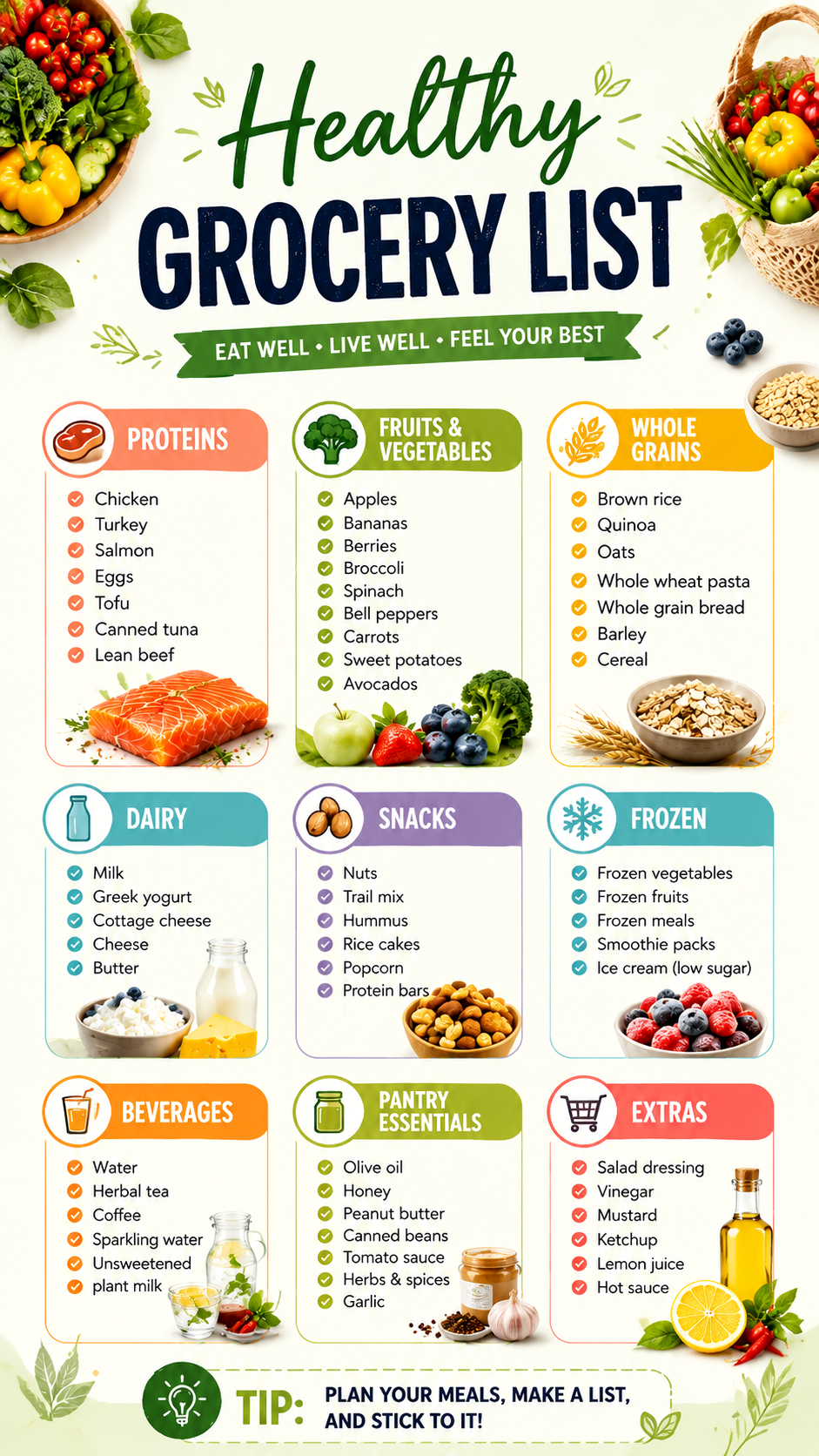
When preparing your weekly grocery list, think about including a variety of food groups. The image highlights important categories such as proteins, fruits and vegetables, whole grains, dairy, snacks, frozen foods, beverages, pantry essentials, and extras. These sections make shopping more organized and help ensure you have ingredients available for different types of meals.
Important: A balanced grocery cart usually starts with whole foods. Filling your kitchen with versatile ingredients makes it easier to prepare meals that include protein, fiber, and healthy carbohydrates instead of relying on quick processed options.
Essential Food Categories for Blood Sugar-Friendly Shopping
1. Lean Proteins for Balanced Meals
Protein is an important part of many balanced meals because it can help create satisfying dishes and complement other nutritious foods. The grocery list includes options such as chicken, turkey, salmon, eggs, tofu, canned tuna, and lean beef.
These ingredients can be used in many different ways throughout the week. Grilled chicken can become part of a salad, salmon can pair with vegetables and whole grains, and eggs can provide a simple breakfast option.
Simple Protein Meal Ideas
- Eggs with vegetables for a quick morning meal
- Chicken and roasted vegetables for lunch or dinner
- Tofu stir-fry with colorful vegetables
- Salmon with quinoa and greens
2. Fruits and Vegetables for Nutrient Variety
Fresh produce is one of the most important parts of a healthy grocery routine. The list features apples, bananas, berries, broccoli, spinach, bell peppers, carrots, sweet potatoes, and avocados.
Adding different colors of fruits and vegetables can make meals more enjoyable while increasing variety. Vegetables can be used as side dishes, salad ingredients, or additions to soups and main meals. Fruits can be included as snacks or paired with other foods for a balanced option.
3. Whole Grains and Smart Carbohydrate Choices
Carbohydrates are part of many everyday meals, but choosing quality sources can help create a more balanced plate. The grocery list includes brown rice, quinoa, oats, whole wheat pasta, whole grain bread, barley, and cereal.
Whole grains are often chosen because they provide more nutrients and fiber compared with many refined grain options. They can be used for breakfast bowls, meal-prep lunches, and easy dinner recipes.
Planning a 7-Day Diabetes-Friendly Meal Routine
A grocery list becomes more useful when it connects directly to a weekly meal plan. Instead of buying random ingredients, think about how each item will be used throughout the week. This approach helps prevent food waste and makes healthy eating more convenient.
Start by choosing a few breakfast ideas, several lunch combinations, and simple dinners. Then add snacks and pantry items that support those meals. Having a plan can make busy days easier because you already know what ingredients are available.
Healthy Snacks and Pantry Essentials to Keep Available
Smart snacking can be easier when nutritious options are already prepared. The grocery list includes nuts, trail mix, hummus, rice cakes, popcorn, and protein bars. These choices can be convenient additions when you need something between meals.
Pantry essentials also play an important role in meal preparation. Items such as olive oil, peanut butter, canned beans, tomato sauce, herbs, spices, and garlic can add flavor and flexibility to many recipes.
Creating a More Organized Shopping Experience
A grocery list divided into categories can make shopping faster and easier. Instead of walking through the store without a plan, you can move section by section and focus on the foods that support your goals.
- Shop for fresh produce first to prioritize nutrient-rich foods.
- Choose proteins that can be used in multiple meals.
- Keep healthy frozen options available for busy days.
- Read food labels and compare ingredients when choosing packaged foods.
Expert Insight
Consistency is often easier when healthy choices are convenient. A well-planned grocery list transforms healthy eating from a daily challenge into a simple weekly routine.
- Prepare ingredients ahead when possible.
- Keep easy meal combinations in mind while shopping.
- Focus on balance rather than perfection.
Frozen Foods and Beverages for a Complete Grocery Plan
Frozen foods can be helpful additions to a diabetes-conscious grocery routine. Frozen vegetables, fruits, smoothie packs, and convenient meal options can provide flexibility when fresh ingredients are limited or time is short.
Beverages are another area where mindful choices matter. The list includes water, herbal tea, coffee, sparkling water, and unsweetened plant milk. Keeping simple beverage options available can help create a healthier daily routine.
At a Glance: Building Your Weekly Grocery Routine
Quick Points
- Choose a mix of proteins, vegetables, fruits, and whole grains.
- Plan meals before grocery shopping.
- Keep healthy snacks ready for busy moments.
- Use pantry staples to create simple recipes.
Conclusion: Make Healthy Grocery Shopping Easier
A 7-day diabetic grocery list is a simple way to bring more structure and confidence to healthy meal planning. By focusing on balanced ingredients such as lean proteins, colorful vegetables, whole grains, nutritious snacks, and smart pantry staples, you can create a kitchen that supports your wellness goals.
Healthy eating does not have to feel complicated. With a little planning, grocery shopping can become an opportunity to prepare delicious meals, save time, and build habits that last. A thoughtful list is the first step toward a more organized and balanced approach to everyday nutrition.
Tags
Diabetic Grocery List
Blood Sugar Friendly Meals
Healthy Meal Planning
Diabetes Nutrition
Healthy Grocery Shopping
Balanced Diet