Student To Do List Template Study Planner for Better Time Management
A well-designed to do list can transform a busy day into a clear, organized, and productive routine. Whether you are a student managing assignments, preparing for exams, or simply trying to stay consistent with personal goals, a thoughtful daily planner helps turn overwhelming tasks into manageable steps. A structured checklist gives you a visual path forward, making it easier to focus on what truly matters.
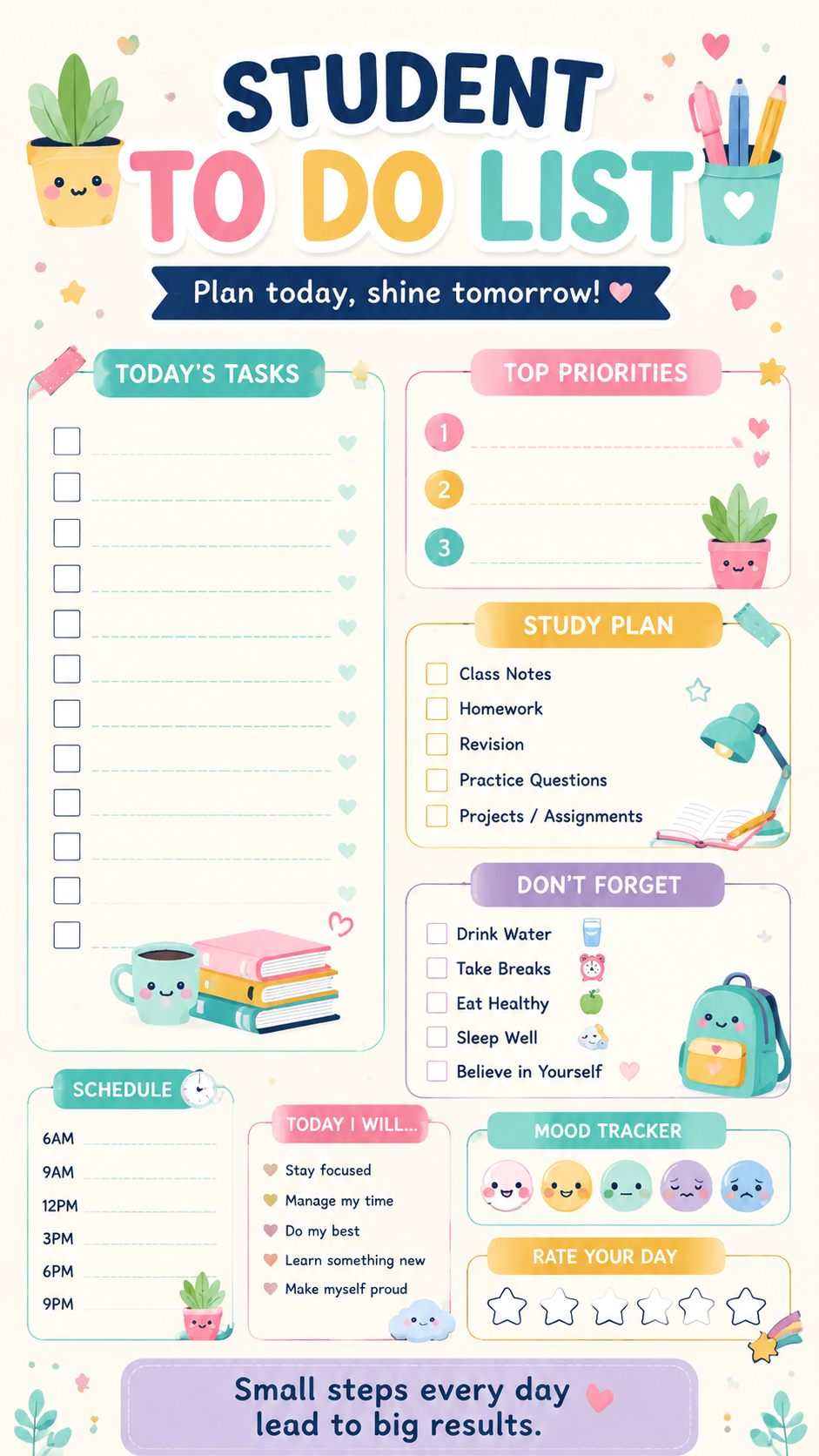
The modern student planner combines organization, motivation, and self-care in one simple format. With sections for today’s tasks, top priorities, study plans, schedules, mood tracking, and daily reminders, this type of planner supports a balanced approach to productivity. It is not just about checking boxes, but about building habits that encourage focus and progress.
Key Takeaways
- A daily to do list helps organize tasks and improve focus.
- Student planners make study routines easier to manage.
- Breaking large goals into smaller steps increases motivation.
- Tracking priorities helps create a productive daily workflow.
- Adding self-care reminders supports a healthier routine.
Why a To Do List Is Essential for Productivity
A daily to do list is one of the simplest tools for improving organization and time management. When tasks are written down, your mind does not have to constantly remember every responsibility. Instead, you can focus your energy on completing each task one step at a time.
For students especially, a planner can create structure during busy academic periods. Homework, revision sessions, class notes, projects, and personal goals can all compete for attention. A clear checklist helps separate urgent responsibilities from smaller tasks, allowing you to plan your day with confidence.
Important: The best productivity system is not the one with the most complicated features. It is the one you can use consistently. A simple to do list that you check every day can create powerful long-term habits.
How a Student Planner Improves Daily Organization
A student planner is designed to bring different areas of life together. Instead of keeping assignments, goals, and reminders scattered across different places, a single planning page creates a complete overview of your day.
Managing Daily Tasks
The task section of a planner provides space to list everything that needs attention. Writing tasks down reduces mental clutter and makes your workload feel more achievable. Checking off completed tasks also creates a sense of progress that encourages you to continue.
Simple tasks such as reviewing notes, completing homework, preparing materials, or organizing study resources become easier when they have a clear place in your daily plan.
Setting Top Priorities
Not every task has the same level of importance. A priority section allows you to identify the activities that deserve your attention first. This prevents spending too much time on less important activities while important deadlines approach.
Tips for Choosing Priorities
- Start with tasks that have upcoming deadlines.
- Choose one or two important goals instead of creating an overwhelming list.
- Complete challenging tasks when your energy level is highest.
- Review your priorities at the beginning and end of each day.
Creating an Effective Study Plan
A study plan helps students create a consistent learning routine. Instead of waiting until exams or deadlines become stressful, planned study sessions encourage steady progress throughout the week.
Sections for class notes, homework, revision, practice questions, and projects make it easier to organize academic responsibilities. By assigning specific times for different activities, students can avoid last-minute preparation and develop better study habits.
The Importance of Small Steps
Many people struggle with productivity because large goals can feel intimidating. A daily planner solves this problem by dividing bigger objectives into smaller actions.
For example, preparing for an exam can become a series of simple tasks: review one chapter, practice a few questions, organize notes, and check understanding. Each completed step builds confidence and keeps progress moving forward.
Balancing Productivity With Self Care
A great planner does not only focus on work and study. The most effective routines include reminders for healthy habits such as drinking water, taking breaks, eating well, sleeping enough, and maintaining a positive mindset.
When students take care of their physical and mental well-being, they often have more energy and concentration for their responsibilities. Productivity is not about working constantly, but about creating a balanced routine that supports success.
Using Mood Tracking for Better Awareness
Mood tracking is a helpful addition to a daily planner because it encourages reflection. Understanding how you feel throughout the week can reveal patterns and help you make better decisions about your routine.
If certain tasks repeatedly cause stress, you can adjust your schedule, prepare earlier, or find strategies that make those activities easier to manage.
Why This Matters
- Planning reduces stress by creating a clear direction.
- Tracking progress helps build confidence and motivation.
- Balanced routines support both academic and personal growth.
How to Make Your To Do List More Effective
A successful to do list should be practical, flexible, and easy to follow. Creating a long list filled with unrealistic expectations can make productivity feel stressful instead of rewarding.
Simple Planning Strategies
- Write your most important tasks first.
- Break complex projects into smaller actions.
- Set specific times for studying and completing assignments.
- Review unfinished tasks and move them to a new schedule when needed.
- Celebrate progress instead of focusing only on perfection.
A planner works best when it becomes part of your everyday routine. Spending a few minutes each morning or evening reviewing your goals can create a strong foundation for better organization.
At a Glance: Benefits of Using a Daily Planner
- Improves focus and time management.
- Makes study routines easier to follow.
- Helps organize priorities and responsibilities.
- Encourages consistent daily habits.
- Supports a balanced lifestyle.
Conclusion: Build Better Days With a Simple To Do List
A well-organized to do list is more than a checklist. It is a tool that helps you create structure, maintain focus, and move closer to your goals. Whether you are a student managing school responsibilities or someone looking to improve daily productivity, a planner can make your routine clearer and more intentional.
By combining task management, study planning, priority setting, and self-care reminders, a simple daily planner can support meaningful progress. Small steps completed consistently can lead to impressive results over time.
Start planning your day with purpose, stay focused on what matters, and create a routine that helps you feel organized and confident.
Tags
To Do List
Student Planner
Study Planner
Daily Productivity
Time Management
Organization Tips
Goal Setting