Psychology Lessons Everyone Should Know Mindset, Emotions Self Growth Tips
Understanding the way your mind works can completely change how you approach your emotions, habits, relationships, and personal growth. Psychology lessons are powerful because they help you recognize patterns, question limiting beliefs, and build a healthier connection with yourself. Small shifts in awareness can create meaningful changes in the way you think, feel, and respond to everyday situations.
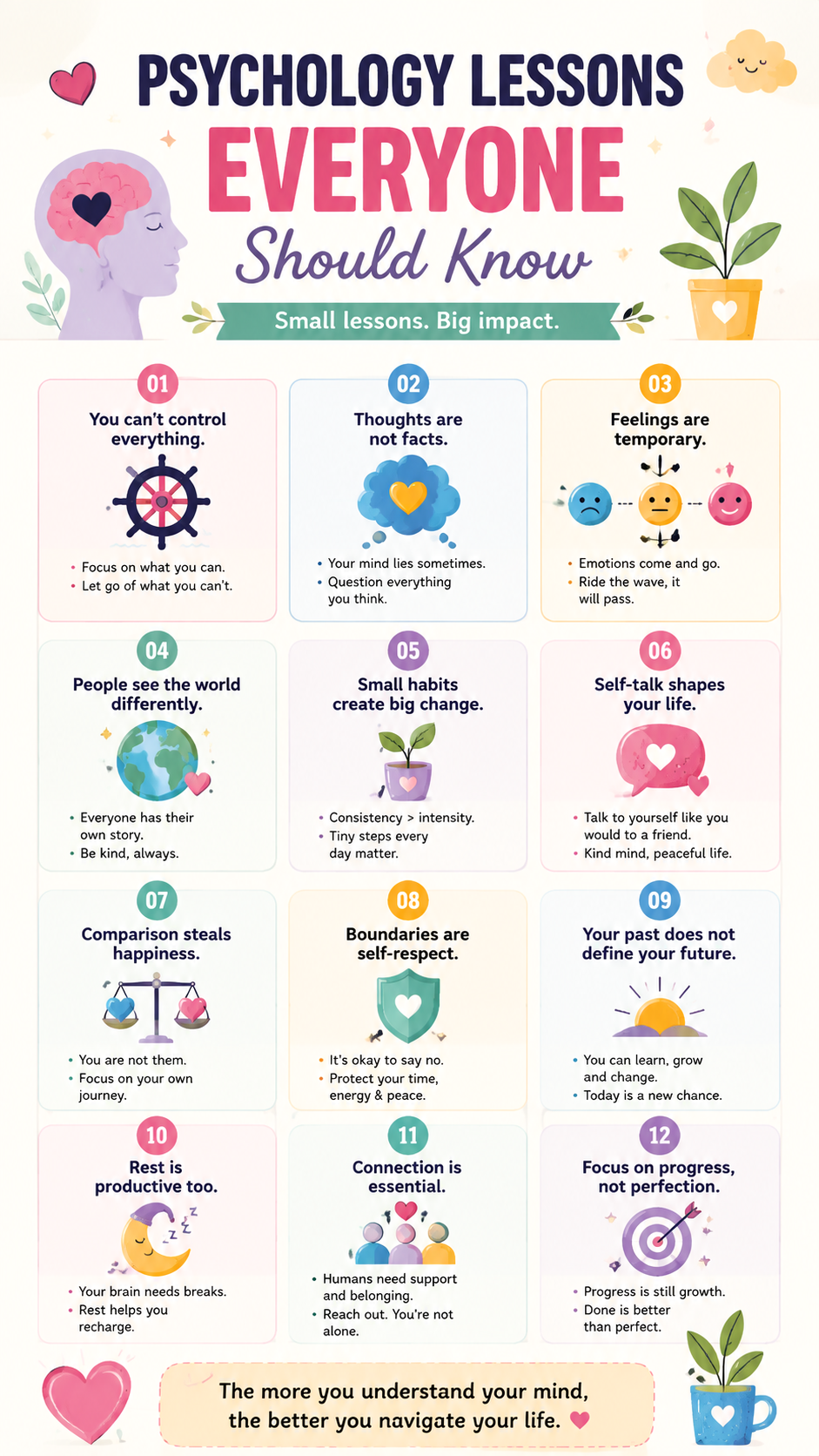
The most valuable psychology insights are often simple reminders: you cannot control everything, thoughts are not always facts, emotions are temporary, and your daily habits shape your future. By learning these principles, you can develop stronger self-awareness and make more intentional choices.
Key Takeaways
- Your thoughts influence your emotions, but they are not always accurate reflections of reality.
- Small daily habits create long-term personal growth and transformation.
- Self-compassion improves confidence, resilience, and emotional balance.
- Healthy boundaries protect your time, energy, and mental well-being.
- Progress matters more than perfection when building a better life.
The Power of Understanding Your Mind
Psychology is the study of thoughts, feelings, behaviors, and the connections between them. You do not need to be a psychology expert to benefit from understanding basic psychological principles. Everyday life is filled with moments where your mindset influences your decisions, relationships, and emotional responses.
When you understand your own patterns, you gain the ability to pause before reacting. Instead of being controlled by automatic thoughts or temporary emotions, you can choose responses that support your goals and values.
Important: Self-awareness is one of the strongest tools for personal growth. The more clearly you understand your thoughts, emotions, and behaviors, the easier it becomes to create positive changes in your life.
Psychology Lesson 1: You Cannot Control Everything
One of the most important lessons in emotional health is learning the difference between what you can control and what you cannot. Many people experience stress because they spend too much energy trying to manage situations, opinions, or outcomes that are outside their influence.
Focus Your Energy Where It Matters
You can control your actions, attitude, preparation, and responses. You cannot control every person’s choices, every unexpected event, or every result. Accepting this reality creates more peace and allows you to focus on meaningful progress.
- Identify situations where you have influence.
- Release unnecessary worry about things beyond your control.
- Use your energy to improve what you can change.
Psychology Lesson 2: Thoughts Are Not Always Facts
Your mind creates thoughts constantly, but not every thought represents the truth. Sometimes thoughts are influenced by fear, past experiences, stress, or assumptions.
Learning to question your thoughts is a valuable emotional intelligence skill. Instead of immediately believing negative ideas about yourself, ask whether those thoughts are realistic and helpful.
How to Challenge Negative Thinking
- Notice the thought without judging yourself.
- Ask whether there is evidence supporting it.
- Consider a more balanced perspective.
- Replace harsh self-criticism with understanding.
Psychology Lesson 3: Feelings Are Temporary
Emotions are an important part of being human. Happiness, sadness, frustration, excitement, and anxiety all provide information about your experiences. However, emotions are not permanent states.
When you remember that feelings come and go, difficult moments become easier to handle. A stressful day does not define your entire life, and a challenging emotion does not determine your future.
Building Emotional Awareness
Instead of fighting emotions, try understanding them. Ask yourself what the feeling is communicating and what action would support your well-being.
Psychology Lesson 4: Small Habits Create Big Changes
Many people believe transformation requires major life changes, but psychology shows that consistent small actions often create the biggest results over time. Your daily routines influence your identity, confidence, and overall lifestyle.
Examples of Positive Daily Habits
- Taking a few minutes each day for reflection.
- Practicing gratitude and noticing positive moments.
- Reading, learning, or developing new skills.
- Creating healthy routines that support your goals.
Consistency is often more powerful than intensity. A small habit repeated regularly can gradually reshape your mindset and behavior.
Psychology Lesson 5: Self-Talk Shapes Your Life
The way you speak to yourself affects your confidence, motivation, and emotional health. Negative self-talk can create unnecessary stress, while supportive inner conversations encourage growth.
Practice Speaking to Yourself With Kindness
Imagine how you would speak to a close friend facing a difficult moment. Your inner voice deserves the same patience and understanding.
- Replace criticism with encouragement.
- Celebrate small achievements.
- Recognize effort, not only results.
Psychology Lesson 6: Comparison Can Steal Happiness
Comparing yourself to others is a common human experience, especially in a world filled with constant images of other people’s achievements. However, comparison often creates unrealistic expectations and distracts you from your own journey.
Everyone has different experiences, challenges, opportunities, and timelines. Personal growth becomes easier when you focus on becoming a better version of yourself rather than measuring your life against someone else’s.
Expert Insight
A healthier mindset comes from progress, not perfection. Focus on your own improvements, celebrate your growth, and remember that meaningful change happens step by step.
Psychology Lesson 7: Boundaries Build Self-Respect
Healthy boundaries are essential for protecting your emotional energy. Saying no when necessary does not make you selfish. It helps you create balanced relationships and maintain respect for your own needs.
Healthy Boundary Examples
- Communicating your needs clearly.
- Protecting your personal time.
- Choosing relationships that support your well-being.
- Recognizing when you need rest.
Psychology Lesson 8: Rest Is Part of Productivity
Rest is not a sign of laziness. Your brain needs recovery time to process information, manage emotions, and maintain creativity. Constantly pushing yourself without breaks can lead to exhaustion.
Building healthy rest habits allows you to return to your responsibilities with more focus and energy.
Psychology Lesson 9: Connection Matters
Humans naturally need connection and belonging. Supportive relationships can improve emotional resilience and help you navigate difficult experiences.
Reaching out, listening, and creating meaningful conversations are simple ways to strengthen your social connections.
At a Glance
- Understand your thoughts before believing them.
- Accept emotions while allowing them to pass.
- Create small habits that support your goals.
- Protect your peace with healthy boundaries.
- Choose progress over perfection.
Conclusion: Use Psychology Lessons to Create a Better Life
Psychology lessons give you practical tools for understanding yourself and navigating life with greater awareness. By learning how your thoughts, emotions, habits, and relationships influence your experiences, you can make more intentional choices every day.
Personal growth does not happen overnight. It comes from small moments of awareness, consistent effort, and a willingness to learn about yourself. Start with one simple lesson, apply it daily, and allow those small changes to create a healthier and more balanced life.
Tags
Psychology Lessons
Mindset Growth
Self Improvement
Emotional Intelligence
Mental Health Tips
Personal Growth