Why You Wake Up Tired After 8 Hours Sleep Improvement Tips Fixes
Waking up tired after getting a full eight hours of sleep can feel frustrating and confusing. You may expect to open your eyes feeling refreshed, focused, and ready for the day, but instead you feel drained, sluggish, or like you never truly rested. The good news is that sleep quality depends on much more than the number of hours you spend in bed. Your daily habits, nighttime environment, stress levels, and routines all influence how restorative your sleep really is.
This guide explores why you might wake up tired even after enough sleep and shares practical sleep improvement tips that can help you create better rest habits. From reducing common sleep disruptors to building a calming bedtime routine, small changes can support deeper sleep, improved energy, and better focus throughout your day.
Key Takeaways
- Eight hours of sleep does not always mean high-quality sleep.
- Late-night screens, caffeine, stress, and heavy meals can reduce sleep quality.
- Morning sunlight and daily movement help regulate your body clock.
- A consistent evening routine can prepare your mind and body for rest.
- Your bedroom environment plays an important role in deep, restorative sleep.
Why You Wake Up Tired After 8 Hours of Sleep
Many people believe that sleeping longer automatically leads to better energy. While getting enough sleep is important, the quality of that sleep matters just as much. If your sleep is interrupted, shallow, or poorly timed, you may not complete enough deep sleep cycles that help your body recover.
Your body uses sleep to repair muscles, balance hormones, process emotions, and restore mental energy. When something interferes with these processes, you can spend eight or more hours in bed and still wake up feeling exhausted.
Important: Sleep quantity and sleep quality are two different things. A longer sleep duration cannot fully compensate for habits that constantly interrupt your natural sleep rhythm.
Common Reasons for Morning Fatigue
Poor Sleep Quality
One of the biggest reasons people wake up tired is spending too little time in restorative sleep stages. Deep sleep supports physical recovery, while REM sleep helps with memory and emotional balance. Frequent waking, noise, uncomfortable temperatures, or an irregular schedule can reduce these important stages.
Late-Night Screen Exposure
Using phones, tablets, or computers close to bedtime can make it harder for your brain to transition into sleep mode. Bright light exposure at night may affect your natural sleep signals and keep your mind active when it should be slowing down.
Creating a screen-free period before bed can make your evening routine more relaxing. Reading, stretching, journaling, or listening to calming audio are simple alternatives that encourage better sleep habits.
Too Much Caffeine
Caffeine can stay active in your system for several hours, meaning that an afternoon coffee or energy drink may still influence your sleep later at night. Even if you fall asleep quickly, caffeine can affect how deeply you rest.
Pay attention to how your body responds and consider limiting caffeine later in the day if you regularly wake up feeling tired.
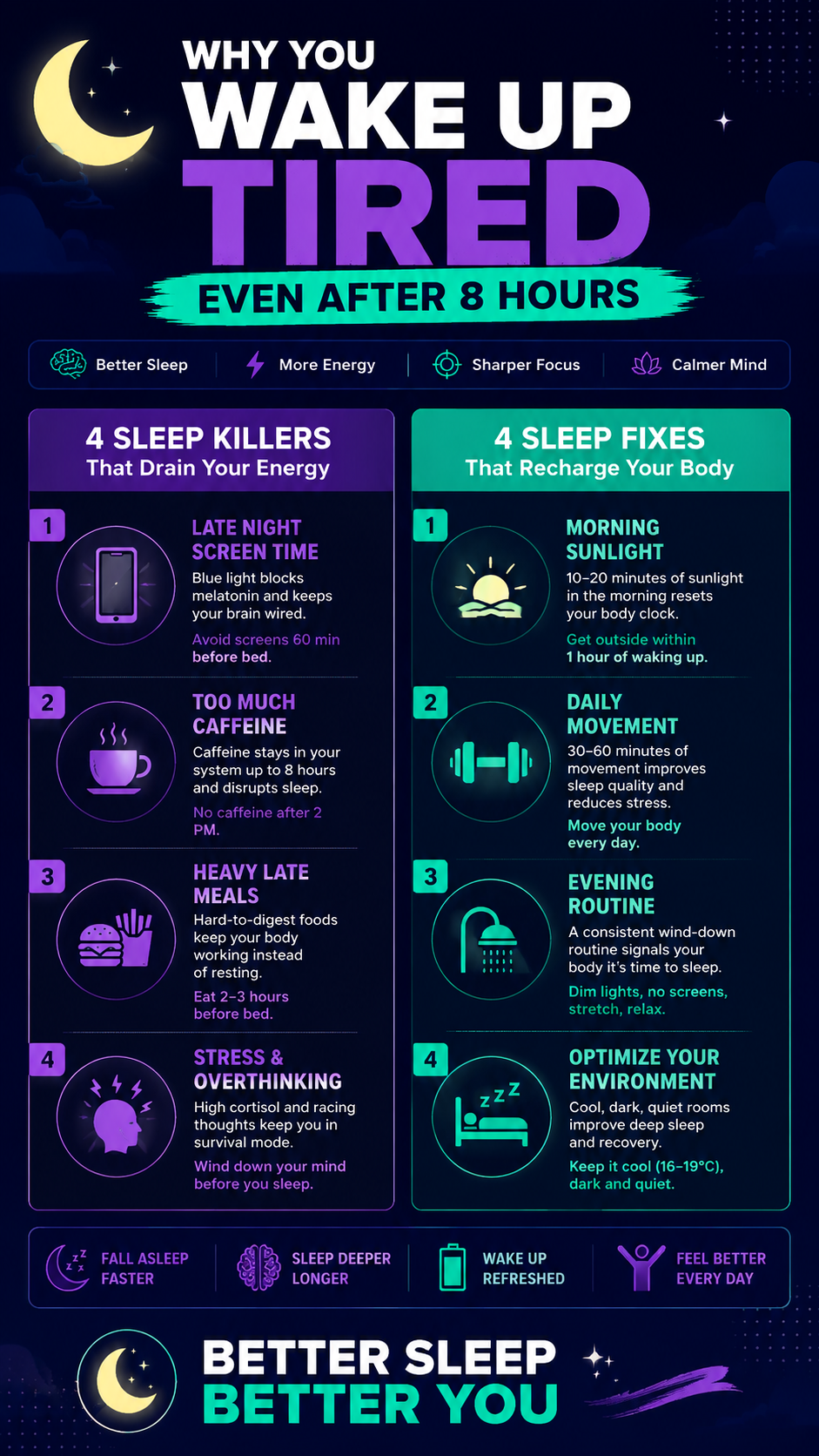
Sleep Killers That Drain Your Energy
Small habits repeated every day can have a major impact on your sleep quality. The following sleep disruptors are common reasons people struggle with morning tiredness.
- Heavy late meals: Eating large or difficult-to-digest meals close to bedtime can keep your body busy when it should be resting.
- Stress and overthinking: Racing thoughts can increase mental activity and make it difficult to enter a relaxed state.
- Inconsistent sleep schedules: Going to bed and waking up at different times can confuse your internal clock.
- Uncomfortable sleep environments: Light, noise, and temperature can influence how deeply you sleep.
Effective Sleep Improvement Tips for Better Rest
Get Morning Sunlight
Morning sunlight is one of the simplest ways to support your natural sleep-wake cycle. Exposure to natural light after waking helps your body recognize that it is daytime, which supports healthy energy levels and better sleep timing later.
Try spending a few minutes outside after waking, whether it is during a walk, while drinking your morning beverage, or simply standing near natural light.
Move Your Body Every Day
Regular movement supports overall wellness and can improve sleep quality. Exercise helps reduce stress, regulate mood, and prepare your body for deeper rest.
You do not need intense workouts every day. Walking, stretching, strength training, or other enjoyable activities can contribute to healthier sleep patterns.
Create a Relaxing Evening Routine
A consistent bedtime routine sends signals to your brain that it is time to slow down. Repeating calming activities each night can make falling asleep easier and improve your overall sleep experience.
- Dim lights in the evening.
- Put away stimulating devices before bed.
- Practice gentle stretching or relaxation exercises.
- Prepare your bedroom for comfortable sleep.
Optimize Your Sleep Environment
Your bedroom should support relaxation and recovery. A cool, dark, and quiet environment can make it easier for your body to maintain uninterrupted sleep.
Consider reducing unnecessary light, managing noise, choosing comfortable bedding, and keeping your bedroom focused on rest.
Expert Insight
Your morning energy often reflects what happened the night before. Building consistent sleep habits, managing stress, and creating a supportive sleep environment can make a noticeable difference over time.
How to Build a Better Sleep Routine Step by Step
Step 1: Set a Consistent Schedule
Try to wake up and go to sleep around the same time each day. Consistency helps your body develop a predictable rhythm, making it easier to feel naturally sleepy at night and alert in the morning.
Step 2: Protect Your Last Hour Before Bed
The final hour before sleep can influence how quickly your mind settles. Use this time for relaxing activities instead of stressful tasks or stimulating entertainment.
Step 3: Track Your Sleep Patterns
Pay attention to patterns that affect your energy. Notice how your bedtime, food choices, caffeine intake, stress levels, and evening habits influence how you feel the next morning.
At a Glance: Better Sleep Habits
Quick Points
- Limit screens before bedtime.
- Get natural light in the morning.
- Stay active throughout the day.
- Create a calming nighttime routine.
- Keep your bedroom comfortable and relaxing.
Conclusion: Wake Up Feeling More Refreshed
Waking up tired after eight hours of sleep is often a sign that your sleep quality needs attention, not necessarily that you need more time in bed. The habits surrounding your sleep can have a powerful effect on how rested you feel each morning.
By reducing sleep disruptors, creating a consistent routine, getting morning sunlight, staying active, and improving your sleep environment, you can support deeper rest and better daily energy. Quality sleep is built through small choices repeated consistently.
Start with one simple change tonight and give your body the opportunity to recover, recharge, and wake up ready for the day.
Tags
Sleep Improvement
Better Sleep Tips
Healthy Sleep Habits
Night Routine
Sleep Health
Morning Energy