Healthy Weekly Grocery List on a Budget Meal Planning for One or Two
Creating a weekly grocery list on a budget is one of the simplest ways to bring more organization, healthier choices, and financial confidence into your everyday routine. With a little planning before heading to the store, you can prepare balanced meals, avoid unnecessary purchases, and make the most of every ingredient you bring home.
The key to successful grocery shopping is not buying more, but buying smarter. A thoughtful weekly grocery plan helps you understand what you need, what you already have, and how each item can become part of a delicious meal. Whether you are shopping for one person or planning meals for two, a structured approach can reduce food waste and make healthy eating feel easier.
Key Takeaways
- Create a grocery plan before shopping to save money and time.
- Choose versatile ingredients that can be used in multiple meals.
- Check your pantry and refrigerator to avoid duplicate purchases.
- Balance your list with proteins, vegetables, grains, and healthy essentials.
- Meal preparation makes healthy eating more convenient throughout the week.
Why Weekly Grocery Planning Makes Life Easier
Many people overspend at the grocery store because they shop without a clear plan. Walking through aisles without knowing what meals you will prepare often leads to impulse purchases, unused ingredients, and extra spending. A weekly grocery list gives every item a purpose.
Planning meals ahead creates a simple connection between your food budget and your daily routine. Instead of asking what to cook every evening, you already have a collection of ideas ready. This reduces stress and helps you maintain healthier eating habits.
Important: A budget-friendly grocery list is not about limiting yourself. It is about making intentional choices, prioritizing nutritious foods, and creating a shopping system that works for your lifestyle.
The Benefits of Shopping With a Plan
A well-organized grocery list can help you:
- Spend less by avoiding unnecessary items.
- Save time because you know exactly what to buy.
- Reduce food waste by purchasing realistic portions.
- Prepare healthier meals at home more consistently.
- Build better awareness of your eating habits.
How to Build a Healthy Weekly Grocery List on a Budget
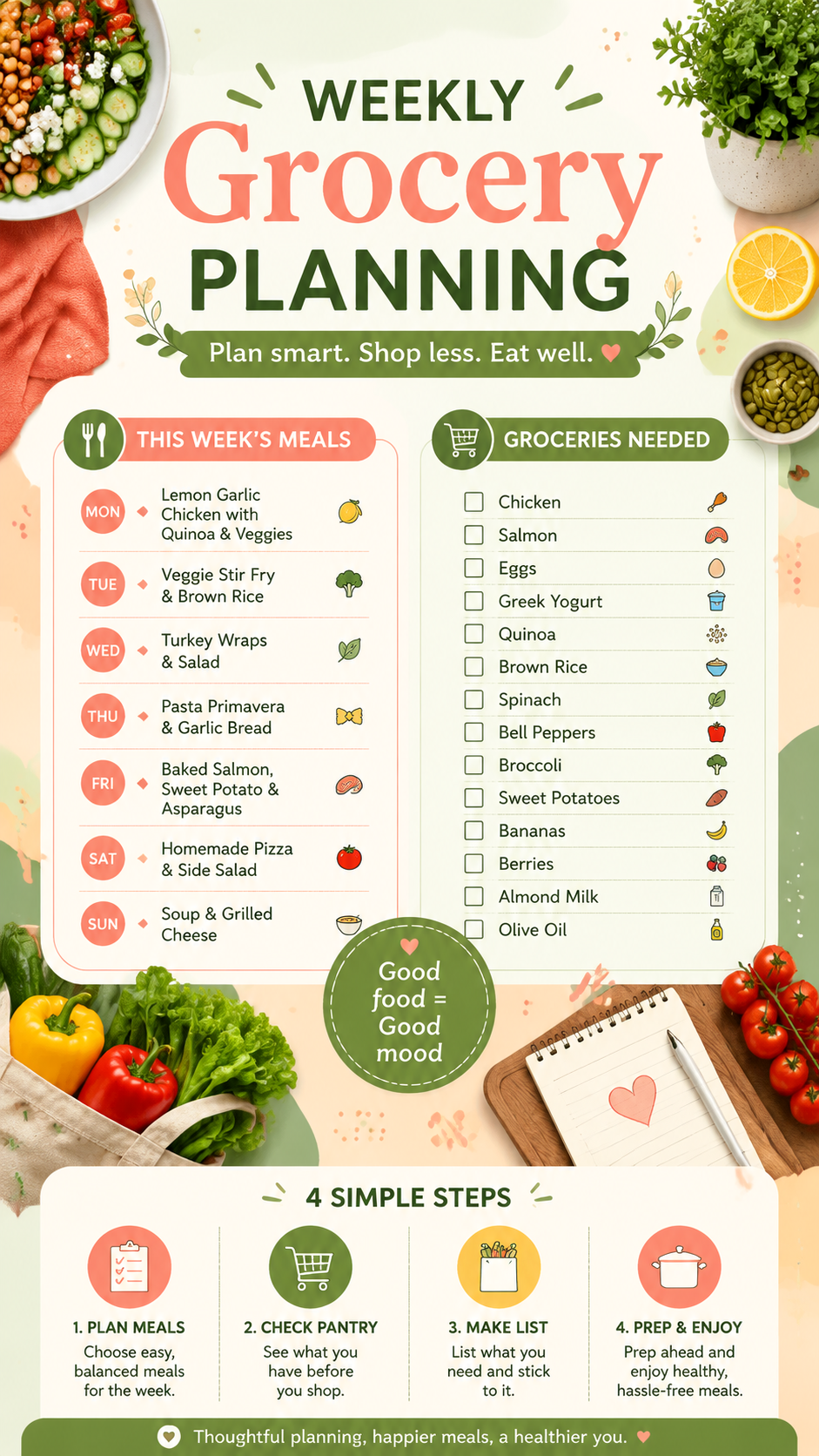
A successful grocery list starts with understanding your meals for the week. Before writing down items, think about breakfast, lunch, dinner, and snacks. Choose recipes that share ingredients so you can purchase fewer items while creating more meals.
Step 1: Plan Your Weekly Meals
Meal planning does not need to be complicated. Start by selecting a few simple meals that include nourishing ingredients. For example, roasted vegetables can become a side dish, salad topping, or filling for wraps. Cooked grains can be used in bowls, stir-fries, or quick lunches.
When planning meals for one or two people, focus on flexible ingredients that can be stored easily and used throughout the week. This approach prevents buying too much food that may expire before you have a chance to enjoy it.
Simple Meal Categories to Include
- Protein: Chicken, eggs, fish, beans, lentils, yogurt, or other affordable options.
- Vegetables: Fresh or frozen produce for nutrients, color, and variety.
- Carbohydrates: Brown rice, oats, potatoes, pasta, or whole grains.
- Healthy extras: Nuts, olive oil, herbs, spices, and seasonal fruits.
Step 2: Check Your Pantry Before Shopping
One of the easiest ways to save money is to shop your own kitchen first. Check cabinets, the refrigerator, and the freezer before creating your grocery list.
You may already have staples like rice, pasta, canned foods, spices, or frozen vegetables. Using these items first helps prevent waste and allows you to spend your grocery budget on foods you actually need.
Questions to Ask Before Buying
- Do I already have this ingredient at home?
- Can I use this item in more than one meal?
- Will this food stay fresh until I use it?
- Does this fit my weekly budget?
Smart Grocery Shopping Tips for Saving Money
Healthy grocery shopping does not have to be expensive. Small changes in how you shop can make a noticeable difference in your monthly food budget.
Buy Ingredients With Multiple Uses
Choose foods that can work across several meals. A bag of spinach can become part of breakfast smoothies, salads, omelets, or dinner recipes. Eggs can provide quick breakfasts, lunches, and simple dinners. These versatile ingredients stretch your budget further.
Shop Seasonal Produce
Seasonal fruits and vegetables are often more affordable and taste better. Building meals around available produce can make your grocery routine more budget-friendly while adding variety to your plate.
Avoid Shopping When Hungry
Shopping while hungry can make tempting snacks and unnecessary purchases harder to resist. Eating a meal or snack before grocery shopping helps you stay focused on your list.
Why This Matters
A grocery list is more than a shopping tool. It creates a connection between your goals, your budget, and your daily meals.
- Better planning leads to fewer wasted ingredients.
- Organized shopping supports healthier choices.
- A simple routine can make meal preparation feel effortless.
Easy Meal Prep Ideas After Grocery Shopping
Once your groceries are home, a little preparation can save valuable time during busy days. Washing vegetables, preparing grains, portioning snacks, and organizing ingredients can make weekday meals much easier.
Prepare Ingredients, Not Just Recipes
You do not need to cook every meal in advance. Preparing basic ingredients gives you flexibility. Cook a batch of grains, chop vegetables, prepare proteins, and store everything properly so meals can come together quickly.
Weekly Prep Checklist
- Wash and organize fresh produce.
- Prepare simple proteins for quick meals.
- Store leftovers in clear containers.
- Prepare healthy snacks for busy moments.
- Review your plan before the week begins.
Important: The best grocery routine is one you can maintain. A simple plan followed consistently is more valuable than a complicated system that feels overwhelming.
At a Glance
- Plan meals before creating your shopping list.
- Choose affordable ingredients with multiple uses.
- Check your pantry to avoid unnecessary spending.
- Prepare ingredients to simplify your week.
Conclusion: Create a Grocery Routine That Works for You
A weekly grocery list on a budget is a powerful habit that can transform the way you shop, cook, and eat. With meal planning, smart ingredient choices, and a little preparation, you can enjoy nutritious meals without overspending.
The goal is not perfection. The goal is creating a simple grocery system that saves time, reduces stress, and supports your lifestyle. Whether you are shopping for yourself or another person, thoughtful planning can make every grocery trip more efficient and rewarding.
Start with a few simple changes this week. Plan your meals, check your pantry, create your list, and enjoy the confidence that comes with organized grocery shopping.
Tags
Weekly Grocery List
Budget Meal Planning
Healthy Grocery Shopping
Meal Prep Ideas
Frugal Living
Healthy Eating
Grocery Organization