Best Serums for Every Skin Concern Acne, Dark Spots Aging Skin Guide
Finding the right skincare product can feel overwhelming with so many ingredients, formulas, and beauty recommendations available. A targeted face serum can make your routine more effective by addressing specific concerns such as acne, dark spots, fine lines, dullness, dryness, and sensitive skin. The key is understanding which active ingredients work best for your skin goals and how to use them correctly.
This guide explores different types of skincare serums and the ingredients commonly chosen for various skin concerns. Whether you want a clearer complexion, brighter skin tone, improved hydration, or a smoother appearance, choosing the right serum can help you create a simple and personalized skincare routine.
Key Takeaways
- Different skin concerns require different serum ingredients and formulas.
- Niacinamide and salicylic acid are popular choices for acne-prone skin.
- Vitamin C and brightening ingredients can help support a more even-looking complexion.
- Hydrating serums with hyaluronic acid help maintain skin moisture.
- Retinol, peptides, and bakuchiol are commonly used in anti-aging skincare routines.
How to Choose the Right Face Serum for Your Skin
Serums are lightweight skincare products designed to deliver concentrated ingredients to the skin. Unlike traditional moisturizers that mainly focus on hydration and barrier support, serums are often created with specific goals in mind, making them a useful step for targeted skincare concerns.
The best serum for your routine depends on what your skin needs most. Someone struggling with clogged pores may benefit from a completely different formula than someone looking to improve dryness or uneven skin tone.
Important: A successful skincare routine is not about using the most products. It is about selecting ingredients that match your skin concern, introducing them gradually, and staying consistent over time.
Best Serums for Acne and Breakouts
Acne-prone skin often needs ingredients that help manage excess oil, clogged pores, and visible blemishes. The right serum can support clearer-looking skin while keeping your routine balanced.
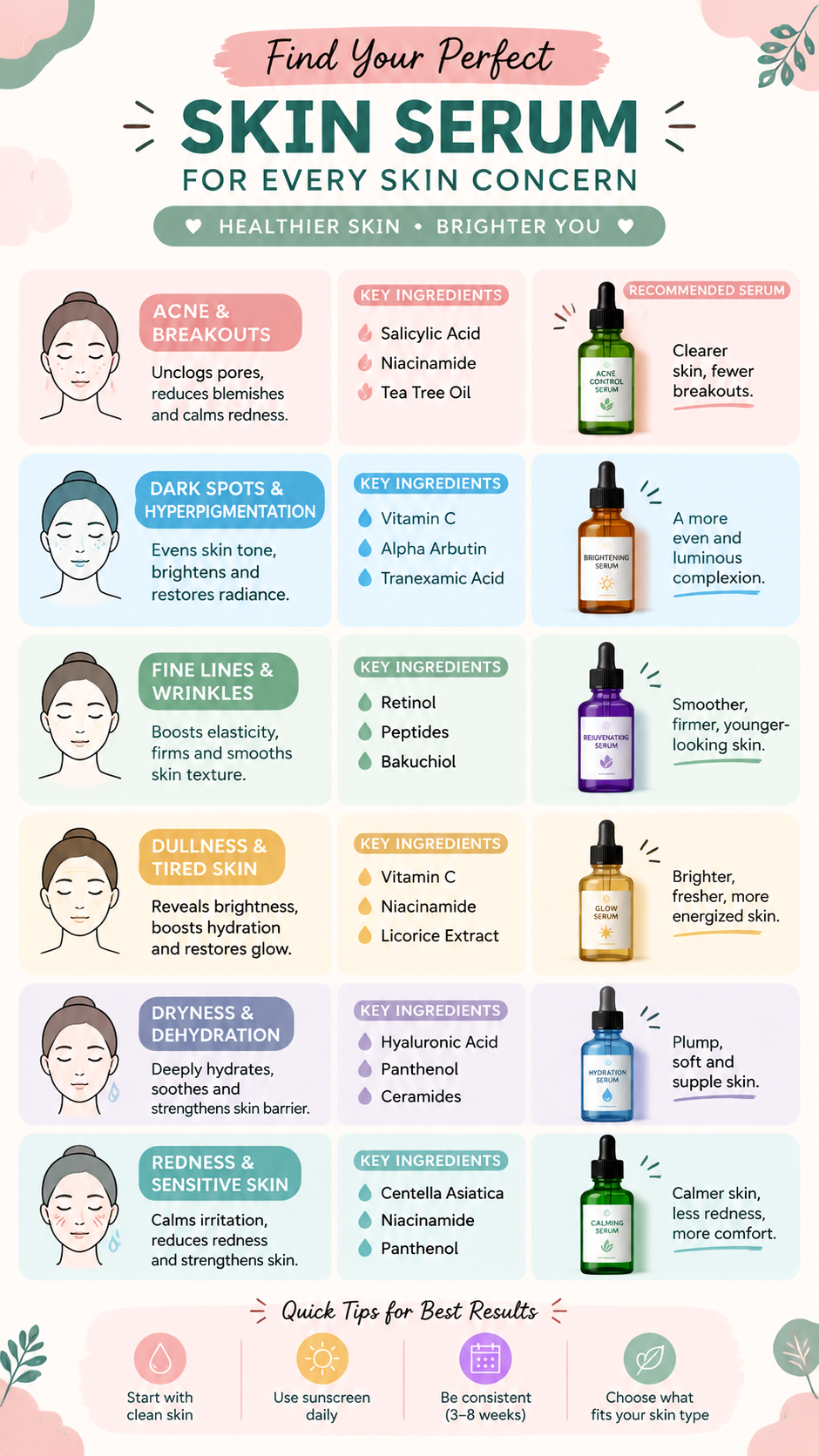
Key Ingredients for Acne-Prone Skin
- Salicylic Acid: A beta hydroxy acid that is commonly used to help exfoliate inside pores and reduce the appearance of congestion.
- Niacinamide: A versatile ingredient known for supporting the skin barrier and helping improve the appearance of uneven texture.
- Tea Tree: Often included in skincare formulas designed for oily and blemish-prone skin.
When adding an acne serum to your routine, avoid using too many strong active ingredients at once. Combining several exfoliating products can sometimes leave skin feeling irritated or unbalanced.
Serums for Dark Spots and Uneven Skin Tone
Dark spots, post-acne marks, and uneven-looking skin tone are common concerns that many people want to address. Brightening serums are designed to support a more radiant appearance by focusing on ingredients associated with skin tone balance.
Popular Brightening Ingredients
- Vitamin C: A popular antioxidant ingredient used in many glow-focused skincare routines.
- Alpha Arbutin: Frequently used in formulas targeting the appearance of discoloration.
- Tranexamic Acid: An ingredient often found in products designed for uneven-looking skin tone.
Consistency is important when using brightening products. Results from skincare routines usually develop gradually, so maintaining daily habits and protecting skin from sun exposure are essential steps.
Anti-Aging Serums for Fine Lines and Wrinkles
As skin changes over time, many skincare routines focus on improving the appearance of fine lines, texture, and firmness. Anti-aging serums often include ingredients that support smoother-looking and healthier-looking skin.
Ingredients Commonly Used in Anti-Aging Skincare
- Retinol: A widely used skincare ingredient known for its role in improving the appearance of texture and signs of aging.
- Peptides: Often included in formulas designed to support a youthful-looking complexion.
- Bakuchiol: A plant-based ingredient used in some gentle alternatives to traditional retinol products.
Serums for Dull and Tired-Looking Skin
Dullness can make skin appear less radiant and uneven. A carefully selected serum can help support a fresh, glowing appearance by focusing on hydration, antioxidants, and skin-renewing ingredients.
Glow-Enhancing Ingredients
- Vitamin C: Helps support a brighter-looking complexion.
- Niacinamide: Supports smoother-looking skin and overall balance.
- Licorice Extract: Often included in brightening skincare products.
A glowing complexion is usually the result of multiple healthy habits, including proper hydration, consistent skincare, and daily sun protection.
Hydrating Serums for Dry and Dehydrated Skin
Dry skin often needs ingredients that help attract and maintain moisture. Hydrating serums are especially useful when skin feels tight, rough, or uncomfortable.
Best Hydration Ingredients
- Hyaluronic Acid: A popular ingredient that helps support skin hydration.
- Panthenol: Commonly used for moisturizing and soothing benefits.
- Ceramides: Ingredients associated with maintaining a healthy skin barrier.
For the best results, apply hydrating serums to slightly damp skin and follow with a moisturizer to help lock in hydration.
Gentle Serums for Redness and Sensitive Skin
Sensitive skin often benefits from calming formulas with simple ingredient lists. The goal is to support comfort while avoiding unnecessary irritation.
Soothing Ingredients to Look For
- Centella Asiatica: Popular in calming skincare products.
- Niacinamide: Often used to support the skin barrier.
- Panthenol: Known for its moisturizing properties.
Important: Always patch test new skincare products before applying them widely. A simple introduction process helps you understand how your skin responds to a new serum.
How to Build a Simple Serum Routine
- Start with one serum that matches your main skin concern.
- Apply products consistently according to their instructions.
- Use moisturizer after serum application to support your skin barrier.
- Wear sunscreen during the day, especially when using active ingredients.
- Adjust your routine based on how your skin feels and responds.
Expert Insight
Healthy skin comes from a balanced routine. Choosing one targeted serum, using it consistently, and protecting your skin barrier often creates better results than constantly switching between products.
At a Glance: Choosing Your Serum
- Acne concerns: Look for salicylic acid and niacinamide.
- Dark spots: Consider vitamin C and brightening ingredients.
- Fine lines: Explore retinol and peptide formulas.
- Dry skin: Choose hydrating ingredients like hyaluronic acid.
Final Thoughts
The right face serum can become one of the most valuable steps in a skincare routine. By understanding your skin concern and choosing ingredients designed for that goal, you can create a routine that feels simple, effective, and personalized.
Whether your focus is clearer skin, a brighter complexion, improved hydration, or a smoother appearance, the best skincare approach is one that you can maintain consistently. Start with your skin’s needs, introduce products carefully, and enjoy the process of building healthier-looking skin.
Tags
Face Serum
Skincare Routine
Acne Care
Dark Spot Treatment
Anti Aging Skincare
Hydrating Serum
Beauty Tips