Powerful Essential Oils for Hair Growth Natural Oils for Stronger Hair
Healthy-looking hair often starts with a simple, consistent care routine. Natural oils have been used for generations as part of hair care rituals because they can help improve the appearance of dryness, support scalp nourishment, and leave strands feeling softer and smoother. From coconut oil and castor oil to argan oil and peppermint oil, different oils offer unique benefits that can complement a balanced hair routine.
The right hair oil routine is not about using every oil at once. It is about understanding your hair needs, choosing suitable ingredients, and applying them correctly. Whether your goal is stronger-looking hair, improved shine, reduced dryness, or a healthier scalp environment, natural oils can be a valuable addition to your beauty routine.
Key Takeaways
- Natural oils can help nourish and condition dry-looking hair.
- Coconut, castor, argan, and peppermint oils are popular choices for hair care routines.
- Scalp care plays an important role in maintaining healthy-looking hair.
- Consistent oiling habits can improve softness, shine, and manageability.
- Choosing oils based on your hair type creates better results.
The Benefits of Using Natural Oils for Hair Care
Natural hair oils are popular because they provide a simple way to add moisture and care to your routine. Hair can become dry due to heat styling, environmental exposure, frequent washing, or chemical treatments. Applying nourishing oils may help improve the overall appearance of hair by creating a smoother texture and adding a healthy-looking shine.
Many oils contain fatty acids, vitamins, and plant-based compounds that support conditioning. While oils do not replace a healthy diet or professional hair treatments, they can work as a supportive step in maintaining beautiful, manageable hair.
Important: Hair oils work best as part of a complete routine that includes gentle cleansing, proper hydration, balanced nutrition, and protection from excessive heat styling. Consistency is often more valuable than using large amounts of oil.
Coconut Oil for Nourished and Softer Hair
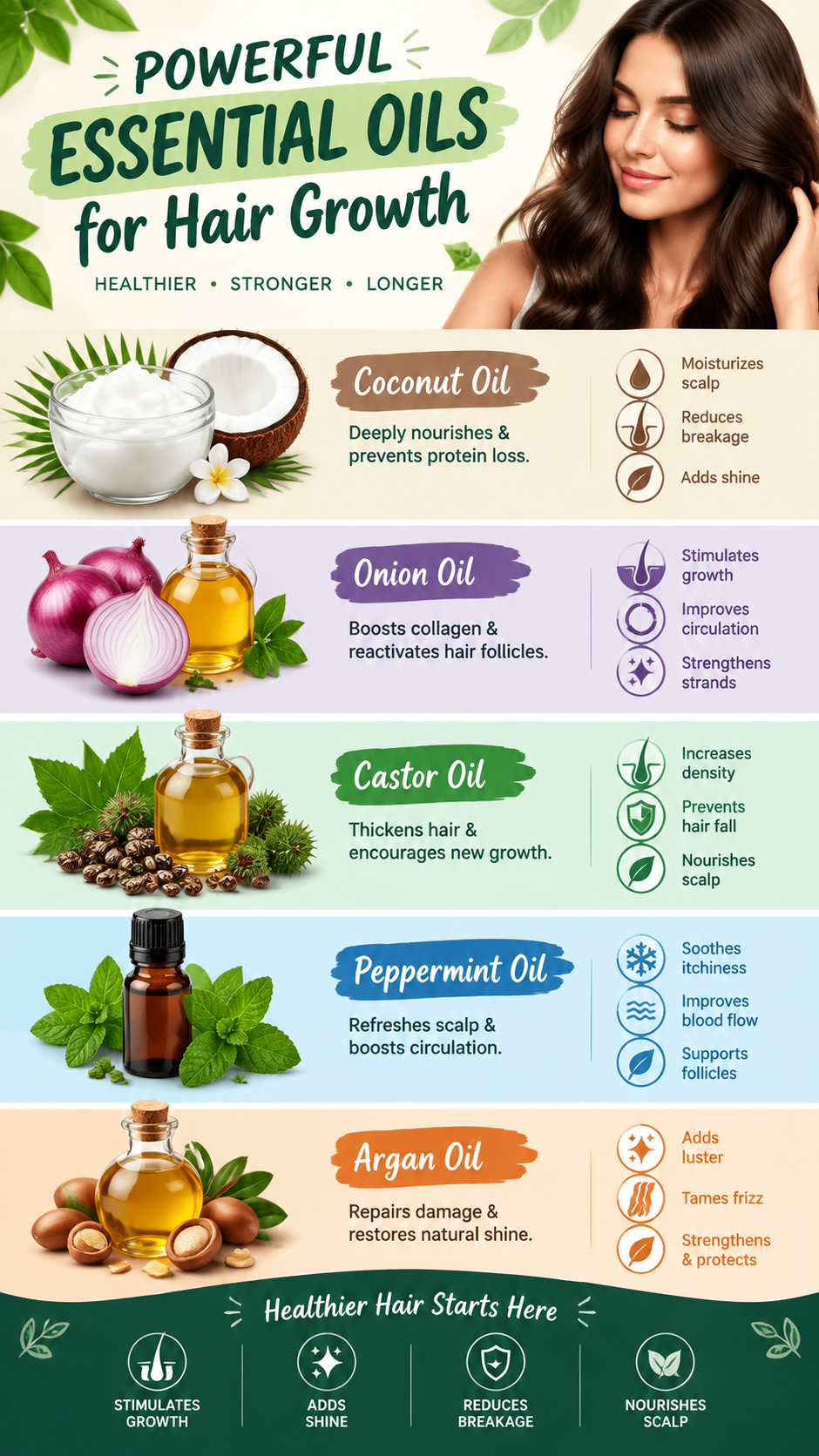
Coconut oil is one of the most recognizable ingredients in natural hair care. Its lightweight texture and rich conditioning properties make it a favorite for people looking to improve the softness and smoothness of their hair.
How Coconut Oil Supports Hair Care
Coconut oil is commonly used before washing as a pre-shampoo treatment or applied lightly to dry ends. Many people enjoy it because it helps hair feel less rough and more manageable.
- Helps reduce the feeling of dryness
- Adds softness and natural shine
- Supports a smoother hair texture
- Works well in homemade hair masks
Simple Coconut Oil Hair Routine
Warm a small amount of coconut oil between your hands and gently apply it from the middle of your hair toward the ends. Leave it on for a short period before washing. Using too much oil can make hair feel heavy, so a small amount is usually enough.
Castor Oil for Fuller-Looking Hair
Castor oil is frequently included in beauty routines because of its thick texture and rich feel. It is often used by people who want to create a nourishing scalp care routine and support the appearance of thicker, healthier-looking hair.
Why Castor Oil Is Popular
Because castor oil is heavier than many other oils, it is often blended with lighter oils such as coconut or argan oil. This creates a smoother application that is easier to spread through the hair.
- Provides deep-feeling moisture
- Helps improve the look of dry ends
- Creates a nourishing scalp massage experience
- Can be included in weekly hair treatments
Argan Oil for Shine and Smoothness
Argan oil is often called a beauty oil because of its silky texture and luxurious feel. It is commonly used in hair products designed to add shine, reduce the appearance of frizz, and improve softness.
Best Ways to Use Argan Oil
A few drops of argan oil can be applied to damp or dry hair. It is especially useful for the ends of the hair, where dryness and frizz are often more noticeable.
Pro Tip: Lightweight oils like argan oil are often better for finishing routines because they can add shine without leaving hair feeling overly coated.
Peppermint Oil for a Refreshing Scalp Routine
Peppermint oil is known for its fresh, cooling sensation and is commonly included in scalp care products. Because essential oils are concentrated, they should always be diluted with a carrier oil before applying to the scalp.
Creating a Safe Peppermint Oil Blend
Mixing a few drops of peppermint essential oil with a carrier oil such as coconut or jojoba oil can create a pleasant scalp massage blend. Always perform a patch test before using any new essential oil product.
Onion Oil and Traditional Hair Care Practices
Onion oil has gained attention in natural hair care routines because of its popularity in traditional beauty practices. It is often used in scalp-focused treatments and hair masks.
How to Include Onion Oil in Your Routine
Many people prefer using onion oil blends rather than pure onion-based preparations because they are easier to apply and often combined with other nourishing ingredients.
- Massage gently into the scalp
- Allow enough time before washing
- Combine with a pleasant-smelling carrier oil if needed
Expert Insight
A successful hair oil routine depends on choosing products that match your personal hair needs. Dry hair, oily scalps, curly textures, and chemically treated hair may all respond differently to oils.
- Start with small amounts to avoid buildup.
- Focus on regular care rather than occasional heavy treatments.
- Pay attention to how your hair responds over time.
How to Build a Natural Hair Oil Routine
A simple routine can make natural oils easier to incorporate into your weekly self-care habits. The goal is to nourish your hair without creating unnecessary buildup.
Step-by-Step Hair Oiling Method
- Choose an oil that matches your hair type and concerns.
- Apply a small amount and gently massage the scalp if suitable.
- Distribute oil through the lengths of your hair.
- Leave it on for a comfortable amount of time.
- Wash thoroughly with a gentle shampoo.
Finding the Right Oil for Your Hair Type
Fine hair may prefer lighter oils, while thicker or drier hair may enjoy richer options. Curly hair often benefits from moisture-focused routines, while oily scalps may need lighter applications.
At a Glance: Natural Hair Oil Tips
Quick Points
- Use oils consistently for better hair care habits.
- Apply moderate amounts to prevent heaviness.
- Blend essential oils with carrier oils.
- Choose ingredients based on your hair needs.
Conclusion: Create Your Own Nourishing Hair Care Ritual
Natural oils can be a wonderful addition to a healthy hair routine. Ingredients like coconut oil, castor oil, argan oil, peppermint oil, and onion oil each bring different qualities that can support softer, shinier, and more manageable-looking hair.
The best routine is one that fits your lifestyle and your hair’s unique needs. With gentle application, consistent care, and the right ingredients, hair oiling can become a relaxing self-care practice that helps you maintain beautiful hair.
Tags
Hair Growth Oils
Natural Hair Care
Essential Oils
Healthy Hair Routine
Scalp Care
Hair Oil Treatment