Iodine Foods List Best Natural Sources for Thyroid Health Energy Support
Iodine is a small but essential mineral that plays a major role in maintaining overall wellness, especially when it comes to thyroid function, metabolism, energy production, and healthy growth. Many people focus on vitamins and protein while overlooking important minerals like iodine, yet the body depends on an adequate supply to create thyroid hormones that influence many daily processes.
The right foods can help support a balanced intake of iodine. From sea vegetables and seafood to dairy products, eggs, iodized salt, and selected plant-based options, there are many ways to include iodine-rich foods in a varied diet. Understanding where iodine comes from and how it supports the body can make healthy eating choices much easier.
Key Takeaways
- Iodine is an essential mineral needed for thyroid hormone production.
- Seaweed, seafood, dairy, eggs, and iodized salt are common iodine sources.
- A balanced diet can help support healthy metabolism and energy levels.
- Both iodine deficiency and excessive intake can affect thyroid balance.
- Food variety is important for maintaining overall nutritional health.
Why Iodine Is Important for Thyroid Health
The thyroid gland uses iodine to produce hormones that help regulate metabolism, body temperature, energy use, and many other important functions. These hormones act like messengers that influence how efficiently the body uses nutrients and maintains normal activity levels.
Because the thyroid cannot produce these hormones without iodine, getting enough of this mineral through food is an important part of a nutritious lifestyle. A diet lacking iodine over time may affect thyroid hormone production and overall wellness.
Important: Iodine supports thyroid hormone production, but healthy thyroid function depends on many factors, including overall nutrition, lifestyle habits, and individual health needs.
Top Natural Sources of Iodine
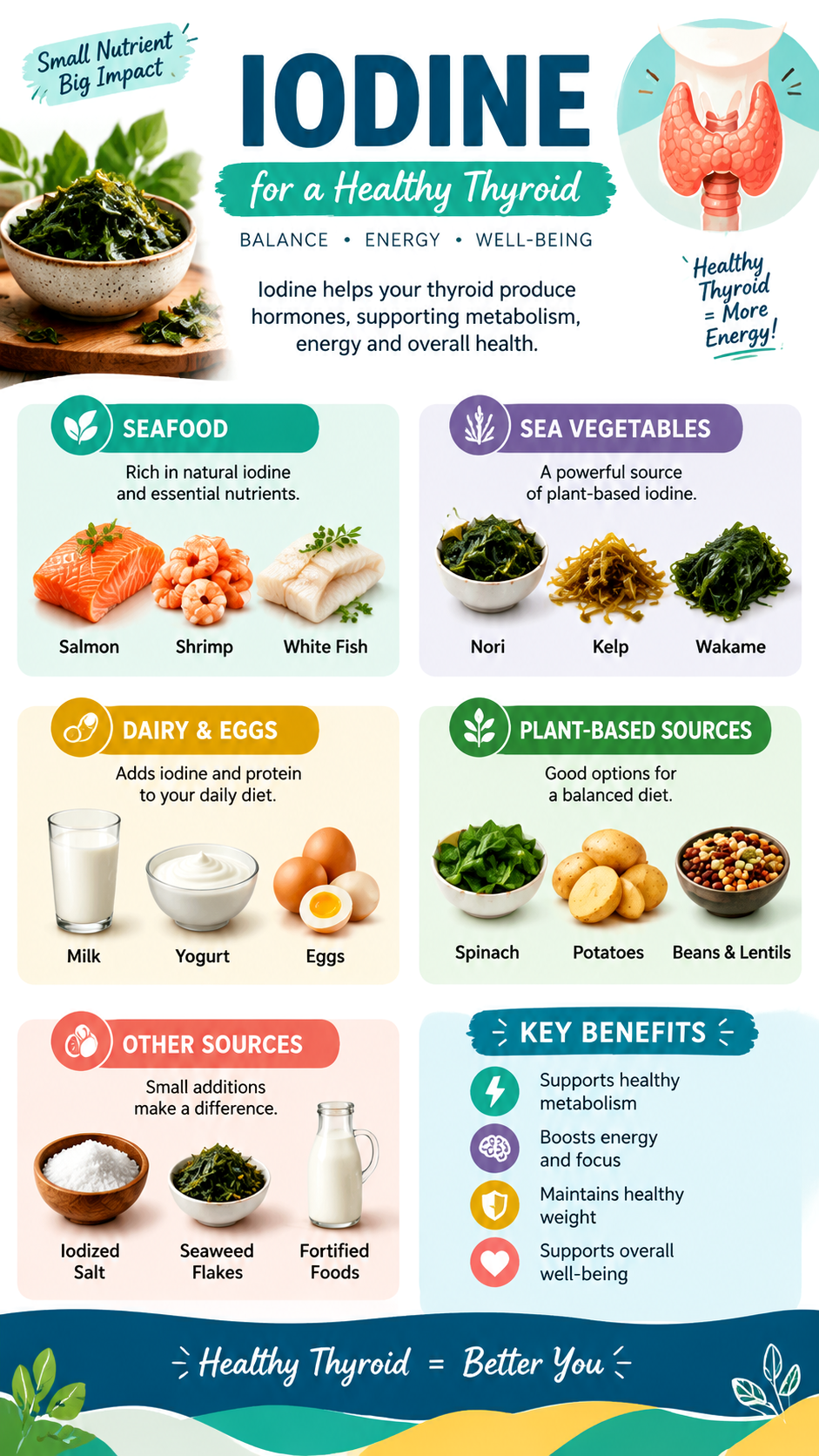
The best way to increase iodine intake is through a balanced diet that includes naturally rich sources. The image highlights several food groups that provide iodine or contribute to overall nutrition.
Seaweed and Ocean-Based Foods
Seaweed is one of the most recognized natural sources of iodine. Varieties such as kelp, nori, and wakame are commonly used in many cuisines and can provide iodine along with other minerals.
Seafood, including fish and shellfish, is another valuable source. Fish such as cod and other ocean fish are often included in iodine-focused nutrition plans because they naturally contain this mineral.
Adding Sea Vegetables to Meals
Seaweed can be added to soups, salads, rice dishes, and snacks. Since iodine levels in seaweed can vary significantly, moderation and variety are important when adding it regularly to meals.
Dairy Products and Eggs
Dairy foods such as milk and yogurt can contribute iodine to the diet. Eggs are also included among common iodine-containing foods, making them convenient options for many eating styles.
These foods also provide other nutrients, including protein and minerals, which makes them useful additions to a balanced meal plan.
Iodized Salt as a Common Source
Iodized salt has been an important dietary source of iodine in many countries. It was introduced as a simple way to help populations maintain adequate iodine intake.
However, using salt wisely is important. Too much sodium can be a concern for overall health, so iodized salt should be used in moderation as part of a balanced diet.
Plant-Based Foods That Support Iodine Intake
Some plant-based foods can contribute small amounts of iodine, although levels depend on factors such as growing conditions and soil content. Vegetables like spinach, potatoes with skin, zucchini, and green beans may support overall nutrition while adding variety to meals.
Fruits such as strawberries, cranberries, pineapple, apples, and bananas are shown as supportive foods because they contribute important nutrients, even though they are not typically considered major iodine sources.
Understanding Iodine Deficiency
When iodine intake is too low, the thyroid may struggle to produce enough thyroid hormones. One well-known sign associated with severe iodine deficiency is goiter, which is an enlargement of the thyroid gland.
Other possible signs associated with insufficient iodine intake may include tiredness, difficulty maintaining energy levels, feeling unusually sensitive to cold, and changes in weight. However, these symptoms can have many causes and should not be used alone to identify iodine status.
Who May Need Extra Attention to Iodine Intake?
Some groups may have higher iodine needs or may need to pay closer attention to iodine sources, including people with limited food variety or diets that avoid major iodine-containing foods.
Pregnancy and early childhood are also periods when iodine is especially important because thyroid hormones support growth and development.
Expert Insight
A nutrient-rich diet works best when it includes a wide range of foods. Iodine is important, but it works alongside other nutrients that support the body’s natural processes.
How to Add More Iodine-Rich Foods to Your Routine
Building iodine-friendly meals does not have to be complicated. Small changes can help increase variety and make nutritious choices easier.
- Add seafood meals occasionally if they fit your dietary preferences.
- Use iodized salt in moderation instead of relying on excessive amounts.
- Include dairy products or alternatives that provide important nutrients.
- Try seaweed snacks or small amounts of sea vegetables in meals.
- Create balanced plates with vegetables, proteins, and whole foods.
Creating a Balanced Thyroid-Friendly Plate
A balanced meal can include a source of protein, colorful vegetables, healthy carbohydrates, and nutrient-rich additions. Foods containing iodine can be part of this pattern without becoming the only focus.
Consistency matters more than perfection. A varied diet over time helps provide the body with a wide range of essential nutrients.
Iodine Intake: Finding the Right Balance
While iodine is essential, more is not always better. Very high iodine intake can also affect thyroid function in some people. The goal is to maintain an appropriate amount through normal food choices.
Most people can support healthy iodine intake by eating a varied diet that includes reliable iodine sources while avoiding unnecessary excessive supplementation unless recommended by a healthcare professional.
At a Glance: Iodine Nutrition Tips
- Choose a variety of iodine-containing foods.
- Include seafood, dairy, eggs, or iodized salt when appropriate.
- Enjoy plant foods for overall nutritional support.
- Avoid relying on one food as your only iodine source.
Conclusion: Building Better Nutrition with Iodine-Rich Foods
Iodine plays a valuable role in thyroid health, metabolism, and overall wellness. Including a variety of iodine-containing foods such as seafood, seaweed, dairy products, eggs, and iodized salt can help create a more nutrient-balanced diet.
The key is not focusing on a single ingredient but building healthy eating habits that provide a wide range of essential nutrients. With thoughtful food choices and a balanced approach, iodine can become a simple part of a wellness-focused lifestyle.
Tags
Iodine Foods
Thyroid Health
Healthy Eating
Mineral Nutrition
Metabolism Support
Natural Foods