How C-PTSD Develops Understanding the Survival Cycle Healing Pathway
Understanding How C-PTSD Develops and the Path Toward Healing
Complex Post-Traumatic Stress Disorder (C-PTSD) develops when a person experiences repeated or prolonged stress, fear, or emotional threats over time. Unlike a single traumatic event, complex trauma often comes from ongoing situations where the nervous system feels trapped, unsafe, or unable to fully recover. Understanding how C-PTSD develops can help people recognize survival patterns, build self-awareness, and begin the journey toward healing.
The human brain and body are designed to protect us from danger. When threats continue for long periods, the nervous system may adapt by staying alert, shutting down emotions, or creating protective responses that once helped someone survive. These responses are not signs of weakness. They are powerful survival mechanisms that can continue even after the original danger has passed.
Key Takeaways
- C-PTSD is linked to prolonged or repeated experiences of threat and stress.
- The nervous system can become stuck in survival mode after chronic trauma.
- Fight, flight, freeze, and people-pleasing responses are common protective patterns.
- Healing involves rebuilding safety, emotional awareness, and self-compassion.
- Support, healthy coping tools, and understanding trauma responses can encourage recovery.
What Is C-PTSD?
Complex Post-Traumatic Stress Disorder is a trauma-related condition that can occur after repeated exposure to distressing experiences. While traditional PTSD is often associated with a single traumatic event, C-PTSD is commonly connected to ongoing situations where a person repeatedly feels powerless, unsafe, or unable to escape.
Examples of experiences that may contribute to complex trauma can include prolonged emotional neglect, repeated criticism, unstable environments, chronic fear, controlling relationships, or situations where a person’s needs and emotions were consistently ignored. Each person’s experience is different, and trauma responses can appear in many ways.
Important: C-PTSD is not about being damaged or incapable of healing. It reflects the way the nervous system adapted to difficult circumstances. With understanding, safety, and support, many people learn new ways to regulate emotions and reconnect with themselves.
The C-PTSD Survival Cycle Explained
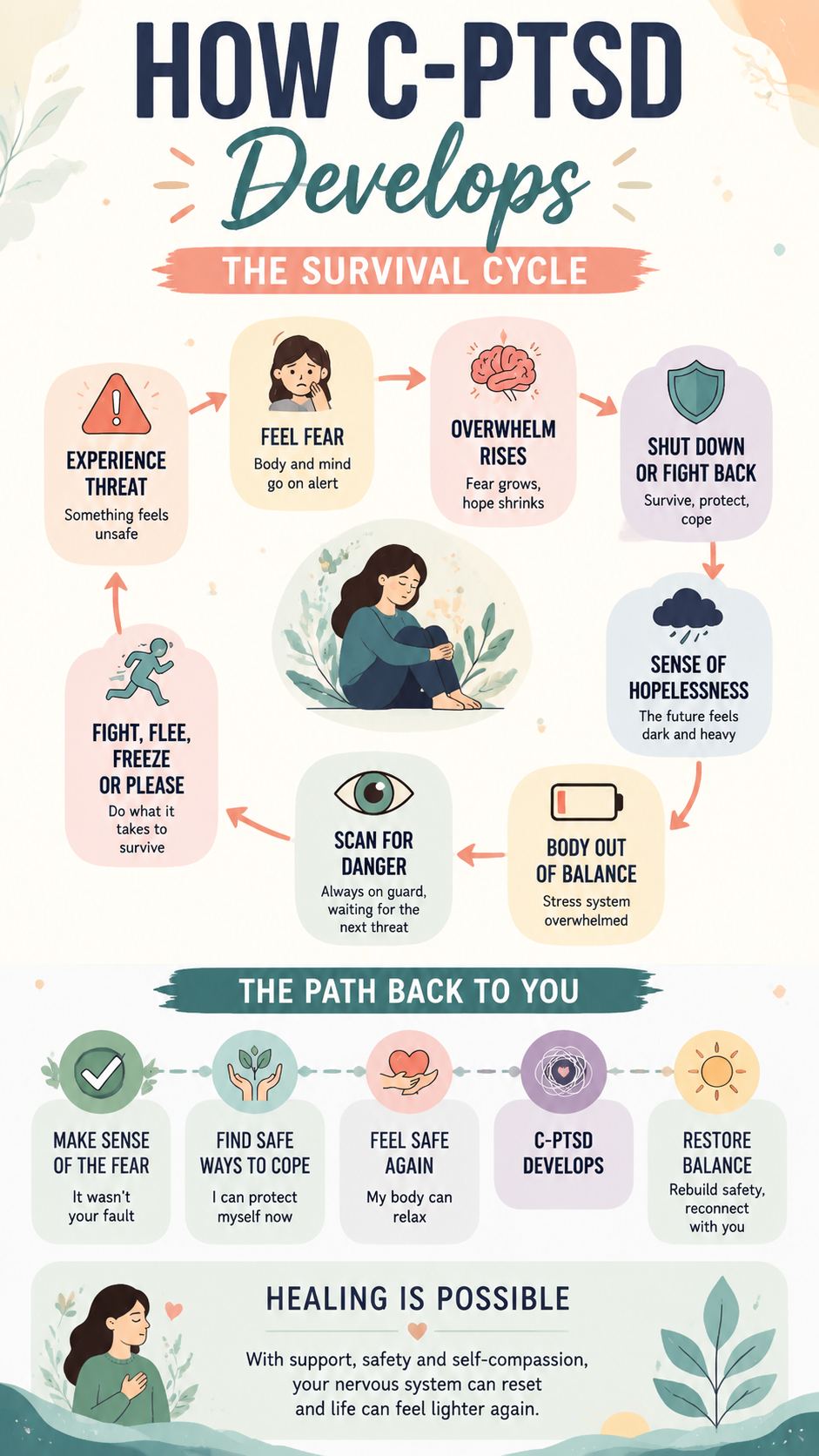
The survival cycle shown in the visual represents how the body and mind may move through different stages when a person feels threatened. These stages are connected, creating a pattern that can repeat until safety is restored.
1. Experiencing a Sense of Threat
The cycle often begins when something feels unsafe. The threat may be physical, emotional, social, or connected to a past memory. The nervous system does not always separate present danger from previous experiences, which means a current situation can activate old survival responses.
A person may notice feelings such as anxiety, fear, tension, or a strong urge to protect themselves. The body begins preparing for action, even if the danger is not immediately visible.
2. Fear and Hypervigilance Increase
When the nervous system detects danger, it may enter a state of heightened awareness. This can look like constantly scanning for problems, overthinking situations, or expecting something negative to happen.
Hypervigilance is the brain’s attempt to prevent future harm. However, when this response remains active for too long, it can become exhausting and interfere with daily life.
3. Overwhelm and Emotional Shutdown
When stress becomes too intense, the nervous system may shift from active defense into a shutdown response. A person may feel disconnected, numb, exhausted, or unable to process emotions.
This response is sometimes misunderstood as a lack of motivation or caring. In reality, emotional shutdown can be the body’s way of conserving energy during overwhelming situations.
4. Fight, Flight, Freeze, or Please Responses
Trauma responses are often described through four common patterns: fight, flight, freeze, and fawn or people-pleasing. These responses develop as ways to increase safety.
- Fight: Feeling the need to defend yourself, control situations, or react strongly.
- Flight: Avoiding situations, staying busy, or trying to escape discomfort.
- Freeze: Feeling stuck, disconnected, or unable to respond.
- Please: Prioritizing others’ needs to prevent conflict or rejection.
Why the Nervous System Gets Stuck in Survival Mode
The nervous system plays a central role in how people respond to stress. When someone experiences repeated trauma, the brain may learn that danger is always nearby. This can create a pattern where the body remains prepared for threats even during safe moments.
A person may struggle with relaxing, trusting others, managing emotions, or feeling comfortable in peaceful situations. These reactions are connected to learned survival patterns rather than personal failure.
Signs That May Be Connected to C-PTSD
C-PTSD can affect emotions, thoughts, relationships, and physical well-being. Symptoms vary from person to person, but some common experiences include:
- Difficulty feeling safe or relaxed
- Strong emotional reactions to certain situations
- Persistent shame, guilt, or self-criticism
- Challenges with trust and relationships
- Feeling disconnected from yourself or others
- Difficulty managing stress and emotions
- A strong need to stay in control
Recognizing these patterns can be an important step toward understanding yourself. Awareness creates an opportunity to replace automatic survival responses with healthier coping strategies.
The Path Back to Safety and Healing
Healing from complex trauma is not about forgetting the past. It is about helping the mind and body recognize that safety is possible in the present. Recovery is often a gradual process that focuses on rebuilding trust, emotional balance, and connection.
Building Nervous System Regulation
Learning calming techniques can help the body move out of constant alertness. Practices such as slow breathing, grounding exercises, mindful movement, and creating supportive routines may help encourage a sense of stability.
Creating a Sense of Safety
Safety can be rebuilt through healthy relationships, supportive environments, and learning personal boundaries. Small moments of comfort and consistency can teach the nervous system that relaxation is possible.
Practicing Self-Compassion
Many people with trauma histories carry harsh beliefs about themselves. Replacing self-criticism with kindness and understanding can become an important part of emotional recovery.
Expert Insight
Recovery is not about forcing yourself to move forward quickly. Healing often happens through small, consistent steps that help your body experience safety, connection, and emotional balance.
Supporting Someone With C-PTSD
If someone you care about experiences complex trauma responses, patience and understanding can make a meaningful difference. Instead of judging reactions, try recognizing that many behaviors developed as protection.
- Listen without immediately trying to fix everything.
- Respect personal boundaries and emotional needs.
- Offer consistency and reassurance.
- Encourage professional support when needed.
At a Glance: C-PTSD Recovery Basics
- Understand your survival responses.
- Create routines that support safety and calm.
- Practice self-compassion instead of self-blame.
- Build supportive connections.
- Remember that healing is possible.
Conclusion: Moving From Survival Toward Healing
Understanding how C-PTSD develops can help transform confusion into awareness. The survival responses created by trauma are meaningful adaptations that helped the nervous system cope with difficult experiences.
Recovery involves rebuilding a relationship with yourself, learning to recognize safety, and developing healthier ways to respond to emotions and stress. With patience, support, and compassion, it is possible to move beyond survival mode and create a life that feels more balanced, connected, and hopeful.
Tags
C-PTSD Recovery
Complex Trauma
Trauma Healing
Nervous System Regulation
Mental Health Awareness
Self Compassion