10 Healing Teas to Sip Instead of Pills for Better Health Naturally
Herbal teas have been enjoyed for centuries as comforting beverages that fit naturally into daily wellness routines. From a warm cup in the morning to a relaxing drink before bedtime, different teas offer unique flavors, aromas, and traditional uses that make them popular choices for people seeking natural lifestyle habits.
The growing interest in herbal remedies has brought attention to teas made from ingredients such as cloves, hibiscus, green tea leaves, cinnamon, turmeric, echinacea, peppermint, milk thistle, chamomile, and white tea. These plant-based drinks are often chosen for their soothing qualities and their connection to mindful self-care.
Key Takeaways
- Herbal teas can be a flavorful addition to a balanced wellness routine.
- Different tea varieties are traditionally associated with different health benefits.
- Ingredients like turmeric, peppermint, and chamomile are popular natural choices.
- Choosing quality tea ingredients can improve flavor and overall experience.
- Tea rituals can support relaxation, hydration, and mindful habits.
Exploring Natural Herbal Teas for Everyday Wellness
Herbal teas are more than simple beverages. They represent a connection between traditional plant knowledge and modern wellness practices. Many people enjoy these teas because they provide a natural way to add variety to their daily routines without relying on sugary drinks or artificial flavors.
Each tea has its own personality. Some offer a bright floral taste, while others provide warm spices or refreshing herbal notes. This variety makes it easy to find a tea that matches your mood, preferences, and personal wellness goals.
Important: Herbal teas can complement a healthy lifestyle, but they should not replace professional medical advice or prescribed treatments. Think of them as supportive additions to balanced nutrition, hydration, movement, and self-care.
Popular Herbal Teas and Their Traditional Uses
Clove Tea: A Spicy Herbal Drink
Clove tea is made from aromatic clove buds and is known for its rich, warming flavor. Traditionally, cloves have been valued in many cultures for their natural compounds and comforting qualities. A cup of clove tea can be a flavorful choice during colder months or whenever you want a warming beverage.
The bold spice of cloves pairs well with other ingredients such as cinnamon, ginger, or honey, creating a cozy drink that feels both refreshing and soothing.
Hibiscus Tea: Bright and Refreshing
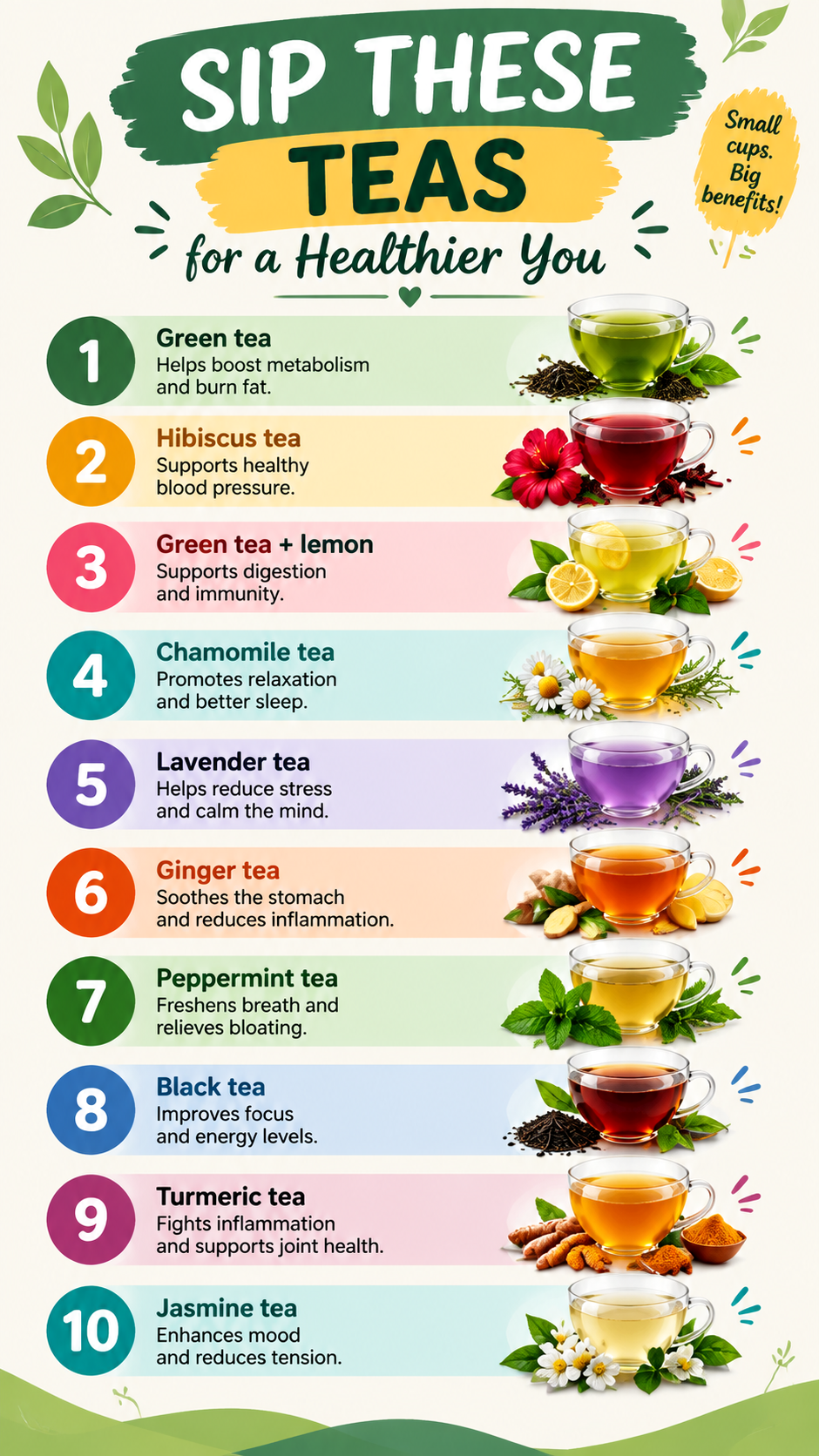
Hibiscus tea stands out with its vibrant red color and naturally tangy flavor. Made from hibiscus flowers, this herbal infusion is often enjoyed chilled or warm. Its refreshing taste makes it a favorite among tea lovers looking for a caffeine-free alternative.
Many people appreciate hibiscus tea as part of a heart-conscious lifestyle because it is naturally rich in plant compounds. It can be enjoyed plain or blended with fruits and herbs for extra flavor.
Green Tea: A Classic Antioxidant Beverage
Green tea is one of the most recognized teas worldwide. Made from tea leaves that undergo minimal processing, it contains naturally occurring antioxidants and provides a gentle caffeine boost.
Many people enjoy green tea as part of their morning routine because of its fresh taste and energizing qualities. It can be served hot, iced, or combined with lemon for a lighter flavor.
Cinnamon Tea: A Warm Spiced Favorite
Cinnamon tea offers a naturally sweet and comforting flavor without the need for added sugar. This spice has long been used in traditional wellness practices and is especially popular during autumn and winter.
Adding cinnamon tea to a daily routine can be an enjoyable way to explore warming spices while creating a relaxing beverage experience.
Turmeric Tea: The Golden Wellness Drink
Turmeric tea, sometimes called golden tea, has gained popularity because of its bright color and earthy flavor. Turmeric contains curcumin, a natural compound that has been widely studied for its properties.
Many recipes combine turmeric with black pepper, ginger, or milk alternatives to create a flavorful and comforting drink.
More Herbal Tea Options to Try
Echinacea Tea for Seasonal Wellness
Echinacea tea is a popular herbal drink often associated with immune-supporting routines. Many people enjoy it during seasonal changes as part of their wellness habits. Its earthy flavor can be balanced with honey or lemon.
Peppermint Tea for a Refreshing Experience
Peppermint tea is loved for its cooling aroma and refreshing taste. It is naturally caffeine-free and is commonly enjoyed after meals or during moments when you want a relaxing herbal drink.
The fresh mint flavor makes it one of the easiest herbal teas to enjoy throughout the year, whether served warm or over ice.
Milk Thistle Tea and Traditional Herbal Practices
Milk thistle tea is another herbal option that has been used traditionally in wellness practices. It is often included in herbal collections focused on supporting natural body processes.
Its mild flavor makes it suitable for blending with other herbs, allowing tea enthusiasts to create personalized combinations.
Chamomile Tea for Relaxation
Chamomile tea is one of the most popular bedtime beverages. Known for its gentle floral aroma, it is often chosen during evening relaxation routines.
A warm cup of chamomile tea can create a calming ritual that helps many people slow down and enjoy a peaceful moment before rest.
White Tea: A Delicate Choice
White tea has a subtle flavor and delicate aroma. It is made from young tea leaves and buds, giving it a lighter taste compared with stronger tea varieties.
Many tea lovers appreciate white tea for its elegant simplicity and gentle character.
Why This Matters
Creating a tea routine is about more than choosing a drink. It is an opportunity to slow down, enjoy natural ingredients, and build small moments of wellness into everyday life.
- Tea rituals encourage mindful breaks throughout the day.
- Natural ingredients provide a wide range of flavors and experiences.
- Simple preparation makes herbal teas easy to enjoy regularly.
How to Choose and Prepare Herbal Teas
Selecting a quality herbal tea starts with choosing ingredients that match your taste preferences and wellness goals. Loose-leaf teas often provide a stronger aroma, while tea bags offer convenience for busy schedules.
Simple Tea Preparation Tips
- Use fresh, clean water for the best flavor.
- Allow herbs to steep long enough to release their natural taste.
- Add natural flavors like lemon, ginger, or honey if desired.
- Store dried herbs away from moisture and direct sunlight.
Building a tea collection can also be a fun way to explore different cultures, flavors, and traditional herbal practices. Start with a few favorites and expand as you discover new varieties.
At a Glance
- Explore herbal teas for flavor, comfort, and daily rituals.
- Choose ingredients that fit your personal preferences.
- Create relaxing moments with simple tea routines.
- Enjoy variety by mixing different herbs and flavors.
Conclusion: Make Herbal Tea Part of Your Wellness Routine
Herbal teas offer a simple and enjoyable way to bring natural flavors into everyday life. Whether you prefer the floral notes of chamomile, the freshness of peppermint, the warmth of cinnamon, or the richness of turmeric, there is a tea variety for every mood and moment.
While herbal teas are not substitutes for medical care, they can be valuable additions to healthy habits. A mindful cup of tea can create a pause in a busy day, support hydration, and encourage a more intentional approach to self-care.
Explore different herbal tea blends, discover your favorites, and create a calming tea ritual that fits your lifestyle.
Tags
Herbal Tea
Natural Wellness
Tea Remedies
Healthy Drinks
Herbal Recipes
Self Care
Natural Remedies