Herbal Tea Remedies for Flu Season Natural Immune Support Tips and Blends
When the seasons change and cold and flu symptoms begin to appear, many people look for comforting ways to support their wellness routine. Herbal teas have been used for generations as part of traditional self-care practices, offering warmth, hydration, and the soothing experience of carefully selected plants. A simple cup of herbal tea can become a calming ritual that helps you slow down and care for yourself during times when your body needs extra attention.
The herbal blend featured in this wellness approach highlights traditional plants such as boneset, elderflower, and peppermint. These herbs are commonly associated with traditional herbal practices for seasonal comfort, relaxation, and respiratory support. While herbal remedies should not replace professional medical care, they can be a thoughtful addition to a balanced wellness routine when used appropriately.
Key Takeaways
- Herbal teas can provide a comforting addition to seasonal wellness routines.
- Boneset, elderflower, and peppermint are traditional herbs often used in herbal preparations.
- Warm beverages can support hydration and create a relaxing self-care moment.
- Herbal remedies should be used thoughtfully and with awareness of individual needs.
- Simple plant-based habits can complement a healthy lifestyle during flu season.
Understanding Herbal Care During Flu Season
Flu season often brings a desire for comforting traditions that help people feel supported while they recover. Herbal care focuses on using plants in teas, infusions, and other preparations as part of a broader approach to wellness. For many cultures, herbs have played an important role in daily routines, especially during colder months when warm drinks and soothing ingredients are especially appealing.
Herbal tea blends are popular because they are simple to prepare and can be customized based on taste preferences. Ingredients like peppermint provide a refreshing aroma, while elderflower is often appreciated for its delicate floral character. Traditional herbs such as boneset have a long history of use in folk practices, particularly during times of seasonal discomfort.
Important: Herbal teas are best viewed as supportive wellness practices rather than cures. If flu symptoms are severe, persistent, or concerning, medical advice from a qualified healthcare professional is important.
The Traditional Herbal Blend: Boneset, Elderflower, and Peppermint
The combination shown in this herbal care concept brings together three plants that are frequently found in traditional herbal collections. Each herb contributes its own flavor, aroma, and history of use in natural wellness traditions.
Boneset: A Traditional Seasonal Herb
Boneset has been used historically in traditional herbal practices, especially in preparations associated with seasonal illness and general discomfort. Its name comes from its long-standing connection with folk remedies, although modern use should always consider safety information and individual health circumstances.
In herbal blends, boneset is often valued for its distinctive plant character. It is usually combined with other herbs to create a more balanced flavor profile rather than used alone.
Elderflower: A Gentle Floral Addition
Elderflower is known for its light floral aroma and has been traditionally used in seasonal herbal preparations. The flowers are commonly incorporated into teas and infusions, creating a mild and pleasant beverage that many people enjoy during colder months.
Beyond its traditional role, elderflower adds a delicate sensory experience to herbal tea blends. Its soft flavor pairs well with other herbs and can make a simple cup of tea feel like a special wellness ritual.
Peppermint: Refreshing and Aromatic
Peppermint is one of the most recognizable herbal tea ingredients. Its cooling aroma and fresh taste make it a favorite in many homemade tea recipes. It is often enjoyed after meals or whenever a refreshing herbal drink is desired.
The addition of peppermint helps balance stronger herbal flavors, making blended teas easier and more enjoyable to drink.
How to Prepare a Simple Herbal Tea Infusion
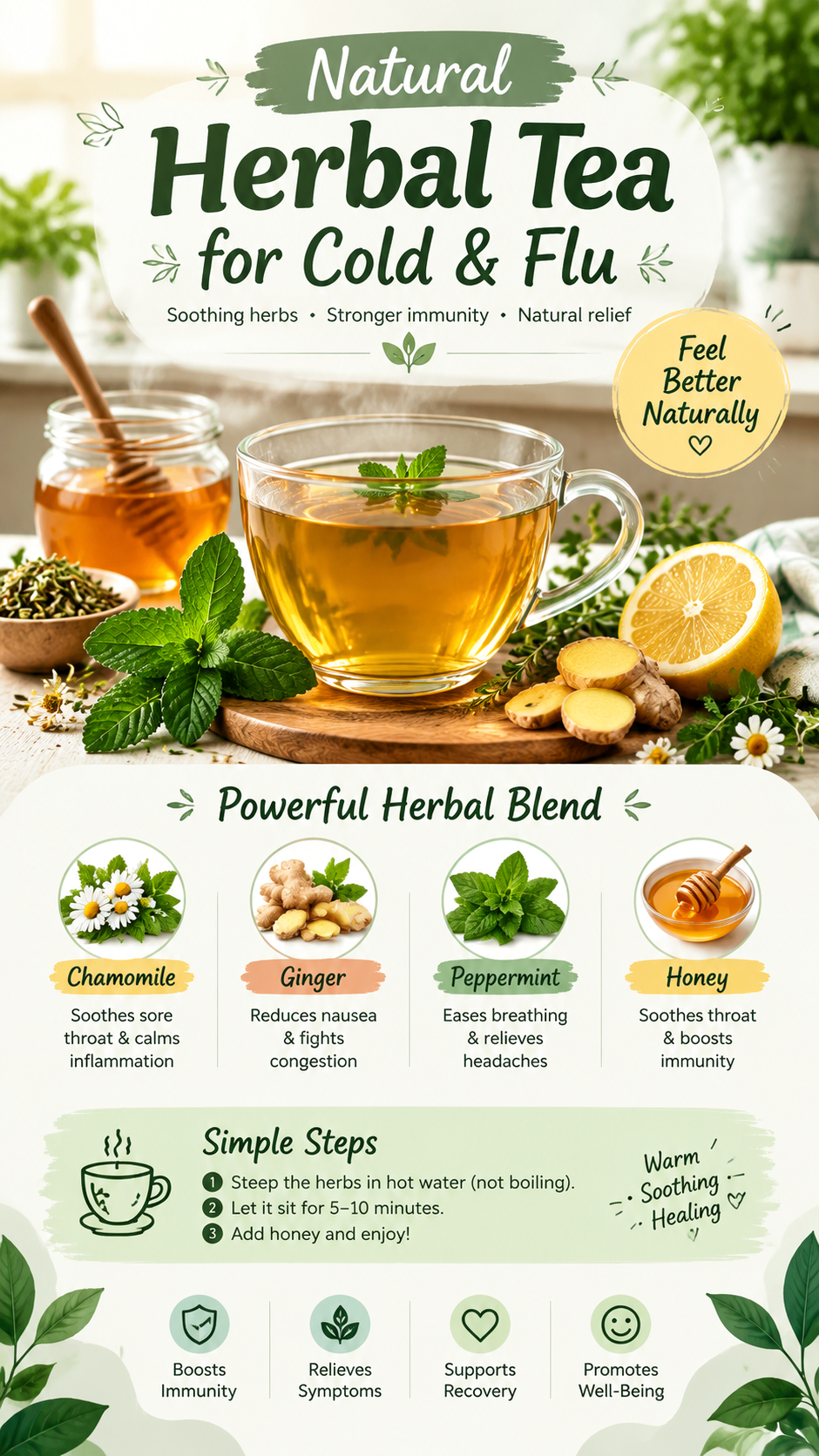
Making herbal tea is a simple process that allows you to enjoy the natural flavors and aromas of dried plants. A basic infusion requires only dried herbs, hot water, and a few minutes of steeping time.
Basic Preparation Steps
- Choose high-quality dried herbs from a trusted source.
- Combine the herbs according to your preferred flavor balance.
- Place the herbs in a cup, teapot, or tea infuser.
- Pour hot water over the herbs and allow them to steep.
- Strain the tea and enjoy it warm.
Many people enjoy herbal tea as part of an evening routine, a quiet morning practice, or a comforting drink during rest periods. The experience of preparing tea can itself become a mindful moment that encourages relaxation.
Supporting Wellness Beyond Herbal Tea
A balanced approach to seasonal wellness involves more than a single remedy. Rest, hydration, nourishing foods, and healthy daily habits all contribute to how the body manages everyday challenges.
Herbal tea can be paired with other supportive habits such as drinking enough fluids, eating a variety of nutrient-rich foods, and creating a comfortable environment for recovery. Small routines often make a meaningful difference in how people care for themselves.
Expert Insight: Traditional herbal practices are most valuable when they are combined with modern health awareness. Understanding both the benefits and limitations of herbs helps create safer and more thoughtful wellness habits.
Safety Considerations When Using Herbal Remedies
Although many herbs have been used traditionally for generations, natural does not always mean suitable for everyone. Some herbs may interact with medications, pregnancy-related needs, allergies, or specific health conditions.
Helpful Safety Tips
- Research herbs before adding them to your routine.
- Speak with a healthcare professional if you take medications.
- Use herbs from reliable suppliers with clear labeling.
- Pay attention to how your body responds.
At a Glance: Herbal Flu Season Wellness
- Warm herbal teas create a comforting seasonal ritual.
- Boneset, elderflower, and peppermint offer traditional herbal inspiration.
- Simple preparations make plant-based wellness accessible.
- Thoughtful use and professional guidance are always important.
Conclusion: Creating a Comforting Herbal Wellness Routine
Herbal care traditions continue to inspire people who appreciate natural ingredients, mindful routines, and the simple comfort of a warm cup of tea. A blend featuring herbs like boneset, elderflower, and peppermint represents a connection between traditional plant knowledge and modern self-care practices.
While herbal teas are not a replacement for medical treatment, they can be a meaningful part of a balanced lifestyle. Whether enjoyed during flu season or simply as a relaxing daily ritual, herbal infusions offer a gentle reminder to slow down and prioritize personal wellness.
Exploring herbal remedies can be an enjoyable journey filled with new flavors, traditions, and calming moments. With careful choices and mindful preparation, a simple herbal tea routine can become a comforting addition to your seasonal self-care habits.
Tags
Herbal Tea
Natural Remedies
Flu Season Wellness
Peppermint Tea
Elderflower
Herbal Wellness