The Ultimate Guide to Skincare Acids Choose the Best Acid for Your Skin Type
Building an effective skincare routine can feel overwhelming with so many ingredients, acids, and treatment options available. Understanding what each skincare acid does is one of the best ways to choose products that match your personal skin goals. From deep hydration to gentle exfoliation and targeted solutions for acne, dark spots, and signs of aging, different acids offer unique benefits that can transform the look and feel of your skin.
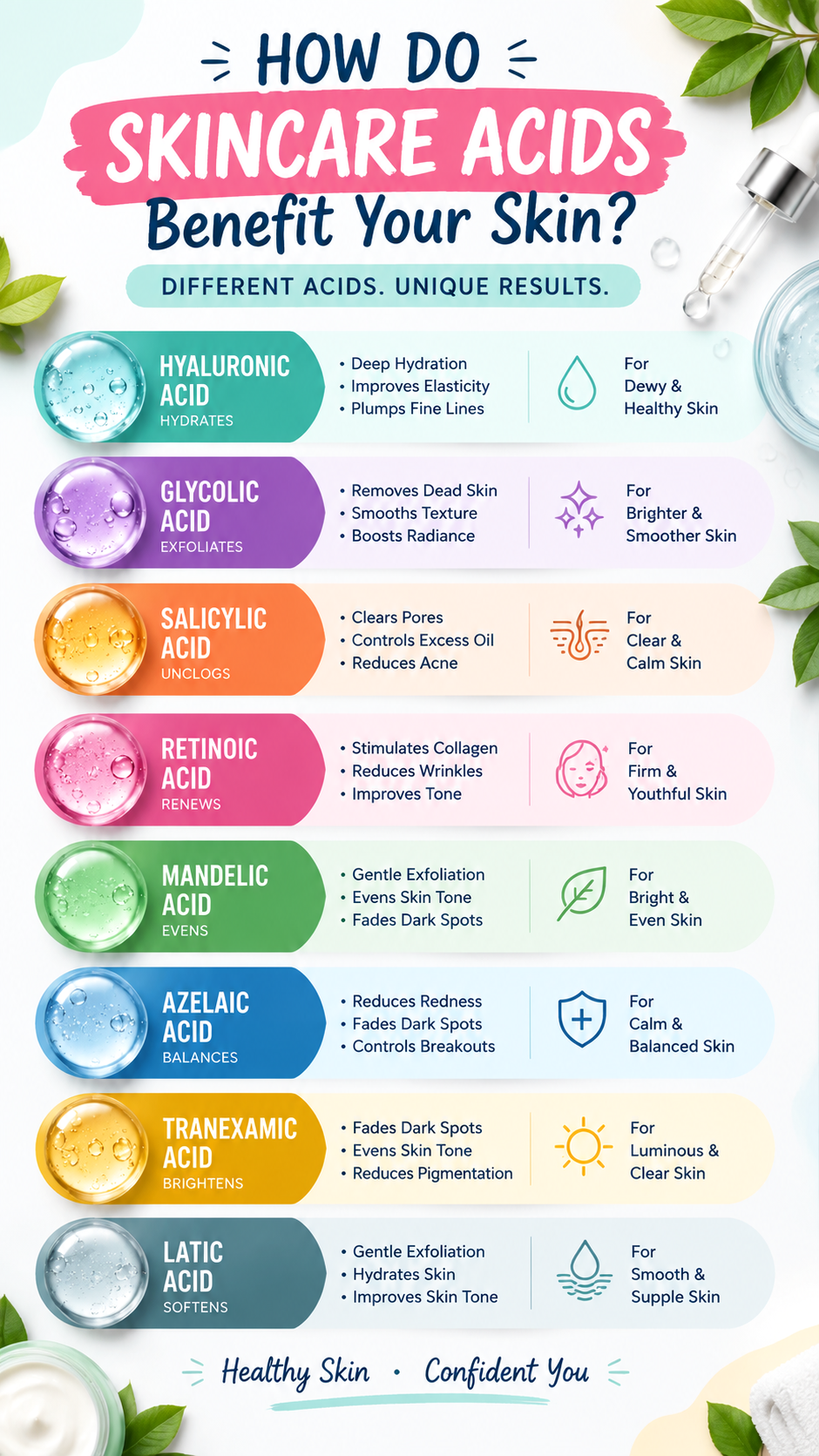
This complete guide explores the most popular skincare acids, including hyaluronic acid, glycolic acid, salicylic acid, retinoic acid, mandelic acid, azelaic acid, tranexamic acid, and lactic acid. Learn how these ingredients work, who they are best suited for, and how to include them in a balanced skincare routine.
Key Takeaways
- Hyaluronic acid helps maintain skin hydration and a plump appearance.
- Glycolic acid and lactic acid support smoother, brighter-looking skin through exfoliation.
- Salicylic acid is a popular choice for oily skin and blemish-prone areas.
- Retinoic acid supports skin renewal and helps improve the appearance of fine lines.
- Azelaic acid and tranexamic acid are commonly used for uneven tone and visible pigmentation concerns.
Understanding Skincare Acids and Their Benefits
Skincare acids are powerful ingredients designed to support different aspects of skin health. While the word “acid” may sound harsh, many cosmetic acids are carefully formulated to provide gentle, effective results when used correctly. They can help improve hydration, texture, clarity, and overall skin appearance.
The key to successful acid-based skincare is choosing the right ingredient for your needs. A person struggling with dryness may benefit from a hydrating ingredient like hyaluronic acid, while someone dealing with clogged pores may prefer salicylic acid. Understanding these differences makes it easier to create a personalized routine.
Important: Skincare acids work best when introduced slowly and consistently. Using too many active ingredients at once can overwhelm the skin barrier, so focus on choosing ingredients that address your main concerns.
Hyaluronic Acid: The Hydration Essential
Hyaluronic acid is one of the most recognized skincare ingredients for achieving hydrated, healthy-looking skin. Unlike exfoliating acids, it does not remove dead skin cells. Instead, it works as a humectant, helping attract and retain moisture on the skin’s surface.
Benefits of Hyaluronic Acid
- Provides intense hydration for dry or dehydrated skin.
- Helps skin look smoother and more refreshed.
- Supports a plumper appearance and reduces the look of fine dehydration lines.
Hyaluronic acid is suitable for most skin types, including sensitive skin. It is often found in serums, moisturizers, and lightweight hydration products that can be layered easily with other skincare ingredients.
Glycolic Acid: Boosting Texture and Radiance
Glycolic acid is an alpha hydroxy acid (AHA) known for its exfoliating properties. It works on the surface of the skin to help remove accumulated dead skin cells, revealing a smoother and brighter-looking complexion.
Why People Use Glycolic Acid
- Improves the appearance of uneven texture.
- Helps create a more radiant-looking complexion.
- Supports smoother skin by encouraging surface renewal.
Because glycolic acid is a stronger exfoliating ingredient compared with some other AHAs, beginners often benefit from starting with lower concentrations and using it less frequently.
Salicylic Acid: A Favorite for Oily and Blemish-Prone Skin
Salicylic acid is a beta hydroxy acid (BHA) that is especially popular among people looking to improve the appearance of oily skin and clogged pores. Because it is oil-soluble, it can penetrate into pores and help remove buildup.
Common Uses for Salicylic Acid
- Helps clear the appearance of congested pores.
- Supports a cleaner-looking complexion.
- Helps manage excess oil and shine.
Salicylic acid is often found in cleansers, toners, and targeted treatments. It can be a useful addition to routines focused on maintaining clearer-looking skin.
Retinoic Acid: Supporting Skin Renewal
Retinoic acid is a vitamin A derivative associated with skin renewal and advanced skincare routines. It is commonly discussed in connection with improving the appearance of fine lines, wrinkles, and uneven texture.
What Makes Retinoic Acid Different?
Unlike many exfoliating acids that work mainly on the surface, retinoic acid influences skin cell activity. Because it is a highly active ingredient, it should be introduced carefully and used according to product instructions.
- Helps improve the appearance of fine lines.
- Supports smoother-looking skin texture.
- Encourages a refreshed complexion.
Gentle Options: Mandelic Acid and Lactic Acid
Not every skincare routine needs strong exfoliation. Mandelic acid and lactic acid are often chosen by people who want gentler approaches to improving skin texture and tone.
Mandelic Acid Benefits
Mandelic acid is an AHA with a larger molecular structure, making it a popular option for those who prefer a milder exfoliating experience. It can help support smoother-looking skin and a more even appearance.
Lactic Acid Benefits
Lactic acid combines exfoliation with hydration support. It is commonly used to improve softness, brightness, and overall skin texture while being gentler than some stronger exfoliating ingredients.
Azelaic Acid and Tranexamic Acid for Uneven Skin Tone
Concerns like visible redness, dark spots, and uneven tone are common reasons people explore targeted skincare ingredients. Azelaic acid and tranexamic acid are two popular choices in routines focused on improving the appearance of pigmentation.
Azelaic Acid
Azelaic acid is valued for its versatility. It is often included in routines designed to support calmer-looking skin, reduce the appearance of redness, and improve uneven tone.
Tranexamic Acid
Tranexamic acid is frequently used in brightening skincare products. It is commonly chosen for routines focused on the appearance of dark spots and uneven pigmentation.
How to Add Acids Into Your Skincare Routine
Creating a skincare routine with acids requires patience and balance. The goal is not to use every ingredient at once but to choose products that complement your skin’s needs.
- Start with one active ingredient at a time.
- Introduce new products gradually.
- Use sunscreen daily, especially when using exfoliating ingredients.
- Pay attention to dryness, irritation, or discomfort.
Expert Insight: A successful skincare routine is built around consistency. The best ingredient is the one that matches your skin goals and fits comfortably into your daily habits.
At a Glance: Choosing the Right Skincare Acid
Quick Points
- Dry skin: Consider hydrating ingredients like hyaluronic acid.
- Texture concerns: Explore gentle exfoliating acids.
- Oily skin: Salicylic acid may support clearer-looking pores.
- Dark spots: Brightening acids can help improve the appearance of uneven tone.
Conclusion: Finding Your Perfect Skincare Acid Match
Skincare acids offer a wide range of benefits, from hydration and gentle exfoliation to improving the appearance of acne, pigmentation, and signs of aging. The right choice depends on your individual skin goals, sensitivity level, and current routine.
Whether you need moisture support from hyaluronic acid, a smoother texture from glycolic or lactic acid, or targeted care with azelaic and tranexamic acid, understanding each ingredient helps you make smarter skincare decisions.
Healthy-looking skin is built through consistency, careful product choices, and a routine that works with your lifestyle. Save this guide as a helpful reference whenever you are choosing your next skincare ingredient.
Tags
Skincare Acids
Skincare Routine
Face Care Tips
Chemical Exfoliation
Glowing Skin
Beauty Ingredients