Digestive Health Spices Traditional Herbs Seeds Used After Meals
For centuries, spices have played a meaningful role in kitchens around the world, not only for adding flavor but also for becoming part of traditional food customs and after-meal practices. From warm ginger infusions to aromatic fennel seeds enjoyed after meals, many cultures have embraced spices as a natural part of their culinary heritage. These ingredients connect generations through recipes, rituals, and everyday eating habits.
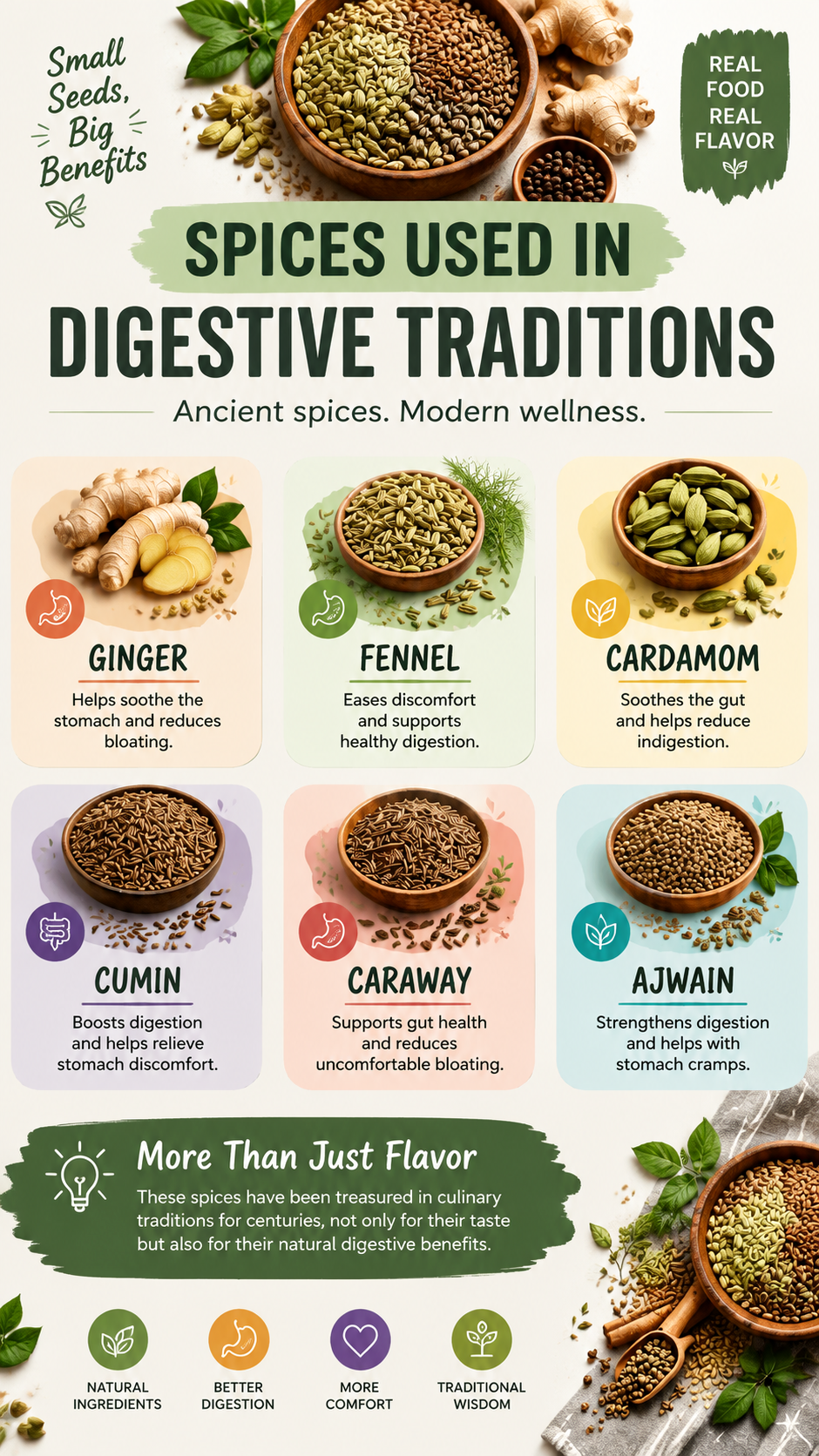
The world of digestive traditions includes a variety of flavorful spices such as ginger, fennel, cardamom, cumin, caraway, and ajwain. These spices are commonly found in teas, beverages, spice blends, and traditional meals across different regions. While traditional use does not automatically prove medical benefits, these ingredients remain valued for their aromas, flavors, and cultural importance.
Key Takeaways
- Traditional spice practices are deeply connected to global food cultures.
- Ginger, fennel, cardamom, cumin, caraway, and ajwain are commonly used in culinary traditions.
- Spices can bring warmth, aroma, and complexity to everyday meals and drinks.
- Many cultures enjoy seeds and spices as part of after-meal customs.
- Traditional use and modern scientific evidence should be understood separately.
The Connection Between Spices and Digestive Traditions
Food traditions often reflect the relationship between people, plants, and local environments. Across Asia, the Middle East, the Mediterranean, and other regions, spices have been incorporated into meals for centuries. Their strong flavors and distinctive aromas have made them important ingredients in both cooking and traditional food routines.
Many digestive traditions focus on simple practices such as drinking warm herbal teas, adding aromatic spices to meals, or enjoying seeds after eating. These customs are often passed down through families and communities, creating a connection between food, culture, and daily life.
Important: Spices have a long history of traditional use in food cultures around the world. Their presence in these practices highlights cultural knowledge and culinary traditions, while individual health effects depend on many factors.
Popular Spices Found in Digestive Food Traditions
Ginger: A Warm and Versatile Spice
Ginger is one of the most recognized spices in traditional cooking. Its warm, slightly spicy flavor makes it a favorite ingredient in teas, soups, sauces, and seasonal recipes. In many cultures, ginger has been enjoyed as part of food and beverage traditions, especially in warming drinks.
Fresh ginger root, dried ginger powder, and ginger-infused beverages are all popular ways to experience this spice. Its bold taste pairs well with sweet and savory ingredients, making it a flexible addition to many recipes.
Fennel: The Sweet Aromatic Seed
Fennel seeds are known for their naturally sweet, anise-like flavor. They are traditionally enjoyed in several regions, including parts of South Asia and the Mediterranean. Their refreshing taste makes them a popular choice in spice blends, teas, and after-meal customs.
Beyond their traditional role, fennel seeds add a unique flavor to baked goods, vegetable dishes, and beverages. Their pleasant aroma has helped them remain a valued ingredient across generations.
Cardamom: A Fragrant Culinary Favorite
Cardamom brings a floral, sweet, and refreshing character to foods and drinks. It is commonly used in teas, coffee preparations, desserts, and traditional recipes across many cultures.
The small green pods contain aromatic seeds that create a memorable flavor experience. Cardamom is often included in festive dishes and beverages, where its fragrance adds warmth and elegance.
Cumin: Earthy Flavor With Global Roots
Cumin is a widely used spice with an earthy, warm, and savory flavor. It appears in countless cuisines, from traditional spice mixes to everyday dishes. Its deep aroma makes it an essential ingredient in many regional cooking styles.
Whether used whole or ground, cumin adds richness to soups, roasted vegetables, rice dishes, and sauces. Its popularity shows how a single spice can become a foundation of many culinary traditions.
Caraway and Ajwain: Distinctive Traditional Seeds
Caraway seeds have a warm, slightly peppery, anise-like taste and are commonly associated with European food traditions. They are often found in breads, baked dishes, and traditional beverages.
Ajwain, also called carom seeds, is known for its strong thyme-like aroma and peppery flavor. It is frequently used in South Asian cooking, where it adds character to snacks, breads, and savory recipes.
How These Spices Are Used Around the World
Different cultures have developed unique ways to incorporate spices into daily food routines. Some traditions focus on beverages, while others highlight spice combinations in meals. These practices show how ingredients can carry cultural meaning beyond their basic culinary purpose.
Spiced Teas and Warm Drinks
Herbal teas and spiced beverages are common examples of traditional spice use. Ginger, cardamom, and fennel are often paired with warm liquids to create comforting drinks with complex flavors.
These beverages are enjoyed throughout different seasons and are often associated with relaxation, hospitality, and cultural gatherings.
After-Meal Spice Customs
In some regions, seeds such as fennel or ajwain are traditionally enjoyed after meals. These customs are part of social and family traditions, often shared during conversations or gatherings.
These small rituals demonstrate how food experiences extend beyond the main meal and become meaningful parts of everyday life.
Why This Matters
Traditional spices tell stories about history, geography, and family customs. Exploring these ingredients helps us appreciate how food connects people across generations.
- Spices preserve cultural cooking knowledge.
- Aromatic ingredients can transform simple recipes.
- Traditional food habits reflect local identities and traditions.
Creating Your Own Spice-Inspired Kitchen Routine
Adding traditional spices to everyday cooking does not require complicated recipes. Simple changes can introduce new flavors and encourage exploration of global food traditions.
- Experiment with one new spice at a time to understand its flavor.
- Add aromatic seeds to teas, baked goods, or savory dishes.
- Create homemade spice blends inspired by different cuisines.
- Store spices properly to preserve their freshness and aroma.
Building a spice collection is a journey of discovery. Each ingredient offers a different sensory experience, from the warmth of ginger to the sweetness of cardamom and the earthiness of cumin.
At a Glance: Traditional Digestive Spices
- Ginger adds warmth and spice to drinks and meals.
- Fennel provides a sweet, refreshing seed flavor.
- Cardamom brings floral notes to teas and desserts.
- Cumin creates depth in savory recipes.
- Caraway and ajwain offer distinctive traditional flavors.
Conclusion: Celebrating the Tradition of Flavorful Spices
Spices used in digestive traditions represent more than ingredients in a recipe. They reflect centuries of culinary creativity, cultural knowledge, and shared experiences around food. From aromatic seeds enjoyed after meals to warming spices blended into comforting drinks, these ingredients continue to inspire kitchens around the world.
Final Thought: Exploring traditional spices is a simple way to connect with global cuisine while bringing new flavors and meaningful food traditions into your own kitchen.
Tags
Digestive Spices
Traditional Herbs
Ginger
Fennel Seeds
Cardamom
Culinary Traditions
Natural Ingredients