Homemade Soap Ideas Natural Handmade Soap Recipe for Self-Care
Creating your own soap at home is a wonderful way to bring a little extra care and creativity into your daily routine. Handmade soap offers a beautiful combination of simple ingredients, thoughtful preparation, and a personal touch that store-bought options often cannot replicate. With natural oils, nourishing butters, essential oils, and botanical additions, DIY soap making can transform an ordinary cleansing routine into a relaxing self-care experience.
The appeal of homemade soap goes beyond its attractive appearance. Many people enjoy making natural soap because they can choose the ingredients, customize scents, experiment with textures, and create bars that feel gentle and luxurious. Whether you are interested in beginner soap recipes, natural skincare, or spa-inspired home projects, handmade soap ideas provide plenty of inspiration.
Key Takeaways
- Natural handmade soap allows you to control ingredients and customize your skincare routine.
- Simple oils, butters, and botanical elements can create beautiful homemade soap bars.
- DIY soap making can become a relaxing hobby and creative self-care activity.
- Proper preparation and safety practices are essential when making cold process soap.
- Handmade soap makes a thoughtful gift for friends, family, or yourself.
Why Homemade Soap Is Becoming a Popular Self-Care Choice
Homemade soap has gained attention among skincare lovers who want a more mindful approach to personal care. Instead of choosing products based only on packaging or fragrance, many DIY enthusiasts prefer understanding what goes into the products they use every day.
Natural soap recipes often include ingredients such as coconut oil, olive oil, shea butter, and essential oils. These ingredients are commonly chosen because they can create a pleasant texture, creamy lather, and a nourishing feel on the skin. Adding dried flowers, herbs, or natural color elements can also make each soap bar unique.
Important: Handmade soap is not only about creating a beautiful product. It is about building a slower, more intentional routine where ingredients, scents, and textures are carefully selected to match your personal preferences.
Understanding the Basics of Natural Handmade Soap
At its core, soap making is a process that combines oils or fats with a soap-making ingredient called lye. Through a chemical process known as saponification, the ingredients transform into a solid cleansing bar. While the process may seem complex at first, understanding the basic components makes it easier to appreciate how homemade soap is created.
The Role of Natural Oils
Oils are the foundation of most handmade soap recipes. Different oils contribute different qualities to the final bar.
- Coconut oil: Often used to create cleansing properties and a rich lather.
- Olive oil: Popular for creating a gentle and conditioning soap.
- Shea butter: Added for a creamy texture and luxurious feel.
- Other botanical oils: Can provide additional customization options.
Adding Essential Oils and Botanicals
One of the most enjoyable parts of making homemade soap is choosing decorative and aromatic additions. Lavender, rose petals, dried herbs, and natural essential oils can create a spa-inspired experience.
Botanical ingredients also add visual interest, making handmade soap bars look beautiful when displayed in a bathroom or wrapped as gifts. Simple details such as dried flowers on top of a soap bar can create a handcrafted appearance.
How to Create a Simple Homemade Soap Recipe
A beginner-friendly soap recipe usually focuses on a balanced combination of oils, a carefully measured lye solution, and optional additions for fragrance or decoration. The process requires patience, accuracy, and attention to safety.
Essential Ingredients
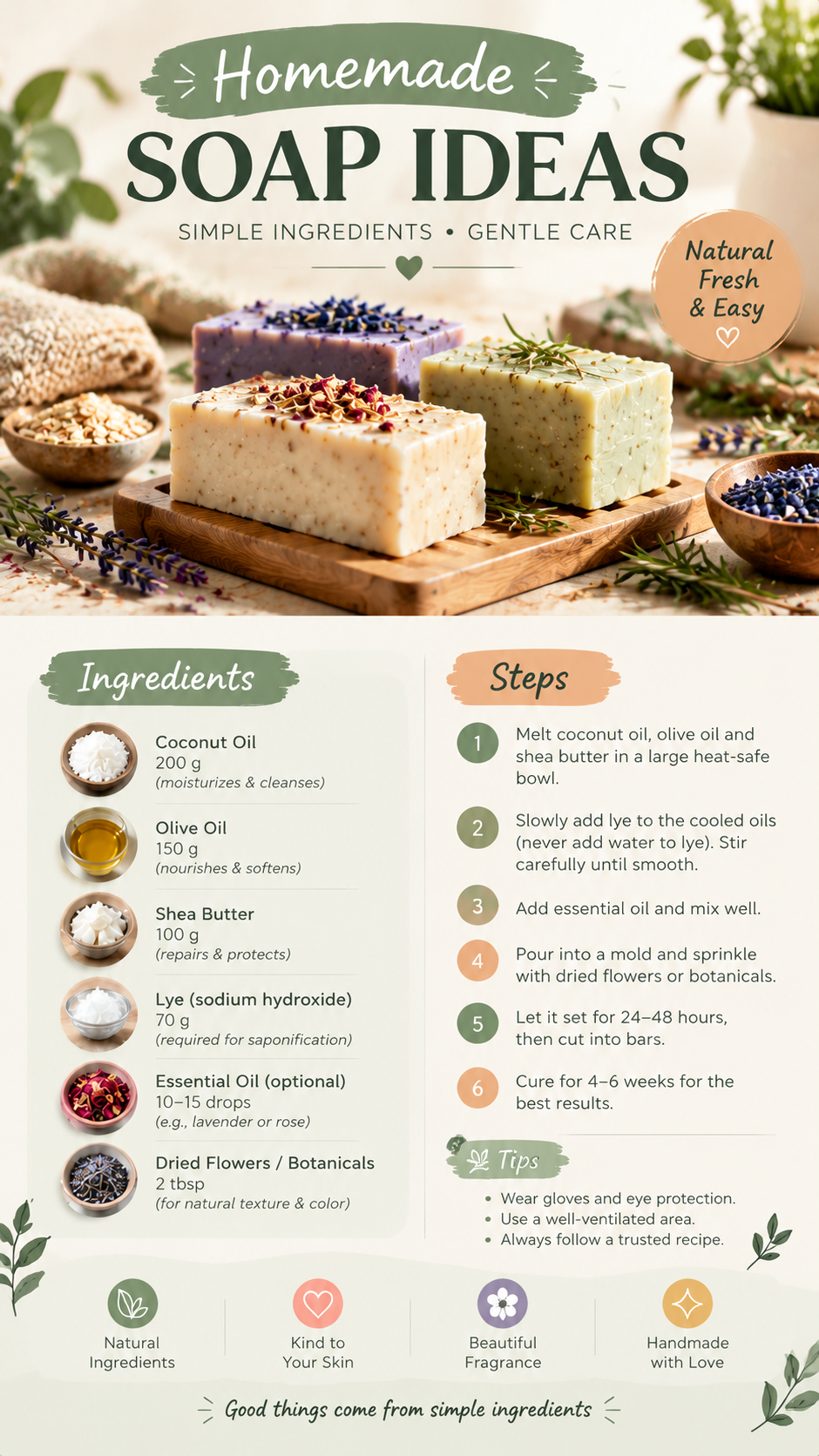
A basic natural handmade soap recipe may include:
- Coconut oil for cleansing and bubbles
- Olive oil for a gentle and conditioning feel
- Shea butter for a creamy texture
- Sodium hydroxide (lye) for the soap-making process
- Essential oils for fragrance
- Dried flowers or botanicals for decoration
Basic Soap Making Steps
- Prepare your workspace and gather all ingredients and equipment.
- Measure oils and prepare them according to your chosen recipe.
- Carefully combine the lye solution following proper safety guidelines.
- Blend ingredients until the soap mixture reaches the correct consistency.
- Add essential oils, herbs, or decorative botanicals.
- Pour into molds and allow the soap to set before cutting.
- Allow the bars to cure properly before regular use.
Creating a Spa-Like Experience at Home
Homemade soap can turn everyday routines into relaxing moments. The combination of natural scents, soft textures, and beautiful presentation creates a small luxury that fits easily into your home.
Pair handmade soap with cozy towels, calming candles, and simple bathroom decorations to create a peaceful spa-inspired environment. These small details can make self-care feel more intentional without requiring expensive products or complicated routines.
Ideas for Customizing Your Soap Bars
Once you become comfortable with basic soap making, there are many creative ways to personalize your creations.
- Use different essential oil combinations for fresh, floral, or calming scents.
- Add natural exfoliants like oatmeal or finely ground botanicals.
- Create seasonal soap designs with different colors and decorations.
- Experiment with molds to create unique shapes.
- Wrap finished bars with simple paper packaging for a handmade look.
Expert Insight
The beauty of handmade soap comes from the ability to slow down and create something meaningful. A simple recipe can become a creative ritual that connects natural ingredients with everyday wellness.
- Choose ingredients based on your desired soap texture and fragrance.
- Keep notes of recipes so you can improve future batches.
- Focus on quality ingredients rather than complicated designs.
Common Mistakes Beginners Should Avoid
Starting a soap-making hobby is exciting, but beginners often make simple mistakes that affect the final results. Learning proper techniques can help create better soap bars and make the process more enjoyable.
- Not measuring ingredients accurately.
- Skipping safety equipment when handling lye.
- Adding too much fragrance or decorative material.
- Using a recipe without understanding the ingredient balance.
- Being impatient during the curing process.
At a Glance: Homemade Soap Benefits
- Personalized natural skincare creations
- Creative and relaxing DIY activity
- Beautiful handmade gifts
- Custom scents and botanical designs
- A simple way to enjoy mindful self-care
Conclusion: Enjoy the Art of Homemade Soap Making
Homemade soap ideas are a wonderful invitation to explore creativity, natural ingredients, and thoughtful self-care. Whether you are making your first batch or developing your own signature recipes, the process offers a rewarding way to create something beautiful and useful.
With simple ingredients, careful preparation, and a little patience, handmade soap can become more than a cleansing product. It can represent a moment of relaxation, a creative hobby, and a personal approach to natural living.
Start exploring different soap recipes, experiment with gentle ingredients, and enjoy the satisfaction of creating your own spa-inspired bars at home.
Tags
Homemade Soap
Natural Skincare
DIY Soap Recipes
Handmade Soap Ideas
Self Care Routine
Organic Beauty
Spa Inspired Ideas