Lazy Decluttering Rules That Actually Work for a Clutter-Free Home
Decluttering does not have to mean spending an entire weekend emptying every closet, sorting hundreds of items, and feeling exhausted before you even begin. A simpler approach is possible. By following a few lazy decluttering rules that actually work, you can create a cleaner, calmer home with small decisions that fit naturally into your everyday routine.
Many people avoid decluttering because they believe it requires perfection, endless organizing supplies, or a complete lifestyle change. In reality, successful decluttering is often about creating easy habits, removing unnecessary items, and making your space support the way you truly live.
Key Takeaways
- Small decluttering decisions create lasting results.
- Keep items that support your current lifestyle, not an imagined future.
- Simple rules help reduce clutter without feeling overwhelmed.
- Your home should feel peaceful, functional, and easy to maintain.
- Consistent habits are more effective than occasional cleaning marathons.
Why Lazy Decluttering Works Better Than Extreme Cleanouts
Traditional decluttering advice often focuses on dramatic transformations. While a major home reset can be helpful, it is not always realistic for busy schedules. Lazy decluttering focuses on reducing friction and making decisions easier.
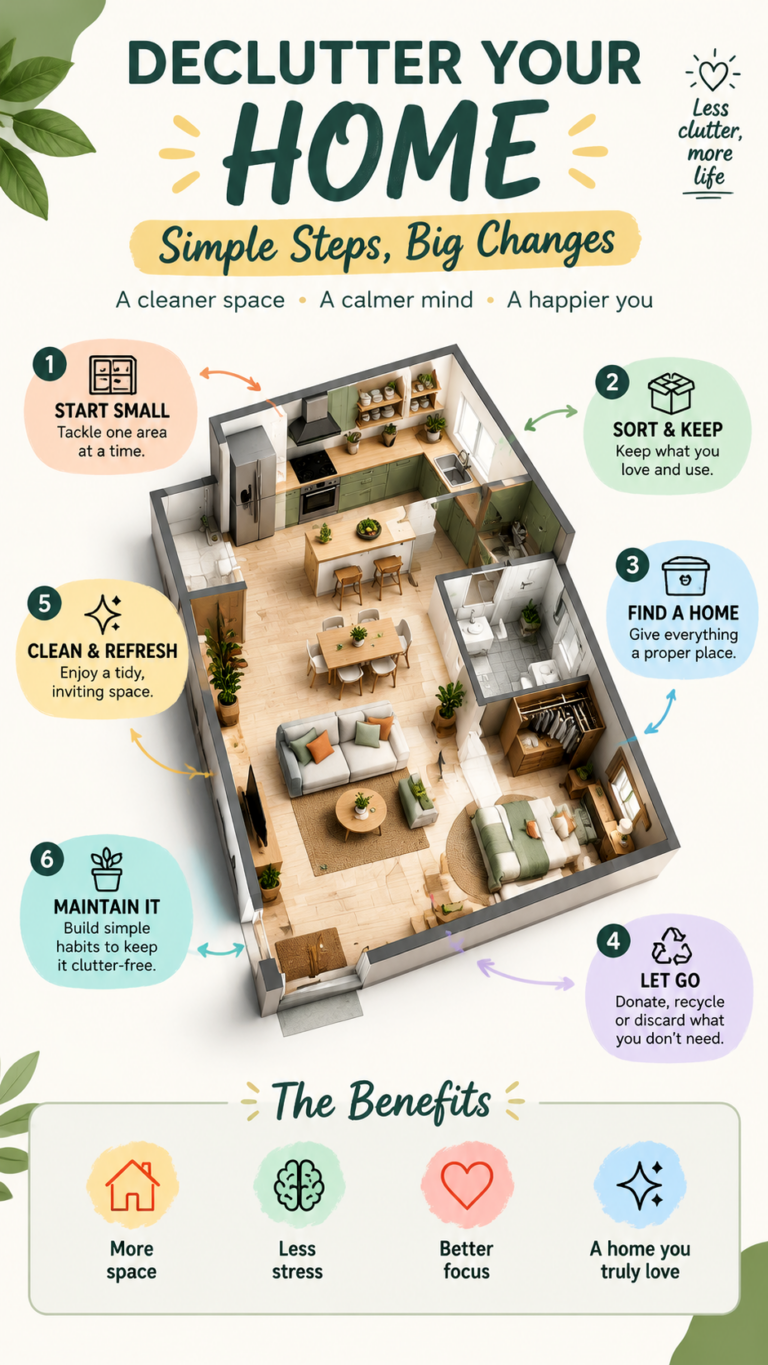
Instead of asking yourself to organize an entire room, you focus on one drawer, one shelf, or one category at a time. These small actions build confidence and prevent the stress that often comes with large decluttering projects.
Important: The goal of decluttering is not to create an empty home. The goal is to create a space where everything you own has a purpose, a place, or a positive meaning in your daily life.
The One-Year Rule: Let Go of What You Do Not Use
One of the easiest decluttering rules is simple: if you have gone a full year without using something, consider whether it deserves space in your home.
This rule works especially well for clothing, kitchen gadgets, decorations, and hobby supplies. If an item has remained untouched through different seasons and situations, it may no longer fit your lifestyle.
Ask Yourself These Questions
- Have I used this item recently?
- Would I buy this again today?
- Does this make my life easier or more enjoyable?
- Am I keeping this because I need it or because I feel guilty?
Simple Decluttering Rules for a More Organized Home
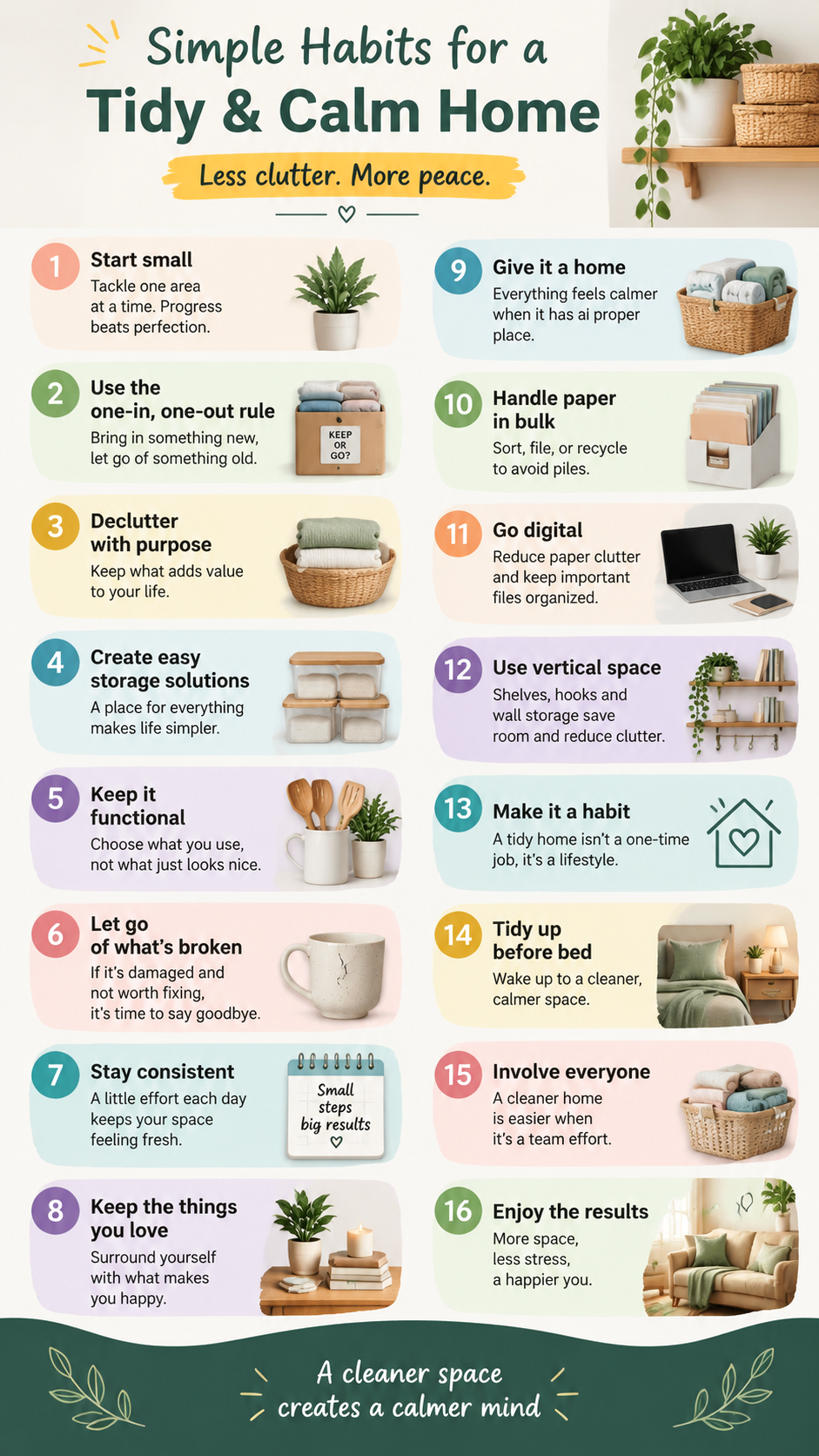
Follow the One-In, One-Out Method
Clutter often returns because new items enter the home faster than old items leave. The one-in, one-out rule creates a natural balance.
Whenever you bring something new into your space, choose something similar to remove. A new shirt may replace an old one. A new kitchen tool may replace one that no longer works well.
This habit prevents overflowing closets and crowded storage areas without requiring frequent large cleanups.
Give Everything a Home
Items without a designated place often become visual clutter. When something does not have a clear storage location, it tends to move from one surface to another.
Create simple homes for everyday items such as keys, paperwork, shoes, chargers, and cleaning supplies. The easier an item is to put away, the more likely you are to maintain order.
Stop Saving Things for a Fantasy Lifestyle
Many people hold onto items for a version of life they imagine they might have someday. This could include unused craft supplies, clothing that no longer matches your style, or equipment for hobbies you no longer enjoy.
Your home should support your current life. Keeping things that belong to your past or an unrealistic future can make your space feel crowded.
Decluttering Without Guilt or Stress
One of the biggest reasons people struggle with decluttering is emotional attachment. Items may represent memories, money spent, or expectations from others. However, keeping something out of guilt can create unnecessary stress.
Appreciating an item does not mean you must keep it forever. A gift can be meaningful even after it leaves your home. A purchase can have served its purpose even if it is no longer useful.
Replace “What If I Need It?” With Better Questions
The fear of needing something later often keeps unnecessary items around. Instead of focusing on possible future situations, consider how realistic that possibility is.
- Could I easily replace this if I needed it?
- Is the storage space worth keeping this item?
- Would someone else benefit more from having it?
Easy Areas to Start Your Decluttering Journey
If you feel overwhelmed, start where you already spend time. Decluttering does not need a complicated plan. A few minutes in the right area can create an immediate improvement.
Begin With Visible Clutter
Clear surfaces often create the biggest visual impact. Start with countertops, tables, entryways, or open shelves.
Removing unnecessary objects from visible areas can make your home feel calmer quickly, even before you tackle hidden storage spaces.
Declutter Where You Are Standing
A practical lazy decluttering habit is to improve the area around you first. When you notice something that no longer belongs, deal with it immediately instead of creating a future task list.
This approach turns decluttering into a natural part of daily life instead of a stressful project.
Expert Insight
- Simple systems are easier to maintain than complicated organization methods.
- Less clutter means fewer decisions and less daily stress.
- The best organizing method is the one you can continue using.
Creating Long-Term Decluttering Habits
A clutter-free home is not created by one perfect cleaning session. It is created through small choices repeated over time.
Try adding a few simple habits into your routine:
- Spend five minutes each day returning items to their proper places.
- Review one small area every week.
- Donate or remove unused items regularly.
- Avoid bringing home items without considering their purpose.
The best decluttering routine is one that feels effortless. When your systems match your lifestyle, maintaining your home becomes much easier.
At a Glance
- Keep only what supports your life today.
- Make decluttering small and manageable.
- Create easy storage habits.
- Choose peace over unnecessary possessions.
Conclusion: A Simpler Home Starts With Small Choices
Lazy decluttering rules are not about avoiding effort. They are about using smarter methods that fit real life. By letting go of unused items, creating simple systems, and focusing on what truly matters, you can build a home that feels lighter and more peaceful.
You do not need to declutter everything at once. Start with one decision, one drawer, or one small corner. Over time, these small actions create a home that feels organized, comfortable, and easy to enjoy.
Tags
Lazy Decluttering
Home Organization
Minimalist Home
Decluttering Tips
Simple Living
Clutter Free Home