5 Home Organization Mistakes Making Your Space Look Cluttered
Creating a peaceful, organized home is not about having more storage bins or constantly cleaning. It starts with understanding the small habits that allow clutter to build up in the first place. Many homes feel messy not because they lack space, but because everyday items do not have a clear purpose, location, or routine.
The most effective home organization strategies focus on making your space easier to maintain. By identifying common organizing mistakes and replacing them with simple systems, you can create rooms that feel calmer, more functional, and more enjoyable to live in.
Key Takeaways
- Every item needs a designated home to prevent unnecessary clutter.
- Keeping too many unused belongings makes organization harder.
- Simple daily routines help maintain a tidy and comfortable space.
- Smart storage works better when it allows easy access.
- A clutter-free home starts with small, consistent choices.
5 Home Organization Mistakes That Make Your Home Feel Cluttered
Home organization is often viewed as a big weekend project, but lasting results come from improving the small decisions you make every day. A home can look crowded even when it has plenty of space simply because belongings are not managed with a clear system.
From overflowing storage areas to misplaced daily essentials, certain habits quietly create visual clutter. Learning how to fix these mistakes can transform your home into a space that feels lighter, more peaceful, and easier to enjoy.
1. Not Having a Home for Everything
One of the biggest causes of clutter is not knowing where items belong. When everyday objects do not have a dedicated place, they naturally end up on countertops, tables, chairs, and other random surfaces.
Keys may collect near the door, mail may pile up on kitchen counters, and bags or jackets may move from one room to another. These small collections create the feeling of disorder, even if the rest of the room is clean.
How to Create a Home for Your Belongings
Start by assigning specific locations for items you use regularly. A small basket near the entrance can hold keys and everyday accessories. Drawer organizers can keep small items from spreading across surfaces.
- Choose a convenient location based on how you use each item.
- Return belongings to their assigned spot after use.
- Avoid creating temporary piles that become permanent clutter.
Important: The easiest organization systems are the ones that match your daily habits. If putting something away requires too many steps, the system will be difficult to maintain.
2. Holding On to Too Much
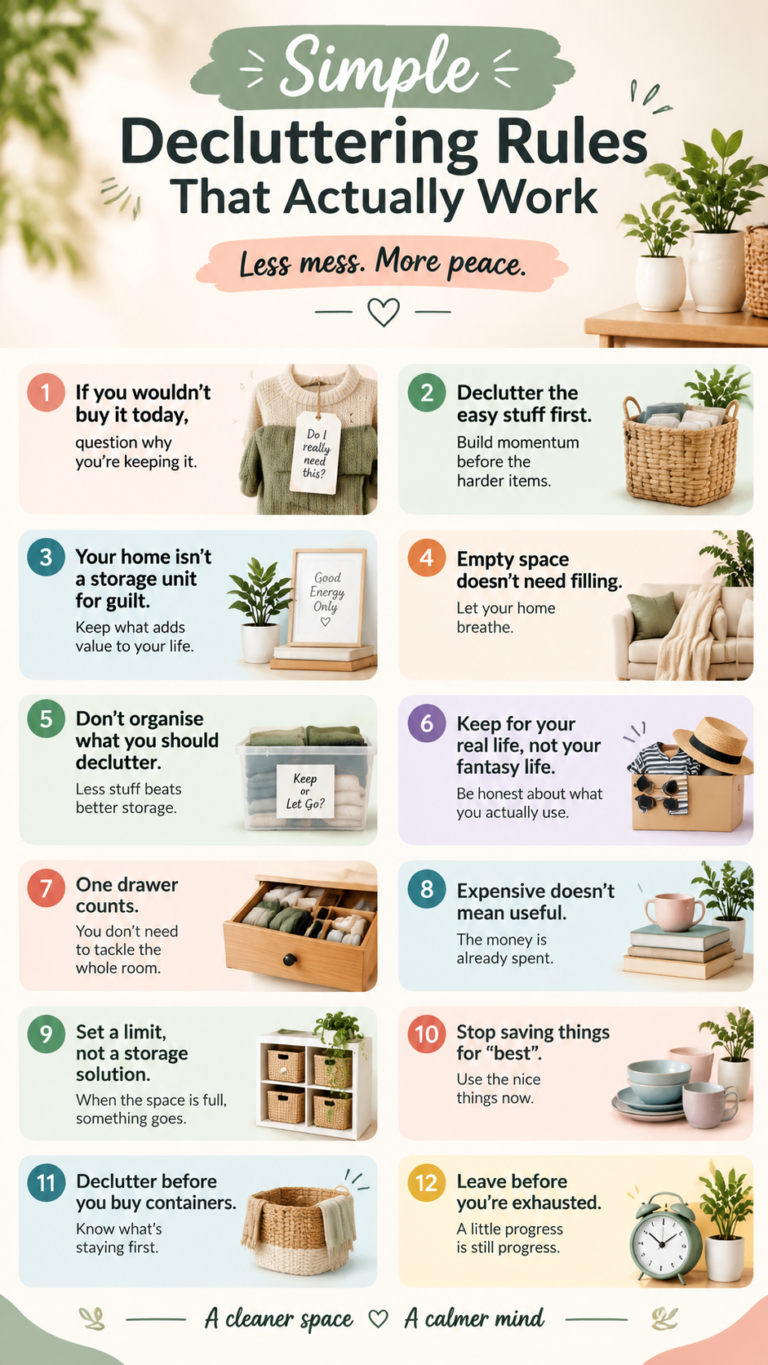
Storage problems are often caused by having more belongings than your home can comfortably support. Keeping items you no longer use, need, or enjoy can make every organizing project feel overwhelming.
Clutter is not only about appearance. Too many possessions can make it harder to find important items, increase cleaning time, and create unnecessary stress.
Practice Intentional Decluttering
Instead of trying to organize everything at once, make thoughtful decisions about what deserves space in your home. Ask yourself whether an item is useful, meaningful, or something you truly enjoy having.
- Remove items you have not used in a long time.
- Donate belongings that could benefit someone else.
- Keep only what supports your current lifestyle.
3. Having No System for Daily Items
Daily essentials need simple systems. Without a routine, frequently used items tend to move around the house and create constant visual noise.
Think about the objects you reach for every day: bags, mail, chargers, shoes, wallets, and cleaning supplies. These items should have easy-to-access storage locations.
Build Simple Drop Zones
A drop zone is a small area designed for items that enter and leave your home frequently. It can be a shelf, drawer, basket, or wall organizer.
- Create an entryway station for keys and bags.
- Use trays for papers and incoming mail.
- Keep everyday items where they are naturally used.
Pro Tip: Organization does not mean hiding everything. It means creating practical spaces where your belongings are easy to find, use, and return.
4. Overstuffing Storage Spaces
Storage areas can quickly become clutter zones when they are filled beyond their capacity. A packed closet or overflowing cabinet may technically store many items, but it becomes difficult to find anything.
Good organization requires breathing room. When shelves, drawers, and closets have extra space, you can see what you own and access items without creating a mess.
Improve Storage Without Adding More Space
Before purchasing additional storage products, evaluate your current belongings. The best storage solution is often removing unnecessary items rather than finding more places to put them.
- Leave empty space on shelves for easier access.
- Group similar items together.
- Use containers that fit your actual needs.
5. Not Keeping Up With Maintenance
Even the best organization system will fail without regular maintenance. A home naturally becomes messy through everyday activities, which is why small reset routines are so valuable.
Waiting until clutter becomes overwhelming makes organizing feel like a difficult chore. A few minutes each day can prevent large messes from developing.
Create a Weekly Home Reset
A simple reset routine can include returning misplaced items, clearing surfaces, organizing paperwork, and refreshing commonly used spaces.
- Spend a few minutes tidying each evening.
- Choose one small area to improve each week.
- Make cleaning and organizing part of your routine.
Why This Matters
A clutter-free home is not about perfection. It is about creating an environment that supports your lifestyle and helps you feel comfortable.
When your home has simple systems, daily tasks become easier. You spend less time searching for things and more time enjoying your space.
- Clear spaces can create a calmer atmosphere.
- Simple routines make organization easier to maintain.
- Intentional storage helps your home function better.
Easy Organization Habits to Start Today
You do not need to completely redesign your home to make a difference. Small changes can create noticeable improvements over time.
Begin with one problem area. Choose a drawer, countertop, closet shelf, or entryway space that often becomes messy. Create a simple system and practice using it consistently.
Small Changes With Big Results
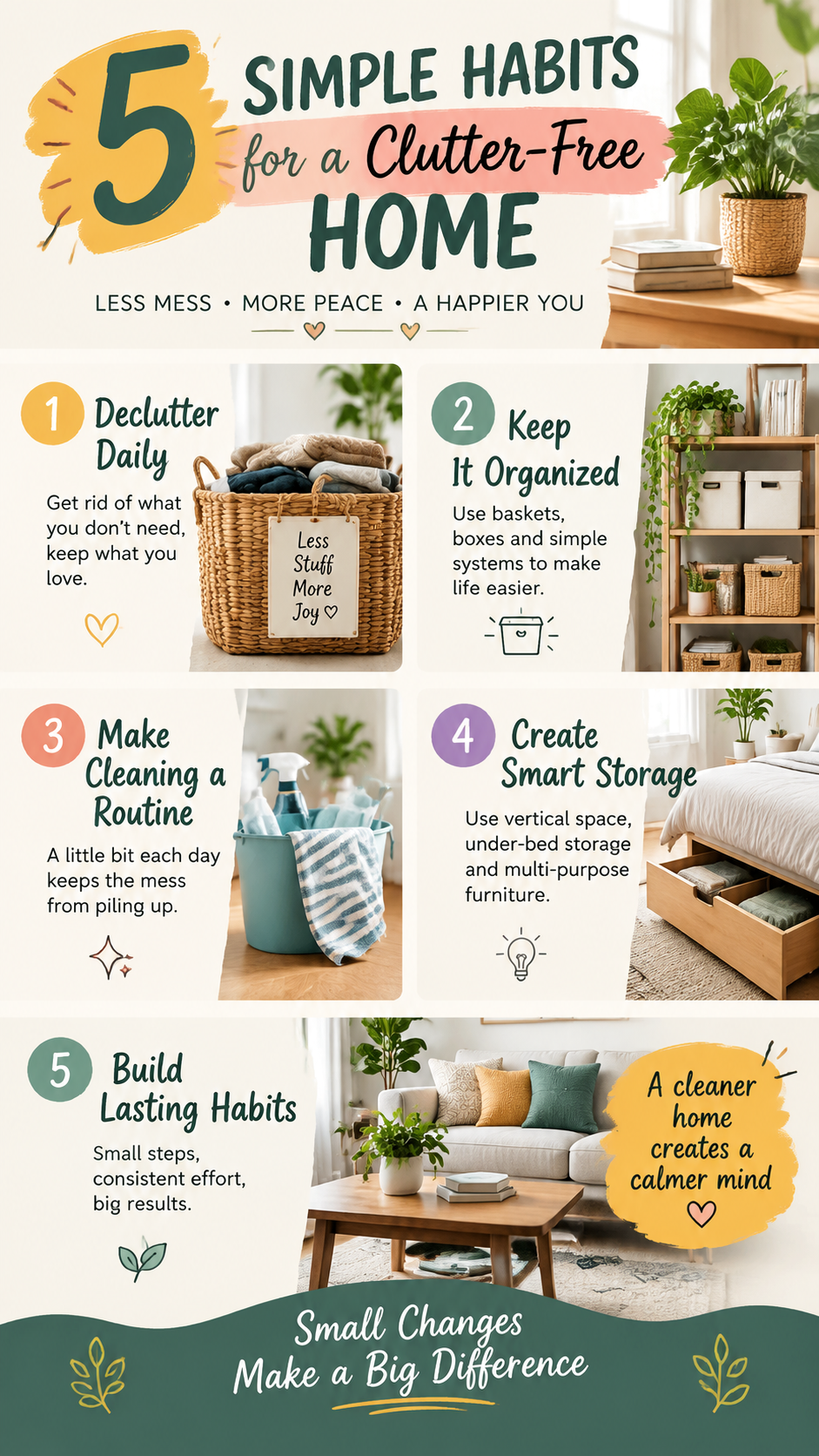
- Remove items that no longer serve you.
- Store frequently used belongings where they are easy to reach.
- Reset your home for a few minutes each day.
- Focus on creating habits instead of chasing perfection.
At a Glance
- Give every item a clear place.
- Declutter before adding storage.
- Create simple daily organization routines.
- Keep storage spaces practical and accessible.
Create a Home That Feels Peaceful and Organized
Home organization is about more than making rooms look neat. It is about creating a space that feels comfortable, functional, and easy to live in. By avoiding common clutter mistakes and building simple habits, you can enjoy a home that stays organized naturally.
Start with one small improvement today. Give your belongings a purpose, create realistic routines, and make your home work better for you.
A calmer home begins with small, smart choices that create lasting change.
Tags
Home Organization
Decluttering Tips
Clutter Free Home
Home Storage Ideas
Minimalist Living
Organized Home
Cleaning Routine